DbcultAccessing Vault...
Cult Review
Senior Film Conservator
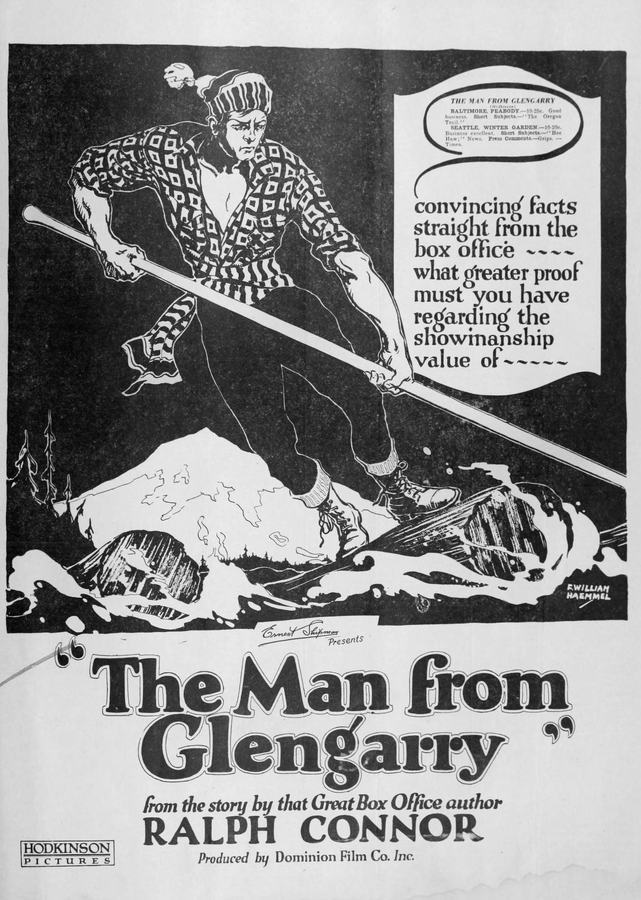
The 1922 adaptation of Ralph Connor’s seminal work, The Man from Glengarry, serves as a quintessential artifact of early 20th-century North American storytelling. It is a film where the landscape is not merely a backdrop but an active antagonist—a churning, arboreal beast that demands blood as much as it yields timber. Under the direction of David Smith, this silent-era masterpiece navigates the treacherous waters of frontier morality with a grit that modern cinema often fails to replicate. Unlike the stylized urbanity found in His Picture in the Papers, Smith’s work is rooted in the soil, the sawdust, and the unyielding dogmatism of the Scots-Presbyterian diaspora.
The narrative engine is fueled by the friction between 'Big' MacDonald (Harlan Knight) and Louis Lenoir (E.L. Fernandez). This is not a simple rivalry; it is a clash of civilizations within a lawless wilderness. MacDonald represents the Old Testament rigidity of the Scottish highlands, a man whose every action is weighed against a severe, unforgiving God. Lenoir, by contrast, is the quintessential renegade—a man of impulse and physical prowess who operates outside the liturgical constraints of his rival. When their conflict results in MacDonald’s death, the film pivots from a survivalist drama into a complex psychological study of inherited trauma.
Ranald MacDonald, portrayed with a brooding intensity by Warner Richmond, is the vessel through which this trauma flows. His journey is one of de-escalation in an era that demanded escalation. The screenplay, penned by Faith Green and Kenneth O’Hara, meticulously deconstructs the 'eye for an eye' philosophy. While contemporary films like Betrayed often leaned into the visceral satisfaction of revenge, The Man from Glengarry dares to suggest that the true test of masculinity lies in the restraint of violence rather than its execution.
The technical achievements of this 1922 production cannot be overstated. The log drive sequence, intended to be the film’s centerpiece, remains a harrowing example of practical stunt work. As the lumberjacks navigate the mid-river logs, the camera captures a kinetic energy that feels dangerously real. There is no green-screen safety net here; the actors are amidst the churning foam of the Ottawa River. This sequence serves as a metaphorical whirlpool, drawing all the characters toward a moral center. When Pauline Garon’s character—the minister’s daughter and the film’s moral compass—falls into the water, the stakes shift from the personal to the existential.
Garon’s performance is a revelation of silent-era nuance. Often, the 'sweetheart' role in such films is relegated to a passive observer, yet she acts as the catalyst for Ranald’s transformation. Her presence introduces a soft, sea-blue tranquility to the otherwise dark orange heat of the lumber camp’s aggression. Her peril in the river forces Ranald to choose between the death of his enemy and the life of his beloved. It is a classic melodramatic trope, yet handled here with a sincerity that avoids the campiness found in later, lesser works like Three Strings to Her Bow.
The film’s exploration of 'dogmatic religious beliefs' provides a fascinating lens into the zeitgeist of the 1920s. Ralph Connor, the pseudonym for the Reverend Charles William Gordon, wrote the source material as a form of muscular Christianity. This is reflected in the film’s visual language. The lumber camp is a cathedral of labor, where work is worship and the axe is a holy instrument. The reformation of Louis Lenoir at the film’s conclusion is not merely a narrative convenience; it is presented as a spiritual inevitability. The 'renegade' is not destroyed by Ranald’s fist but by Ranald’s mercy—a far more profound defeat for a man who lives by the sword.
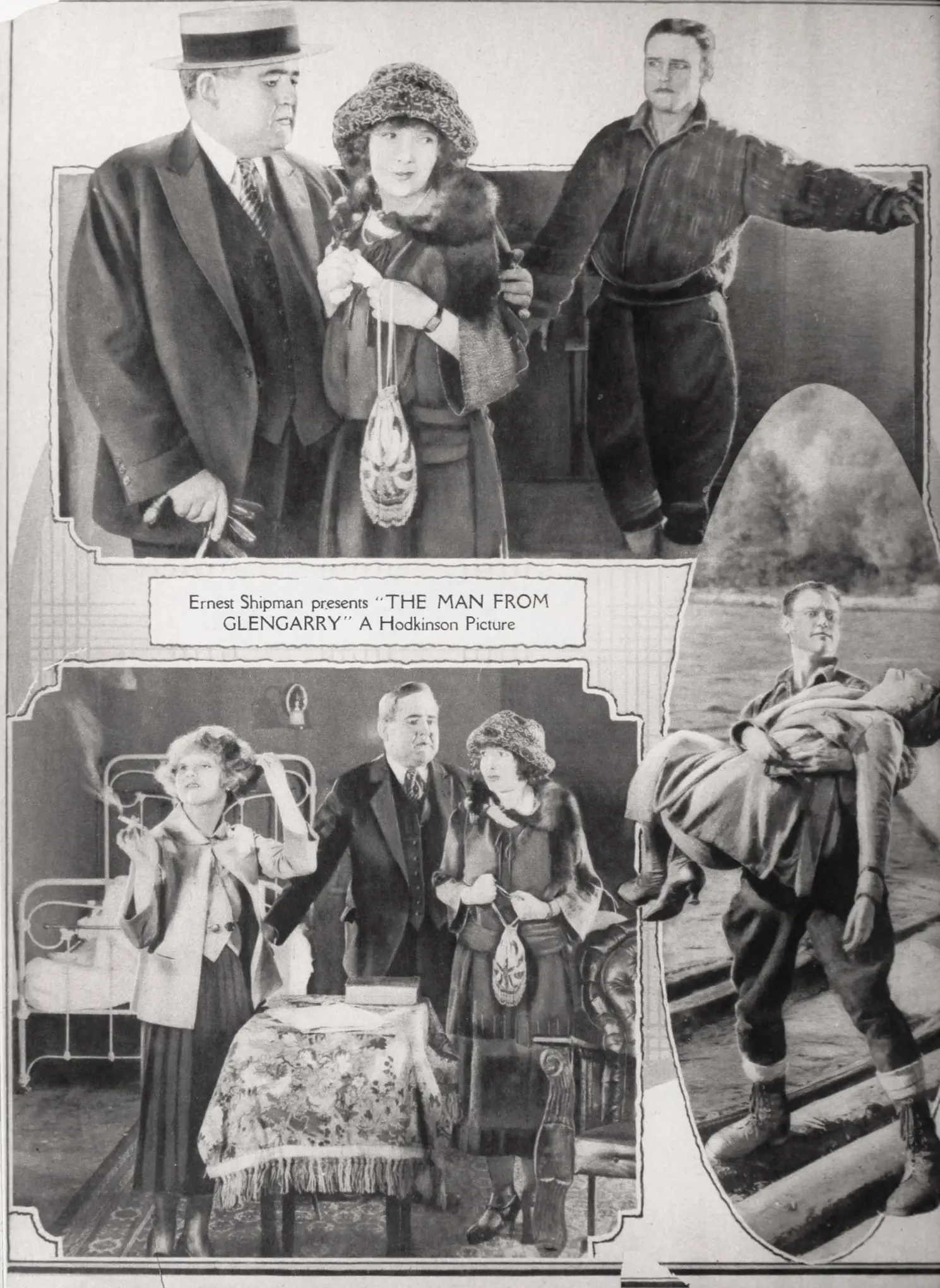
In comparison to the psychological claustrophobia of Shattered, The Man from Glengarry is expansive and panoramic. It captures the vastness of the Canadian identity at a time when that identity was still being forged in the fires of the frontier. The inclusion of diverse characters, though filtered through the lens of early 20th-century sensibilities, hints at a melting pot of cultures—Scottish, French-Canadian, and the burgeoning 'New World' citizen. This cinematic tapestry is as rich as any found in When Rome Ruled, though its scale is intimate and human rather than epic and imperial.
The final act of the film, where Lenoir experiences his reformation, is a masterclass in silent acting. Without the benefit of spoken dialogue, E.L. Fernandez conveys a shift from defiance to humility through posture and gaze alone. It is a moment of quiet power that stands in stark contrast to the earlier, thunderous log-fight. This transition from the cacophony of war to the silence of peace is what elevates the film above standard genre fare like Jes' Call Me Jim.
One must also acknowledge the supporting cast, particularly Marian Swayne and Jack Newton, who flesh out the social fabric of the Glengarry community. Their performances provide the necessary grounding for the high-stakes drama of the MacDonald-Lenoir feud. The community’s reaction to the violence—a mixture of horror and resigned acceptance—mirrors the audience’s own journey through the film’s moral labyrinth. In many ways, the film functions as a precursor to the modern 'prestige' drama, prioritizing character development and ethical inquiry over simple spectacle.
For the modern viewer, the aesthetics of The Man from Glengarry are a striking reminder of the power of black-and-white cinematography. The play of light on the water, the deep shadows of the forest, and the rugged textures of the men’s clothing create a visceral sense of time and place. While it lacks the exoticism of Das Geheimnis von Bombay or the maritime suspense of The Marconi Operator, it possesses a rugged honesty that is uniquely its own. It is a film that demands to be seen not just as a historical curiosity, but as a living piece of art.
The pacing, while slower than contemporary action films, allows for a deep immersion into the characters' lives. We feel the weight of Ranald’s decision; we smell the pine needles and the river silt. This immersive quality is what differentiates a truly great film from a mere entertainment. Like Panna Meri or A Fitting Gift, it understands that the most significant battles are fought within the human heart, even when they are set against a backdrop of crashing logs and roaring rapids.
In the pantheon of early Canadian-themed cinema, this film stands tall. It avoids the easy sentimentality of Rich Girl, Poor Girl and the melodrama of Toton. Instead, it offers a stark, beautiful, and ultimately hopeful vision of what happens when we choose to break the cycle of violence. The Man from Glengarry is a testament to the power of film to explore the deepest recesses of the human condition, even in its infancy. It remains a vital, pulse-pounding experience for anyone interested in the roots of North American storytelling and the eternal struggle between the dogmas of the past and the possibilities of the future.
Final Verdict: A rugged, intellectually stimulating journey into the heart of the frontier, proving that mercy is the ultimate act of strength.
IMDb —
1924
Community
Log in to comment.