DbcultAccessing Vault...
Cult Review
Senior Film Conservator
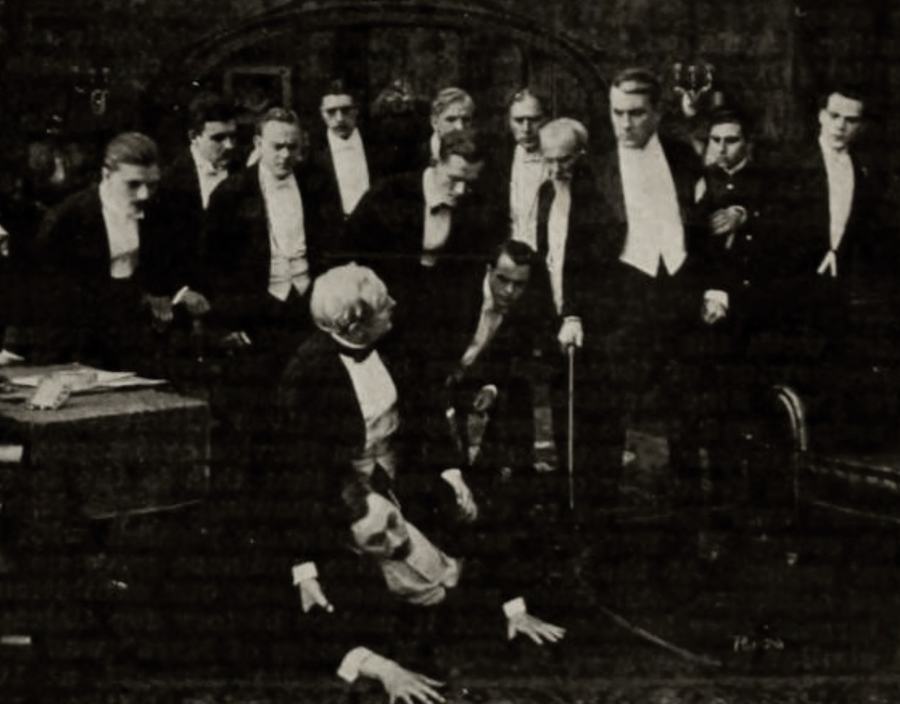
Stepping into the flickering realm of early cinema, one often encounters narratives painted with broad, bold strokes, designed to evoke powerful emotions without the aid of spoken dialogue. The Man from Nowhere, a 1916 silent film, stands as a quintessential example of this art form, weaving a tale of profound injustice, relentless pursuit, and eventual vindication. It is a melodrama par excellence, a testament to the era's storytelling prowess, where moral clarity triumphs over intricate deceit, and heroism emerges from the most desolate corners of human experience. This particular cinematic journey, helmed by the narrative vision of William H. Clifford and brought to life by the expressive performance of King Baggot, transports its audience to a world where honor is paramount, and a man's word, or lack thereof, can seal a fate.
The narrative commences with James Herron's return from the rugged, untamed landscapes of the western mining camps, a homecoming anticipated with a certain nostalgic longing. Yet, the tranquility he envisions is shattered by the tumultuous reality awaiting him. His sister, Betty, has fallen prey to the charms of Antonio Gaudio, a foreigner whose suave demeanor conceals a deeply manipulative core. Their elopement, a decision born of youthful impetuosity and perhaps a touch of naivety on Betty's part, sets in motion a chain of events that will irrevocably alter Jim's life. The urgency of Betty's hastily scribbled note, promising a future explanation for her sudden departure, only amplifies the sense of impending doom that permeates the film's opening acts. It’s a classic setup for the dramatic tension that silent films excelled at, relying on visual cues and the audience’s innate understanding of familial bonds and societal expectations. The rapid succession of events, from Jim’s discovery to his determined tracking of the couple, demonstrates a narrative efficiency that defies the film’s age.
The confrontation in the fashionable boarding house is the crucible where innocence is irrevocably lost and a life unjustly condemned. Gaudio, a master of duplicity, has secured separate rooms, a flimsy pretense of propriety that barely masks his questionable intentions. Jim, ever the protective sibling, overhears a desperate plea from Betty, her insistence on adhering to societal norms, her fear of scandal, clashing starkly with Gaudio's glib assurances of forthcoming matrimony. The tension is palpable, a silent crescendo building to the fateful moment. As Jim bursts into the room, a desperate attempt to salvage his sister’s honor, Gaudio’s true colors are violently revealed. He lunges for the window, firing a shot intended for Jim, but in a cruel twist of dramatic irony, Betty, rushing into her brother’s arms for sanctuary, intercepts the bullet. Her tragic fall, a silent scream of betrayal and agony, is a powerful visual that resonates deeply. This scene, a masterclass in silent film melodrama, hinges on the precise timing of gestures and reactions, the wide-eyed horror of Betty, the furious despair of Jim, and the cowardly flight of Gaudio. The swiftness of Gaudio’s escape leaves Jim, cradling his dying sister, vulnerable and framed.
The subsequent trial is a stark portrayal of the fragility of justice when confronted by circumstantial evidence and malicious testimony. The maid from the Herron home, a figure whose motivations are left tantalizingly ambiguous, delivers a damning account: an overheard threat from Jim to Betty, a brother’s protective warning twisted into a murderous intent. This testimony, devoid of context and laden with misinterpretation, seals Jim’s fate. The swift conviction and the life sentence imposed upon him are a brutal reminder of how easily truth can be obscured, how quickly a hero can be cast as a villain. The film, in this segment, delves into the profound sense of helplessness that accompanies false imprisonment, a theme explored with poignant intensity in other cinematic works of the era, such as The Juggernaut, which similarly grapples with the devastating impact of wrongful accusations and the arduous path to exoneration. Jim’s silent suffering, his stoic acceptance of an unbearable injustice, is conveyed through the subtle nuances of King Baggot's performance, a quiet intensity that speaks volumes without a single uttered word.
Three years languish within the unforgiving walls of the penitentiary, a period that would break lesser men. Yet, Jim Herron, though hardened by his ordeal, retains an intrinsic core of honor. His opportunity for redemption, or at least a reprieve, arrives during a gubernatorial inspection. A chaotic prison break erupts, a maelstrom of desperation and violence. Amidst the pandemonium, several inmates turn their aggression towards the Governor. It is here that Jim’s inherent heroism resurfaces, untainted by the bitterness of his wrongful conviction. He intervenes, risking his own life to protect the very symbol of the system that condemned him. This selfless act is not merely a plot device; it is a profound commentary on character, demonstrating that true virtue cannot be extinguished by adversity. His bravery earns him the coveted status of a "trusty," a small but significant step towards regaining a semblance of freedom and respect. This pivotal moment is skillfully handled, showcasing the raw energy of the prison riot juxtaposed with Jim's calm, decisive action, a visual narrative that elevates him from mere prisoner to an undeniable hero.
Word of Jim’s valiant deed reaches Ruth, the Governor’s compassionate daughter. Touched by his heroism, she sends him a carrier pigeon, a delicate symbol of hope and connection in the bleak isolation of his cell. This seemingly small gesture is immensely significant, forging an invisible bond between the imprisoned man and the outside world, a spark of human kindness that keeps his spirit from succumbing entirely to despair. It introduces a vital romantic element into the narrative, a glimmer of future happiness amidst the prevailing gloom. Meanwhile, across the vast expanse of the Atlantic, the true villain, Antonio Gaudio, resurfaces. Having spent three years in self-imposed exile, he returns to America, reinvented as "Count Lorenz," a figure of sophisticated menace. This transformation from a desperate eloper to a polished card sharp operating within the upper echelons of society is a brilliant narrative stroke, highlighting the deceptive nature of appearances and the enduring presence of evil. His mingling with the "smart set" under a false title speaks to the ease with which identity can be fabricated and exploited, a theme also explored with intriguing depth in films like The Impostor, where hidden identities drive much of the dramatic conflict.
Count Lorenz, with his newfound aristocratic veneer, quickly establishes himself as a notorious cheat. His predatory gaze falls upon Larry, the Governor’s "sporty" son, a character whose impulsiveness and penchant for gambling make him an easy mark. At a fashionable club, the Count expertly fleeces Larry of his ready cash, then ensnares him further through a web of promissory notes. Larry, realizing he has been swindled, turns to a trusted friend, the prison warden, for advice. This serendipitous connection is a masterstroke of plot construction, drawing the disparate threads of the story closer together. The warden, a shrewd and observant man, listens to Larry's predicament. It is in the warden’s office that Jim, now a trusty, serendipitously encounters Larry. The warden, recalling Jim’s past "clever card stunts" performed for the entertainment of his fellow inmates, unknowingly plants the seed for Jim’s involvement. Jim’s response, "It has been years since I sat in a real game, but I am sure I can catch any sharper at his own trick," is not merely a line of dialogue; it is a declaration of his dormant prowess, a hint at the instrumental role he is about to play.
The revelation that Larry is Ruth’s brother ignites a newfound interest in Jim. The pigeon, a symbol of hope, now takes on a deeper, more personal meaning. Jim, seeing an opportunity not just for Larry’s rescue but perhaps for his own ultimate vindication, proposes a daring plan to the warden. The warden, a man of integrity and sharp intellect, concocts a pretext: Jim is needed to finish an "important report" and will therefore remain in his apartment overnight, beyond the prison walls. This ingenious ruse allows Jim to temporarily shed his identity as a convict. The warden, transforming Jim into a "gentleman of leisure," outfits him in appropriate attire, a sartorial metamorphosis that visually underscores his transition from prisoner to a man of society. Larry, still oblivious to Jim’s true identity, introduces him to Ruth. It is here, at the threshold of a new life, that Jim, with a touch of poetic flair, introduces himself: "Just call me Barrs, the man from nowhere." This moniker is profoundly symbolic, encapsulating his past anonymity, his mysterious origins, and his sudden, impactful appearance into their world. It’s a moment designed to heighten anticipation, establishing Jim as an enigmatic figure whose true purpose remains shrouded in secrecy.
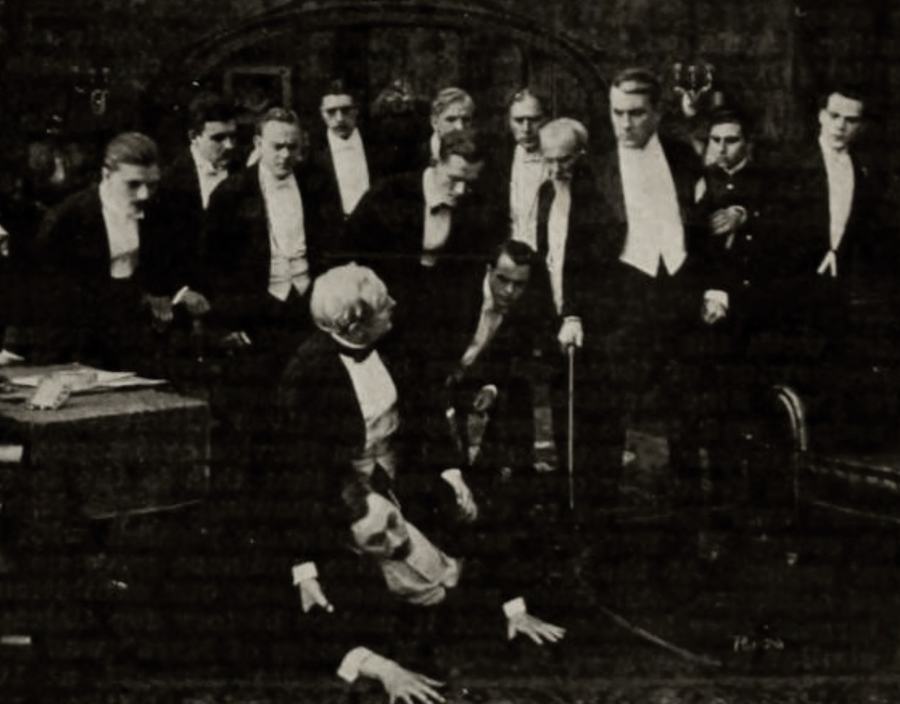
The journey to the club, where a grand ball is underway, is not merely a logistical transition but a narrative space for burgeoning romance. During the brief ten-minute automobile ride, Ruth, captivated by Mr. Barrs’s quiet strength and enigmatic charm, finds herself increasingly drawn to him. The film subtly builds this connection, relying on glances, shared smiles, and the unspoken understanding that often characterizes silent film romance. The atmosphere of the ball, a vibrant tableau of high society, serves as the perfect backdrop for the dramatic climax. Amidst the swirling dancers and glittering chandeliers, Jim’s gaze, honed by years of suffering and a burning desire for justice, spots Count Lorenz. The recognition is instantaneous, a jolt of visceral understanding that transcends the Count's elegant disguise. The man who orchestrated his sister's death and his own wrongful imprisonment stands before him, oblivious to the impending reckoning. This moment, a silent film staple, relies on the power of the close-up, the sudden flicker of recognition in Jim's eyes, and the audience's shared knowledge of the villain’s identity.
The card table becomes the arena for the initial confrontation, a battle of wits and dexterity. Jim, leveraging his intimate knowledge of a sharper’s tricks, meticulously exposes Count Lorenz’s manipulation of the cards. The public humiliation, a stark unraveling of the Count’s carefully constructed façade, ignites his fury. In a fit of desperate rage, Lorenz seizes a sword from the wall, a dramatic escalation that transforms a genteel game into a deadly duel. Jim, with remarkable agility, disarms him. But instead of delivering a decisive blow, he takes two swords of equal length, tossing one to the Count with a chilling warning to defend himself. This act is not born of mere vengeance, but of a profound desire for justice to be met on an equal footing, a challenge issued with the full weight of his accumulated suffering. He denounces Lorenz not just as a cheat, but as the murderer of his sister, a public declaration that shatters the villain’s carefully cultivated persona.
The ensuing sword fight is the dramatic zenith of the film, a breathtaking display of athleticism and choreographic precision. Despite Count Lorenz’s reputation as an expert fencer, Jim, fueled by years of pent-up rage and a righteous cause, proves his undeniable master. The clash of steel, the parries and thrusts, are rendered with an intense visual dynamism, each movement conveying the high stakes of the encounter. Lorenz ultimately falls, mortally wounded, his reign of deceit brought to a violent end. In his dying moments, perhaps spurred by a flicker of conscience or the crushing weight of his impending demise, he calls for a piece of note paper. With his last breath, he signs a confession, a document that definitively admits to accidentally killing Betty while intending to murder Jim. This confession is the ultimate exoneration, the irrefutable proof of Jim’s innocence, a moment of profound catharsis for both the character and the audience. It is a narrative device, common in melodramas, that provides a clear and unambiguous resolution to the central conflict, leaving no room for doubt or lingering ambiguity.
The Governor, upon receiving the dying confession, promptly issues a pardon for Jim. The wheels of justice, though slow and initially misdirected, have finally turned in his favor. Jim’s name is cleared, his honor restored, and his freedom secured. Ruth, learning of Jim’s true identity and the harrowing ordeal he endured, sees him not just as Mr. Barrs, the enigmatic stranger, but as James Herron, the man of unwavering courage and profound integrity. The film concludes with a poignant dissolve, a visual metaphor for the merging of their destinies. A sympathetic understanding blossoms between Jim and Ruth, a silent promise of a bright future together. This romantic resolution, a staple of classic storytelling, provides a satisfying closure to the intense drama, suggesting that even after profound suffering, happiness and love can be found.
The Man from Nowhere is more than just a revenge tale; it is a meticulously crafted narrative about the resilience of the human spirit, the enduring quest for truth, and the redemptive power of selfless action. King Baggot delivers a compelling performance, conveying a spectrum of emotions—from despair to righteous fury, from quiet suffering to burgeoning hope—with remarkable subtlety for the silent era. The screenplay by William H. Clifford is a masterclass in plot construction, introducing twists and turns that keep the audience thoroughly engaged, weaving together disparate elements into a cohesive and compelling whole. The film's pacing is exemplary, moving swiftly through its dramatic beats without sacrificing character depth or emotional impact. It stands as a powerful example of how early cinema, even without synchronized sound, could tell stories of immense emotional resonance and complex moral dimensions, captivating audiences with its visual poetry and universal themes.
The visual language of the film, characteristic of its time, employs stark contrasts between light and shadow to emphasize emotional states and narrative shifts. The dimly lit prison cells, for instance, powerfully convey Jim’s confinement and despair, while the opulent ballrooms gleam with a false promise of gaiety and social grace that masks underlying villainy. The use of intertitles is precise and impactful, providing necessary exposition without interrupting the flow of the visual storytelling. Character blocking and movement are deliberately choreographed to convey relationships and intentions, a necessity in an art form that relied solely on visual communication. The climactic duel, in particular, is a testament to the era's ability to stage thrilling action sequences, demonstrating a clear lineage to theatrical traditions while embracing the unique capabilities of the nascent cinematic medium.
Comparing it to other films of the period, one might find echoes of its themes in productions like The Woman, which also explores societal expectations and hidden truths, or even the heightened drama found in The Chalice of Courage, where characters are tested by extreme circumstances. However, The Man from Nowhere distinguishes itself through its intricate plotting and the compelling arc of its protagonist. It's a journey from wrongful accusation to heroic redemption, punctuated by moments of genuine suspense and heartfelt emotion. The film not only entertains but also offers a glimpse into the moral sensibilities and narrative conventions that shaped early 20th-century popular entertainment. Its enduring appeal lies in its straightforward yet powerful portrayal of good versus evil, and the ultimate triumph of integrity over deceit, a timeless message delivered with the earnest charm and dramatic flair unique to the silent screen era.
In essence, The Man from Nowhere remains a compelling piece of cinematic history, a testament to the foundational power of storytelling through images. It reminds us that even without spoken words, the human experience—its triumphs and tragedies, its moments of profound betrayal and courageous sacrifice—can be communicated with stunning clarity and emotional depth. It is a film that deserves to be rediscovered, not just as an artifact of a bygone era, but as a vibrant, engaging narrative that continues to resonate with its universal themes of justice, love, and the unwavering pursuit of truth. Its legacy, however modest in the grand tapestry of film history, is secure as a finely wrought example of early American melodrama.
IMDb —
1916
Community
Log in to comment.