DbcultAccessing Vault...
Cult Review
Senior Film Conservator
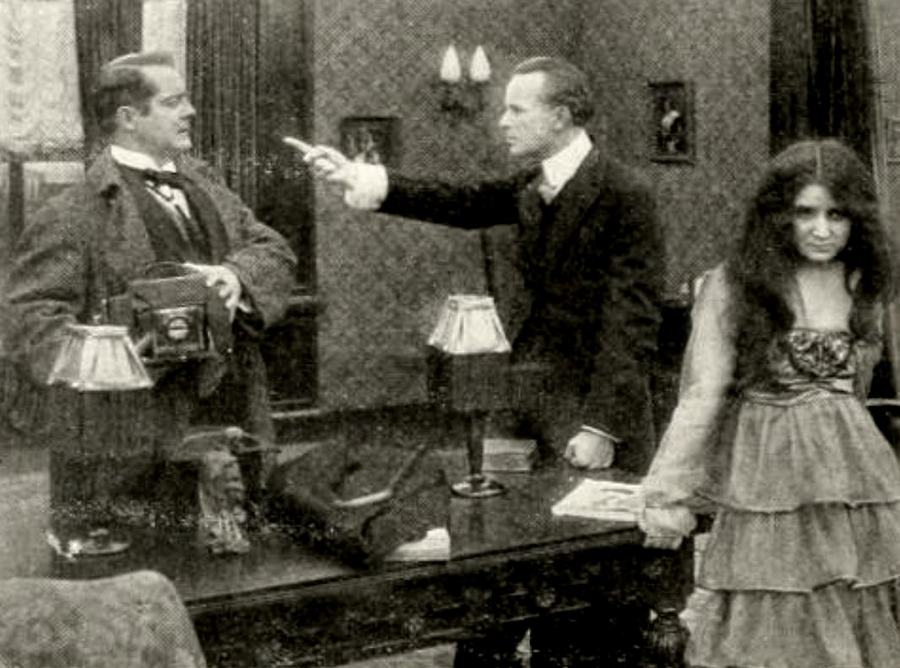
In the nascent days of American cinema, when the flickering images on screen held a potent mirror to society's burgeoning complexities, films often grappled with the moral quandaries of their time. The Man from Oregon stands as a compelling artifact from this era, a silent narrative that plunges headfirst into the murky waters of political corruption and the arduous journey toward personal redemption. It's a tale that, despite its century-old vintage, resonates with an unsettling familiarity, exploring themes of integrity, temptation, and the transformative power of conscience. This isn't merely a historical curiosity; it's a testament to the enduring power of storytelling, rendered with a dramatic flair characteristic of early cinematic endeavors.
At its heart is "Honest Jim" Martin, portrayed with a compelling earnestness by Joseph J. Dowling. Jim is the quintessential American hero of his time: a man of the people, elected by popular mandate from the rugged, untainted landscapes of Oregon to champion the fight against the insidious Railway Land-Grab Bill in the nation's capital. His very moniker, "Honest Jim," telegraphs his moral standing, positioning him as a beacon of incorruptibility in a political arena often perceived as rife with compromise. His presence in Washington D.C. is not just a personal journey but a symbolic crusade, representing the hopes of ordinary citizens against powerful, unseen forces. Dowling's performance, reliant on the broad, expressive gestures and nuanced facial work typical of the silent era, effectively conveys Jim's initial naiveté and his subsequent emotional turmoil, making his character a relatable anchor in a swirling sea of deceit.
The true pivot of the film, however, is not Jim, but the captivating and complex figure of Harriet Lane, brought to life with intriguing depth by Clara Williams. Introduced as "the most dangerous woman in the Capital," Harriet is a lobbyist, a mercenary of influence tasked by the shadowy Wm. Landers and his railway syndicate to secure votes for their nefarious bill. She is a woman of formidable wit and striking beauty, a master of manipulation whose allure is her primary weapon. Her initial portrayal is that of a femme fatale, a stock character often employed in early cinema to embody moral peril. Yet, Williams imbues Harriet with more than just surface-level villainy. There's an underlying current of calculation, yes, but also a hint of weariness, suggesting a woman perhaps trapped by her circumstances rather than inherently malicious. Her machinations, particularly the elaborate setup involving the staged struggle and the incriminating photograph, are executed with chilling precision, highlighting the ruthless efficacy of political blackmail. The film, in this regard, echoes the themes of moral compromise and hidden agendas seen in contemporary dramas like Officer 666, where deception and identity play crucial roles in uncovering corruption.
Looming gently over this tableau of political intrigue is the figure of Mother Martin, portrayed by Fanny Midgley. She is more than a supporting character; she is the film's moral compass, an embodiment of unvarnished goodness and homespun virtue. Her presence in Washington, accompanying her senator son, serves as a constant, if often unacknowledged, reminder of the principles Jim left Oregon to uphold. It is her innocent kindness, her genuine warmth, epitomized by the homemade pie she bakes for Harriet's birthday, that acts as the catalyst for Harriet's profound transformation. This maternal influence, a quiet force against the clamor of corruption, is a powerful motif, underscoring the film's belief in the enduring power of human connection and empathy. The contrast between Mother Martin's simple integrity and the capital's complex moral compromises is stark and effective, a common trope in early narratives that sought to champion rustic honesty over urban depravity. This duality, where an individual's innate goodness confronts the cynicism of the world, is a timeless narrative device, reflecting broader societal anxieties about the erosion of traditional values.
The initial act of blackmail is a masterclass in psychological manipulation. Jim, drawn by Harriet's feigned distress, enters her hotel room, his innate sympathy overriding his political caution. The staged embrace, the artfully disheveled hair and waist, and Landers' perfectly timed photograph create a damning visual narrative that threatens to shatter Jim's reputation and derail his fight against the Land-Grab Bill. The film effectively portrays the gut-wrenching dilemma faced by Jim, caught between his public duty and the looming threat of personal scandal. His subsequent scorn for Harriet, a raw expression of betrayal, is the first crack in her carefully constructed façade of indifference. It is this moment, coupled with the unexpected warmth of Mother Martin's friendship and the simple gesture of a birthday pie, that ignites a nascent conscience within Harriet. This internal struggle, the transition from cynical manipulator to an agent of justice, is where the film truly shines. It suggests that even in the most hardened hearts, a spark of morality can be rekindled, a theme explored with similar gravitas in films like The Man Who Couldn't Beat God, where characters confront their past failings and seek spiritual or moral redemption.
Harriet's decision to retrieve and destroy the negatives is the dramatic engine of the film's latter half. It is a bold, almost reckless act, signaling her complete break from Landers' influence and her embrace of a newfound moral compass. Her nocturnal infiltration of Landers' office is fraught with tension. The anticipation of her success, only to be met by Landers' foresight in changing the safe combination, heightens the stakes considerably. Yet, Harriet's intelligence, which once served her manipulative ends, now becomes her tool for good. Her quick thinking in telephoning police headquarters for a safe expert is a stroke of narrative genius, adding an unexpected layer of suspense and dark humor to the unfolding drama. This scene, particularly the arrival of the unsuspecting expert while Harriet is mid-heist, injects a thrilling tension that keeps the audience on the edge of their seats. The film expertly uses silence and visual cues to build this suspense, a hallmark of effective silent cinema storytelling. The desperate measures taken by characters to right wrongs are also a central tenet of films like A Fight for Freedom; or, Exiled to Siberia, where protagonists undertake perilous journeys for justice, often against formidable adversaries.
The confrontation in Landers' office is the film's undeniable climax. Landers' dramatic entrance, pistol in hand, momentarily reasserts his dominance. He snatches the negatives back, believing he has thwarted Harriet's plan. But Harriet, having tasted the bitter fruit of her complicity and now driven by a powerful desire for atonement, is no longer the submissive pawn. In a moment of electrifying defiance, she snatches the pistol from his grasp. The subsequent act of shooting the negatives to pieces as they lie on Landers' desk is a profoundly symbolic gesture. It is not merely the destruction of evidence; it is the obliteration of her past, the shattering of the chains that bound her to corruption, and a forceful declaration of her moral autonomy. This scene, executed with a raw intensity that transcends the limitations of silent film, is a powerful visual metaphor for breaking free from oppressive forces. It mirrors the spirit of female characters in other early films, such as those grappling with challenging societal norms in The Waif, who often demonstrate remarkable resilience and agency in the face of adversity, carving out their own paths in a restrictive world.
Watching The Man from Oregon today, one is struck not only by its narrative prowess but also by the unique artistry of silent cinema itself. This medium, often unfairly dismissed as primitive, required a sophisticated understanding of visual storytelling. Actors like Dowling and Williams masterfully convey complex emotions without uttering a single word, their faces and body language becoming the primary vehicles for pathos and drama. Every gesture, every glance, every subtle shift in posture carried immense weight, demanding a heightened level of performance. The film's pacing, while perhaps more deliberate than modern blockbusters, allows for a considered unfolding of plot and character development, inviting deeper contemplation rather than constant stimulation. The effective use of intertitles, far from being mere text, served as a crucial narrative tool, guiding the audience through intricate plot points and revealing inner monologues. Furthermore, the often-forgotten element of live musical accompaniment, which would have underscored every scene, added an emotional layer that contemporary viewers experienced directly. This era of filmmaking, often overlooked, offered a rich tapestry of human experience, much like the diverse narratives found in films such as Our Mutual Girl, which provided episodic glimpses into various facets of early 20th-century life, capturing the zeitgeist through compelling visual narratives. The sheer ingenuity required to captivate an audience solely through moving images and accompanying music is a testament to the foundational brilliance of this art form.
Beyond the thrilling plot, The Man from Oregon delves into themes that remain evergreen. The struggle between individual integrity and systemic corruption is a constant in political discourse, making Jim Martin's plight feel remarkably contemporary. The film critiques the insidious influence of money and power on legislative processes, a battle that continues to be waged in various forms, often behind closed doors. Furthermore, Harriet Lane's arc provides a fascinating study in moral metamorphosis. Her journey from being an instrument of corruption to an agent of justice is a powerful testament to the human capacity for change and redemption. This exploration of moral ambiguity and the potential for good within seemingly compromised characters is a sophisticated touch for a film of its period, distinguishing it from simpler morality plays. It reminds one of the layered ethical dilemmas presented in works like The Merchant of Venice, where justice and mercy are constantly weighed against each other, and the line between virtue and vice often blurs. The film also subtly explores the destructive power of public perception versus the often-hidden reality of private morality. Jim's entire career is threatened by a manufactured scandal, highlighting how easily a reputation can be tarnished, regardless of the truth. This vulnerability of public figures to manipulation and false narratives is a theme that continues to resonate profoundly in our media-saturated age.
The film concludes with Harriet sending the destroyed negatives to Jim, accompanied by a poignant note urging him to live up to his mother's belief in him. This final act of atonement is not about erasing her past, but about empowering Jim to fulfill his potential and uphold the principles he stands for. It's a powerful and optimistic resolution, suggesting that even after significant moral failings, a path to integrity can be forged. The film ultimately champions the idea that individual actions, driven by conscience, can indeed make a difference, even against seemingly insurmountable odds. It's a message of hope, wrapped in a thrilling package of political intrigue and personal drama. The enduring appeal of such narratives, where personal conviction triumphs over systemic pressures, is timeless, echoing the spirit of heroic tales like Ivanhoe, where honor and justice ultimately prevail against tyranny, albeit through different means. The careful construction of the narrative, the nuanced performances, and the overarching moral message solidify The Man from Oregon as more than just a relic; it's a vibrant piece of cinematic history that continues to offer relevant insights into human nature and societal challenges.
The Man from Oregon, with its intricate plot, compelling characters, and resonant themes, serves as a vital reminder of early cinema's capacity for sophisticated storytelling and social commentary. It's a film that deserves to be revisited, not just for its historical significance, but for its timeless exploration of human nature, morality, and the relentless pursuit of justice in a world often shadowed by corruption. It is, in essence, a silent roar against injustice, a cinematic gem that continues to speak volumes without uttering a single word.
Cast: Joseph J. Dowling, Clara Williams, Howard Hickman, Fanny Midgley, Herschel Mayall, J. Barney Sherry
Writer: C. Gardner Sullivan
IMDb 6.4
1929
Community
Log in to comment.