DbcultAccessing Vault...
Cult Review
Senior Film Conservator
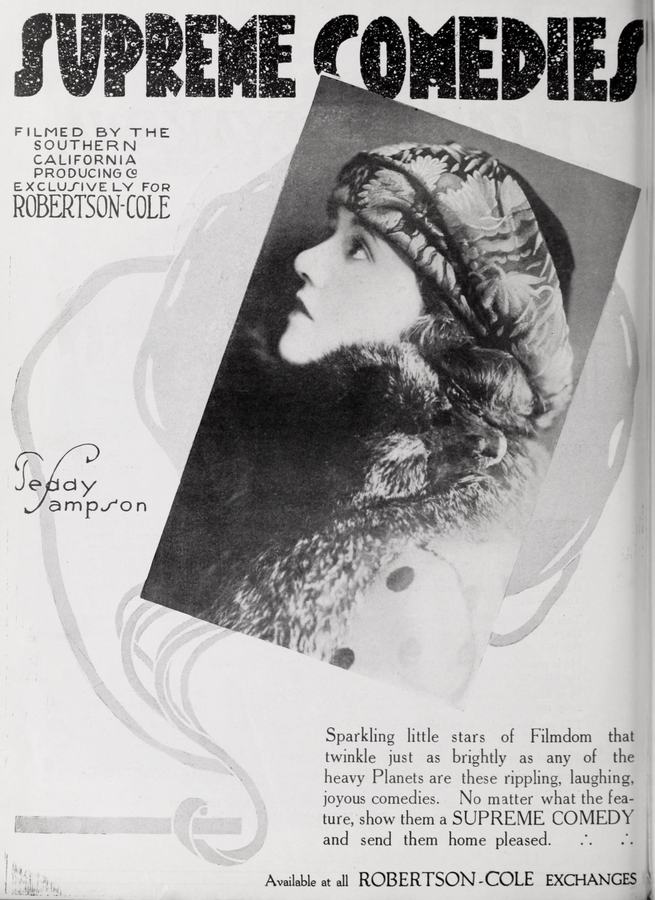
To witness Their Little Wife in the modern era is to step into a temporal rift where the nuances of 1918 social etiquette collide with the raw, burgeoning power of cinematic storytelling. This isn't merely a relic of a bygone age; it is a vibrant, breathing specimen of the domestic comedy genre that predates the sophisticated screwball antics of the 1930s. The film operates on a frequency of high-strung energy, anchored by the incomparable Teddy Sampson. Her performance serves as a precursor to the complex female protagonists we see in later works like The Stronger Love, though here the stakes are draped in the velvet of humor rather than the heavy brocade of melodrama.
The directorial vision—while anonymous in the broader historical ledger—displays a remarkable grasp of spatial dynamics. The way the camera captures the interiority of the home suggests a claustrophobia that mirrors the characters' own social anxieties. Unlike the sweeping, almost ethereal landscapes found in The Lure of Crooning Water, 'Their Little Wife' finds its poetry in the mundane: the tilt of a hat, the frantic opening of a door, the desperate scribbling of a note. It is a film of small things that signify monumental shifts in the domestic status quo.
The chemistry between Teddy Sampson and Harry Depp is the engine that drives this narrative vehicle. Sampson possesses a face that was engineered for the silent screen—every micro-expression is a paragraph of dialogue. She manages to convey a sense of agency that was often denied to the 'ingénue' roles of the period. In many ways, her character's navigation of the plot's absurdities mirrors the tactical maneuvering seen in Gloria's Romance, yet with a grounded, more relatable earthiness.
Harry Depp, conversely, provides the kinetic friction. His performance is a frantic ballet of nerves, a stark contrast to the more stoic masculinity often presented in films like A Gentleman from Mississippi. Depp understands that in a world without sound, the body must become the voice. His movements are staccato, rhythmic, and perfectly timed to the film's editing pace. This interplay between Sampson’s poise and Depp’s volatility creates a tension that keeps the audience tethered to the screen, even when the plot threatens to dissolve into pure abstraction.
Technically, 'Their Little Wife' is a fascination. The use of lighting to delineate the passage of time within the single-day narrative structure shows an early mastery of the medium's temporal capabilities. While it lacks the avant-garde visual flourishes of Vingarne, it compensates with a rigorous devotion to narrative clarity. The intertitles are used sparingly, allowing the visual storytelling to carry the heavy lifting—a hallmark of a director who trusts their cast and their audience.
Consider the sequence in the parlor, where a series of mistaken identities leads to a crescendo of confusion. The framing is tight, almost invasive, forcing the viewer to confront the ridiculousness of the social constructs at play. It reminds one of the situational absurdity found in Next Aisle Over, but with a deeper, perhaps more cynical, undercurrent regarding the fragility of the marital bond. This theme of marital instability is a recurring motif in the era, explored with more gravity in The Divorce Trap, but handled here with a light, almost ethereal touch.
To truly appreciate 'Their Little Wife', one must place it within the broader tapestry of 1918 cinema. This was a year of transition. The industry was moving away from the primitive shorts of the previous decade and toward the feature-length complexities that would define the 1920s. Films like Vor tids helte were pushing boundaries in Europe, while in America, the focus remained on refining the grammar of the Hollywood style.
'Their Little Wife' sits comfortably in this evolutionary middle ground. It doesn't possess the maritime scale of His Briny Romance, nor the royal aspirations of On the Steps of the Throne. Instead, it finds its strength in the microcosm. It is a study of the 'little' things—the little wife, the little house, the little lies—that aggregate into a life. This focus on the domestic sphere provides a fascinating counterpoint to the more cosmic concerns of The Cloud or the financial anxieties of Cupid Forecloses.
While the title might suggest a patronizing view of femininity, the actual text of the film tells a different story. Teddy Sampson’s character is frequently the smartest person in the room. She is the one who ultimately navigates the wreckage of the men's egos. In this regard, the film shares a spiritual DNA with Assigned to His Wife, where the female lead must manage the external world while maintaining the internal harmony of the home. There is a proto-feminist resilience here that often goes unremarked in critiques of silent comedy.
The film also touches upon the concept of 'harmony' in a way that feels surprisingly modern. Much like Life's Harmony, it posits that peace is not the absence of conflict, but the successful management of it. The resolution of 'Their Little Wife' is not a return to a perfect state, but a weary, humorous acceptance of the chaos that comes with human connection. It is a cynical yet warm conclusion that elevates the film above mere slapstick.
In the final analysis, 'Their Little Wife' is a testament to the enduring power of the silent medium. It proves that you don't need a massive budget or a cast of thousands to tell a story that resonates. You need a camera, a room, and actors who understand the profound language of the human face. It is a film that deserves to be pulled from the shadows of history and placed alongside the more celebrated works of its time.
Whether compared to the fleeting romance of One Night Only or the structural rigidity of other 1918 releases, 'Their Little Wife' stands out for its wit, its pacing, and its heart. It is a masterclass in the economy of storytelling, proving that sometimes, the smallest stories are the ones that echo the loudest through the decades. Teddy Sampson and Harry Depp may not be household names today, but for those eighty minutes of flickering light, they are as vital and alive as any modern star. This is essential viewing for any serious student of cinema history, a vibrant reminder of the days when the silver screen was first learning how to speak to our souls without saying a single word.
IMDb 5
1934
Community
Log in to comment.