DbcultAccessing Vault...
Cult Review
Senior Film Conservator
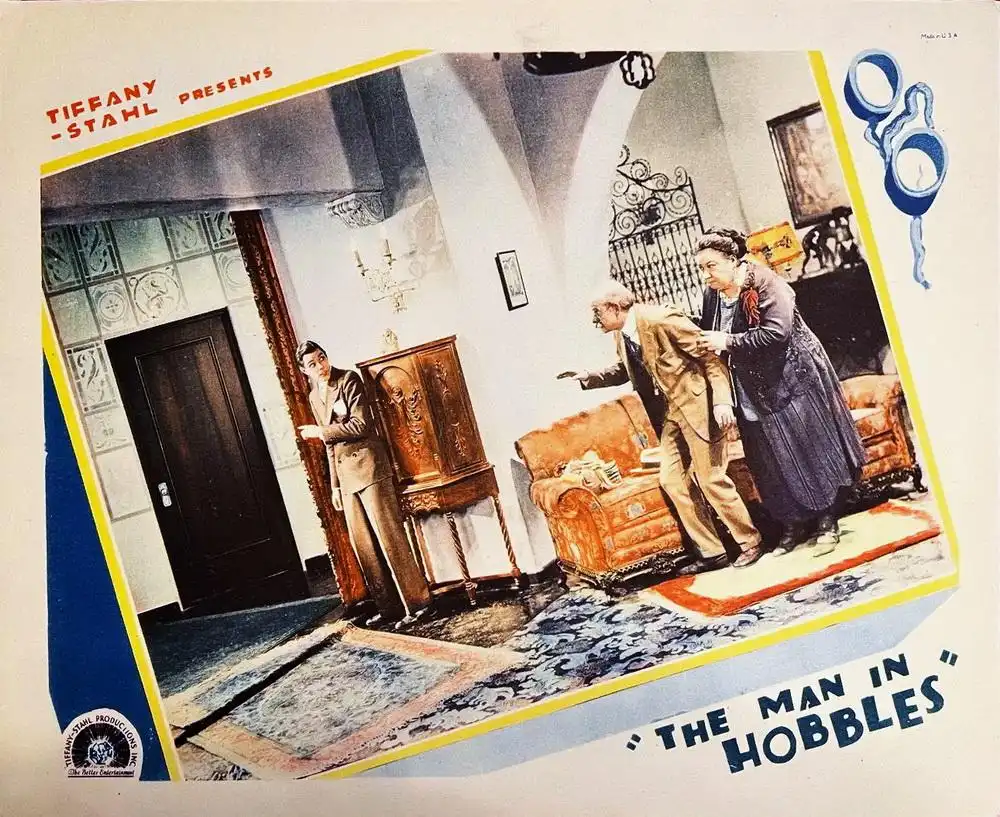
If you have ever had a relative stay on your couch for two weeks too long, The Man in Hobbles will probably trigger some very specific, dormant frustrations. It’s worth a look if you’re into the tail-end of the silent era where the acting started getting a bit more naturalistic but the plots were still stuck in that Vaudeville 'one-note gag' territory. If you’re looking for high-concept slapstick or a sweeping romance, you’re going to be bored stiff within twenty minutes.
Lucien Littlefield is the main reason to even pull this out of the archive. He’s got one of those faces that looks like it was sketched by a caricaturist who was having a bad day—all sharp angles and nervous blinking. He plays a photographer, which gives the movie an excuse for some decent studio set-pieces, but the heart of the thing is just him looking increasingly miserable while his family eats him out of house and home.
There is a scene early on where the whole family is sitting around the breakfast table, and the way they eat is genuinely repulsive. It’s effective, I guess, but the camera lingers on the brother-in-law chewing for an uncomfortably long time. You can tell the director wanted us to hate these people, and boy, does it work. Maybe too well. By the time the second reel starts, I didn’t just want Lucien to kick them out; I wanted him to burn the house down with them inside.
The pacing is a bit of a mess. There’s a sequence involving a photography session that feels like it was lifted from a completely different, much broader comedy. It drags. You find yourself looking at the background of the shots—the weirdly busy wallpaper, the way the light hits the dust in the studio—just to stay occupied. It reminded me a bit of the frantic energy in Hot Heels, but without the actual momentum. Everything here feels heavy, which I suppose fits the 'hobbles' theme, but it doesn't always make for a great viewing experience.
Lila Lee shows up as the love interest, and she’s fine, but there is zero chemistry between her and Littlefield. They look like two people standing in the same frame because the script told them to. In one shot, she gives him this look of supposedly deep affection, but her eyes are darting toward the edge of the frame, probably checking for her cue to leave. It’s one of those tiny acting slips that you only notice when the rest of the scene isn't giving you much to hold onto.
The titles are incredibly literal. They actually show a drawing of a man with his feet hobbled every time the metaphor is mentioned, just in case you didn't get the title of the movie. It’s that kind of hand-holding that makes some of these late silents feel a bit condescending compared to the stuff being made in Europe at the same time, like Die Liebe des Van Royk.
One thing that actually worked for me was the costume design for the mother-in-law character. She wears these hats that are aggressively large and always seem to be vibrating slightly whenever she’s complaining. It adds this layer of visual noise to her nagging that made the scenes feel much more claustrophobic. It’s a small detail, but it’s the kind of thing that makes the domestic misery feel real.
There is a weird tonal shift toward the end where it tries to become a bit of a caper, and it doesn't quite land. The movie is much better when it’s just being mean-spirited about family dynamics. When it tries to be 'heartwarming' or 'exciting,' it loses its edge. It’s like watching Stage Struck if all the charm was replaced with a low-grade fever.
Is it a lost masterpiece? No. But as a document of 1928 domestic anxiety, it’s fascinating. You can see the transition happening—the way the actors are trying to move away from big, theatrical gestures and into something smaller, even if the script is still screaming at them to be 'funny.' It’s a bit of a slog, but Littlefield’s face is worth the price of admission, even if you just want to reach into the screen and give the guy a drink.
IMDb 6.1
1917
Community
Log in to comment.