DbcultAccessing Vault...
7.1/10
Senior Film Conservator
A definitive 7.1/10 rating for a film that redefined the boundaries of cult cinema. Mrs. Black Is Back remains a cornerstone of transgressive art.
Ah, the silent era! A time when physical comedy reigned supreme and the subtlest flick of an eyebrow could convey volumes. Stepping back into this enchanting period, we encounter Mrs. Black Is Back, a delightful comedic romp from 1914 that masterfully weaves a tapestry of domestic deceptions and their hilariously cascading consequences. This film, starring the remarkable Clara Blandick, Cyril Chadwick, and James Hester, is more than just a relic; it's a vibrant testament to the enduring appeal of well-crafted farcical narratives, demonstrating how timeless human foibles remain fertile ground for laughter.
At the heart of Mrs. Black Is Back lies a premise so deliciously precarious, it’s a wonder it doesn't collapse under its own weight from the very first reel. Our protagonist, the titular Mrs. Black, a recently remarried widow, finds herself in a charmingly desperate predicament. Eager to captivate her new husband, the esteemed Professor Black, a man she both adores and, crucially, fears, she embarks on a campaign of youthful fabrication. Her own age is trimmed by a significant seven years, transforming her from a respectable 36 to a spry 29. But the true comedic genius of the setup blossoms with her son, John. Far from being the "Little Johnny" of tender age ten that she claims, John is, in fact, a strapping, sophisticated seventeen-year-old, a full six feet tall, broad-shouldered, and quite accustomed to the finer things, including his very own Irish valet, Larry McManus, all while studying abroad in England.
This initial, seemingly innocuous fib about John's age and whereabouts necessitates the invention of "Aunt Prue," a mythical relative residing in the distant reaches of New England, conveniently hosting young Johnny. The irony is palpable as Professor Black, with a doting anticipation that borders on the absurd, meticulously acquires toys for this phantom ten-year-old. His gushing young female students, equally enthralled by the prospect of meeting "Professor's Little Johnny," only amplify the pressure on Mrs. Black to maintain her elaborate charade. It's a classic comedic setup: a small lie, born of vanity and affection, spiraling into an uncontrollable, multi-layered deception. One can almost hear the audience's delighted gasps and chuckles as each new layer of falsehood is carefully, then frantically, applied. The film's early moments expertly establish this foundation, laying the groundwork for the ensuing pandemonium with a meticulousness that belies the eventual chaos. It’s a testament to the script's ingenuity that such a simple premise can yield such intricate and sustained comedic tension.
As if the age and son deceptions weren't enough, Mrs. Black, in her earnest quest for perpetual youth, engages the services of physical-culture teacher Tom Larkey to shed a few pounds. Her efforts, however, yield more in lost funds and exasperation than in actual physical reduction. This subplot, while seemingly secondary, cleverly intertwines with the main narrative as John, her actual son, writes from England, urgently requesting money to return home. In a moment of maternal desperation, Mrs. Black diverts the $400 owed to Larkey and dispatches it to her son, imploring him to remain abroad and complete his studies. The audience, privy to the burgeoning financial woes, can already sense the impending storm. The filmmakers expertly build this sense of dread, not through overt dramatic cues, but through Mrs. Black's increasingly harried expressions and furtive glances. Every close call, every near miss, ratchets up the tension, making the viewer complicit in her frantic attempts to keep the truth hidden.
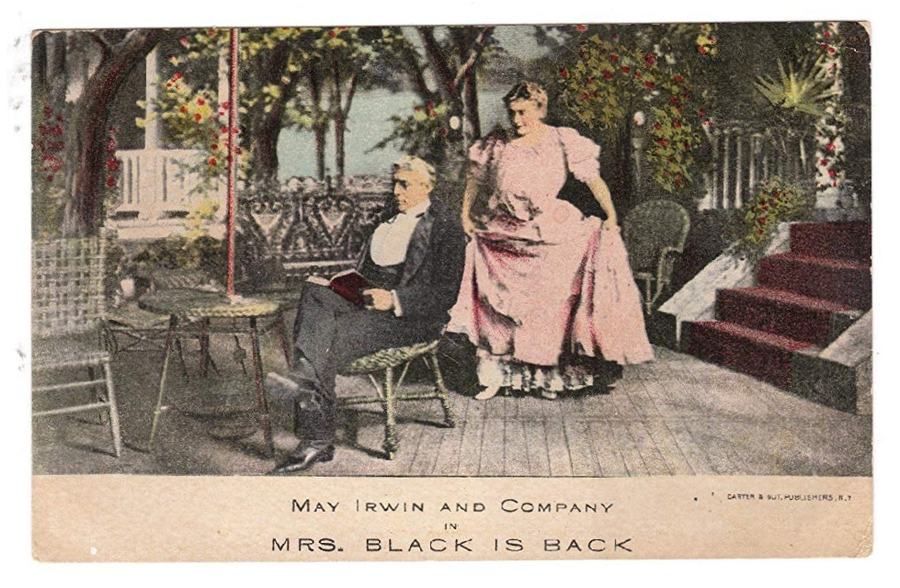
And a storm it is! John, with the impetuousness of youth, promptly squanders the money in a game of poker, issuing an I.O.U. for $400 to a Spaniard named Pedro, scribbled on the back of an envelope addressed to his unsuspecting mother. Pedro, with a single-minded determination, travels to America to collect his debt, setting the stage for a grand collision of creditors. Suddenly, Mrs. Black finds herself besieged on two fronts: Larkey, relentlessly pursuing his overdue payment with a persistence bordering on the comical, and Pedro, demanding recompense for John's gambling loss with an air of foreign menace that adds to the farcical tension. Her ingenuity is stretched to its absolute limit as she endeavors to keep these two relentless pursuers at bay, all while meticulously shielding her husband from the encroaching chaos. It's a masterclass in comedic timing, with Mrs. Black often just a hair's breadth away from total exposure, her expressions a delightful blend of panic and strained composure. The visual gags involving her attempts to literally hide or deflect these unwelcome visitors from the Professor are among the film's most memorable, showcasing the physical comedy prowess of the era.
Adding another layer of excruciating tension to Mrs. Black's already fragile world is her husband's unwavering moral stance. The dignified Professor Black, in a moment of grave pronouncement, reveals his absolute disdain for dishonesty, declaring that he "never forgives a liar." This revelation hangs like a Sword of Damocles over Mrs. Black, intensifying her frantic efforts to conceal her elaborate web of falsehoods. The dramatic irony here is exquisite, as the audience knows precisely how deep Mrs. Black's deceit runs, while the Professor remains blissfully, if a little naively, unaware. His character, while seemingly rigid, serves as the immovable object against which Mrs. Black's unstoppable force of comedic desperation must contend. This fundamental opposition of character traits fuels much of the film's humor and underlying anxiety.
Just as Mrs. Black's situation seems utterly untenable, fate delivers its most significant, and most amusing, blow. Young John, having fallen head over heels for a pretty girl in England, decides to follow her to America. A terse telegram announcing his imminent arrival in New York sends Mrs. Black into a fresh paroxysm of panic. The "Little Johnny" who should be ten is now a very real, very tall, very grown-up seventeen-year-old, about to appear on her doorstep, quite possibly with his valet in tow. The stage is perfectly set for the inevitable, uproarious unraveling of all her carefully constructed lies. The narrative, at this juncture, accelerates with a delightful urgency, propelling Mrs. Black from one desperate improvisation to the next. The audience feels the mounting pressure alongside her, eagerly anticipating the moment when the whole house of cards will come tumbling down.
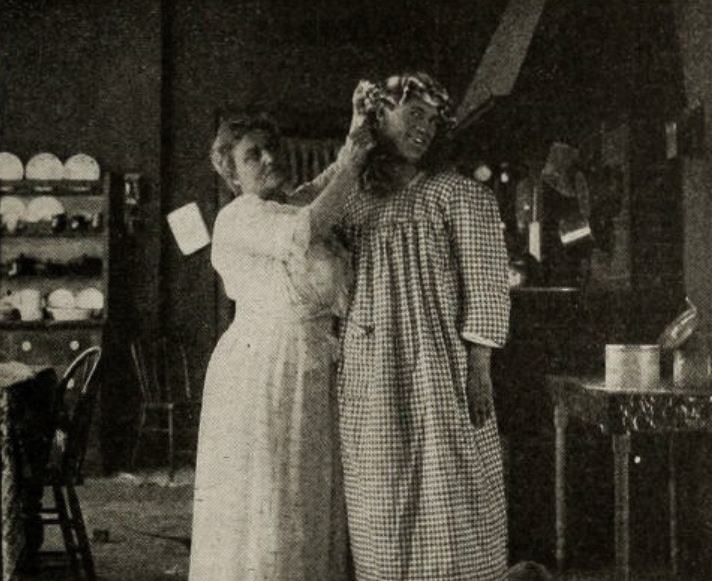
When John and his ever-loyal valet, Larry, finally make their grand entrance, the film truly hits its stride, transforming into a whirlwind of mistaken identities and frantic improvisations. Mrs. Black, a woman now operating purely on adrenaline and a desperate hope, presents Larry McManus not as a valet, but as the supposedly mythical "Aunt Prue's" husband. This audacious move is merely the prelude to John's own series of increasingly absurd disguises. First, he masquerades as a gas man, a fleeting attempt to explain his imposing presence. But the pièce de résistance arrives when he transforms into "Lizzie," the new cook. This particular charade provides some of the film's most memorable visual gags and physical comedy, as John, a tall, broad-shouldered young man, attempts to embody a demure female domestic. The sheer audacity of these deceptions, combined with Mrs. Black's increasingly strained efforts to keep her husband from noticing the obvious incongruities, creates a comedic crescendo that is both relentless and thoroughly entertaining. The art of silent comedy shines brightest in these sequences, relying on exaggerated movements, quick costume changes, and the actors' incredible ability to convey character and intent without a single spoken word.
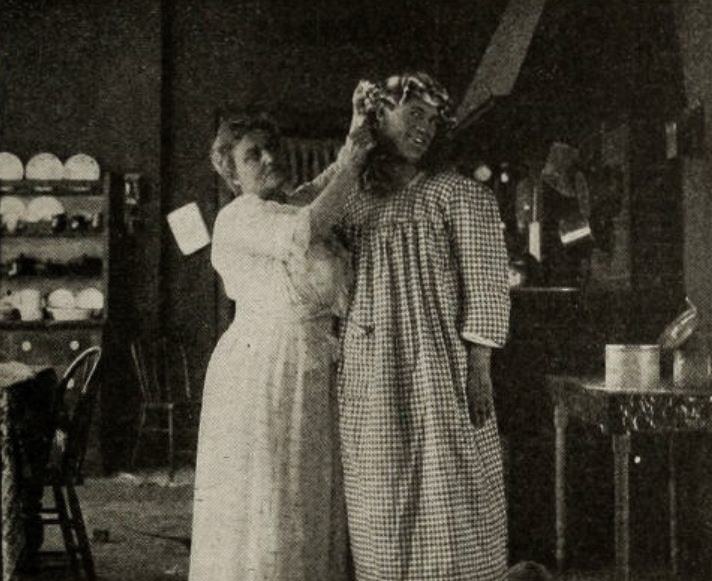
The film’s brilliance here lies in its commitment to the escalating absurdity. Each new lie demands another, more elaborate one, trapping Mrs. Black in a comedic prison of her own making. The audience is invited to revel in her predicaments, caught between sympathy for her plight and amusement at her increasingly desperate measures. This kind of elaborate deception, where characters assume false identities to navigate social or financial quandaries, was a popular trope in early cinema, often seen in comedies where societal norms and expectations were playfully subverted. While not a direct comparison in genre, the intricate plotting and the reliance on hidden identities might remind some viewers of the complex narratives found in early mysteries, albeit with a far lighter tone, such as the layers of concealment in The Mystery of the Yellow Room, though here, the stakes are purely domestic and farcical. The sheer energy of these scenes is infectious, a testament to the robust comedic sensibilities of the period.
Clara Blandick, as Mrs. Black, is nothing short of a revelation. Her performance is a masterclass in silent film acting, conveying a vast spectrum of emotions—from doting wife to panicked liar, from exasperated mother to desperate schemer—all through nuanced facial expressions and expressive physicality. She embodies the character with a warmth and relatability that makes her endless deceptions forgivable, even endearing. We root for her, even as we gasp at the audacity of her lies. Blandick’s Mrs. Black is not a malicious deceiver, but a woman driven by a desire to be loved and to protect her son, caught in a trap of her own making. Her frantic movements, her wide-eyed moments of panic, and her strained smiles are all perfectly calibrated for maximum comedic effect. It's a performance that truly carries the film, anchoring the escalating madness with a believable human core.
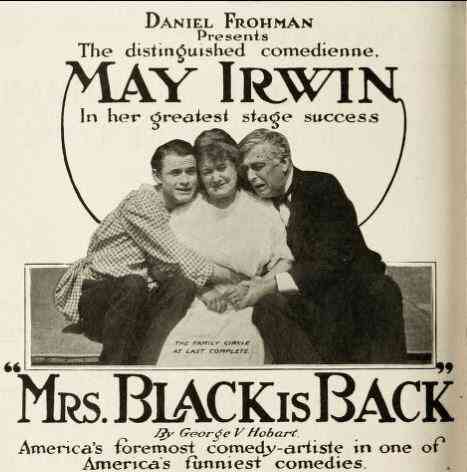
Cyril Chadwick, as Professor Black, provides an excellent foil. His dignified, somewhat oblivious demeanor perfectly contrasts with Mrs. Black's frenetic energy. He embodies the stern, principled husband whose unsuspecting nature makes Mrs. Black's task all the more challenging and humorous. Chadwick’s portrayal is subtle yet effective, his reactions to the unfolding chaos often a source of understated humor, particularly when he is just missing the obvious truth. James Hester, as the strapping John, brings a youthful exuberance and a touch of unwitting chaos, particularly in his various disguises. His physical presence, so contrary to the "Little Johnny" persona, is a constant source of visual comedy. The supporting cast, including Charles Lane as the perpetually confused Larry McManus and Elmer Booth as the determined Pedro, round out a strong ensemble, each contributing to the film's vibrant comedic tapestry. May Irwin, though her role details aren't explicitly provided in the plot summary, likely adds to the period charm and character dynamics, typical of the era's robust theatrical talent transitioning to the screen. The chemistry among the principal players is evident, transforming what could be a simple sequence of events into a truly engaging and memorable experience. Their ability to communicate complex emotions and comedic timing without dialogue is a testament to their craft and the directorial vision that brought this lively narrative to life.
Beyond the laughs, Mrs. Black Is Back offers intriguing glimpses into the societal anxieties and expectations of its time. Mrs. Black’s initial deception about her age speaks volumes about the pressures on women to maintain youthfulness, particularly in a new marriage. The fear of not being "young enough" or "attractive enough" for a new, adoring husband is a deeply relatable, albeit problematic, concern that transcends eras. Her attempts to reduce her figure further underscore these societal ideals of feminine beauty, reflecting a pervasive cultural emphasis on appearance. The film, in its comedic way, subtly critiques these pressures, showing the absurd lengths to which individuals might go to conform, and the inevitable complications that arise from such superficial pursuits.
The theme of identity is also central, explored through Mrs. Black's manufactured persona and John's various disguises. What does it mean to be true to oneself when external pressures demand a different facade? The film suggests that while deception can lead to temporary chaos and discomfort, authenticity, even when painful, is ultimately the path to genuine connection and forgiveness. The Professor's initial declaration of never forgiving a liar sets up a powerful moral challenge that the narrative must ultimately resolve. This exploration of personal truth versus public perception gives the film a surprising depth beneath its lighthearted surface. This type of character-driven moral dilemma, wrapped in a comedic package, distinguishes it from simpler slapstick fare, inviting the audience to ponder the human condition even as they chuckle.
The inevitable moment of truth arrives, as all carefully constructed facades must eventually crumble. The fatal truth, as the plot succinctly puts it, "at last comes out." One can only imagine the theatricality of this revelation in a silent film, with wide-eyed stares, dramatic gestures, and perhaps a well-placed title card to deliver the devastating blow. The penitent Mrs. Black, overwhelmed by the exposure of her lies and the potential loss of her beloved husband, makes a desperate, impulsive decision: she leaps into an automobile, about which she understands nothing, and speeds away. This act of frantic escape leads to a spectacular, albeit comically rendered, crash. The visual spectacle of a runaway car, particularly in the context of early cinema, would have been quite thrilling and provided a dramatic punctuation to the preceding comedic build-up.
The Professor, witnessing the apparent destruction, believes his wife to be gone forever, a consequence of her deceit. His subsequent relief upon learning that she escaped injury is profound and immediate. In that moment, the strict adherence to his "never forgives a liar" principle dissolves under the overwhelming tide of love and relief. The realization that "Mrs. Black is Back"—physically unharmed, and perhaps more importantly, truly present—allows him to readily forgive her elaborate deception. He welcomes his son John into their lives, accepting the reality he previously refused to acknowledge. This resolution, while perhaps a touch convenient, delivers a satisfying emotional payoff, emphasizing the power of love and forgiveness over rigid principles. It's a heartwarming conclusion to a chaotic journey, reinforcing the idea that genuine affection can overcome even the most elaborate of deceptions. This thematic arc, from deception to revelation and ultimate reconciliation, is a classic narrative structure, akin to many tales of redemption and understanding found across various genres, even in dramatic works like The Redemption of White Hawk, albeit with a vastly different tone and context. The final moments of the film beautifully tie together the threads of the narrative, leaving the audience with a sense of warmth and satisfaction.
Mrs. Black Is Back stands as an engaging example of early cinematic comedy, showcasing the genre's nascent techniques and enduring appeal. The film's reliance on physical humor, exaggerated expressions, and the rapid pacing of events to build comedic tension is characteristic of the era. It's a reminder of how effectively silent films could tell complex, emotionally resonant stories without a single spoken word. The screenplay by George V. Hobart and Eve Unsell is remarkably tight, with each plot point carefully designed to escalate the comedic predicament, demonstrating a sophisticated understanding of narrative construction for the screen. Their ability to craft such a convoluted yet comprehensible narrative, purely through visual storytelling and intertitles, is a remarkable achievement.
For modern audiences, viewing Mrs. Black Is Back offers a fascinating window into the past, not just into the history of film, but into the social mores and anxieties of the early 20th century
IMDb 5.5
1931
Community
Log in to comment.