DbcultAccessing Vault...
Cult Review
Senior Film Conservator
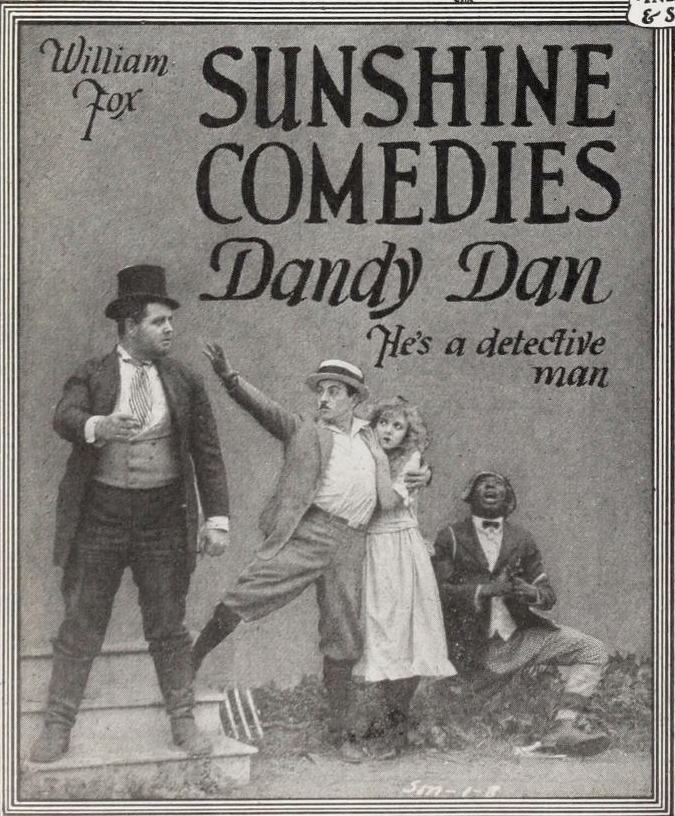
To watch Dandy Dan: He's a Detective is to witness the very birth of the procedural comedy, a genre that would eventually find its footing in the works of Buster Keaton, yet here it exists in a raw, primal state. The film, starring the indomitable Sidney Smith, operates on a frequency of pure motion. Unlike the atmospheric tension found in Crooked Streets, this picture eschews the shadows for the bright, frantic energy of the chase. It is a testament to the era's obsession with the 'moving' part of moving pictures.
The narrative architecture is deceptively simple, yet it carries a weight of historical significance. We see Dan, a character who fancies himself a master of disguise and deduction, though his primary talent seems to be surviving his own incompetence. This juxtaposition of ego and ability creates a comedic friction that drives the film forward at a breakneck pace. While The Original Movie might have explored the foundational tropes of the medium, Dandy Dan subverts them by poking fun at the burgeoning detective craze of the 1910s.
Sidney Smith’s performance is nothing short of a revelation in physical theater. His body is a tool of narrative expression, capable of conveying more through a twitch of the shoulder than most modern actors do with a monologue. There is a specific scene where Dan attempts to tail a suspect through a crowded marketplace; the way Smith weaves through the throng—part dancer, part disaster—is a masterclass in blocking. It lacks the melodrama seen in The Blood Barrier, opting instead for a levity that feels remarkably modern.
One cannot discuss Smith without acknowledging his specific brand of 'dandyism.' His costume—a sharp suit that seems to shrink and expand with his movements—serves as a visual metaphor for the film's tonal shifts. He is at once the sophisticated investigator and the bumbling fool. This duality is what makes the film so enduring. It doesn't ask the audience to believe in Dan's competence; it asks them to marvel at his resilience. In this regard, the film shares a spiritual DNA with The Kangaroo, another piece that relies heavily on the physical prowess of its lead to carry the narrative burden.
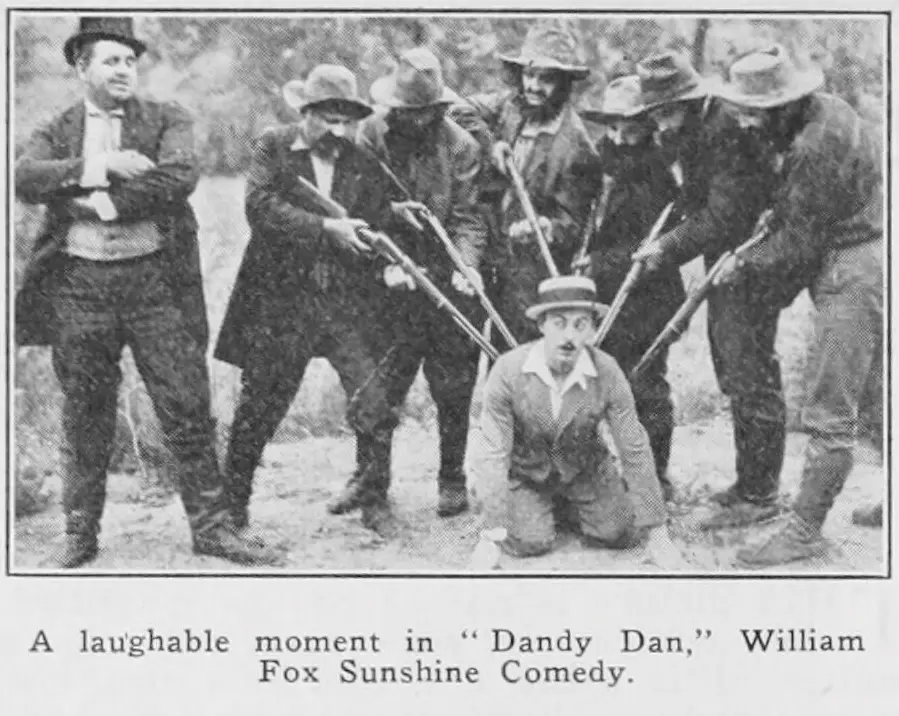
The cinematography in Dandy Dan: He's a Detective is emblematic of the transition from static stage-like shots to a more dynamic visual language. The camera, while still largely stationary, begins to experiment with depth of field in ways that were revolutionary for the time. We see characters moving from the deep background into the extreme foreground, creating a sense of immersion that was absent in earlier works like Romeo's Dad. The framing is tight, focusing on the minutiae of Smith's expressions, capturing the 'flicker' of thought across his face.
The use of practical effects and location shooting gives the film a gritty, tactile quality. The streets feel alive, filled with the incidental chaos of early 20th-century life. This realism provides a grounding force for the more absurd elements of the plot. When compared to the stylized, almost theatrical sets of Hands Across the Sea, Dandy Dan feels like a documentary of a dream. It captures the zeitgeist of a world in flux, where the old ways of the Victorian detective were being replaced by the frenetic energy of the industrial age.
It is fascinating to place Dandy Dan alongside contemporary dramas like The Banker's Daughter or Shirley Kaye. While those films sought to evoke deep emotional resonance through tragedy and social commentary, Dandy Dan seeks a visceral, immediate reaction: laughter. Yet, there is a sophistication here that is often overlooked. The timing required for Smith's gags is as precise as any dramatic beat. The film understands the rhythm of tension and release, a concept that The Fox Woman uses for suspense, but Dan uses for punchlines.
Furthermore, the film’s exploration of identity—Dan’s various disguises—mirrors the thematic concerns of By Right of Possession. Both films deal with the idea of who we are versus who we pretend to be, though Dan’s pretensions are played for laughs. This thematic depth elevates the film from mere slapstick to a satirical commentary on the performative nature of authority. Even in an animated context, like Felix in the Bone Age, we see this same impulse to use a central, iconic figure to navigate a chaotic world, proving that the archetype of the 'bumbling hero' is universal across mediums.
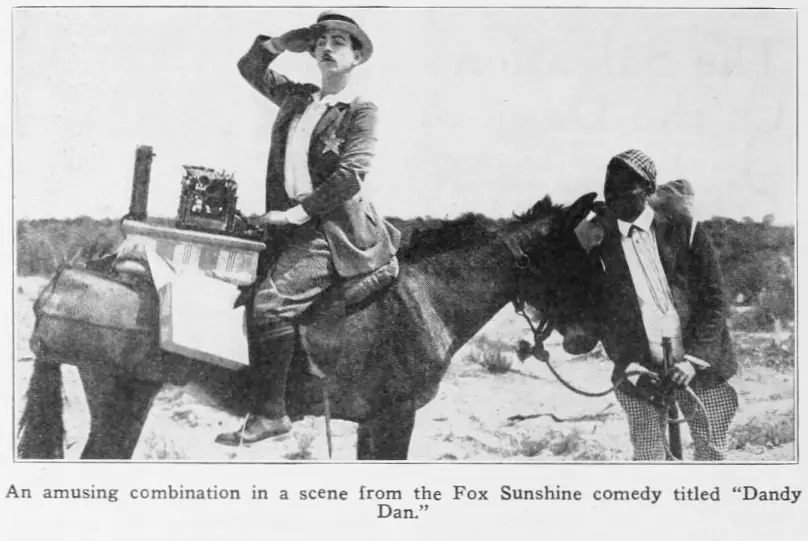
While Dandy Dan is quintessentially American in its energy, one can detect the faint echoes of European cinematic sensibilities. There is a touch of the whimsical surrealism found in Varázskeringö and the stark, almost existential isolation seen in Udenfor loven. Dan is an island of eccentricity in a sea of normalcy. This isolation is what makes his character so sympathetic; he is a man out of time, trying to apply logic to a world that is inherently illogical.
The film’s pacing also bears mention. It lacks the languid, contemplative speed of The Social Secretary, opting instead for a staccato rhythm. Every scene is a beat, every beat is a movement, and every movement is a revelation. This rapid-fire approach to storytelling would become a hallmark of the American style, yet here it is being refined and perfected. It is the 'ABC' of cinematic construction, much like the instructional yet narrative tone of The ABC of Love.
Reviewing a film of this vintage requires a certain degree of historical empathy. We must look past the grain and the occasional frame jitter to see the brilliance of the composition. The restoration of Dandy Dan: He's a Detective allows us to appreciate the subtle interplay of light and shadow on Sidney Smith’s face—a detail that would have been lost in poorer prints. The way the light catches his monocle or the sheen of his polished shoes is not just a technical achievement; it is a narrative choice that highlights his character's vanity.
In the grand tapestry of film history, Dandy Dan might be a small thread, but it is a brightly colored one. It bridges the gap between the primitive shorts of the late 1890s and the sophisticated features of the 1920s. It is a film that refuses to be ignored, demanding our attention through its sheer audacity and charm. As we look back at it from the vantage point of the 21st century, we see not just a relic, but a living piece of art that still has the power to surprise and entertain.
Ultimately, Dandy Dan: He's a Detective is a celebration of the human spirit in all its flawed, hilarious glory. Sidney Smith gave us a character that is timeless—a man who fails upward with such style that we cannot help but cheer for him. The film’s legacy is found in every detective who has ever tripped over a clue or every hero who has ever won the day through sheer luck. It is a cornerstone of comedy, a pillar of silent cinema, and a joy to behold. It reminds us that even in the dark, even without words, the human story is one of movement, laughter, and the eternal search for the truth—no matter how many times we fall down along the way.
Review by the Cinematic Chronicler – A deep dive into the archives of the silver screen.
IMDb 6.8
1934
Community
Log in to comment.