DbcultAccessing Vault...
Cult Review
Senior Film Conservator
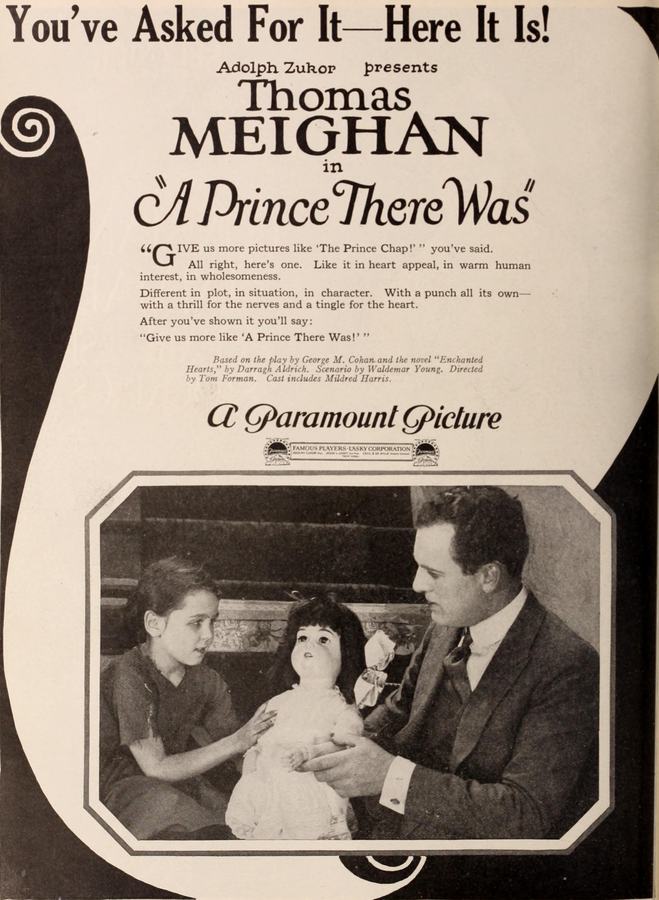
In the early 1920s, when Hollywood was still grappling with the transition from stage-bound melodrama to cinematic storytelling, A Prince There Was emerged as a peculiarly ambitious hybrid—part fairy-tale parable, part social satire, and wholly a product of its time. Directed with a painterly eye for chiaroscuro by Waldemar Young, the film’s narrative pivots on the collision of two worlds: the glittering, hollow decadence of Charles Edward Martin’s existence and the embittered resilience of Katherine Woods, whose family’s downfall is both a personal wound and a societal indictment.
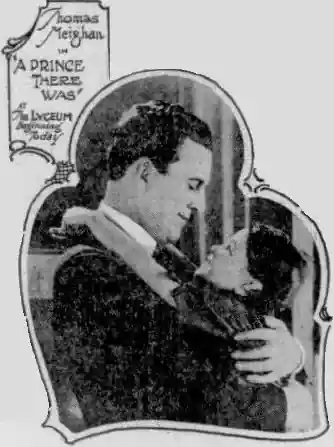
Thomas Meighan’s performance as Martin is a masterclass in understated artifice. The actor, known for his comedic timing, strips away the caricature of the wealthy idler and instead imbues Martin with a tragicomic vulnerability. His initial indifference to Katherine’s plight—rooted in ignorance rather than malice—becomes a narrative hinge, allowing the film to explore the corrosive nature of inherited privilege. When Martin dons the metaphorical crown of the 'Prince,' the audience is forced to question whether this is a redemptive act or a desperate evasion of his own complicity in the world that ruined Katherine’s father.
Mildred Harris, as Katherine, delivers a performance that oscillates between icy restraint and simmering passion. Her character’s journey from desperation (writing magazine stories to survive) to reluctant dependence on Martin’s patronage is rendered with aching authenticity. The film’s most poignant moments arise from the tension between her intellectual pride and the societal constraints that force her to accept Martin’s 'aid' under false pretenses. In one particularly striking scene, Katherine’s voice trembles as she reads her own words aloud to a disinterested editor—a visceral reminder of the erasure of female authorship in this era.
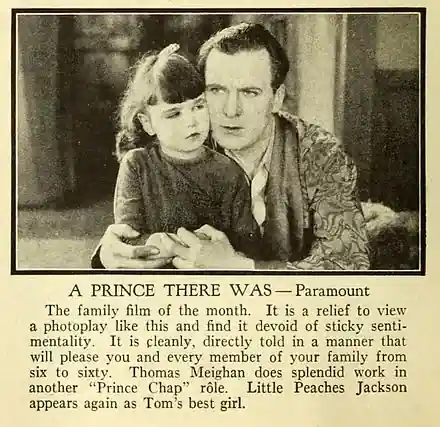
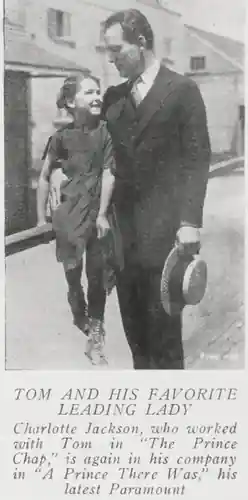
Comfort Brown, portrayed by Charlotte Jackson, is the film’s unsung hero. Her role as the pragmatic realist who facilitates Martin’s transformation into a literary savior is both a narrative device and a critique of the underappreciated labor of working-class women. The scene where Comfort confronts J.J. Stratton—Arthur Stuart Hull’s smirking embodiment of financial predation—is a microcosm of the film’s central conflict. Hull’s Stratton, a spider at the center of a web of financial manipulation, is both comically grotesque and chillingly plausible, a reminder that villainy often wears the mask of respectability.
The film’s visual language is equally compelling. The boardinghouse, where Katherine and Comfort reside, is rendered as a chiaroscuro of hope and despair: the flickering gaslight casting shadows on peeling wallpaper, the cramped rooms echoing with the sound of typewriters and whispered conversations. When Martin arrives, his entrance is framed in a long, slow push-in, the camera gliding past dusty books and half-finished paintings—metaphors for the stasis of Katherine’s life. The contrast between this setting and Martin’s opulent bachelor pad is stark, but the film avoids crude symbolism. Instead, it uses mise-en-scène to suggest that both spaces are prisons of a sort, just of different kinds.
One cannot discuss A Prince There Was without acknowledging its debt to the fairy-tale tradition. The 'prince' motif is both a narrative convenience and a thematic anchor. Martin’s adoption of this identity is a form of self-mythologizing, a way to distance himself from the man he was while pretending to be the savior Katherine needs. Yet the film is too self-aware to allow this trope to go unchallenged. Katherine’s eventual rejection of Martin’s 'princely' persona—when she discovers his true role in the financial ruin of her father—is a devastating denouement that forces the audience to confront the fragility of all identities, especially those constructed for others.
The film’s climax, wherein Stratton is exposed and the lovers are reunited, is a masterstroke of emotional economy. Unlike the operatic finales of Douglas Fairbanks swashbucklers, this resolution is stripped of grandeur. The courtroom scene, where evidence of Stratton’s schemes is laid bare, is conducted in silence—no triumphant music, no dramatic speeches. Instead, the victory is implied in the way Katherine and Martin lock eyes across the room, the unspoken understanding that their bond transcends the petty deceptions that surrounded it. It’s a quietly radical gesture in a genre often obsessed with spectacle.
Comparisons to The Purple Lady are inevitable, given both films’ exploration of female agency. However, A Prince There Was distinguishes itself by focusing on the intersection of class and identity. Similarly, Her Life and His shares thematic similarities in its treatment of economic exploitation, but lacks the nuanced character dynamics that elevate this film. The use of intertitles is also noteworthy: Young and Cohan’s script avoids the florid language common in silent films, opting instead for terse, often poetic dialogue that mirrors the characters’ emotional states.
For modern audiences, the film’s moralizing tone may feel anachronistic, but its exploration of how systems of power (financial, gendered, institutional) warp individual lives remains urgent. The subplot involving Katherine’s attempts to publish her stories is a prescient commentary on the barriers faced by female writers—a theme that echoes in later works like Wolves of the Rail, though with far less subtlety.
Technically, the film is a marvel of early cinema. The use of deep focus in the scene where Martin reviews Katherine’s manuscripts is particularly striking, the background filled with shelves of books that seem to press in on the characters, a visual metaphor for the weight of literary expectation. The editing, while occasionally choppy by today’s standards, serves the narrative’s urgency. There’s a kinetic energy to the film that belies its silent medium—a quality that must have been even more pronounced in its original theatrical run, where the live orchestra’s score would have heightened the tension.
Ultimately, A Prince There Was is a film that resists easy categorization. It is neither a pure melodrama nor a strict social drama, but a hybrid that embraces paradox. Martin’s redemption is ambiguously framed—he may have bought the magazine to publish Katherine’s stories, but the act itself is tainted by his privilege. The film does not offer easy answers, instead posing questions about the ethics of patronage, the performative nature of selfhood, and the cost of idealism in a corrupt world.
In an era where silent films are often dismissed as relics, A Prince There Was stands as a testament to the medium’s narrative and emotional power. Its themes of identity, betrayal, and redemption are as resonant today as they were a century ago. For scholars of cinema history, it is an essential text; for general audiences, a rediscovery of a forgotten classic that rewards careful attention with its layered storytelling and haunting performances.
IMDb 4.4
1933
Community
Log in to comment.