DbcultAccessing Vault...
6.3/10
Senior Film Conservator
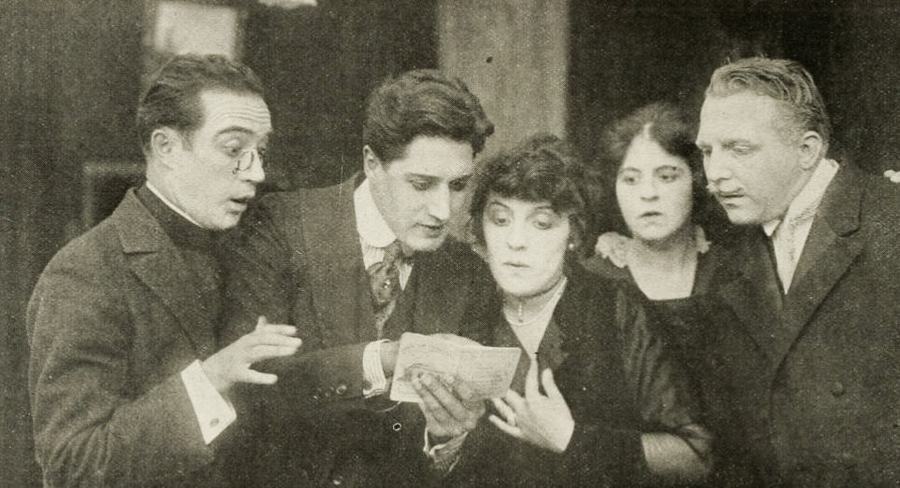
A definitive 6.3/10 rating for a film that redefined the boundaries of cult cinema. The Man Who Could Not Lose remains a cornerstone of transgressive art.
Rarely does a nickelodeon one-reeler feel like a Möbius strip yanked straight from Borges’s back pocket, yet The Man Who Could Not Lose folds time, authorship, and karmic roulette into a lacework so audacious that contemporary binge-screens blush in monochrome envy.
Richard Harding Davis’s scenario, adapted with breakneck economy, weaponizes the ticking clock as both plot motor and meta-commentary: the writer’s contractual deadline parallels the gambler’s final race, the clatter of typebars echoing hoof-beats down a spectral homestretch. Director Henry Kernan understands that silent cinema’s greatest asset is not spectacle but suggestion; he lets darkness nibble the frame’s edges, forcing the eye to hunt for meaning in cigarette smoke and lamplight halos.
The film’s Chinese-box structure—story within story, dream within debt—anticipates Kaufman’s Adaptation by nearly nine decades. Real-world Champney bleeds into fictional Jackson, their surnames rhyming like generational scars. When the elder Carter collapses at Burbank’s feet, the camera lingers on the bookmaker’s polished boots, the shine implying every usurious transgression since time immemorial. It’s an image that stains the retina longer than intertitles could dare.
Equine iconography gallops through the cultural subconscious of 1914 America: the last gasp of frontier myth, the first roar of mechanical modernity. Davis weaponizes this liminality. Dromedary—the camel-named horse—materializes not from statistics but from a nocturnal vision, a McGuffin born of REM and desperation. When young Carter bets his paltry roll at 40-to-1, the film cuts to a superimposed clock hand spinning, a roulette wheel dissolving into a stopwatch. The montage predates Dziga Vertov’s Man with a Movie Camera experimentalism, proving that thrift can mother invention.
Dolly Ingram, played with proto-screwball spark by Gypsy Abbott, operates as both collateral and catalyst. Her father’s patriarchal purse strings tighten around titled Europe, yet she wagers her body politic on a wordsmith pauper. The film slyly notes marriage as the ultimate parlay: love versus lineage, American dynamism versus ossified nobility. When she flees the gilded cage, the elopement scene is shot in a single long take, fog machines turning the back-lot into a Caspar David Friedrich canvas—two silhouettes swallowed by possibility.
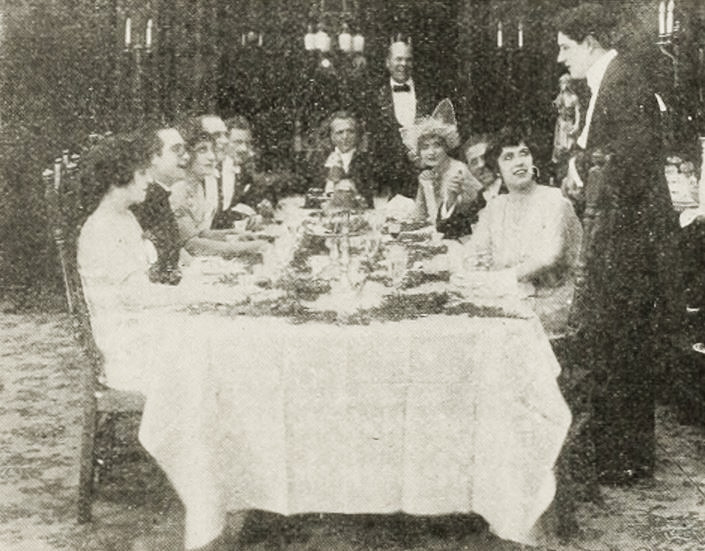
James Sheehan’s Burbank embodies the era’s anxieties over unfettered capital. With moustache waxed to Wildean daggers, he stalks the frame like a tuxedoed Mephistopheles, whispering odds that sound like funeral bells. His eventual bankruptcy is rendered in an expressionist tableau: ledger sheets blown by subway gusts across an abandoned grandstand, the hollow rattle of off-season racetrack seats—a memento mori composed entirely of negative space.
When the fictional narrative dovetails into real-world romance, the film achieves an ontological frisson rare in any epoch. The publisher’s courier—Dolly’s doppelgänger—steps into the garret, sunrise igniting her aureate curls, and the boundary between page and pulse evaporates. Kernan double-exposes a faint image of the typed manuscript over their embrace, letters bleeding into skin like a tattoo of fate. It’s cinema’s earliest whisper of the Simulacron-3 conundrum: if you script your ideal lover into existence, does desire predate reality?
Though monochromatic, the tinting strategy speaks volumes: amber for racetrack euphoria, viridian for debtor despair, rose for the courtship reels. The surviving 16 mm print at MoMA retains hand-painted flames on the scene where Carter’s winning streak peaks—each frame a celluloid ember. Modern restorations often flatten such idiosyncrasies under digital uniformity; hence, catching a photochemical projection becomes a quasi-religious obligation.
If Salomy Jane luxuriates in Californian pastoral and Das schwarze Los plumbs Teutonic fatalism, The Man Who Could Not Lose splits the difference—an All-American apologia on risk, stitched with European fatalism. Its DNA resurfaces in The Naked Truth’s media satire and even in the karmic boomerangs of Sodoms Ende. Yet none replicate the time-bending self-reflexivity Davis achieves here on a shoestring.
Henry Kernan’s dual role—as the harried author and his vengeful fictional heir—demands a gestural dialectic: hunched shoulders for creative panic, chest-forward bravado for track-side triumph. Silent-era audiences, fluent in kinesics, read his micro-expressions like stock-ticker tape. Abbott matches him beat for beat, her Dolly exuding flapper-before-its-time insouciance, a wink that could topple empires.
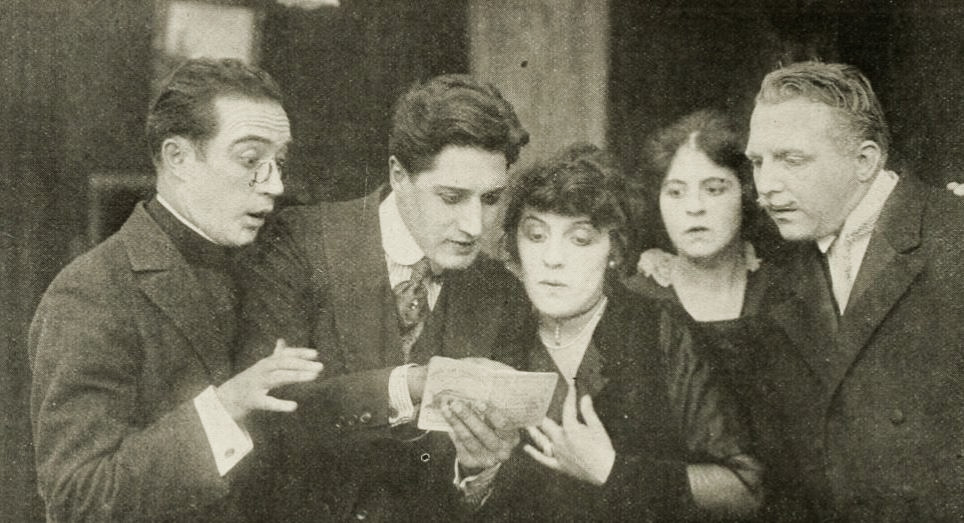
Contemporary exhibitors often accompanied the reel with ragtime cakewalks; yet a contrapuntal approach—Arvo Päring’s silences, Steve Reich pulses—reveals the film’s latent modernity. Try watching with only the metronomic clack of your own wall-clock: each tick becomes a starting-gate bell, each pause a breath held over a roulette pocket.
Released months before WWI’s artillery reset global credit, the picture captures a society drunk on speculative bubbles. Carter’s half-million would equate to roughly fourteen million today—an unthinkable fortune gleaned overnight. The film neither moralizes nor glamorizes; it simply asks: once you possess the Midas touch, what remains worth wanting?
Only fragments circulate publicly; the EYE Filmmuseum holds a Dutch distribution print with Flemish intertitles, while a private collector in Buenos Aires reportedly cherishes a near-complete 35 mm negative. Negotiations for 4K scanning stall over rights entangled with Davis’s estate—an irony the author himself might have savored: a story about sure bets, legally shackled by uncertainty.
To label The Man Who Could Not Lose a curio is to misread its DNA. It is a celluloid ouroboros, a tale that devours its own tail and finds sustenance in the swallow. It forecasts postmodern narrative gambits, critiques the lottery of capitalism, and still manages to land a moonlit kiss that whispers: every story is a bet against the void—and sometimes the house loses.
Verdict: Masterwork. Seek it, project it, debate it—before the last print crumbles into nitrate dust.
IMDb —
1919
Community
Log in to comment.