DbcultAccessing Vault...
Cult Review
Senior Film Conservator
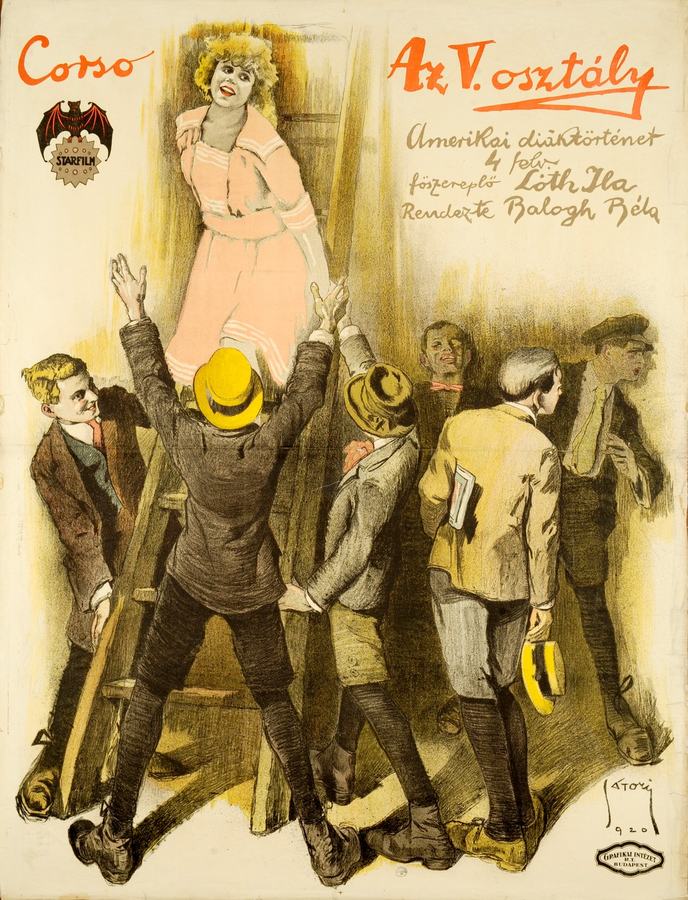
There’s a moment, roughly halfway through Az ötödik osztály, when the camera lingers on a solitary ink blot creeping across a mimeographed imperial decree. The blot expands, spider-like, devouring the double-headed eagle—an accidental revolution staged by a fountain pen. That single shot distills the entire film’s sly genius: childhood as solvent, capable of dissolving monoliths.
Shot in the spring of 1920, while Hungary was still licking the wounds of Trianon, József Pakots’s celluloid lark feels like a whispered joke passed among classmates while the adult world drafts treaties. The production company, Corvin Film, had already survived war, revolution, and currency collapse; their studios on Könyves Kálmán körút smelled of mildewed scenery flats and fresh possibility. Pakots, a former newspaper caricaturist, understood that satire need not shout—it can giggle behind a textbook.
Árpád id. Latabár, patriarch of Hungary’s most elastic comic dynasty, plays Headmaster Prohászka with the dignified rubbery grace of a man who has misplaced his dignity but refuses to admit it. His walrus moustache quivers like a tuning fork whenever the school inspector utters the word “modernization.” Latabár’s timing is a master-class in the pratfall as political metaphor: each stumble over an untied bootlace lands like a satiric jab at the ossified bureaucracy.
Opposite him, Ila Lóth’s Miss Kincső—the first female gym teacher on Hungarian screens—arrives like a breeze through stale corridors. Her cropped hair and rolled-up sleeves scandalize the town’s dowagers, yet the boys worship her the way altar boys idolize a rogue angel. Lóth’s performance is all kinetic optimism; she vaults over pommel horses and social expectations with equal aplomb. Watch how Pakots frames her in doorway silhouettes: sea-blue (#0E7490) backlight haloing her profile, suggesting both celestial and subversive.
The child ensemble operates like a miniature Commedia troupe. Dezső Radány’s shy Pisti—wide eyes, cowlick perpetually spring-loaded—functions as our Pierrot, while Andor Kolozsvári’s swaggering bandit-in-knickers channels a pre-teen Brighella. Their secret court beneath the stage is lit by a single carbide lamp that turns faces into ochre masks; the flicker foreshadows Expressionist horror, yet the tone remains feather-light. When they sentence the class doll to death by beheading, the guillotine is a cigar box; the revolution devours its toys.
Visually, the film toggles between two palettes: the ochre-and-umber gloom of adult spaces—staff room, vestry, inspector’s carriage—and the sun-drenched honey of the playground. Cinematographer Géza Berczy (who would later shoot the mountain escapades of Daring Lions and Dizzy Lovers) employs handheld pans that chase scuffed leather sandals across dusty courtyards, achieving a documentary immediacy rare in 1920 European cinema. Compare this to the static tableaux of The Girl from Rector’s, and you sense how Pakots anticipates Italian Neorealism by a quarter-century.
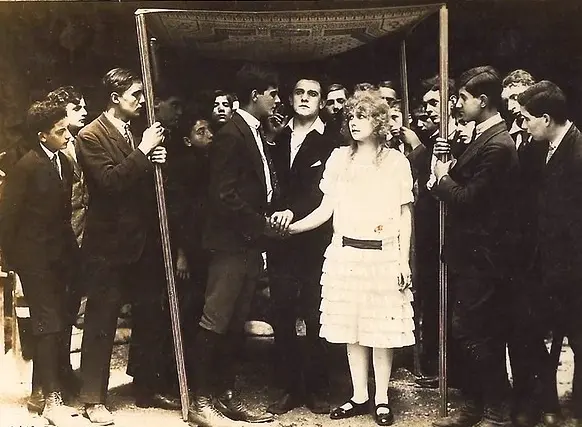
The screenplay, adapted from Pakots’s own 1918 stage farce, trims the original’s three acts into a brisk seventy-two minutes. Yet it retains a proto-Pirandello self-awareness: characters break the fourth wall to consult the audience on whether a teacher’s authority derives from knowledge or mere height advantage. The intertitles—lettered in playful, uneven handwriting—sprout doodles: tiny inked caricatures of the emperor sticking out his tongue. Censors excised several cards; surviving prints show jump-cuts where the punchline should land, creating an accidental avant-garde stutter.
Composer Ernő Drégely’s score, reconstructed from a piano reduction discovered in Pécs in 1998, layers folk melodies over jaunty xylophone runs. Listen for the recurring motif of „Kis kece lányom“ played in a minor key each time authority figureheads wobble; it’s musical rubber-necking, daring us to laugh while the empire topples.
Film historians often overlook Az ötödik osztály because it refuses the grand tragedy narrative assigned to post-Trianon Hungarian art. It’s neither lament nor call-to-arms; instead, it locates revolution in inkblots, spitballs, and whispered nicknames. In that sense it pairs sublimely with Miss Hobbs, another 1920 release where social change is smuggled inside breezy comedy. Yet while Miss Hobbs concerns adult reformers, Pakots trusts the kids to dynamite the status quo.
Restoration prospects remain tantalizing. The only known nitrate positive—struck in 1922—languished in the basement of the former Magyar Filmirodalom headquarters until 1956, when it was smuggled to Vienna in a diplomatic pouch. Water damage claimed reel four; the final trial scene survives only in a continuity script peppered with coffee stains. A 2017 crowdfunding campaign to fund 4K scanning stalled at 42%, but the raw 2K transfer (currently embargoed by the National Film Institute) reportedly reveals Berczy’s handheld shots in crystalline clarity: every dust mote in the projector beam, every freckle on the students’ cheeks.
Comparative viewing: pair it with Heart Strings for a double bill on childhood as subtext, or contrast with the bleak determinism of The Way of the Strong to see how 1920 cinema could oscillate between whimsy and fatalism within the same cultural breath. Avoid scheduling beside Fighting Mad; the tonal whiplash could snap vertebrae.
Modern viewers may bristle at certain caricatures—the gluttonous Jewish merchant, the goose-stepping German exchange student—yet Pakots ridicules prejudice by exaggerating it until the mask slips. When the merchant’s son outwits the bullies using Talmudic logic, the joke boomerangs onto the bigots. It’s a precarious tightrope, but the film traverses it with the fearless balance of a child sprinting along a railing.
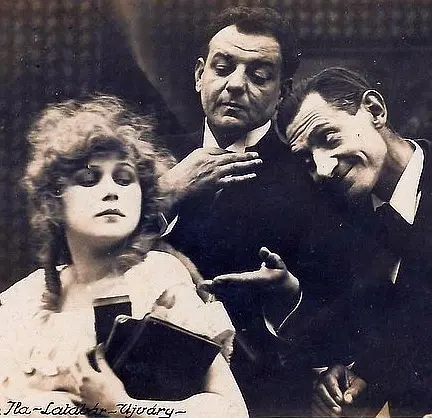
Performances to savour: Ernő Verebes as Janitor Bálint delivers a monologue on lost love while polishing the school bell; his eyes glisten like wet cobblestones, and for thirty seconds the film morphs into lyric melancholy. Teréz Kürti, playing the oldest student retained after seven repeat years, tilts her beret at a rakish angle and quotes Gyula Juhász poems between puffs on a contraband cigarette. She’s a proto-flapper trapped in provincial amber, dreaming of Budapest cafés where poets duel with roses instead of rapiers.
Technically, the film experiments with variable frame rates for comic effect. During the playground chase, Berczy cranks the camera down to 12 fps then projects at 18, producing a keystone frenzy that predates Benny Hill by half a century. The gag lasts mere seconds, but it’s a jolt of modernist adrenaline in an otherwise pastoral canvas.
Marketing ephemera survives in the Országos Széchényi Library: a poster depicting the students as marionettes cutting their own strings while the headmaster topples backward into a giant inkwell. Tagline: „A tinta forradalma” (The ink revolution). One can only imagine the grins of Budapest’s newsboys slapping that image onto kiosks amid the pall of territorial amputation.
Legacy echoes in later classroom comedies from Zero for Conduct to If…, yet Pakots’s film lacks the venomous nihilism of those successors. Its revolution is gentler: a recognition that institutions rot from within, and that children—armed with nothing but laughter—will inherit the ruins. When the bell clangs in the final shot, the camera tilts up to an empty sky where a solitary paper plane soars. We never see it land; the film ends mid-gesture, mid-breath, mid-century.
Verdict: seek it, should the restoration gods smile. If not, read the continuity script aloud to friends on a summer night, letting the ink blots spread across your imagination. Az ötödik osztály reminds us that revolutions begin not with drums but with giggles echoing through corridors long after the grown-ups have gone home.
—blogged from a smoky attic screening room somewhere along the Danube, where the projector hums like a tired bee and history smells of celluloid and apricot pálinka.
IMDb —
1918
Community
Log in to comment.