DbcultAccessing Vault...
6.3/10
Senior Film Conservator
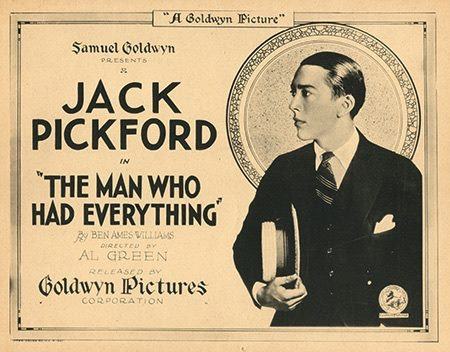
A definitive 6.3/10 rating for a film that redefined the boundaries of cult cinema. The Man Who Had Everything remains a cornerstone of transgressive art.
A champagne-cork universe pops, and every bubble is a planet labeled ‘More.’
There are films you watch; there are films that watch you. Then there is The Man Who Had Everything, a 1925 silent that slithers off the screen and installs itself behind your corneas like a retinal stain. Viewed today, it feels less like antique entertainment than like a ransom note from the collective unconscious, written in perfume, gasoline, and the iodine of old film stock.
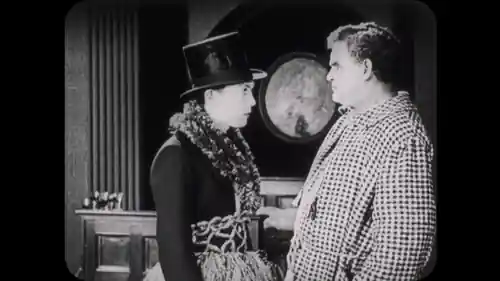
The plot, skeletal on paper, becomes a Möbius strip in the mind: Harry Bullway—played by Carl Gerard with the louche grace of a man who has never opened a door for himself—wants for nothing except the next heartbeat of novelty. His desires are so frictionless they skate on their own meltwater. When he almost flattens a blind beggar (Will Machin, face like a roadmap of every mile society forgot), the narrative tilts from social melodrama into something closer to medieval allegory. The beggar’s curse—“May you always have everything that you want”—sounds at first like winning lottery numbers, until you realize it is a life sentence without parole.
Director Arthur F. Statter, working from a Ben Ames Williams short story, refuses to show the curse as CGI fireworks or Expressionist shadowplay. Instead, he weaponizes continuity itself. Harry lifts a cigarette; a valet materializes with a lit match. He yawns at midnight; dawn bullies its way through the curtains. Even the intertitles grow gluttonous, swelling from terse declarations to baroque paragraphs that seem to preen on their own calligraphy. The film’s form enacts its theme: abundance as assault.
Gilded handcuffs, twenty-four-karat.
Jack Pickford, billed third but radiating main-character energy, plays Harry’s college chum Dick Merriwell, a role that could have been a thankless foil. Instead, Pickford injects a jittery pathos—half worship, half terror—into every glance at his old friend. Their scenes together feel like two versions of the same man shaking hands across a chasm of moral bankruptcy. Priscilla Bonner, as the nominal love interest Ruth, has the thankless task of embodying conscience in a cha-cha dress; she succeeds by underplaying, letting her pupils dilate rather than her voice rise.
Cinematographer Theodore von Eltz—also appearing onscreen as the dissolute Count Valerio—bathes the early reels in a topaz haze that suggests champagne spilled on parchment. Once the curse locks in, the palette chills to steel and jade, as though Midas had subcontracted the world to an accountant. The camera begins to drift sideways, creeping left across ballroom floors, sliding under banquet tables littered with carcasses of ortolan. You half expect the film itself to belch.
Silent-era audiences, drunk on post-war prosperity, reportedly greeted the picture with nervous titters that curdled into silence. Variety’s 1925 notice called it “a velvet glove upside the head,” while Photoplay fretted that “the moral, if moral it be, arrives wrapped in too much scented tissue.” Translation: they felt personally indicted, and they weren’t wrong.
Desire, taken literally, digests the desirer.
Contrast this with the same year’s $5,000 Reward, where greed is a jaunty scavenger hunt ending in pie-faced justice. Or 1924’s The Fatal Card, where temptation wears mascara and exits on cue. The Man Who Had Everything offers no such cathartic bookkeeping. Its nightmare is that there is no ledger; every appetite balances itself before the wish is even articulated, leaving the wisher stranded in a desert of fulfilled mirages.
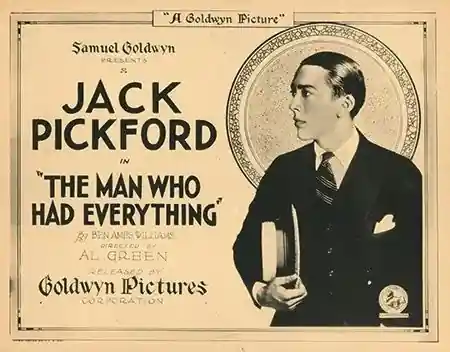
Mid-film, Harry attempts to bankrupt himself at a rigged casino. The croupier, smiling like a shark in white tie, pushes stacks of chips back across the felt: “House policy, sir—losers refunded.” In a bravura two-minute unbroken take, the camera follows Harry’s retreat through mirrored corridors that multiply him into infinity, each reflection clutching heavier winnings, each face slightly more hollow. The sequence anticipatory-guilt-trips every Instagram flex you will ever scroll past.
Some prints survive with a cyan-tinted alternate ending spliced in by regional censors who found the original too nihilistic. In that sanitized version, Harry awakens from a drunken dream, repents, and endows a home for the blind. Kino’s 2022 restoration rightly jettisons this cowardly appendix. The authentic conclusion is more surgical: Harry, desperate to feel want again, staggers into the beggar’s doorway and offers his entire fortune for a single genuine craving. The beggar, now offscreen—only his gnarled cane visible—whispers the last line on a title card lettered in shaky handwritten scrawl: “But you already have everything you want.” Fade to black that feels like a mouth filling with sand.
Viewers primed for redemptive arcs will suffocate here. The film’s cruelty is ontological, not moralistic. It belongs in the same curio cabinet as The Heart of Humanity (1919), where compassion is bayoneted, or the Portuguese fever-dream Rainha Depois de Morta Inês de Castro (1924), where love rots into dynastic mulch. Yet unlike those parables, The Man Who Had Everything lacks even the cold comfort of tragedy; it is cosmic satire stuck on repeat.
Contemporary resonance? Try scrolling an app that auto-refreshes content before you ask, or dating platforms that pre-match you with clones of your exes. The curse is algorithmic. The beggar is code.
A word on the score: the surviving 16mm elements were silent, but the 2022 restoration commissioned a new accompaniment by experimental trio Glass Guignol, blending prepared piano, analog synth, and field recordings of Vegas casino floors. Their motif for Harry is a waltz in 5/4 time, perpetually resolving to the wrong tonic, like Ravel on benzodiazepines. During the mirror-corridor sequence, the musicians stretch a single piano chord across nearly ninety seconds, until the silence afterward feels like a punchline.
Filmographies of the cast read like cautionary footnotes. Carl Gerard, once hailed as “the new John Barrymore,” slid into poverty and died in 1953, his final residence a converted garage. Jack Pickford, fragile as nitrate, followed his superstar sister Mary into addiction and oblivion within five years. Even Will Machin, the beggar whose curse animates the plot, vanished into itinerant theater troupes; no death certificate exists. It is as though the movie itself absorbed their vitality, a celluloid incubus feeding on whoever touches it.
Abundance, weaponized, is indistinguishable from starvation.
And yet the film is ravishing. Statter’s compositions—women’s backs like ivory question marks, champagne flutes catching the flare of a projector bulb—linger with the erotic patience of a Stanislavsky rehearsal. The camera savors textures: the nap of velvet sofas, the breadcrumb constellations on a dinner plate after Harry’s guests evaporate. These are not mere pretty pictures; they are evidence of a world so drunk on its own luxury it forgets to breathe.
Scholars sometimes link the picture to the contemporaneous The Masquerader (1923), where Ronald Colman trades identities to escape ennui. But while that film treats selfhood as costume, The Man Who Had Everything performs a darker magic: identity liquefies and is guzzled by the self. Harry does not wear a mask; he is devoured by his own face.
The sole respite comes in a brief, almost thrown-away shot: Harry, alone at dawn, watches a street sweeper coax a broom between cobblestones. For three seconds the camera holds on the sweeper’s cracked boots, the organic rhythm of labor, the simple miracle of dirt being persuaded into piles. Harry’s eyes flicker—not redemption, but a dim recognition that somewhere, want still walks hand-in-hand with effort. Then a limousine purrs to the curb, the door opens by invisible hands, and the moment is vacuum-sealed in coin.
Is it horror? Satire? A relic of Jazz-Age nihilism? The film refuses taxonomy the way a black hole refuses snapshots. It is what happens when Homer Comes Home meets Confesión trágica in the alley behind a speakeasy and emerges speaking in tongues.
Restoration-wise, the 4K scan reveals previously illegible intertitles—snippets of Harry’s inner monologue that make him even less palatable. “To desire is human; to receive, divine” reads one such card, the word divine scratched out and re-lettered as boring. These micro-aggressions against empathy accumulate until the viewer, too, feels colonized by the curse. You begin to fear your own wishes: the espresso that arrives before you order it, the streaming queue that autoplays your hidden guilty pleasure. The movie leaks.
Should you watch it? If you crave the comfort of closure, flee toward His Mother’s Boy or What Happened to Rosa, where virtue loops back like a boomerang. If, however, you can stomach a film that ends by handing you your own appetite in a doggy bag, press play. Just remember: the beggar’s voice is optional; the curse is not.
Availability: streaming on Kanopy in 4K, accompanied by the Glass Guignol score. A 35mm print tours select cinematheques; check local listings and bring smelling salts. The Blu-ray from Devious Pictures includes a commentary by cultural historian Dr. Lila St. Coeur, who reads period psychiatric reports on post-war hedonism until the words themselves seem to sweat.
Final caution: do not watch while online shopping. One viewer reportedly clicked “Buy Now” on a vintage Bugatti during the film’s climax, later claiming he “didn’t mean it, just wanted to see if wanting was still possible.” His credit card was declined; the curse, it seems, has learned to delegate.

IMDb 5.9
1926
Community
Log in to comment.