DbcultAccessing Vault...
Cult Review
Senior Film Conservator
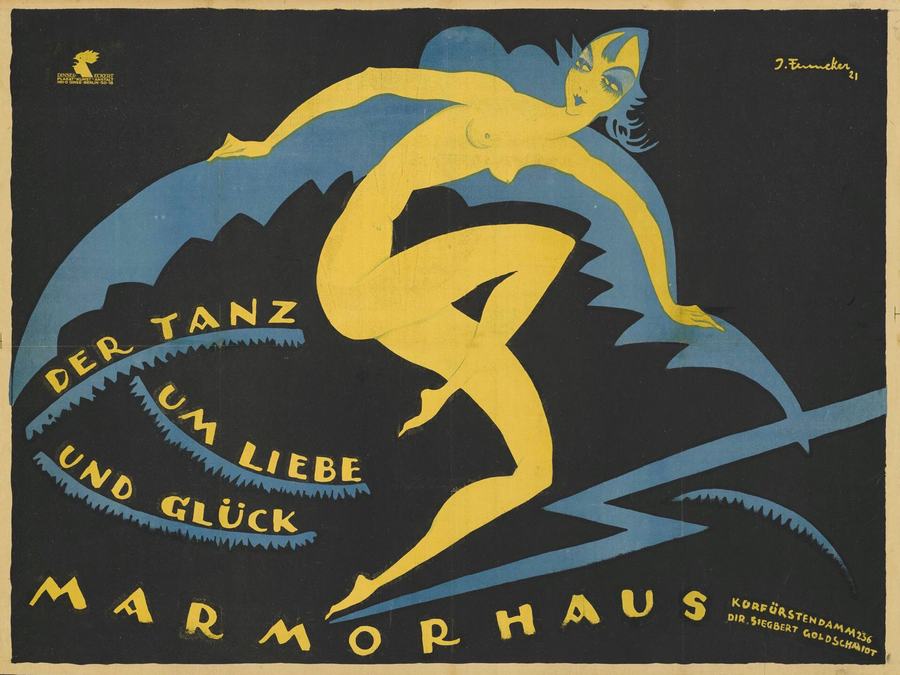
To witness Der Tanz um Liebe und Glück in its restored glory is to step into a fever dream of 1921 Berlin. The film, helmed by the often-underestimated Willy Zeyn, represents a pivotal moment where the German silent screen began to shed its stage-bound origins in favor of a more fluid, rhythmic visual language. While Zeyn is perhaps better remembered for the proto-detective thrills of Where Is Coletti?, here he pivots toward a lush, melancholic melodrama that interrogates the very fabric of romantic idealism. The film does not merely present a story; it choreographs a social critique, using the proscenium arch of the ballet as a mirror for the performative nature of upper-class life.
The narrative architecture, crafted by Zeyn alongside Armin Petersen, avoids the simplistic moralizing prevalent in many contemporary productions like Love's Toll. Instead, it embraces a complex, almost polyphonic structure where the desires of the individual are constantly thwarted by the gravitational pull of societal expectations. The "dance" of the title is a multifaceted metaphor—it is at once the literal artistry of the Erna Offeney troupe and the desperate maneuvering of characters trying to find a footing in an unstable world.
Any discussion of this film must center on the presence of Werner Krauss. Fresh from his legendary turn in Caligari, Krauss brings a different kind of intensity to Der Tanz um Liebe und Glück. His performance is a masterclass in economy of motion. Unlike the broad, sweeping gestures seen in Die Königstochter von Travankore, Krauss works with the micro-expressions of the face and the tension in his shoulders. He embodies a man for whom happiness is not a destination but a phantom limb—something felt acutely in its absence.
Opposite him, Olga Limburg provides a necessary counterpoint. If Krauss is the earth, Limburg is the air. Her portrayal of a woman caught between the call of the stage and the requirements of the heart is nuanced and devoid of the histrionics that mar lesser silents like A Wife on Trial. The chemistry between them is not one of explosive passion, but of a slow, agonizing friction. They are two celestial bodies caught in an orbit that prevents them from ever truly touching, a theme that resonates far more deeply than the sentimentalism of Whither Thou Goest.
The inclusion of the Erna Offeney Ballet is not merely a decorative choice. In 1921, the integration of high-art dance into narrative cinema was a bold experiment in cross-pollination. The sequences directed by Offeney herself are filmed with a startling sense of depth. Fritz Beckmann’s cinematography captures the dancers not as flat figures, but as sculptural entities moving through space and light. The chiaroscuro effects—heavy shadows competing with brilliant, almost heavenly highlights—create a visual tension that mirrors the film's thematic conflict.
When compared to the more straightforward visual style of Soldiers of Fortune, Zeyn’s work here feels avant-garde. He uses the motion of the dancers to dictate the editing rhythm. There is a sequence mid-film where the cutting accelerates in tandem with the pirouettes, creating a dizzying sensation of vertigo that perfectly encapsulates the protagonist’s losing grip on his social standing. It is a sophisticated use of montage that predates the more famous Soviet experiments of the mid-20s.
Der Tanz um Liebe und Glück is deeply embedded in the anxieties of its time. The early 1920s in Germany were marked by hyperinflation and a desperate search for identity. The film’s preoccupation with 'Glück' (happiness/luck) is telling. It suggests that in a world where economic and social structures are crumbling, happiness is a matter of chance—a gamble taken on a spinning floor. This cynicism is far removed from the more optimistic American imports of the era, such as True Nobility.
The supporting cast, including Hugo Flink and Danny Guertler, populate a world that feels lived-in and weary. There is a sense that every character has a history of loss. Even the moments of levity—provided by the likes of Gerhard Ritterband—carry a sharp, satirical edge. This is not the escapism of Sweet Patootie; it is a confrontation with the fragility of the human condition. The film asks: can love survive when the very ground it stands on is shifting? The answer Zeyn provides is ambiguous, favoring a bittersweet realism over a tidy resolution.
From a technical standpoint, the film is a marvel of its era. The set design transitions seamlessly from the opulent ballrooms of the elite to the cramped, shadowy backstage areas of the theater. This spatial dichotomy reinforces the film’s central theme of the divide between public persona and private pain. Unlike the static compositions found in Respectable by Proxy, Zeyn’s camera is restless. It pans and tilts with a curiosity that feels modern, seeking out the emotional truth hidden in the corners of the frame.
The lighting, particularly in the night scenes, anticipates the film noir aesthetic that would emerge decades later. Shadows are used to isolate characters, suggesting an existential loneliness that mirrors the themes of Ene i verden. Every frame is composed with an eye for balance and symbolic weight. The recurring motif of the circle—seen in the dancers' formations and the circular tables of the gambling dens—emphasizes the cyclical nature of the characters' struggles. They are trapped in a loop, repeating the same steps in a dance that has no end.
When we look at Der Tanz um Liebe und Glück alongside The Vengeance of Durand, we see a stark difference in how European and American directors handled melodrama. While the latter focuses on external conflict and retribution, Zeyn’s film is concerned with internal collapse. The "vengeance" in this German tale is not enacted by a person, but by time and fate. It is a more philosophical approach to cinema, one that values atmosphere and mood over plot points.
Similarly, the film avoids the gendered clichés of More Deadly Than the Male. The women in Zeyn’s world are not mere temptresses or victims; they are working artists with their own agency and professional burdens. The ballet is not just a backdrop for romance; it is a demanding career that requires sacrifice. This grounding in reality gives the film a weight that persists long after the final frame has flickered out.
Der Tanz um Liebe und Glück remains a vital artifact of the silent era, not just for its historical value but for its enduring emotional resonance. It captures a world in transition, using the medium of film to explore the intersections of art, class, and the human heart. It lacks the overt propaganda of Kaiser's Finish, opting instead for a universal story of aspiration and heartbreak.
For the modern viewer, the film offers a chance to see Werner Krauss at the height of his powers, supported by a director who understood the power of visual storytelling. It is a film that demands to be watched with the same attention one would give a live performance—every movement, every shadow, and every silence speaks volumes. It is a reminder that cinema, at its best, is a dance between the creator and the audience, a search for that fleeting moment of 'Glück' in the darkness of the theater. While it may not have the fame of Metropolis or Nosferatu, its quiet intensity and technical sophistication make it an essential chapter in the history of the moving image. It stands as a testament to the power of the silent screen to convey the deepest complexities of the human soul without uttering a single word.

IMDb 6.2
1935
Community
Log in to comment.