DbcultAccessing Vault...
5.9/10
Senior Film Conservator
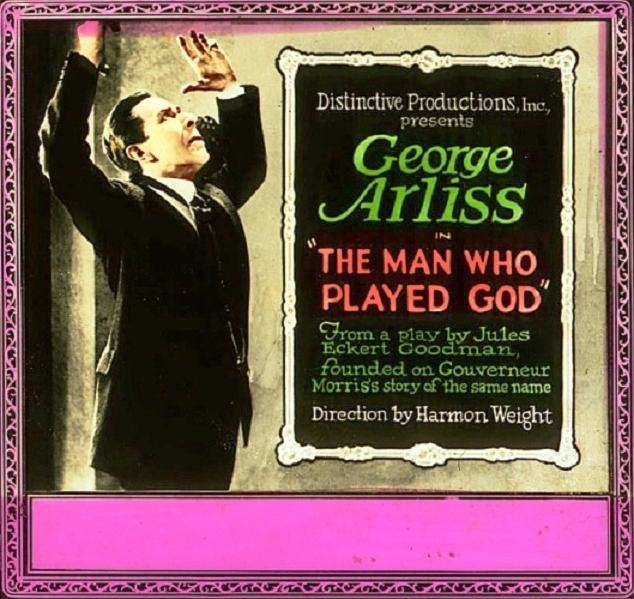
A definitive 5.9/10 rating for a film that redefined the boundaries of cult cinema. The Man Who Played God remains a cornerstone of transgressive art.
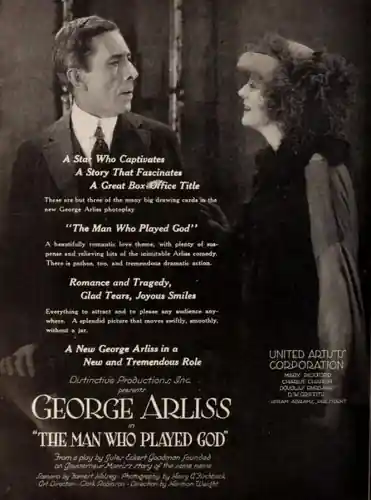
In the transitionary twilight of early 1930s cinema, few figures loomed as large or as intellectually formidable as George Arliss. In The Man Who Played God (1932), Arliss reprises a role he had previously explored in the silent era, yet the addition of sound adds a poignant, ironic layer to a narrative centered entirely on the loss of it. The film is not merely a melodrama concerning a musician’s disability; it is a profound meditation on the paternalistic impulses of the wealthy and the fragile architecture of marital fidelity under the weight of martyrdom.
The film opens with a flourish of high-society elegance, establishing John Arden as a man whose identity is inextricably linked to the vibrations of the piano. When an explosion—a jarring sonic intrusion—robs him of his hearing, the silence that follows is not peaceful; it is a cacophony of internal despair. Arliss, known for his precise, almost surgical acting style, portrays Arden’s descent into bitterness with a chilling authenticity. He does not seek sympathy; he demands a recognition of his tragedy, which makes his eventual transformation all the more compelling.
The pivot point of the narrative occurs when Arden, isolated in his high-rise sanctuary, masters the art of lip-reading. This skill transforms his telescope into a tool of divine intervention. He watches the common folk in the park below, eavesdropping on their desperate prayers and whispered tragedies. Here, the film flirts with a fascinating, almost Nietzschean concept: the man who, having lost his humanity through suffering, seeks to reclaim it by assuming the role of a secular deity. He begins to anonymously solve the problems he overhears, dispensing funds and fixing lives with the detached precision of a clockmaker.
This sequence is where the film’s title takes on its most literal and haunting meaning. There is a certain arrogance in Arden’s altruism—a sense that he is playing a game with human pawns to distract himself from his own silence. It brings to mind the thematic weight found in other character studies of the era, such as the psychological tension in The Man Hunt, where the protagonist is similarly defined by his pursuit and his perspective. Arden is hunting for meaning in a world that no longer speaks to him, and he finds it in the manipulation of others' destinies.
Mary Astor delivers a performance of remarkable restraint as Marjorie, Arden’s wife. In an era where female roles were often relegated to the background or heightened to the point of hysteria, Astor’s Marjorie is a study in quiet, agonizing conflict. Her devotion to Arden is not born of a burning, youthful passion—that flame is clearly reserved for Philip Stevens—but of a rigid, almost terrifying sense of duty. The film treats this duty with a complexity that feels modern. It asks the audience: is a marriage sustained by pity and obligation a marriage at all?
The interplay between Arliss and Astor is the emotional engine of the film. While Arliss is flamboyant in his misery, Astor is a statue of endurance. Her character’s internal struggle mirrors the thematic concerns of A Lady of Quality, where social standing and personal desire clash in the crucible of Victorian morality. Marjorie’s refusal to leave Arden, even when he becomes a shell of his former self, is portrayed not as a triumph of love, but as a triumph of character—a distinction that the film navigates with surprising nuance.
Director John G. Adolfi utilizes the camera to emphasize Arden’s isolation. The framing often places Arliss in large, opulent rooms that feel like gilded cages. The cinematography by James Van Trees makes excellent use of light and shadow to delineate Arden’s psychological state. When he is at his most cynical, the shadows are long and sharp; as he moves toward his philanthropic awakening, the light softens, reflecting a spiritual thawing.
The use of sound—or the conspicuous absence thereof—is equally effective. In the moments following the explosion, the film’s soundscape becomes muffled, forcing the audience to inhabit Arden’s disorienting new reality. This was a sophisticated technique for 1932, a period when many directors were still struggling with the static nature of early sound equipment. Unlike the more rudimentary audio-visual experiments found in Hot Dog or other contemporary shorts, The Man Who Played God uses audio cues to deepen the narrative’s emotional resonance.
The climax of the film—a fall that restores Arden’s hearing—is a classic melodramatic trope that might feel contrived to modern sensibilities. However, within the context of 1930s storytelling, it serves as the necessary 'deus ex machina' to resolve the ethical tension. The physical restoration of his hearing is secondary to the spiritual restoration of his perspective. It is only when he can hear again that he truly listens to his wife’s heart. He realizes that his "God-like" interference in the lives of others was a hollow substitute for genuine connection with those closest to him.
The film avoids the pitfalls of saccharine sentimentality by grounding the ending in Arden’s newfound humility. He recognizes that his wife’s loyalty was a sacrifice he had no right to demand, yet he accepts it with a grace that was absent in the first act. This arc of redemption is far more sophisticated than the simple moral binaries found in films like The Reckoning Day. Arden’s journey is one from egoism to empathy, facilitated by the very disability he once viewed as a curse.
George Arliss was often accused of being "too theatrical," but in The Man Who Played God, that theatricality is perfectly suited to the character. John Arden is a man who lived his life on a stage, and even in his private moments of grief, he is performing for an invisible audience—or perhaps for God Himself. Arliss’s ability to convey complex thought through subtle facial expressions and gestures is a masterclass in screen acting. He brings a dignity to the role that elevates the material above its stage-play origins.
Supporting turns by Ivan F. Simpson and Bette Davis (in one of her earliest significant roles) provide a rich texture to the world. Davis, in particular, shows flashes of the fire that would later make her a legend, even in a relatively minor role. The ensemble cast works in harmony to create a believable social milieu, one that feels lived-in rather than merely a set for Arliss’s monologues. This level of production quality is a far cry from the more experimental or low-budget efforts of the time, such as Karadjordje, demonstrating the polished efficiency of the Hollywood studio system at its peak.
Ultimately, The Man Who Played God stands as a testament to the power of character-driven drama. It explores themes of disability, class, and the ethics of charity with a sophistication that remains impressive nearly a century later. It challenges the viewer to consider the nature of altruism—is it truly selfless if it is used as a balm for one’s own ego? By the time the credits roll, we are left not just with a happy ending, but with a lingering question about the responsibilities we owe to one another in our moments of greatest strength and deepest weakness.
For fans of classic cinema, this film is an essential artifact. It bridges the gap between the grandiosity of the silent era and the psychological realism of the mid-century. It is a film that rewards close viewing, much like Sein schwierigster Fall, demanding that the audience look past the surface-level plot to the deeper currents of human experience flowing beneath. In the silence of John Arden, we find a profound articulation of what it means to be human.
Reviewer's Note: While the film's pacing reflects the deliberate style of its era, the emotional payoff is timeless. Arliss remains a titan of the screen, and this performance is perhaps his most enduring legacy.

IMDb 5.9
1915
Community
Log in to comment.