DbcultAccessing Vault...
Cult Review
Senior Film Conservator
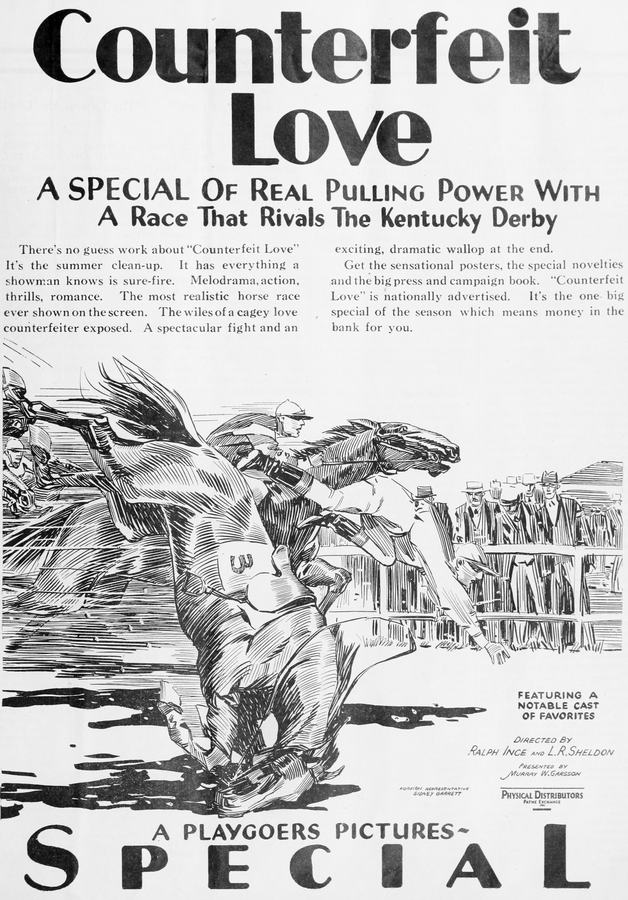
There is a peculiar, haunting resonance in the way silent cinema articulated the crushing weight of the working class. In Counterfeit Love, we are not merely watching a melodrama; we are witnessing a surgical deconstruction of the American Dream’s dark underbelly. The film, directed with a palpable sense of claustrophobia, centers on Mary Shelly, a character whose nobility is less a choice and more a sentence. Unlike the pastoral idealism found in Wildflower, this narrative is steeped in the grime of urban survival and the terrifying fragility of the domestic sphere.
Irene Boyle delivers a performance that transcends the often-hyperbolic gestures of the era. Her Mary Shelly is a study in restrained agony. She carries the physical toll of supporting an invalid brother and sister, a dynamic that mirrors the grueling social pressures explored in The Eternal Grind. When the mysterious stranger enters her life, he isn't just a man; he is a manifestation of the 'easy out,' a trope that Adeline Leitzbach and Thomas F. Fallon handle with a cynical, modern edge. This isn't the whimsical romance of The Fortunes of Fifi; it is a predatory transaction masked by the language of courtship.
The inciting incident—the discovery of the money—is filmed with a frantic, jittery energy. The brother’s sudden acquisition of wealth is the film’s first great lie. It’s a moment of false catharsis that the audience feels in their gut. When Mary rushes to pay the mortgage, the camera lingers on the transaction with a cruel irony. We know the paper is worthless, yet we share her fleeting, desperate relief. It is a sequence that rivals the tension of the criminal underworld depicted in The Three Black Trumps, though the stakes here are far more intimate.
If the first act is about the burden of duty, the second is a descent into the gambler’s fallacy. Mary’s decision to bet the remaining counterfeit cash on a horse race is a stroke of narrative brilliance. It highlights the irrationality born of extreme stress. The racetrack sequence is a masterclass in silent editing—the rhythmic cutting between the thundering hooves and Mary’s deteriorating composure creates a visceral sense of impending doom. While films like Fame and Fortune might treat such risks with a sense of adventure, Counterfeit Love treats it as a funeral dirge for her soul.
Losing the money isn't just a financial blow; it’s the final stripping away of Mary’s agency. Her subsequent agreement to marry the stranger is presented not as a romantic sacrifice, but as a total surrender to the forces of darkness. The stranger, played with a slithering, oily charm by Alexander Giglio, represents the moral rot that often hides behind a well-tailored suit. This thematic exploration of hidden villainy is a recurring motif in the writers' work, often seen in the complexities of The Unforseen.
The third act revelation that Richard Wayne is an undercover agent for the U.S. Secret Service provides a tonal shift that is both jarring and satisfying. Joe King plays Wayne with a stoic resolve that balances the film’s more melodramatic tendencies. His dual identity serves as a metaphor for the film’s core theme: nothing is as it appears. Love, money, and even the law are subject to the art of the counterfeit. The way Wayne dismantles the counterfeiting ring is swift and clinical, a sharp contrast to the emotional chaos Mary has endured. This procedural element adds a layer of grit that distinguishes the film from the more straightforward moral plays like The Stainless Barrier.
The final confrontation between Wayne and the lead counterfeiter is staged with an impressive use of shadow and depth. The cinematography utilizes the stark contrasts of the black-and-white medium to emphasize the binary between justice and criminality. It’s a visual language that feels ancestor to the noir aesthetic that would dominate the decades to follow. The resolution, while providing the requisite happy ending, leaves a lingering sense of melancholy. Mary’s journey through the fire of deception has changed her; the 'love' she finds at the end is no longer the naive hope of the film’s opening, but a hardened, realistic bond forged in the crucible of trauma.
In the broader context of silent cinema, Counterfeit Love stands as a testament to the sophistication of early 20th-century storytelling. It avoids the easy pitfalls of the 'damsel in distress' trope by making Mary’s choices—however ill-fated—the central engine of the plot. She is a woman acting within a system that has failed her, making her struggle universally relatable even a century later. The film shares a certain DNA with Stolen Honor in its preoccupation with reputation and the social consequences of crime, but it possesses a unique emotional core that is entirely its own.
The supporting cast, including the likes of Danny Hayes and Marian Swayne, provide a rich tapestry of humanity that surrounds Mary. Each character feels lived-in, contributing to a sense of a world that exists beyond the frame. The invalid siblings are not merely plot devices; their presence is a constant, suffocating reminder of why Mary must endure the unendurable. This attention to domestic detail is what elevates the film above the standard potboilers of the time, such as Jack, Sam and Pete.
Technically, the film is a marvel of its era. The set design of the Shelly home reflects their declining fortunes, with every peeling wallpaper and dim lamp telling a story of better days long gone. The contrast between this domestic decay and the opulent, predatory world of the counterfeiters is striking. It reminds one of the thematic density in The Song of the Lark, where the environment is as much a character as the protagonists. The direction ensures that the pacing never falters, moving from the quiet desperation of the home to the frantic energy of the city streets with seamless precision.
Ultimately, Counterfeit Love is a film about the price of integrity in a world that values only the appearance of wealth. It is a cautionary tale that feels remarkably relevant in an age of digital facades and economic volatility. Mary Shelly’s journey is a harrowing reminder that the most dangerous counterfeits are not those printed on paper, but those that reside in the human heart. It is a must-watch for anyone interested in the evolution of the crime melodrama and the enduring power of silent storytelling. It lacks the sweeping scale of The Last Crusade, but it makes up for it with a piercing, intimate intensity that leaves a lasting mark on the viewer.
As the final iris closes on Mary and Richard, we are left to contemplate the fragility of their hard-won peace. They have survived the machinations of the counterfeiters, but the scars of the ordeal remain. It is this refusal to offer a purely saccharine ending that makes the film so compelling. It acknowledges that while justice can be served, the emotional cost of the journey is a debt that can never be fully repaid. It is a profound, if somber, meditation on the nature of sacrifice and the ultimate value of a love that is, finally, genuine.
IMDb —
1926
Community
Log in to comment.