DbcultAccessing Vault...
Cult Review
Senior Film Conservator
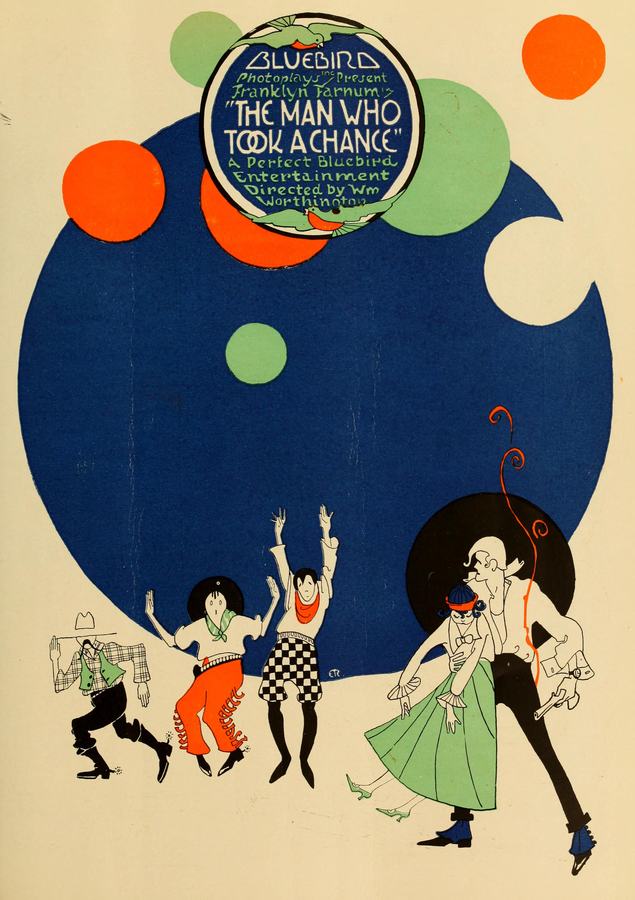
Stepping back into the nascent days of cinema, a period often characterized by its grand gestures and silent declarations, we encounter The Man Who Took a Chance. This film, a charming relic from an era when narratives unfolded through expressive pantomime and intertitles, presents a delightful exploration of ambition, class, and the audacious pursuit of love. It's a testament to the enduring power of a well-crafted story, even when stripped of spoken dialogue, relying instead on the nuanced performances of its cast and the evocative visual language of the camera. The premise itself is a classic romantic setup: a determined suitor, an unattainable beauty, and a formidable obstacle in the form of an overbearing parent. Yet, within this familiar framework, the film manages to weave a narrative that feels both fresh and timeless, echoing sentiments that resonate even with contemporary audiences.
Monty Gray, portrayed with an endearing blend of worldly experience and boyish charm by Arthur Hoyt, returns to the United States after a decade spent forging railroads across the vast expanses of China. His return isn't merely a geographical relocation; it's a reentry into a society whose conventions he likely views with a pragmatic eye, having witnessed the raw realities of industrial expansion in a distant land. His decade abroad, we infer, has not only enriched him financially but also instilled in him a certain self-reliance and an unconventional approach to life's challenges. This character foundation is crucial, as it sets the stage for his subsequent, rather audacious, endeavors. Upon checking into a hotel, a seemingly innocuous encounter with an old college friend swiftly steers his life onto an unexpected trajectory. The casual camaraderie of old acquaintances catching up is shattered, or perhaps, illuminated, by a single photograph. It's a moment of cinematic serendipity, where destiny, or at least intense infatuation, is ignited by a still image.
The picture reveals a young woman whose beauty, to Monty, is nothing short of transcendent. Agnes Vernon, in the role of this captivating muse, doesn't even need to be present in the scene for her allure to be established; the intensity of Monty's reaction, conveyed through Hoyt's subtle yet potent expressions, speaks volumes. His immediate, almost visceral, capitulation to her charm is the driving force of the entire narrative. This isn't a slow-burn romance; it's an instant, overwhelming fixation, a love-at-first-sight scenario amplified by the silent film's penchant for heightened emotion. However, as is often the case in tales of romantic pursuit, a colossal impediment quickly materializes. His friend, perhaps amused by Monty's sudden ardor, delivers the crushing news: the girl is his cousin, and her life is meticulously orchestrated by her mother, played with formidable authority by Countess Du Cello. This matriarch, a character whose social ambitions overshadow all else, is determined that her daughter will ascend the social ladder by marrying into royalty, dismissing any suitor without a title as utterly unworthy.
This setup immediately establishes a classic conflict that has fueled countless narratives across centuries: the clash between genuine affection and societal expectation. It’s a theme explored in myriad forms, from Shakespearean tragedies to contemporary romantic comedies. In the context of The Man Who Took a Chance, it acquires a particular poignancy, as Monty, a self-made man of the burgeoning American industrial age, finds himself pitted against the entrenched snobbery of old-world aristocracy, or at least, the fervent aspiration towards it. His lack of a noble title, a non-issue in his entrepreneurial world, becomes an insurmountable barrier in the eyes of the girl's mother. This kind of class-based romantic tension is a recurring motif in early cinema, often serving as a dramatic engine. One might draw parallels to films like Only a Factory Girl, where social strata dictate destinies, though the specific circumstances and the protagonist's response diverge significantly. Here, Monty is not merely a victim of circumstance; he is an active agent of change.
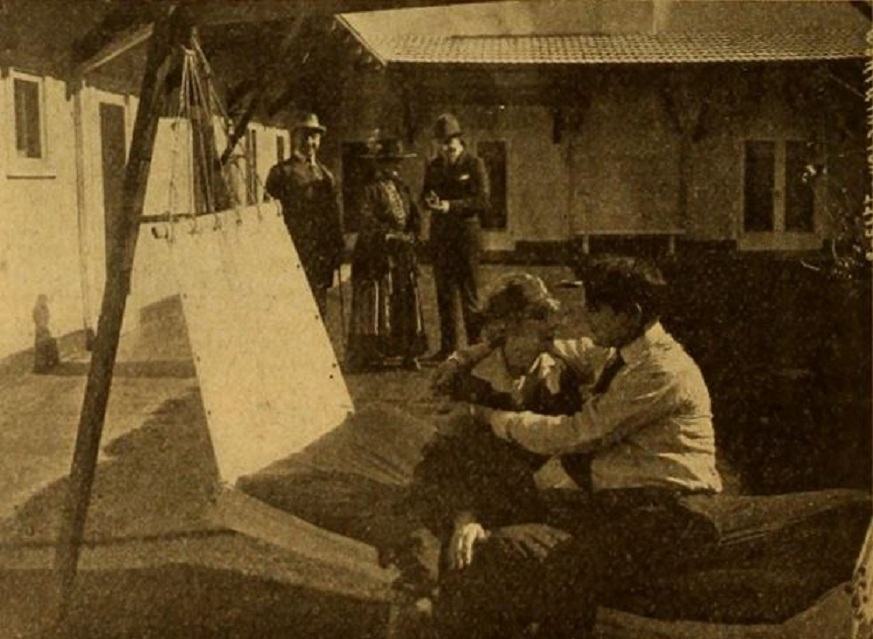
What distinguishes Monty Gray from many a lovesick suitor is his refusal to accept defeat. His years in China, building railroads, were not merely a means to accumulate wealth, but also a crucible that forged a resourceful and determined spirit. He is not one to passively lament his fate; instead, he channels his frustration into ingenious problem-solving. The film's title, The Man Who Took a Chance, perfectly encapsulates his character. He doesn't just wish for the girl; he devises a plan, a strategy as intricate and ambitious as any railroad project he might have overseen. The specifics of this plan are, of course, the heart of the film's unfolding drama and comedic elements, relying on deception, clever manipulation, and perhaps a touch of theatrical flair.
Bennett Cohen's writing, even without the benefit of spoken dialogue, manages to imbue the narrative with a palpable sense of wit and suspense. The audience is invited to delight in Monty's cunning, rooting for the underdog against the formidable, if slightly ridiculous, snobbery of the Countess Du Cello. This narrative structure, where a clever protagonist outwits an antagonist through elaborate schemes, resonates with the spirit of many silent-era comedies and dramas. One might consider the intricate plotting seen in films like The Vanderhoff Affair, where convoluted circumstances and clever solutions drive the story forward. However, in The Man Who Took a Chance, the stakes are deeply personal, centered on the pursuit of genuine affection rather than mere financial gain or unraveling a mystery.
Arthur Hoyt, as Monty Gray, carries the film with an impressive range of expressions. His initial shock and awe upon seeing the photograph, his determined resolve, and the subtle humor in his execution of the plan are all conveyed with an economy of movement and a richness of facial expression that was the hallmark of great silent actors. He manages to make Monty both relatable and admirable, a figure whose romantic idealism is tempered by a pragmatic, almost mischievous, intelligence. Agnes Vernon, though given fewer opportunities for grand dramatic flourishes, embodies the object of Monty's affection with a delicate grace, conveying the quiet longing and perhaps the subtle rebellion against her mother's dictates. Her role, while seemingly passive in the face of her mother's will, becomes a crucial anchor for Monty's ambition, validating his elaborate efforts. Countess Du Cello, as the domineering mother, is perfectly cast, exuding an aristocratic haughtiness that makes her a formidable, yet ultimately satisfying, antagonist. Her performance leans into the theatricality often associated with silent film villains, providing a clear and compelling foil for Monty's ingenuity.
The supporting cast, including Mark Fenton, Franklyn Farnum, Charles Perley, and Lloyd Whitlock, contribute to the film's texture, each playing their part in the unfolding drama with the characteristic stylization of the era. Their reactions and interactions serve to ground the more extravagant elements of the plot, providing a believable social backdrop against which Monty's extraordinary actions unfold. The pacing of The Man Who Took a Chance is typical of its time, building suspense through a series of carefully constructed scenes, each intertitle serving as a narrative beat, guiding the audience through the twists and turns of Monty's grand scheme. The film avoids unnecessary exposition, allowing the visual storytelling to take precedence, a quality that often makes silent films surprisingly engaging for modern viewers accustomed to fast-paced narratives. The visual gags and dramatic reveals are expertly timed, ensuring that the audience remains invested in Monty's predicament and his eventual triumph.
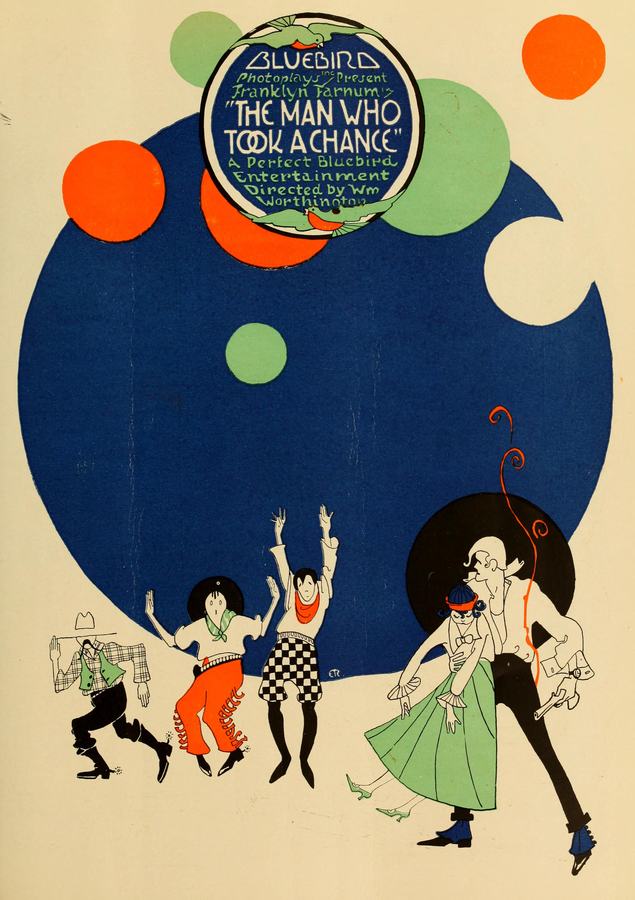
At its core, The Man Who Took a Chance is a celebration of human determination and the idea that true love can, and should, transcend artificial social barriers. Monty Gray represents the quintessential American ideal of the self-made man, whose worth is measured by his character and his accomplishments, rather than by inherited titles. His struggle against the Countess Du Cello's aristocratic pretensions is emblematic of a broader cultural shift, where the old-world emphasis on lineage was gradually giving way to a more meritocratic worldview. This thematic conflict elevates the film beyond a simple romantic comedy, imbuing it with a social commentary that remains relevant. The film subtly critiques the superficiality of social climbing, contrasting it with the genuine emotion that drives Monty's actions.
The film's exploration of agency, particularly that of the young woman, is also noteworthy. While she is initially presented as a pawn in her mother's ambitious game, Monty's actions are ultimately aimed at liberating her from this gilded cage. His plan, while initially a means to an end, implicitly acknowledges her desire for a life chosen by love rather than dictated by status. This resonates with other narratives of the era where women navigate restrictive societal expectations, such as in Her Sister's Rival or The Martinache Marriage, where personal desires often clash with familial or societal pressures. However, The Man Who Took a Chance offers a more optimistic outlook, suggesting that ingenuity and courage can indeed reshape one's destiny.
The Man Who Took a Chance, while perhaps not as widely known as some of its more epic contemporaries like Hamlet (1917) or the serialized adventures of The Perils of Pauline, holds its own as a delightful and engaging piece of cinematic history. It exemplifies the craftsmanship of silent-era filmmaking, showcasing how compelling narratives could be constructed through purely visual means. The film's enduring appeal lies in its universal themes and its joyous depiction of a clever underdog succeeding against formidable odds. It reminds us that sometimes, the greatest adventures aren't found in distant lands or grand battles, but in the audacious pursuit of personal happiness, even when society dictates otherwise.
The simplicity of its premise is deceptive; beneath the surface lies a nuanced commentary on social structure and individual will. It’s a film that speaks to the enduring human desire for connection and the lengths to which one might go to secure it. For cinephiles and casual viewers alike, revisiting The Man Who Took a Chance offers a charming window into a bygone era of storytelling, a time when the power of a glance, a gesture, and an ingenious plot could captivate an audience entirely. Its legacy is not just in its individual narrative, but in its contribution to the rich tapestry of silent film, demonstrating the genre's capacity for wit, romance, and spirited rebellion against convention. It stands as a vibrant example of how early filmmakers skillfully leveraged the unique constraints of their medium to produce works that continue to entertain and provoke thought, proving that sometimes, the greatest chances yield the most rewarding outcomes.
The elegance of its narrative, devoid of the verbose dialogue that would later define sound cinema, forces a focus on visual cues and the sheer theatricality of human emotion. Each actor, particularly Hoyt, must convey layers of meaning through exaggerated expressions and body language, a skill that now feels like a lost art. This reliance on visual storytelling gives The Man Who Took a Chance a unique charm, transporting viewers to a time when cinematic language was still being invented and refined. The film’s ability to evoke laughter, empathy, and suspense without a single spoken word is a testament to the directorial prowess and the innate talent of its cast. It’s a delightful reminder that cinematic magic doesn't always require cutting-edge technology; sometimes, it simply needs a compelling story and passionate performers.
In an era when narratives often grappled with grander, more overtly dramatic themes, such as the social anxieties depicted in The Enemy or the moral quandaries of The Witching Hour, The Man Who Took a Chance offers a refreshing, lighter touch while still engaging with significant social commentary. It’s a film that doesn't shy away from depicting the absurdities of class snobbery, yet it does so with a playful spirit, ensuring that the audience remains entertained rather than lectured. The triumph of Monty Gray is not just a personal victory; it’s a symbolic win for individualism and genuine affection over the hollow pursuit of status. This makes the film remarkably resonant, even after all these years, serving as a charming blueprint for countless romantic comedies that would follow. The enduring appeal of watching a clever protagonist outmaneuver an antagonist, all for the sake of love, is a timeless narrative hook, and this film executes it with considerable flair and heart.
IMDb —
1918
Community
Log in to comment.