Is 'The Man Without a Face' a Hidden Gem or a Historical Curiosity?
For anyone with a serious interest in the silent era, particularly its mysteries and thrillers,
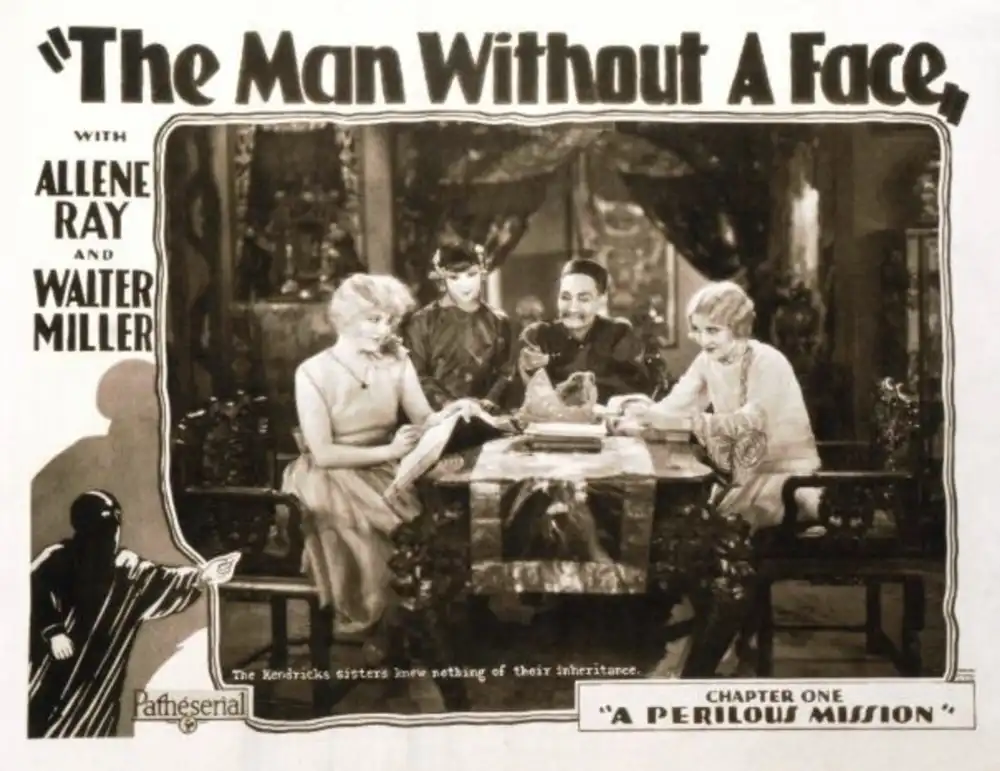
The Man Without a Face (1928) offers a compelling, if occasionally uneven, glimpse into late-period silent filmmaking. It’s certainly worth watching today for cinephiles, film historians, and those who appreciate visual storytelling unencumbered by dialogue. However, casual viewers accustomed to modern pacing and narrative conventions will likely find its rhythms challenging, its melodrama broad, and its silent presentation a barrier to entry. This isn’t a film for dipping your toe into silent cinema; it’s for those already somewhat familiar with the form, looking for another piece of the puzzle.
Unmasking the Performances
Richard Neill, as our central figure — sometimes the man with a face, sometimes without — carries much of the film’s narrative weight through sheer physical presence. His performance is a masterclass in silent-era intensity, relying on sharp, almost angular movements and a perpetually furrowed brow that conveys a deep-seated inner conflict or relentless determination. There’s a particular scene early on, where his character is first introduced in a dimly lit study, poring over documents. Neill doesn't just read; he *attacks* the papers, his head snapping up at every perceived sound, a subtle tension in his shoulders that speaks volumes about the stakes involved without a single intertitle needed. It’s a performance that understands the camera's ability to capture minute shifts in posture and gaze.
Jeanette Loff, playing the female lead, brings a necessary counterpoint of vulnerability and spirited resilience. Her expressions, while occasionally leaning into the dramatic conventions of the time, are generally effective. She handles the shifts from fear to resolve with commendable clarity, particularly in the later sequences where her character is thrust into danger. One moment that sticks out is her reaction shot during a sudden, unexpected revelation. Instead of a prolonged gasp, Loff delivers a series of quick, almost staccato blinks, her eyes darting between objects off-screen, conveying a scramble for comprehension rather than just shock. It’s a small, humanizing detail that cuts through some of the era's broader acting styles.
Supporting players like Richard Cramer and Walter Miller fulfill their roles with the expected villainous menace and stoic authority, respectively. Cramer, in particular, leverages his imposing physicality to great effect, often seen looming in doorways or silhouetted against a stark background, making his presence felt even when not directly in the action. Sôjin Kamiyama, a familiar face in exotic or menacing roles of the period, brings a certain inscrutable gravitas to his character, though his part feels somewhat underutilized, often serving more as an atmospheric presence than a fully fleshed-out antagonist.
Pacing, Tone, and the Art of Silent Suspense
For a film of its age,
The Man Without a Face maintains a surprisingly brisk pace for significant stretches, particularly once the central mystery is firmly established. The early exposition, while necessary, does feel a bit drawn out, relying on a string of intertitles to set up the complex web of relationships and motives. However, once the 'man without a face' begins his machinations, the film kicks into a higher gear. Director Joseph Anthony Roach employs a good deal of cross-cutting during chase sequences and moments of peril, building a genuine sense of urgency. A standout example is a rooftop pursuit that features surprisingly dynamic camera work for 1928, with the camera sometimes tracking alongside the characters, lending a sense of immediate involvement. This sequence, in particular, feels ahead of its time in its kinetic energy.
Where the pacing occasionally falters is in the more contemplative or romantic interludes. These moments, while aiming to deepen character motivations, sometimes feel like detours, breaking the tension built up by the mystery. A scene where Loff’s character reflects by a window, bathed in soft light, feels visually poetic but dramatically static, extending just a beat too long, causing the narrative momentum to dip. The tonal shifts, from thrilling mystery to tender romance and back again, are handled with varying degrees of success; sometimes they blend smoothly, other times they create a slight jarring effect, as if two different films are briefly vying for attention.
A Visual Tapestry of Shadows and Secrets
Visually, the film leans heavily into expressionistic lighting and stark contrasts, which serves its mystery genre well. There are numerous instances of dramatic chiaroscuro, particularly in scenes involving the titular masked figure or during clandestine meetings. Shadows are not just an absence of light; they are characters in themselves, obscuring faces, distorting figures, and hinting at unseen dangers. The production design, while not lavish, is effective in creating distinct environments, from opulent drawing rooms to grimy back alleys. The use of practical effects for the 'man without a face' – the mask itself – is simple yet effective, relying on its stark blankness to convey an unsettling anonymity.
One specific visual choice that impressed me was the recurring motif of reflections. Not just mirrors, but reflections in polished surfaces, glass panes, and even still water. In several key moments, characters are shown not directly, but through their distorted reflections, adding another layer of visual ambiguity to a film already steeped in hidden identities. During one tense interrogation scene, the detective's face is shown only in the polished surface of his desk, his authority subtly undermined by the rippling distortion caused by a nervous hand drumming nearby. This commitment to visual metaphor over explicit exposition is a hallmark of the film's strengths.
Strengths and Weaknesses
The film’s primary strength lies in its confident visual storytelling and its commitment to building atmosphere. The central mystery is engaging, and the payoff, while perhaps predictable to modern audiences, is handled with a genuine sense of dramatic flair. Neill’s performance anchors the film, providing a compelling focal point for the audience’s investment. The action sequences, when they occur, are surprisingly well-executed and demonstrate a good understanding of cinematic rhythm for the period. It stands apart from more rudimentary silent films like
Dull Care by attempting a more complex narrative and visual style.
However, the film isn't without its weaknesses. As mentioned, the pacing can be inconsistent, with some scenes lingering longer than necessary. The intertitles, while providing crucial information, sometimes feel a little too dense, slowing down the visual flow. The romantic subplot, while not entirely unwelcome, often feels like it's competing for screen time with the more compelling mystery, rather than enriching it. And while the visual style is strong, there are occasional moments of static camera work or slightly flat compositions that pull you out of the immersive experience. Compared to the groundbreaking visual experimentation of something like
The Red Circle, this film plays it safer in its overall aesthetic, though still effective.
Final Verdict: A Worthy Dive into Silent Mystery
For those willing to engage with the unique language of silent cinema,
The Man Without a Face offers a rewarding experience. It's a solid, well-crafted mystery that showcases the expressive power of visual storytelling and the compelling physicality of its lead performances. While it won't convert skeptics of the silent era, it provides a valuable and entertaining watch for enthusiasts. It’s a testament to the ingenuity of filmmakers working without sound, proving that suspense and drama can be built with little more than light, shadow, and a compelling performance. Don’t expect a forgotten masterpiece, but do expect an engaging and often thrilling piece of film history that holds up surprisingly well for its age.