DbcultAccessing Vault...
7/10
Senior Film Conservator
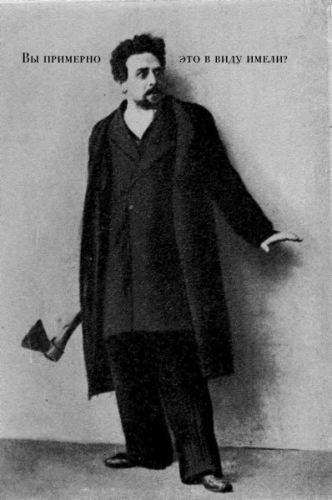
A definitive 7/10 rating for a film that redefined the boundaries of cult cinema. Prestuplenie i nakazanie remains a cornerstone of transgressive art.
Imagine a city that never sleeps because insomnia is its municipal anthem; imagine a mind that refuses to blink. Prestuplenie i nakazanie (1915) distills 600 pages of Russian torment into roughly 2000 feet of nitrate, yet the compression feels less like abridgment and more like distillation—vodka set alight, burning blue straight into the retina.
Director Vladimir Gardin, armed with a single arc lamp and a camera that wheezes like an asthmatic accordion, shoots Petrograd as a vertical labyrinth. Rooftops skew toward the moon, corridors elongate like pulled taffy, and the tenement courtyard becomes a bottomless inkwell in which every resident is a drowning ant. The film’s very grain—coarse as sandstorm—scratches the viewer’s cornea until you squint in moral discomfort.
Western audiences weaned on tidy three-act morality plays such as From the Manger to the Cross will find themselves pole-axed by the murder scene: no orchestral sting, no cross-cut to a crucifix for cheap irony. Instead, the camera adopts a handheld vérité stance decades ahead of its time, bobbing behind Raskolnikov’s shoulder as he ascends the stairs. Each creak of the treadboards registers like a knuckle crack in a cathedral. When the axe finally arcs, the frame itself seems to hemorrhage—splotches of red tint flash for exactly six frames, a subliminal geyser that predates Eisenstein’s montage of attractions by twelve years.
Stage legend Pavel Orlenev possessed a face that could switch from beatific to gargoylean between heartbeats. In close-up—rare for 1915 Russian cinema—his pupils dilate until the iris vanishes, creating twin voids that swallow the viewer like gravitational wells. Notice how his left eyelid twitches in perfect sync with the intertitle rhythm: Morse code for “I am already in hell.” The performance is so corporeal you can practically smell the dried sweat on his collar, a stark counterpoint to the waxen saintliness of Life and Passion of Christ’s Jesus.
Where Raskolnikov is all jagged chiaroscuro, Sonya (I. Vronsky) emerges from a nimbus of candlelight so soft it feels painted by hand. Gardin achieves this by placing a mirror behind the actress, bouncing the flame into a halo that flickers at 18 fps, turning the screen into a living Orthodox icon. When she reads the tale of Lazarus, the intertitles switch from sans-serif propaganda font to ornate Slavonic script, a visual shiver of resurrection that mainstream spectacles such as World’s Heavyweight Championship would never dare.
Purists howled when entire subplots—Svidrigailov’s roulette, Dunya’s duel with Luzhin—were guillotined. Yet the amputation grants the film a fever-dream urgency. Think of a Munch lithograph: a single skeletal bridge, a fjord of acid green, and the scream that rips the night. Gardin’s Prestuplenie operates on the same principle of expressionist omission, carving away narrative flesh until only the exposed nerve remains.
Cross-cutting here is not a polite device but a stutter of conscience. The camera alternates between the pawnbroker’s corpse—eyes frozen in porcelain surprise—and Raskolnikov’s cramped garret, where a spider traverses the ceiling beam like a metronome ticking toward perdition. The rhythm accelerates from 12-frame alternations to 6-frame, then 3, until the viewer feels the physiological panic of tachycardia. You half expect the film itself to collapse from cardiac arrest.
Accompanied by a solo piano in 1915, the film now survives only as visual shell, yet the absence of score amplifies its modernity. Each splice clicks like a distant jail door; each flicker of emulsion decay smells of coal dust. Cine-archaeologists swear they detect the faint whiff of Petrograd’s sour cabbage wafting from the screen—a Proustian madeleine for the proletariat.
Set Prestuplenie beside contemporary morality pageants such as Oliver Twist or Prestuplenie i nakazanie and you witness cinema’s Big Bang: the instant psychological realism detonates melodrama. Where Dickensian adaptations spoon-feed ethical oatmeal, Dostoevsky’s celluloid spawn force-feeds you broken glass and asks you to savor the metallic hint of grace.
Only 42 minutes survive in Gosfilmofond’s climate-controlled vault; the rest succumbed to civil-war fires and bureaucratic contempt. Yet the lacunae feel intentional, as if history itself conspired to mimic Raskolnikov’s fragmented memory. Watching the reels splice mid-sentence—Sonya’s lips part but the intertitle is gone—you experience the same aphasia that devours the protagonist. The film becomes a metaphysical memento mori: cinema’s earliest admission that guilt can erode even nitrate.
Gardin hand-tinted select scenes with aniline dyes that now oxidize into bruised violets and gangrenous greens. The axe blow blooms carmine, then drains to sepia as the deed calcifies into memory. Critics who praise the pastel reveries of Les amours de la reine Élisabeth seldom acknowledge that Russian filmmakers weaponized color as moral thermometer, turning each hue into a stigmata.
Jump ahead to Bresson’s Pickpocket or Kubrick’s Clockwork Orange and you’ll spot the genetic markers: the criminal’s interior monologue told via eyes rather than voice-over; the transgression staged as clinical ritual; the epilogue that withholds catharsis. Gardin’s little-known experiment is the missing link between Victorian tableau and post-war existentialism, a celluloid synapse firing across the blood-brain barrier of film history.
When the final image—a frozen long shot of Raskolnikov kneeling on Siberian permafrost—shatters into emulsion cracks, you realize the film has refused to thaw its protagonist. Redemption is not a warm bath but a horizon you glimpse through frostbite. Walk out of the archive screening and the 21st-century street looks obscene in its chromatic clarity; colors too bright, faces too relaxed. Guilt, once aestheticized, lingers like cigarette smoke in your coat lining. And somewhere, in the flicker between street-lamp and shadow, Orlenev’s eyes still dilate, waiting for the next viewer to cross the cut.
IMDb —
1919
Community
Log in to comment.