DbcultAccessing Vault...
Cult Review
Senior Film Conservator
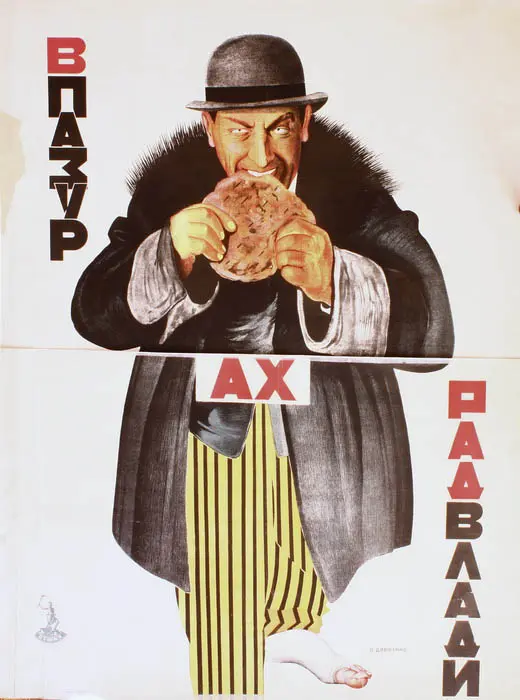
Is 1926’s In the Claws of the Soviets worth watching today? Short answer: Yes, but only if you treat it as a gritty piece of political archaeology rather than a weekend popcorn flick. This is a film for the historians, the cinephiles who enjoy dissecting the anatomy of early 20th-century propaganda, and anyone fascinated by the collapse of the bourgeoisie. It is decidedly NOT for viewers looking for a linear, emotionally resonant character arc or high-definition spectacle.
This film exists at a strange intersection of history and art. It doesn’t just tell a story; it documents a funeral for a social class. If you come to it expecting the narrative polish of a modern drama, you will be disappointed. But if you come to it to see how a new world order uses the camera as a weapon, you will find it fascinating. It is a loud film, despite being silent. It is a violent film, despite its lack of gore. It works. But it’s flawed.
1) This film works because it captures the genuine, unsimulated chaos of post-revolutionary Russia with a visual texture that modern digital recreations cannot touch.
2) This film fails because its protagonist is a caricature designed to be hated, which limits the emotional stakes of his journey.
3) You should watch it if you want to understand the visual language of early Soviet cinema and how it differs from the escapist fare of 1920s Hollywood.
If you are a student of cinema, this is a mandatory viewing. Unlike the more experimental Kino Pravda No. 16: Spring Kino-Pravda, which focused on the lyrical beauty of the new state, In the Claws of the Soviets focuses on the removal of the old. It provides a stark contrast to the lighthearted domestic dramas like Discontented Husbands produced in the West during the same era.
The film offers a unique perspective on the 'industrialist' as a villain. In Western films of the time, such as The Isle of Lost Ships, wealth often equated to resourcefulness or heroism. Here, wealth is a sin. Watching this reversal of values is intellectually stimulating, even if the execution is occasionally heavy-handed. It is a film that demands your attention, not because it is pleasant, but because it is significant.
The film’s greatest strength lies in its refusal to offer the protagonist a shred of dignity. S. Levitin’s writing doesn't just strip the man of his money; it strips him of his relevance. There is a specific scene mid-way through where the industrialist attempts to command a group of workers, only to find that his voice no longer carries the weight of law. The look of sheer, pathetic confusion on his face is a testament to Nikolai Kuchinsky’s performance. He plays the man not as a monster, but as a dinosaur watching the asteroid hit the horizon.
Compare this to the mystery-driven pacing of The Carter Case. While that film uses suspense to keep the audience engaged, In the Claws of the Soviets uses a sense of inevitable dread. We know where this is going. The 'claws' are not just the Soviet authorities; they are the gears of history itself. The industrialist is caught in the machinery, and we are invited to watch the grinding process.
The cinematography is surprisingly raw. While it lacks the polished, ethereal quality of Prima Vera, it possesses a documentary-like urgency. The camera feels like an intruder, capturing the industrialist’s 'misadventures' with a cold, unblinking eye. There is a sequence involving a train departure that is particularly striking—the smoke, the iron, and the frantic movement of the crowds create a sense of claustrophobia that mirrors the protagonist’s internal state.
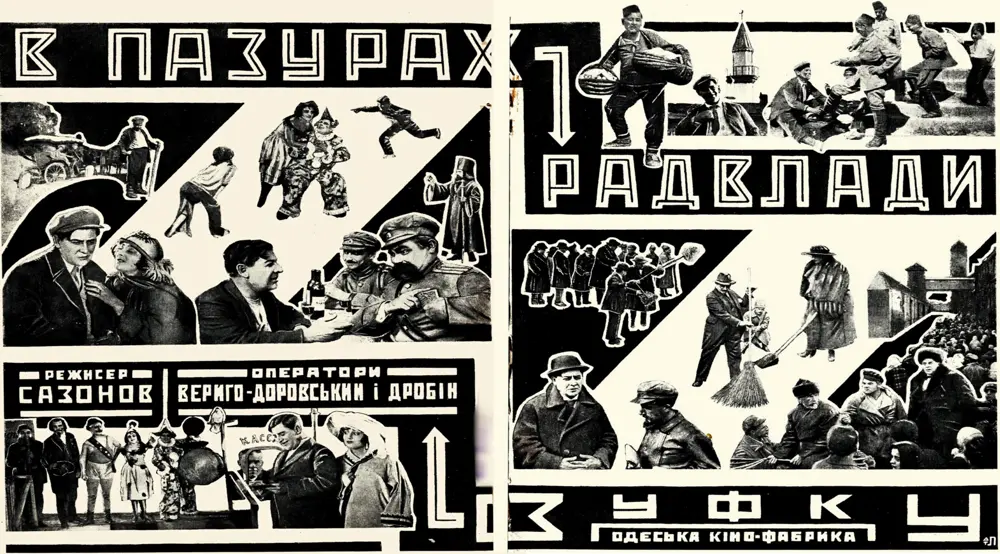
However, the pacing is where the film stumbles. Like many films of the mid-20s, such as A Girl at Bay, there are moments where the narrative drags. The 'episodic' nature of the misadventures means that some scenes feel repetitive. We see him lose his status once, twice, three times—by the fourth time, the point has been made. A tighter edit would have amplified the impact of his descent.
While Kuchinsky anchors the film, the supporting cast, including Bella Beletskaya and Osip Merlatti, provides the necessary texture. They represent the 'new world'—a collective force that is often nameless but always present. This is a stark departure from the star-driven vehicles like Wild Primrose, where the individual is the focus. In this film, the individual is being erased by the collective.
There is a brutal simplicity to the performances. There are no grand monologues here; the actors use their bodies and faces to convey a world in transition. Vladimir Uralskiy and Dmitriy Kapka appear in smaller roles, yet they contribute to the feeling of a society that has been turned upside down. Every background character seems to be judging the protagonist, creating a pervasive atmosphere of paranoia.
It is impossible to discuss this film without addressing its status as propaganda. Some might argue that its political bias renders it worthless as art. I disagree. Much like Hypocrites used allegory to critique social morals, In the Claws of the Soviets uses the industrialist’s plight to celebrate a new political dawn. Whether you agree with the message or not, the conviction with which it is delivered is undeniable.
The film is a fascinating companion piece to Life in the Sudan or other ethnographic films of the era. It seeks to document a 'new tribe' of people—the proletariat—and their triumph over their former masters. It is biased, yes. It is one-sided, absolutely. But it is also a vital record of how a nation reimagined its own identity through the lens of a camera.
The film offers an authentic look at the costumes, architecture, and social dynamics of the 1926 Soviet Union. The performances are grounded and avoid the over-the-top theatricality found in some other silent films like After the Ball. It serves as a powerful example of how cinema can be used to reshape public perception.
The lack of a nuanced villain makes the story feel one-dimensional at times. Unlike the complex moral dilemmas in Open Your Eyes, the conflict here is purely ideological. The pacing is uneven, with some scenes lingering far longer than necessary to make their point.
In the Claws of the Soviets is a difficult, demanding, and ultimately rewarding film. It is a cinematic time capsule that captures a world in the throes of a violent rebirth. It lacks the polish of Hush Money or the charm of Home Brew, but it possesses a gravity that those films lack. It is a film about the end of an era, and it carries the weight of that ending in every frame.
If you can look past the propaganda and the occasionally sluggish pacing, you will find a work of significant historical and artistic value. It is a reminder that cinema has always been more than just entertainment; it is a mirror, a hammer, and sometimes, a claw. It isn't a masterpiece in the traditional sense. But it is essential. Watch it for the history. Watch it for the grit. Just don't expect a happy ending.
IMDb —
1922
Community
Log in to comment.