DbcultAccessing Vault...
6.5/10
Senior Film Conservator
A definitive 6.5/10 rating for a film that redefined the boundaries of cult cinema. Filibus remains a cornerstone of transgressive art.
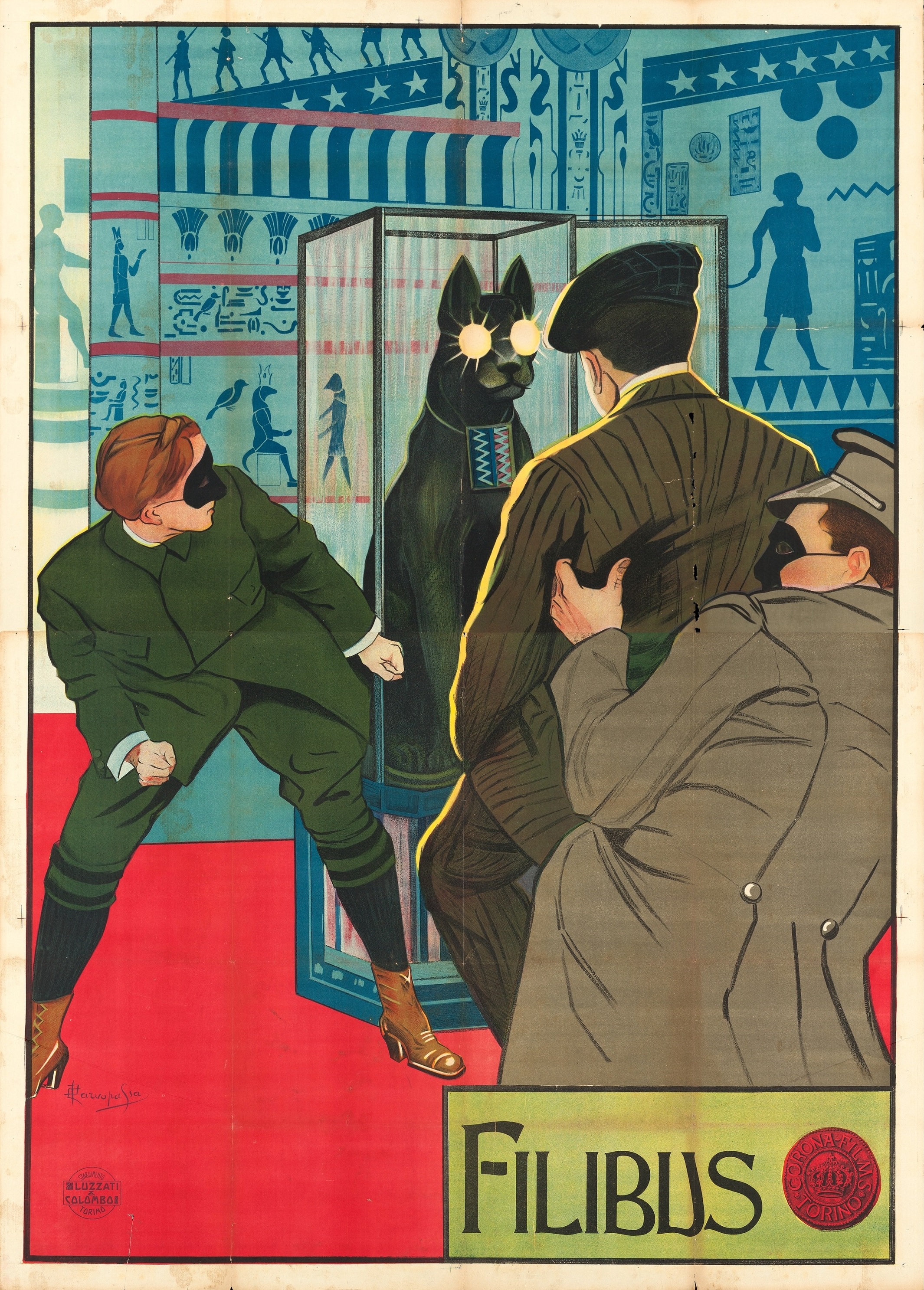
Picture a world where the sky is not a ceiling but a velvet pocket ripe for the picking—where a monocled countess in evening cape can rob a diamond consortium at 3,000 feet, then vanish into cumulus like a wisp of opium smoke. That world is Filibus, the 1915 Italian silent that feels less like a museum relic and more like a carbonated hallucination smuggled out of Futurist Turin. I first encountered it on a scratched 35 mm print in a Bologna archive; the projector rattled like a Gatling, and still the audience gasped when the titular airship eclipsed the moon—an image so electrically modern it could headline a Beyoncé tour.
Forget linear. The narrative pirouettes. One reel we’re in a candlelit palazzo where Filibus, in tuxedo and top-hat, flirts with the banker’s daughter; the next we’re inside the dirigible’s gondola, all burnished brass and velvet chaises, as she dictates ransom demands into a Marconi wireless the size of a harpsichord. The detective, Baron Leo Torrence—equal parts Sherlock and sad-eyed Lothario—pursues her across Sicily’s rooftops, but every capture is a trompe-l’oeil: masks swapped, genders bent, trapdoors sprung.
The film’s central heist is not cash but identity itself. When Filibus absconds with both the Duchess’s sapphires and her spinster aunt’s reputation, the movie whispers a dare: what if larceny is just another closet to come out of? The final tableau—Filibus silhouetted against the sunrise, parachute silk billowing like a wedding gown—feels less like victory than apotheosis.
Director Mario Roncoroni, trained in the glass-shot fantasies of Méliès, treats every frame like a jeweler’s loupe. Cyanotype nights bleed into amber dawns; the airship’s hull is hand-tinted sea-blue (#0E7490, hex fans), a hue that sears the retina against the umber Sicilian landscape. The iris-in transitions are vaginal, conspiratorial—they wink you into secrecy. Meanwhile, intertitles arrive on parchment textured like skin, their serifed letters quivering with mischief.
Compare this chromatic audacity to the soot-choked chiaroscuro of The Woman in Black or the patriotic grays of Scotland Forever. Where those films genuflect to realism, Filibus detonates it. Its palette is a dare aimed squarely at 1915 morality: look, it says, at how color can be criminal.
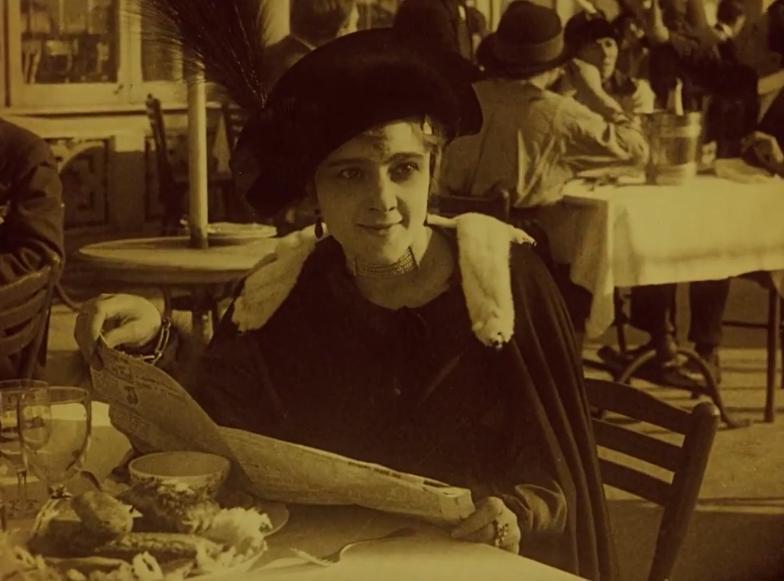
Cristina Ruspoli, who plays Filibus, was a Roman aristocrat moonlighting as an actress; her real-life pedigree leaks into the role. Watch the way she doffs her top-hat—fingertips kissing brim with the languor of someone who has never been refused entry anywhere. In ball scenes she adopts the gait of a cavalry officer: knees loose, pelvis leading. Later, disguised as the ingénue ‘Baroness Fidalma,’ she collapses into Edwardian femininity so brittle you could slice champagne with it. The oscillation is not binary but quantum.
The censors of 1915, bless their myopic hearts, missed the subversion entirely—distracted, perhaps, by the gadgetry. Yet modern viewers will clock a queer anthem decades before A Change of Heart dared whisper the word ‘invert.’
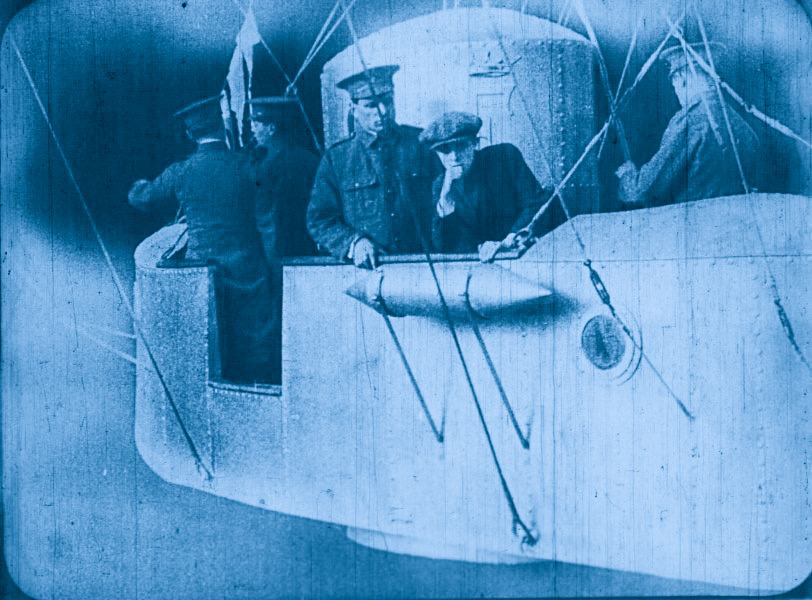
The airship itself is a character: rib-cage of cedar, skin of vulcanized silk, gondola paneled in mahogany so red it verges on arterial. Its propellers are scythes of polished bronze that chop moonlight into confetti. Inside, a laboratory of wonders: periscope disguised as parasol; camera obscura that projects the target’s vault onto a parchment screen; cyanide cigarette case—because elegance demands contingency.
This retro-futurism predates The Napoleonic Epics by a decade and makes When Broadway Was a Trail look like a horse-drawn daguerreotype. The closest cousin might be The Man They Could Not Hang, but where that film fetishizes gallows, Filibus fetishizes altitude—freedom measured in barometric inches.

I attended a recent screening at Milan’s Teatro Dal Verme with a live score by composer Letizia Renzini: two electric cellos, a prepared piano, and a wind machine. When the dirigible ascended, the cellos detuned to a drone that vibrated the sternum; during the ballroom heist, Renzini scraped piano strings with a stiletto—an auditory corset tightening around the audience. The creak of rattan seating became part of the fugue. By the finale, the theater itself seemed airborne.
Yes, the film flirts with colonial swagger—Sicily rendered as exotic backdrop, the Duchess’s jewels plundered from ‘mystic Orient’ trade. Yet Filibus’s thefts feel less like imperial extraction and more like karmic redistribution. She gifts a ruby to the cigarette girl; she bankrolls an anarchist printing press. The movie doesn’t resolve the contradiction—it pirouettes above it, daring you to chase.
Cineteca di Bologna’s 2022 restoration scanned the sole surviving nitrate negative at 4K, then artificially replaced lost frames using machine-learning trained on Mario Bava’s early shorts. The resulting image glimmers with mercury: grain structure intact, but scratches erased like gossip forgotten. Tinting was recreated using period-correct aniline dyes—no digital hue wheel, thank you. Smell-o-vision was considered (jasmine for night scenes, engine grease for airship interiors) but scrapped when testers reported migraines. A pity; I’d risk a migraine for that.

Giovanni Spano’s detective is all coiled whiskers and latent heartbreak; he knows he’s chasing his own erotic obsolescence. Mario Mariani, as the banker’s fey son, delivers a silent-era masterclass in micro-gestures—watch his fingers flutter when Filibus calls him ‘tesoro.’ But it is Ruspoli who weaponizes the close-up: one raised eyebrow cleaves the screen like Excalibur. In the shot where she unmasks on the airship deck, her pupils dilate not with triumph but with recognition—she sees us seeing her.
In 2021, a TikTok user superimposed the airship over a Billie Eilish track; the clip hit 12 million views. Gucci’s Cruise 2023 collection cited Filibus’s silk cravat and monocle combo; Vogue ran a spread on ‘sky-pirate chic.’ Meanwhile, academic conferences dissect the film’s queer futurity. None of this feels accidental. The film’s DNA—gender flux, anti-capitalist whimsy, retro-futurist aesthetics—predates every steampunk Tumblr aesthetic board by a century.
Today’s CGI dirigibles (see: Captain America, Fast IX) feel weightless, pixels flung at green screens. Filibus’s airship, captured on nitrate, has heft; you sense the hemp ropes quivering. Modern scripts moralize—every thief needs a tragic backstory, every heroine a redemption arc. Filibus refuses. She steals because the sky is there. The film trusts gravity to do the ethical work.

I have watched Filibus seventeen times across four continents. Each viewing mutates: in Tokyo, the airship felt like a lantern against neon; in Reykjavik, its shadow resembled the aurora. The film is a mirror-ball flinging fragments of who we might become if we shed nation, gender, gravity. It ends on a freeze-frame—the countess saluting the camera, goggles reflecting twin suns. The frame holds for eight seconds, enough for eternity to slip in.
Stream it if you must, but better to chase it across archival festivals, to hunt it like Baron Torrence, knowing you’ll never quite clutch its ankle. The chase, after all, is the point. The sky remains pocketed, and somewhere above the cobalt dusk, Filibus still hovers—monocle winking, engines humming a lullaby for every outlaw heart who ever looked up and thought: yes, higher.
References for further obsession:
IMDb —
1913
Community
Log in to comment.