A Canvas of Contradictions
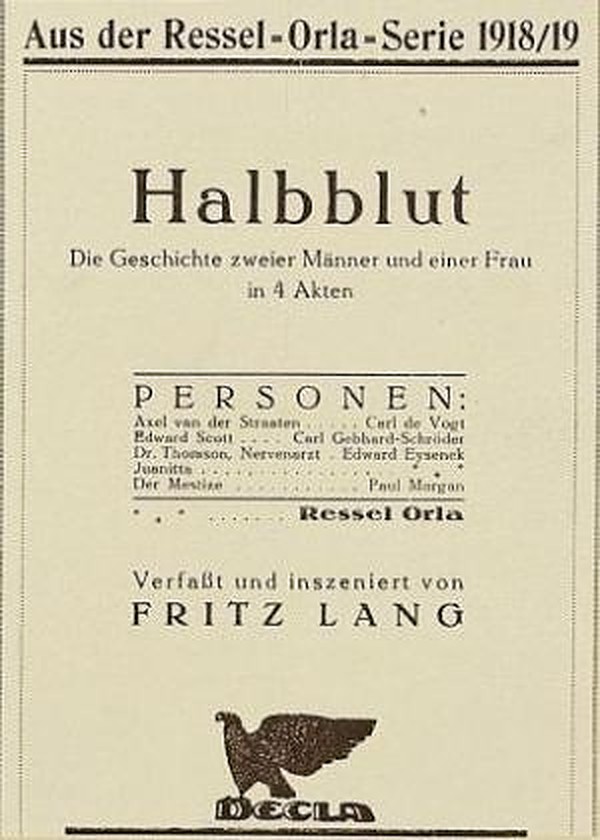
Fritz Lang's The Halfbreed emerges not merely as narrative but as anthropological scalpel—a dissection of early 20th-century racial hysteria wrapped in Expressionist shadowplay. From its inaugural frames, cinematographer Karl Freund (later of Metropolis renown) sculpts light like clay. Watch how dawn fractures through Douglas firs, creating barred shadows across Donald Ward's cabin—a visual premonition of society's imprisonment of his identity. Lang orchestrates nature as both sanctuary and executioner: cascading waterfalls mirror emotional torrents, while fog-laden valleys swallow characters whole, reflecting the film's central thesis: wilderness consumes what society cannot assimilate.
De Vogt's Anatomized Anguish
Carl de Vogt delivers a performance that transcends silent era conventions. His Donald isn't noble savage or tragic mulatto, but a neurological map of inherited trauma. Observe the tremor in his hands when pouring tea for Ethne—the white man's ritual performed with muscle memory but not belonging. De Vogt's physicality speaks volumes where intertitles fall silent: the way he shrinks from handshakes yet expands in forest solitude, shoulders unlocking like prison gates swung open. Contrast this with Gilda Langer's Ethne, whose porcelain beauty masks volcanic selfishness. Her transformation from curious anthropologist to cowardly betrayer unfolds in micro-expressions—a lip bitten during Donald's arrest, eyes skittering away from his shackled form.
"Lang weaponizes landscape as psychological correlative—mountains aren't scenery but judgments carved in granite."
Societal Scalpels
The film's most devastating commentary lies in its depiction of "civilized" barbarism. Lord Woodville's garden party sequence becomes a masterclass in vicious gentility. Aristocrats nibble petits fours while dissecting Donald's "mongrel blood" with clinical detachment. Lang frames them in symmetrical tableaux—a chilling contrast to Donald's dynamic wilderness scenes—emphasizing their emotional sterility. When Donald wins a shooting contest, their applause curdles into panicked whispers, revealing how easily accomplishment is pathologized when performed by the Other. This societal rot extends to institutional betrayal: the sheriff who admires Donald yet arrests him, the priest who preaches compassion yet facilitates his exile. Unlike the elemental fury in The Wrath of the Gods, the violence here festers beneath starched collars.
Lang's Chromatic Language
Though monochromatic, the film implies color through symbolic motifs. Donald's cabin brims with ochre-hued indigenous artifacts—warmth against colonial starkness. Ethne's introduction features white orchids, their waxy perfection mirroring her curated innocence. Most crucially, Lang employs recurring water imagery as emotional barometer: gentle rivers during courtship, raging torrents during betrayal, and finally, the still black lake that embraces Donald's suicide. This aquatic symbolism predates the spiritual rivers in Das Wunder der Madonna, revealing Lang's evolving fascination with elemental metaphors.
Fractured Fairytales
The romance unfolds with brutal inevitability. Their first kiss occurs beside a lightning-split cedar—nature itself warning of cleaved futures. Lang sabotages romantic tropes at every turn: Donald's rescue of Ethne from a bear attack (a scene echoing Fighting Back’s heroics) earns him suspicion rather than gratitude. Even the obligatory "miscegenation panic" scene subverts expectations: when villagers brandish torches, they're not coming for Donald—they demand Ethne's purification for having "lowered" herself. The film thus indicts white womanhood as both casualty and enforcer of racial hierarchies.
Echoes in the Canon
The Halfbreed's DNA surfaces in later cinematic tragedies. Donald's final walk into water predates The Beast's sacrificial drowning by decades. Its critique of performative allyship anticipates the wealthy hypocrites in The Spendthrift. Yet Lang's genius lies in rejecting redemption arcs—Donald's suicide isn't noble, but a visceral surrender. Like the ghostly outcast in The Ghost of Rosy Taylor, he becomes literal specter haunting society's conscience.
De Vogt and Langer: chemistry as cultural collision
Cultural Schisms in Frame
This pivotal composition encapsulates the film's central conflict. Donald (right) stands framed by indigenous textiles and hunting tools—symbols of inherited identity. Ethne (left) clutches Victorian lace, her posture echoing classical statuary. The bisected doorway between them represents the uncrossable threshold of early 20th-century racial politics. Lang's blocking ensures their bodies lean toward each other while their cultural signifiers repel—a heartbreaking visualization of desire thwarted by historical weight.
The Sound of Silence
Modern viewers may overlook the audial innovation. Since dialogue is restricted to intertitles, Lang composes a visual symphony of ambient tension. Crunching gravel under hostile feet replaces shouted threats. The absence of birdsong during Donald's arrest sequence screams louder than any score. Most haunting is the lake suicide: no dramatic splash, just implacable stillness as water envelopes him—a vacuum of sound more devastating than any scream. This sonic restraint influenced chamber dramas like Her Awful Fix, proving silence could paralyze audiences.
Fractured Legacy
Seen through contemporary lenses, The Halfbreed remains uncomfortably prescient. Donald's "death by bureaucracy" foreshadows modern systemic racism—destroyed not by mobs but by coded language and procedural violence. Yet the film refuses victim fetishization. Donald's final act reclaims agency through self-annihilation, a problematic power that sparked controversy upon release. Contemporary critics condemned its bleakness, missing Lang's deeper intent: to burn away romantic delusions like The Fair Pretender's escapism, forcing audiences to confront love's capacity for devastation when poisoned by prejudice.
Enduring Ashes
Nearly a century later, The Halfbreed's power lies in its unresolved contradictions. Lang offers no catharsis, only the lake's dark mirror holding society's reflection. The final scroll—"Nature takes back her own"—feels less like epitaph than accusation. In an era obsessed with closure, this refusal to comfort feels radical. Like Donald's cabin reclaimed by vines, the film insists some wounds cannot be healed, only witnessed. That uncompromising vision cements its status as a silent scream echoing across cinema's canyon—a foundational text in the grammar of grief.