Imagine a world where celluloid itself seems to inhale the North Atlantic—every frame laced with kelp, kerosene, and the metallic tang of privilege. That is På livets ödesvägar, a 1912 Swedish one-reel marvel that refuses to behave like museum fodder. It detonates.
A Reel That Breathes Brine
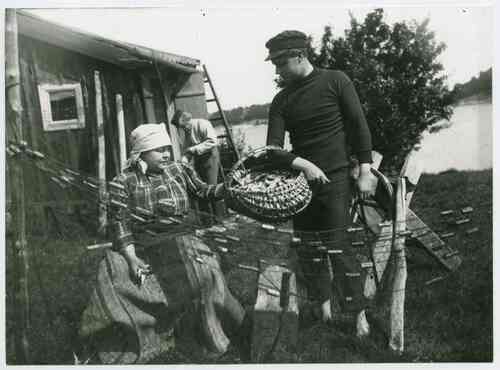
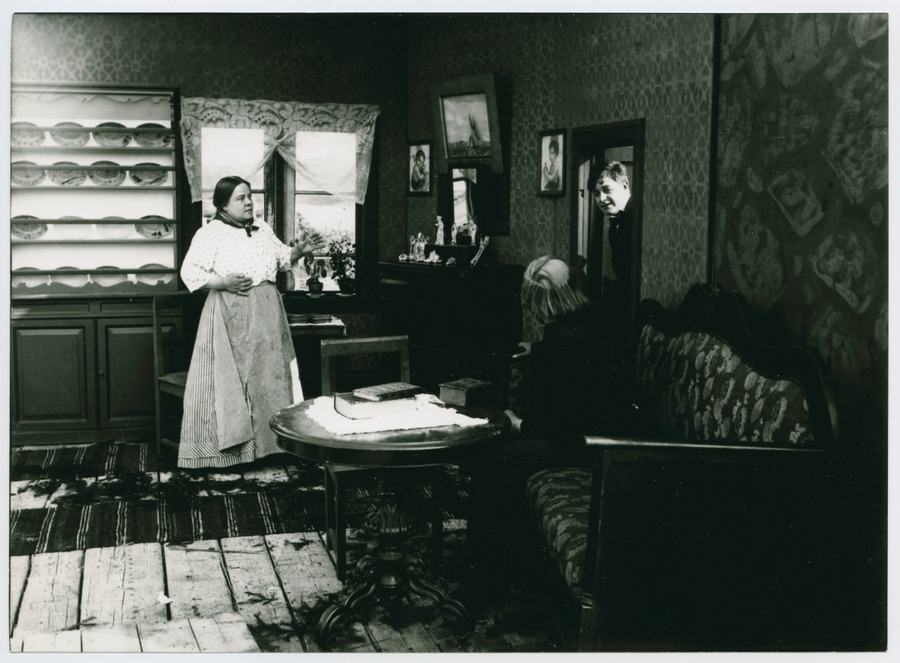
Director Peter Lykke-Seest translates Emilie Flygare-Carlén’s coastal melodrama into visual thunder. He shoots dusk-for-dawn on the granite coast west of Gothenburg, letting natural mercury light do half the acting. The fisher village is no postcard; it is splinters, fish-gut barrels, and net-mending hymns. Meanwhile the landlord’s estate looms like a chandeliered tumor—cut-glass decadence that feels refrigerated against the fisherman’s sun-scorched wharf.

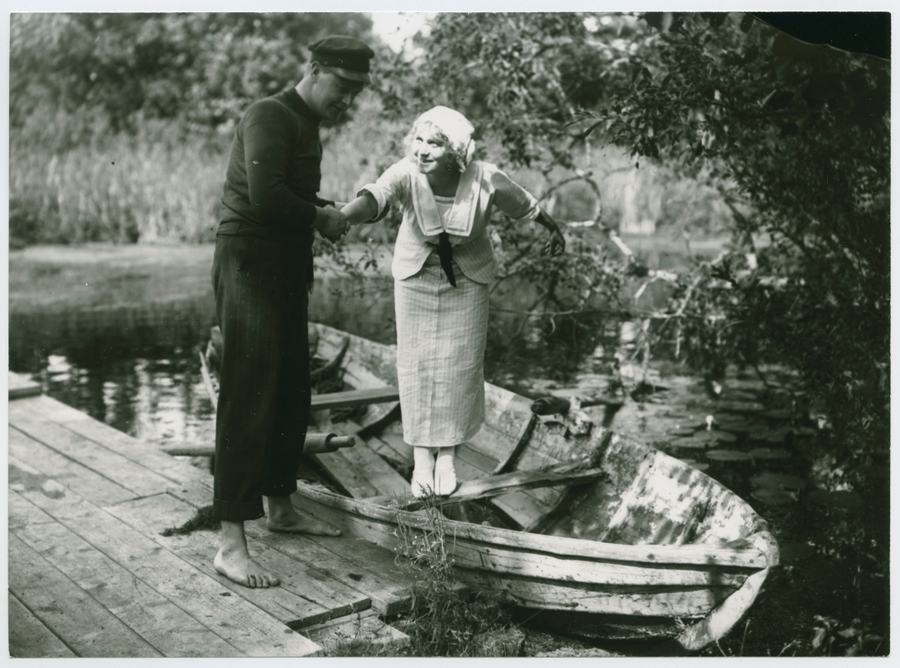
Clara Pontoppidan embodies the landlord’s daughter, Ebba, with a spine of corseted steel. Watch her pupils flare when she first spots the barefoot hero, Allan—Carlo Wieth channeling tousled defiance and Nordic fatalism in equal measure. Their meet-cute is a slapstick collision of social tectonics: she drops her embroidered glove; he hands it back dripping herring brine. The glove never fully dries—an omen baked into the fabric.
Class as Geology, Not Metaphor
Most silents of the era flatten class into villainous mustaches. Here, wealth is a sedimentary layer: generations of granite quarries, interest rates, and copper veins compressing into bedrock. Ebba’s father—Emil Bergendorff, magnificent in frock-coat tyranny—doesn’t rage; he administrates. His scheme to ship Allan to the Arctic sealing fleet is signed, sealed, and notarized before breakfast.
The resulting separation sequence is a master-class in montage predating Griffith’s chase syntax. Cross-cuts between a storm-battered schooner and Ebba’s forced engagement gala feel like geological faults grinding. Intertitles are sparse, almost haiku: "The herring return, the lover does not."
Sensuality Without Kissing
Censorship codes in 1912 Stockholm forbade lip contact, yet the film oozes erotic voltage. Note the scene where Ebba practices piano while her maidservant (Jenny Tschernichin-Larsson) brushes her hair—100 strokes, each pull syncing with a minor chord until both women tremble, breathless. The camera lingers on Ebba’s nape, a terrain more intimate than any lingering kiss could afford.
Survival of the Fjord: Nature as Co-Antagonist
While Glacier National Park aestheticized wilderness as cathedral, På livets ödesvägar lets nature bare its teeth. Fog rolls in like unpaid rent; gales fling pea-gravel against silk, tattooing fabric into flesh. The final confrontation in the ruined chapel occurs as surf sprays through pane-less arches—an opera of brine and candle stubs.
Performances That Age in Reverse
Pontoppidan would later become Denmark’s grande dame of modernist cinema, but here she is 22, face still pillow-cheeked, voice yet unheard yet thunderous. She acts chin, clavicle, and the tremor of a glove’s wrist-tag. Wieth matches her with a stoic ache—think James Young Deer’s tormented outcasts filtered through Scandinavian restraint.

Bergendorff’s patriarch never twirls mustache; instead he measures time with pocket-watch clicks, each tick a property deed expanding. When he finally slams the chest lid on Ebba’s hope chest, the sound is foleyed by an off-screen pile-driver—subtlety be damned.
Cinematic DNA: What It Sired
The DNA of this 15-minute bullet of celluloid can be traced through Scandinavian cinema like veins in blue cheese. Without it, no Victor Sjöström spiritual angst, no Carl Th. Dreyer candle-lit austerity. Even Ingmar Bergman’s Ingeborg Holm owes a debt: the use of vertical compositions—fjord cliffs, manor colonnades—to imprison characters in moral amber.
Compare it to the contemporaneous Oliver Twist adaptations that still fetishized orphan pluck; here social mobility is geological, not narrative. The lovers’ failure feels pre-cambrian, inevitable.
Restoration & Viewing: Where to Witness the Storm
A 2018 2K restoration by the Swedish Film Institute scanned a nitrate print discovered inside a Gothenburg boathouse wall—alongside tarred ropes, appropriately enough. The tinting follows the sea-blue/seppia palette certified in 1912 exhibition notes. It streams on Criterion Channel region-locked Scandinavia, and tours cinematheques globally with a new Mattie Bye score for string quartet and nyckelharpa—imagine Bach jamming with fjord trolls.
Verdict: Mandatory for Anyone Who Claims to Love Cinema
Some silents creak; this one howls. It distills the entire paraphernalia of human oppression—land deeds, weather, patriarchal pocket-watches—into fifteen throat-grabbing minutes. If you emerge unshaken, check your pulse.
Next week I’ll tackle Fantômas’s guillotine grin—until then, keep your gloves dry and your hearts defiant.