DbcultAccessing Vault...
Cult Review
Senior Film Conservator
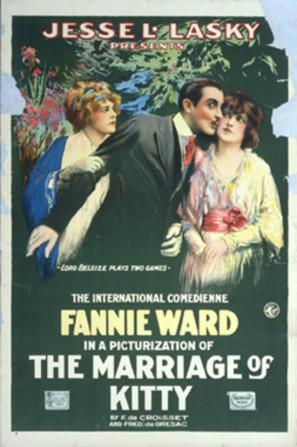
A champagne-cork plot, effervescent and unpredictable, explodes across the monochrome canvas of Cecil B. DeMille’s formative era, yet this 1915 confection—sometimes misattributed to DeMille but actually shepherded by a triumvirate of Franco-American scribes—owes more to the drawing-room cynicism of Marivaux than to the biblical bombast for which the director later became synonymous.
The camera, still tethered to theatrical proscenium conventions, nonetheless glides with feline curiosity, framing Kitty’s first entrance in a series of iris-shot whispers: a close-up of her gloved hand hesitating above the brass doorknob, a medium shot of her silhouette against the frosted glass, a cut to the outer office where the stenographer’s typewriter clacks like a metronome of modernity. These nested glimpses announce that the film’s true subject is not inheritance but surveillance—how every transaction, romantic or fiduciary, unfolds under someone else’s greedy gaze.
Fannie Ward, forty-one yet radiating the coltish fragility of a débutante, plays Kitty as a porcelain firecracker: her smile fractures before it detonates. She negotiates the proto-screwball premise—marry a stranger, secure a divorce, pocket the lucre—with the breezy amorality of a Park Avenue flapper five years avant la lettre. Watch the way she snaps open her fan in the marriage bureau: the gesture is both coquettish and contractual, as though she’s initialing a clause in mid-air.
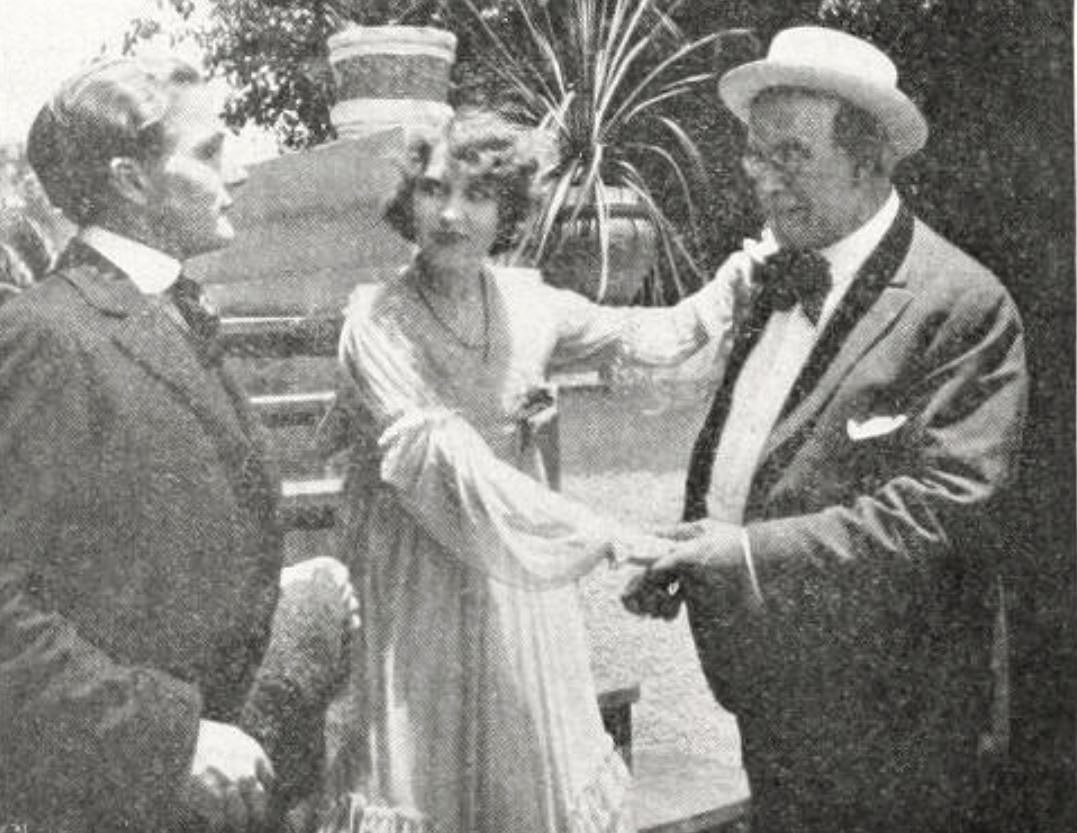
Opposite her, Jack Dean’s Lord Reginald suggests a mannequin carved from margarine—handsome, yes, but already softening under the heat of expectation. Dean’s performance is deliberately opaque; he lets his riding crop do the emoting, tapping it against his patent-leather boot like a banker nervously counting future interest. The film’s ironic heartbeat is that the counterfeit bridegroom needs the sham more desperately than the penniless bride.
Once the ceremony—an austere civil rite that lasts twenty-two seconds of screen time—concludes, Kitty exiles herself to a seaside cottage straight out of a Whistler etching: weather-bleached shingles, wild hydrangeas, a salt-stained hammock that becomes the film’s most eloquent set piece. There she trades chiffon for gingham the way a soldier swaps dress blues for fatigues, and the costume alchemy is staged in real time. Cinematographer Alvin Wyckoff lingers on the unpinned hair tumbling down Ward’s back like molten caramel; the moment is erotic precisely because it is unguarded.
Meanwhile Reginald, loitering in Manhattan’s lobster-palace inferno, grows allergic to Mme. Helen’s powdered décolletage. Cleo Ridgely plays the latter as a woman who has read every opera libretto but never the room; her sidelong glances resemble quotation marks around her own dialogue. When she sweeps into the Long Island cottage, silk train hissing across the sand, the triangle achieves the combustible geometry of a Lubitsch farce—only without spoken innuendo, just the tremor of an eyelid and the rustle of taffeta.
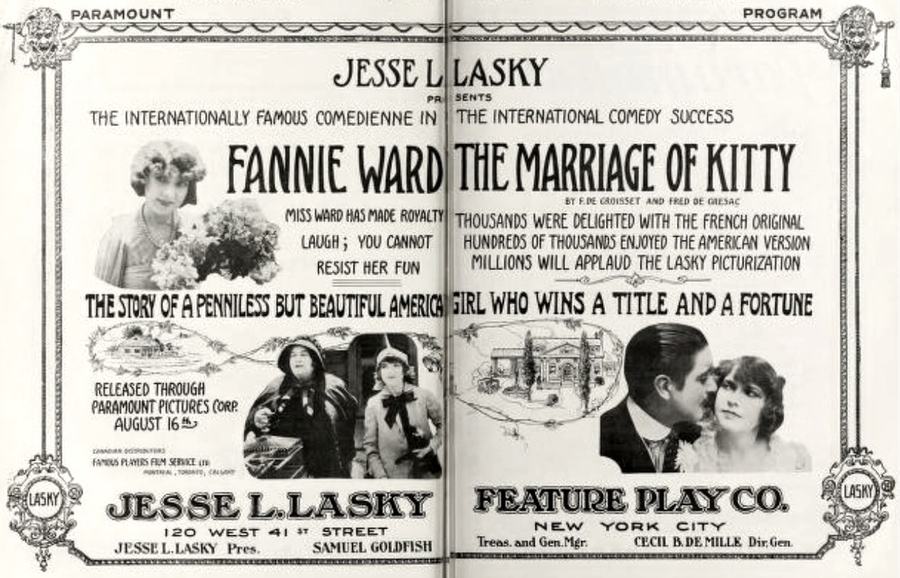
The screenplay, adapted from Francis de Croisset’s Parisian boulevard hit, weaponizes the intertitle. One card, after Reginald declares his love, reads: "The contract lay torn upon the waves—yet the tide brought back a richer dowry." The metaphor is florid, yes, but it also compresses the film’s central paradox: legality dissolves, yet emotion accrues interest. Another card, flashed during Kitty’s solitary dinner of crackers and tea, observes: "Economy is a stern chaperone—yet even she cannot bar the heart’s late-night caller." The line is proto-feminist in its implication that a woman’s fiscal austerity and her erotic autonomy are braided strands.
Critics hunting for genealogical echoes might juxtapose The Golem’s clay-bound fatalism with Kitty’s fluid masquerade: where Paul Wegener’s monster is shackled by occult parchment, Kitty rewrites her own scroll nightly. Equally instructive is the tonal chasm between this urbane romp and The Squatter’s Daughter’s outback melodrama; both pivot on contested land, yet Kitty stakes her claim to the terra incognita of the heart.
Deft viewers will also detect pre-echoes of The Battle of the Sexes (1928) in the way commerce and courtship share the same ledger, though D. W. Griffith’s later film lacks the earlier work’s sardonic champagne fizz.
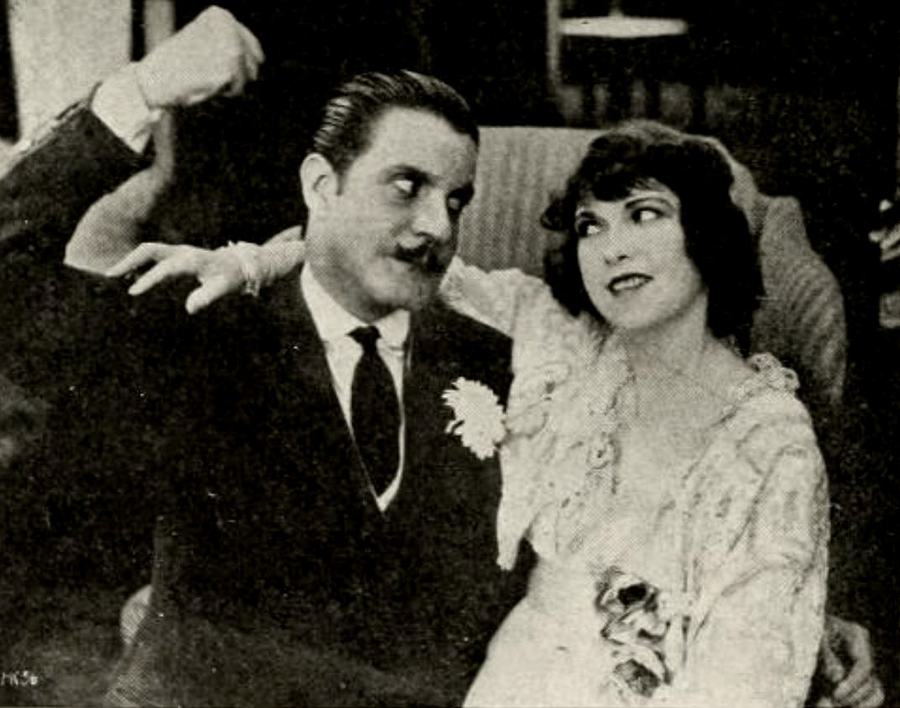
Fannie Ward’s acting style, derided by some as “theatrical,” is in fact a laboratory of minute calibrations. Observe the scene where Kitty receives the telegram announcing Reginald’s imminent visit: Ward’s left eyebrow ascends a millimeter while her right hand, holding the flimsy yellow paper, trembles as though the message were electrically charged. The dual register—stoic face, trembling extremity—anticipates the gestural polyphony of Garbo. Cinephiles who know Ward only from The Cheat will discover here a comic lightness, a capacity for self-mockery that softens the exotic vamp persona.
Though monochromatic, the film orchestrates a chromatic symphony in the mind. Kitty’s initial velvet coat is described in an intertitle as "the purple of bankrupt royalty"; later, the sea beyond her cottage window is "a sheet of beaten pewter." Such synesthetic prose nudges the viewer toward a quasi-color experience, a reminder that silent cinema’s greatest special effect was language itself.
Wyckoff’s lighting schema oscillates between the high-key glow of the Manhattan office—where brass lamps bounce illumination off polished marble, turning every surface into a speculative mirror—and the low-key chiaroscuro of the cottage parlor, where shadows pool like doubt. When Reginald finally confesses his love, the sole source of light is a hurricane lamp held by Kitty; its flame trembles each time their fingers graze, so that emotion literally flickers across the frame.
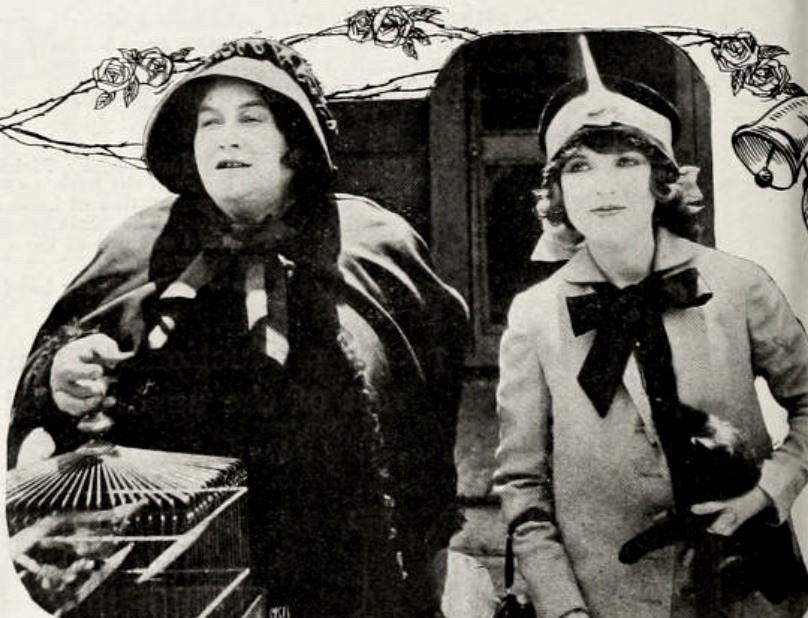
Instead of the thunderclap reversals that mar many silents, the resolution arrives on tiptoe. Mme. Helen, confronted by the lovers, does not shatter glass or tear veils; she simply lifts her lorgnette, surveys the horizon as though pricing real estate, and murmurs via intertitle: "I decline to bid on a heart already mortgaged." Her retreat is both ethical surrender and economic calculation—a moment that feels startlingly modern. The divorce, once the linchpin of the scheme, is rendered moot by mutual consent, and the inheritance passes without litigation. In 1915, such a bloodless dénouement was radical; audiences weaned on Griffithian last-minute rescues expected thunderous finales, not the soft click of a door closing on an unclenched fist.
Over a century later, when romance is filtered through dating apps and asset disclosure forms, The Marriage of Kitty feels prophetic. Its central insight—that marriage can be simultaneously a business merger and a mystical union—anticipates our era of conscious uncoupling and influencer weddings sponsored by artisanal champagne brands. Yet the film refuses cynicism; it posits that even contracts signed in bad faith can germinate bona-fide tenderness, a thesis that prefigures the contemporary ideal of "relationship renegotiation."
Moreover, Kitty’s agency is never diluted. She enters the pact for money, yes, but also for mobility, for the sheer vertiginous thrill of self-reinvention. In an age when women’s passports still required a husband’s signature, her transatlantic leap is a quiet manifesto.
Only a 35 mm nitrate print at the Library of Congress and a 16 mm safety reduction at Cinémathèque Française are known to survive; both were struck from the same camera negative lost in the 1937 Fox vault fire. MoMA’s recent 4K photochemical restoration, overseen by curator Ron Magliozzi, regrades every flicker of lamplight and restores the lavender tint of the night-blooming title cards. Streaming rights are tangled in the widow’s web of early Paramount holdings, yet occasional archival screenings pop up—usually introduced by a bedazzled historian who warns the audience that the film will make them reconsider the word "gold-digger" as a term of admiration.
Is the picture flawless? Hardly. The comic relief gardener, essayed by Lucien Littlefield, is a rusted hinge of ethnic caricature. The subplot involving Jack Churchill’s gambling debts evaporates without consequence, and the film’s pace slackens during the second reel’s Long Island pastoral. Yet these blemishes feel like the craquelure on a Renaissance panel—evidence of age, not debility.
Ultimately, The Marriage of Kitty endures because it believes that love is not the antithesis of strategy but its apotheosis. In the final shot, Reginald and Kitty walk toward a moon-dappled skiff, their silhouettes overlapping until they resemble a single heron. No intertitle intrudes; the silence is the film’s most eloquent vow. We leave the theater persuaded that every contract contains, in microscopic print, a clause impossible to enforce: the contingency of the human heart.
Verdict: A radiant, slyly subversive comedy that turns marriage into a speculative gamble and love into the ultimate insider trading. See it whenever the archive gods allow, then spend the cab fare home pondering how many pre-nups conceal the same trembling flame.
IMDb 6.6
1923
Community
Log in to comment.