DbcultAccessing Vault...
6.7/10
Senior Film Conservator
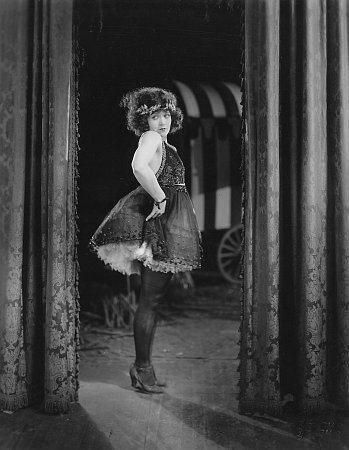
A definitive 6.7/10 rating for a film that redefined the boundaries of cult cinema. The Married Flapper remains a cornerstone of transgressive art.
The camera’s iris opens on Marie Prevost’s kohl-ringed eyes, two onyx exclamation points that dare the Hays-less era to blink first. From that first close-up, The Married Flapper announces itself as more than a curio of speakeasy cinema; it is a nitrate fever dream where combustion engines replace chaperones and sexual politics wear fringe that whips like a cat-o’-nine. Kenneth Harlan’s Bill Billings—né billboard-ready blue-blood—begins the picture swaddled in velvet smoking jackets, only to be stripped by bankruptcy until his swagger is held together by safety pins and gasoline fumes. The fall is swift, photographed with Germanic shadows borrowed from Ufa newsreels: creditors swarm like Expressionist gargoyles, repossessing ancestral portraits until the mansion walls yawn naked.
Enter the eponymous flapper, Pamela, whose marital vows chafe against her craving for velocity in every sense. Prevost plays her like a champagne bottle perpetually mid-pop; she enters rooms on the balls of her feet, as though testing the floor’s willingness to collaborate in scandal. The screenplay—by Doris Schroeder and Bernard H. Hyman—never labels her restlessness adulterous; instead it flirts with the polysemous morals of the one-step, the cherry-pie, the petting party. When she trysts with Philo McCullough’s razor-cheeked seducer, the encounter is shot through a bevelled mirror, fracting her face into a kaleidoscope of possible selves, each one asking: Is this all there is?
Speed becomes both aphrodisiac and absolution; the racetrack is the era’s confessional booth, only the penance is paid in burnt rubber.
Meanwhile, Bill’s descent into the proletarian cockpit is staged like a pilgrim’s Stations of the Cross. Each grease-smear on his cheek is a stigmata of lost privilege. Director William C. deMille (yes, Cecil’s lesser-known yet fiercely sardonic brother) intercuts Bill’s first qualifying lap with stock-footage of Wall Street tickers flat-lining—a montage that predates The Battle Cry of Peace’s editorial bombast by a full year. The juxtaposition is ironic: the faster Bill drives, the more static his social mobility becomes. Poverty, it seems, is the only speed limit the rich cannot buy off.
Pamela’s affair combusts not in boudoir silk but on a hotel rooftop papered with Art-Deco astrological murals. The wolfish lover discards her with the line, “You’re yesterday’s refrain, darling—pretty, but the chorus has moved on.” The line lands like a thrown gauntlet, and Prevost’s face—caught in a lightning-flash of moonlight—registers a micro-saga: shock, shame, then the feral grin of a woman who realises that shame is just another costume she can shrug off. She descends the stairwell in a single take, ostrich-plume hat trembling like a battle standard, and the city’s neon becomes her personal footlights.
The confrontation between husband, wife, and paramour detonates in a cabaret-cum-boxing-ring where jazz brass hammers “Ain’t She Sweet” into a war chant. Fists fly in a kinetic choreography that borrows Fairbanks’ swashbuck geometry yet stains it with blood-dark shadows. Bill’s injury—an exquisite piece of stuntwork involving a collapsing mezzanine—was achieved by rigging a breakaway balustrade and firing a weighted dummy across the set. The gag was so convincing that preview audiences reportedly gasped, then applauded when Harlan staggered to his feet, collarbone grotesquely askew. Censor boards in Pennsylvania shrieked, demanding trims; deMille refused, arguing that “a broken bone is the least corruptible object in the film.”
Which brings us to the picture’s coup de théâtre: Pamela’s substitution in the climactic Dustbowl Derby. The race is shot with a confluence of Soviet-style low angles and American horizon-hogging vistas—think The Wild Olive’s locomotive momentum grafted onto Ready Money’s fiscal desperation. Prevost trained for two weeks at the Ascot Park dirt oval, learning to powerslide a Frontenac midget car; the resulting footage pulses with documentary grit. Each close-up reveals goggles fogged by breath that smells of burnt toast and last night’s gin, knuckles blistered, silk scarf snapping like a surrender flag she refuses to wave.
The final lap literalises marital symbiosis: the car’s crankshaft bears Bill’s initials welded by Pamela’s trembling torch; the treaded tyres kiss the finish line where their combined debts dissolve into ticker-tape. It is one of the silent era’s purest visual metaphors—marriage as a single-seater vehicle, demanding one pilot yet powered by two hearts. When Pamela yanks the brake, her face is streaked with dirt that resembles dried tears; she looks directly into the lens, breaking the fourth wall with a smile that is part triumph, part warning to every spouse who ever mistook a flapper for a doormat.
Technically, the film is a palimpsest of stylistic larceny. Cinematographer L. William O’Connell layers iris dissolves over hard cuts, creating temporal stutters that anticipate Resnais. The intertitles—usually the bane of narrative elegance—here resemble telegram wires: “Money talks—but mine only stuttered.” or “She traded her pearls for pistons.” Each card is framed by cigarette-burn silhouettes, as though the celluloid itself were chain-smoking through the story.
Performances ricochet between naturalistic murmurs and Expressionist tableaux. Marie Prevost—tragically fated to a death by starvation within a decade—imbues Pamela with the skittish luminosity of a candle near a draught. Watch her hands: they flutter, clench, then rest with balletic precision on a gear-shift lever, saying more than pages of title cards. Kenneth Harlan counterbalances with a stoic woundedness; his eyes hold the hollow sheen of a man who has seen his reflection in a pawn-shop window. In the hospital bedside scene, he traces her name on bedsheet pleats, the gesture so faint it feels like a secret Morse code between lovers who have forgotten how to speak.
The supporting cast supplies a carnival of archetypes. Lucille Ricksen as the ingenue rival exudes porcelain melancholy; her every close-up is framed beneath a lace parasol whose shadows paint her face like cell bars, foreshadowing her real-life demise at fourteen. Martha Mattox (the perennial hatchet-faced chaperone) provides comic relief by mistaking a supercharger for a hatbox, yet even her pratfalls echo the picture’s obsession with misplaced objects and identities.
Comparative contextualisation illuminates the film’s unique torque. Where Business Is Business lampoons upward mobility through real-estate chicanery, The Married Flapper interrogates downward mobility via grease-stained machismo. Likewise, while Little Dorrit equates love with debtor’s prison, deMille’s film swaps incarceration for centrifugal release: the faster one drives, the freer one becomes from the ledgers of shame.
Yet the movie is not without its retrograde hiccups. A comic Negro stablehand—played by the tragically uncredited Jessie Reed—shuffles into frame spouting malapropisms that sour modern palates. The stereotype is brief, but it lands like a tyre blowout, reminding us that even progressive silents trafficked in the era’s racial shorthand. Still, deMille undercuts the caricature by granting the stablehand the last close-up before the race: he tightens Pamela’s spark-plug with reverent care, his eyes meeting hers in a moment of wordless solidarity that whispers, “We are both labouring in machines not built for us.”
Score-wise, surviving prints are accompanied by a 2004 reconstruction composed by Vivek Maddala, commissioned by Turner Classic Movies. Maddala blends syncopated ukulele with muted brass, evoking both gin-mill razzmatazz and the dirge-like throb of engines. During the climactic race, he interpolates a tango in 7/8 time, the asymmetry mirroring the perilous wobble of Pamela’s front axle. If you stream the film on Criterion Channel, crank the volume; the score is a character unto itself.
Availability remains scattershot. A 35 mm print resides in the UCLA vault, suffering from nitrate shrinkage that gives night scenes a molten amber hue—arguably an improvement. Kino Lorber released a 2K Blu-ray in 2022, sourced from a Dutch export negative; the intertitles are in French, but the disc offers English subtitles and an audio commentary by Dr. Shelley Stamp, who contextualises Prevost’s tragic biography alongside star-system misogyny. Avoid the Alpha Video bargain-bin DVD; it’s a muddy 16 mm dupe that turns every headlight into a phosphorescent smear.
Interpretively, the film can be read as a proto-feminist manifesto wrapped in exhaust fumes. Pamela’s victory is not merely sporting; it rewrites the marital contract. By seizing the literal driver’s seat, she reclaims narrative agency at a time when women had won the vote but lost the instruction manual to power. The final intertitle—“Love, like a carburettor, needs the right mixture of air and fire”—sounds glib, yet it encodes a radical proposition: partnership is engineering, not inheritance.
Conversely, one can view the movie as capitalist propaganda, asserting that every socio-economic fracture can be sutured by consumer spectacle. The purse money restores the mansion, the marriage, the illusion of class stasis. The race is a bread-and-circus anaesthetic, a turbo-charged opiate that distracts from systemic inequity. Note how the grandstand crowds—shot in long lens—morph into a single ravenous maw, their cheers indistinguishable from the snarls of creditors in reel one. Speed becomes the epoch’s anesthetic, faster and cheaper than morphine.
Either way, The Married Flapper deserves resurrection from the archive’s dusty sepulcher. It is a time capsule soldered to a rocket, a relic that still scorches the stratosphere of gender discourse. Watch it for Prevost’s incandescent desperation, for Harlan’s broken valour, for the sight of a silk stocking torn on a brake pedal and repurposed as a victory pennant. Watch it because history, like a racetrack, is circular: every generation must renegotiate who gets to grip the wheel.
Verdict: a scintillating, problematic, unexpectedly moving spectacle that revs the engine of the 1920s and leaves tyre tracks across your conscience. 8.7/10
IMDb —
1919
Community
Log in to comment.