DbcultAccessing Vault...
5.4/10
Senior Film Conservator
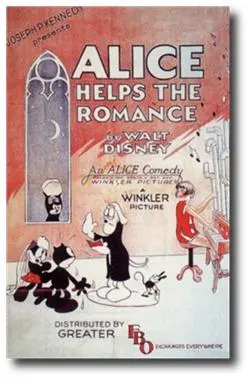
A definitive 5.4/10 rating for a film that redefined the boundaries of cult cinema. Alice Helps the Romance remains a cornerstone of transgressive art.
Is 'Alice Helps the Romance' worth watching today? Short answer: yes, but with significant caveats that demand a certain appreciation for the foundational elements of cinema and a tolerance for the absurd. This film is an intriguing relic best suited for silent film enthusiasts, historians of animation, and those with a pronounced taste for the darkly farcical, particularly those who revel in the sheer audacity of early cinematic humor. It is decidedly not for viewers seeking modern comedic sensibilities, intricate plotlines, or deep character development, nor for those sensitive to the comedic treatment of profound despair.
The 1920s brought forth a deluge of short films, many of which have faded into obscurity, but some, like 'Alice Helps the Romance,' manage to surface with a peculiar charm. Its premise alone is enough to raise eyebrows even a century later: a spurned lover, Julius, repeatedly fails at suicide. This isn't just a simple gag; it's the entire engine of the film's humor, a bold and somewhat shocking choice for its era that speaks volumes about the boundaries early filmmakers were willing to push.
What makes this film endure, for a specific audience at least, is its unashamed commitment to this singular, dark joke. It's a testament to the raw, unfiltered creativity that often characterized the silent era, where visual gags and physical comedy reigned supreme, unburdened by dialogue or the nuanced expectations of later cinematic forms.
This film works because of its audacious, almost shocking premise and the sheer, unbridled commitment to physical comedy. It fails because its humor is deeply rooted in an era that might not translate universally, and its repetitive structure can, at times, feel more exhausting than exhilarating. You should watch it if you appreciate the foundational elements of cartoonish slapstick and early cinema's willingness to tackle taboo subjects with a straight face, albeit a comedic one.
While the title suggests Alice plays a pivotal role, the provided plot summary places Julius's plight at the forefront. The film's comedic core rests almost entirely on his shoulders. Julius, as the perpetually unsuccessful suicide attempt survivor, delivers a masterclass in exaggerated physical comedy. His expressions of despair, his flailing attempts at various methods of self-destruction—each one more ludicrously ineffective than the last—are the film's primary source of laughter.
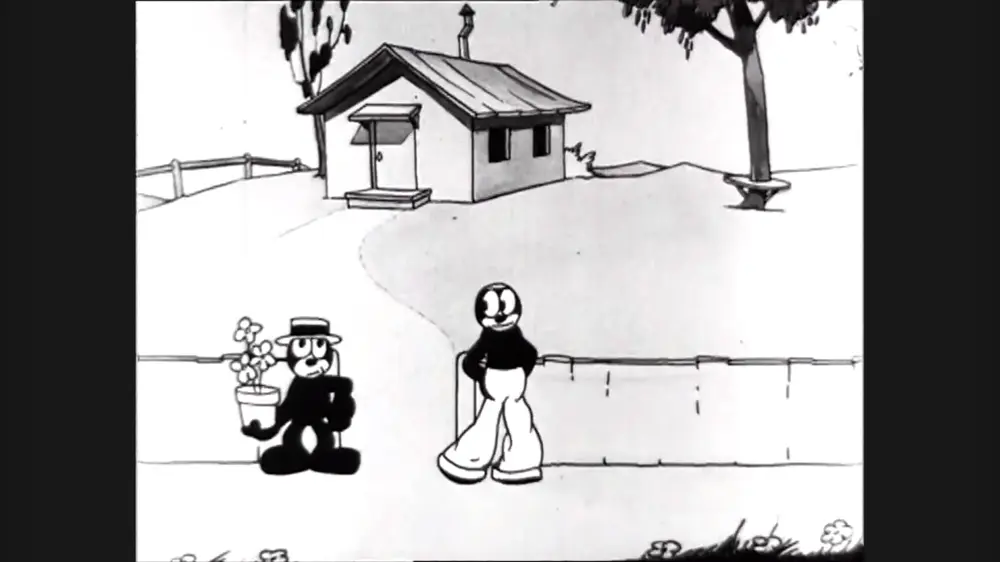
The silent film acting style, characterized by broad gestures and clear pantomime, is perfectly suited to this kind of role. There’s no subtlety here, nor should there be. When Julius attempts to hang himself, only for the rope to snap or the beam to break, the comedy comes from the sheer visual absurdity and his increasingly frustrated reactions. This isn't the internal, nuanced performance of a modern actor; it's a performance designed for the back rows of a crowded cinema, where every emotion had to be writ large.
Margie Gay, listed in the cast, likely plays Alice, the object of Julius's unrequited affection, or perhaps a character who observes his antics. Her presence, even if secondary to Julius's struggles, would have provided a crucial counterpoint, either as the unattainable ideal or as a bewildered witness. In silent comedies, the reactions of supporting characters often amplify the main gag, and one can imagine Gay’s expressions of either disinterest, pity, or amusement adding another layer to Julius’s pathetic endeavors. Her role, typical for many actresses of the era, might be less about active participation and more about being the catalyst or the emotional anchor around which the male protagonist's antics revolve.
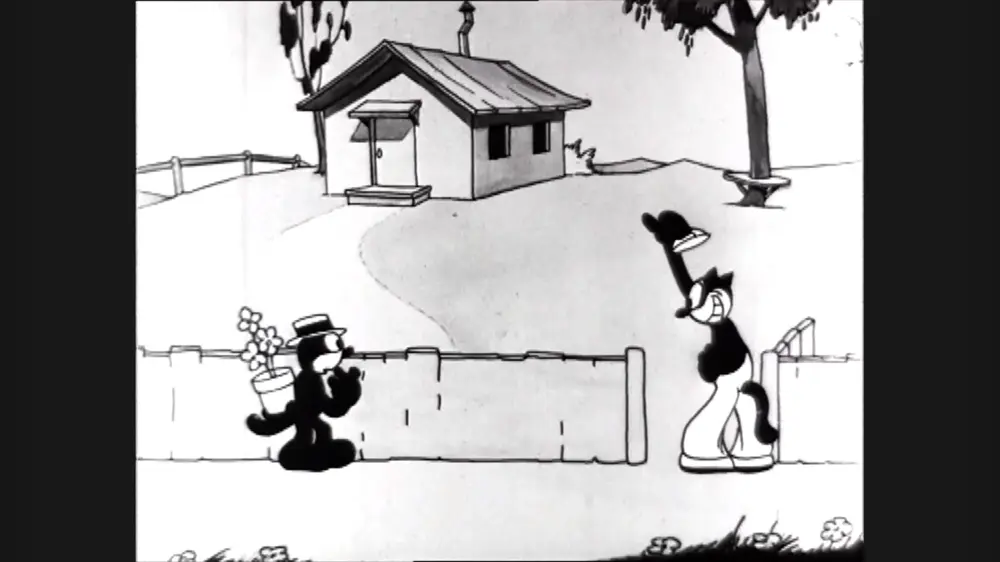
The direction in 'Alice Helps the Romance' is, by necessity, focused on visual storytelling and precise comedic timing. Without dialogue, every gag must be meticulously planned and executed. The film's director (often uncredited in such shorts) orchestrates a series of rapid-fire attempts at self-destruction, each designed to build on the last in terms of absurdity. The pacing is crucial here; the film cannot dwell too long on any single failure, but must quickly transition to the next, maintaining a relentless, almost frenetic energy.
Consider a scene where Julius tries to drown himself, perhaps in a shallow puddle, or by tying himself to a rock that simply floats. The humor isn't just in the failure, but in the immediate cut to his next, equally ill-conceived plan. This rapid succession of visual punchlines prevents the grim subject matter from truly settling in, instead pushing it firmly into the realm of the ridiculous. It's a delicate balance, and one that early filmmakers often mastered through sheer repetition and refinement of slapstick techniques, much like those seen in the works of Buster Keaton or Charlie Chaplin, albeit often with a more straightforward, less character-driven approach.
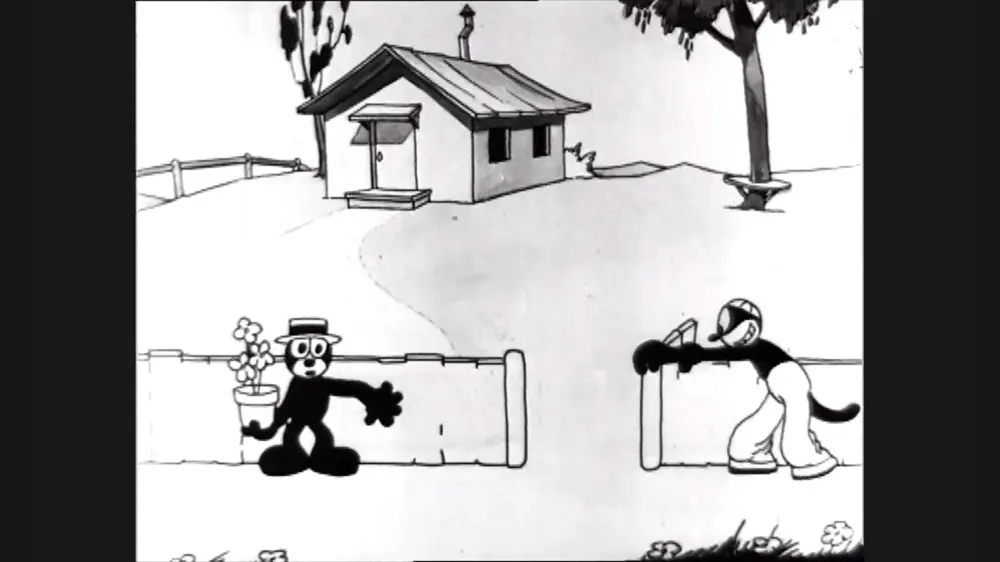
The cinematography, typical of the era, would likely be functional rather than overtly artistic, prioritizing clarity for the gags. Static shots, wide enough to capture the full scope of Julius's physical comedy, would be interspersed with closer shots of his exasperated face. The use of intertitles would be minimal, only appearing when absolutely necessary to convey a plot point or a particularly crucial line of internal thought, allowing the visual comedy to speak for itself. This reliance on visual cues makes the film a fascinating study in how humor was constructed before sound took over.
'Alice Helps the Romance' is, without a doubt, a dark comedy. Its central premise, a man repeatedly trying and failing to end his life due to a broken heart, is inherently morbid. Yet, the film treats this with an almost cartoonish levity that can be jarring to modern sensibilities. This isn't the nuanced, character-driven dark humor of a film like Man by the Roadside (if it had a comedic bent), but rather the broad, almost innocent dark humor of a child's drawing where the stakes are high but the consequences are always averted.
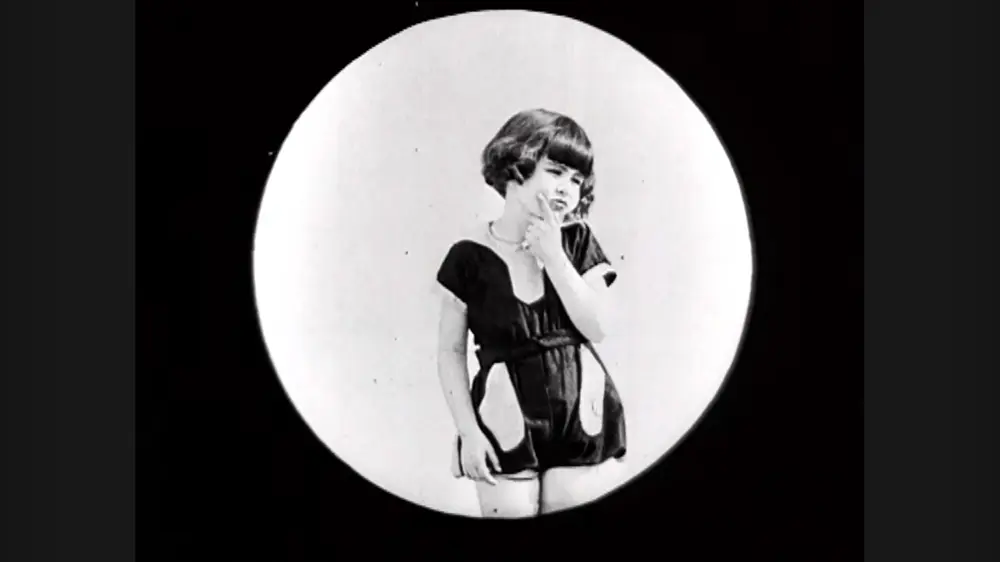
The film's tone walks a tightrope. It asks the audience to laugh at despair, to find amusement in a man's ultimate failure to even achieve his own demise. This isn't a comfortable laugh for everyone, and it highlights a fascinating aspect of early 20th-century entertainment: a willingness to push boundaries of taste in pursuit of a laugh, often without the self-consciousness or irony that would define later dark comedies. It's a remarkably blunt approach. The film doesn't apologize for its subject matter; it simply presents it as a vehicle for physical comedy.
Some might argue that this cavalier treatment of suicide trivializes a serious issue, and that's a valid criticism. However, within the context of early slapstick, where characters were routinely subjected to cartoonish violence and improbable survival, Julius's plight fits a peculiar comedic mold. It's less about the act of suicide itself and more about the comedic potential of repeated, spectacular failure. It's a testament to the raw, unrefined nature of comedic exploration in the nascent days of cinema, a period where filmmakers were still discovering what worked and what resonated with audiences, often by trial and error.
For those with an academic interest in silent cinema or a specific fondness for early animation and slapstick, 'Alice Helps the Romance' offers genuine historical and comedic value. It is a short, punchy experience that showcases a particular brand of humor that has largely disappeared from mainstream cinema.
However, if your comedic tastes lean towards contemporary, dialogue-driven narratives or character-focused humor, this film will likely feel dated and repetitive. It's not a film that attempts to connect emotionally or offer profound insights. It is, purely and simply, a series of escalating visual gags centered around a single, dark premise.
Ultimately, its worth lies in its ability to transport a viewer back to a time when comedy was simpler, bolder, and often more physically demanding. It's a historical artifact that still manages to elicit chuckles from the right audience, provided they understand and appreciate its context.
'Alice Helps the Romance' is a fascinating, if niche, piece of cinematic history. It operates on a single, audacious joke, stretched to its breaking point through a series of increasingly absurd physical gags. It works. But it’s flawed. Its historical significance and raw comedic energy are undeniable, offering a window into a bygone era of filmmaking where boundaries were constantly being tested. However, its appeal is largely academic or nostalgic.
While it may not stand alongside the universally beloved silent comedies of Chaplin or Keaton in terms of timeless appeal or intricate storytelling, it carved out its own peculiar niche. It's a film that demands to be viewed through a specific lens, appreciating its context and its fearless, if somewhat blunt, approach to dark humor. For those willing to adjust their expectations, it’s a surprisingly memorable, if a little uncomfortable, laugh. It’s certainly a conversation starter, even a century later, proving that some comedic ideas are so outrageous, they simply refuse to die, much like poor Julius himself.
IMDb 5.9
1935
Community
Log in to comment.