DbcultAccessing Vault...
Cult Review
Senior Film Conservator
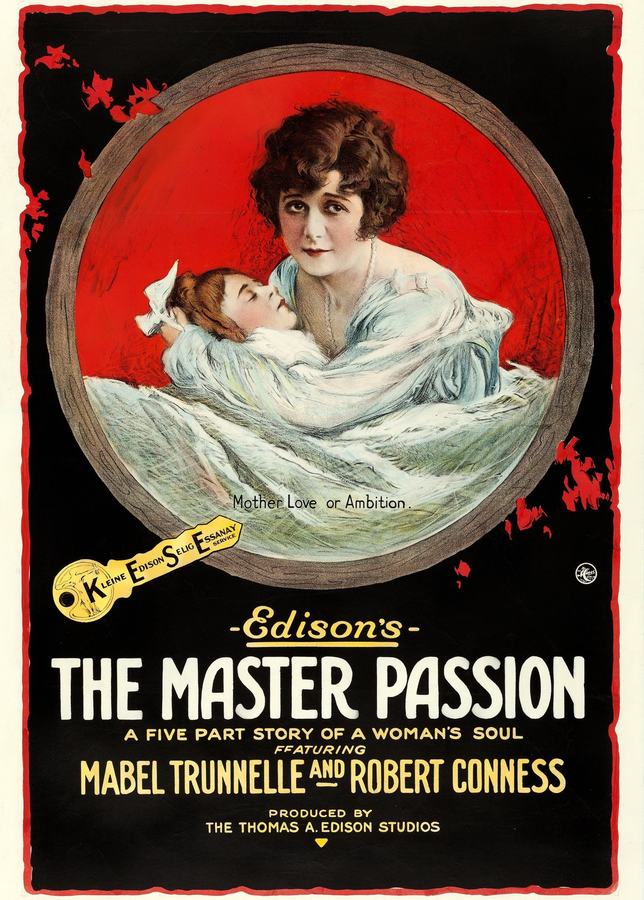
Stepping back into the cinematic landscape of the 1910s, one finds a fascinating tapestry of nascent storytelling, where grand gestures and stark moral quandaries frequently held sway. Among these, Everett McNeil's narrative for The Master Passion, a film brought to life through the expressive silent-era artistry of Anne Leonard, Robert Conness, and Bigelow Cooper, stands as a testament to the era's fascination with the operatic scope of human desire and its often-calamitous repercussions. This is not merely a film; it is a grand, sweeping melodrama, a meticulously crafted exploration of a woman's soul caught between the siren call of personal glory and the profound, often unacknowledged, claims of hearth and home. It’s a narrative that, even a century later, still resonates with a poignant universality, challenging us to consider the true cost of our choices.
At the heart of The Master Passion lies Julia Long, portrayed with a compelling blend of vulnerability and steely resolve by Anne Leonard. Her initial decision to forsake the steadfast Jack Carter for the financial security and social elevation offered by George Bender, president of the National Bank, is painted not as mere caprice, but as a complex interplay of ambition and a desire to please her mother. This foundational choice, driven by a yearning for wealth, sets in motion a chain of events that will define her existence. The early years of her marriage to Bender are depicted as a halcyon period, a brief respite before the storm of self-discovery and external temptation. It's a classic setup that harks back to countless tales of societal ascent, yet McNeil imbues Julia with an internal struggle that elevates her beyond a mere archetype. One might draw parallels to the societal pressures depicted in films like Shoes, where economic realities often dictate personal relationships and life trajectories, albeit with a different outcome for the protagonist.
Julia’s latent vocal talent, described as being “of more than usual merit,” becomes the catalyst for her eventual unraveling and subsequent rebirth. Bender, perhaps with a touch of misguided paternalism or genuine admiration, engages the services of Professor Alberto Martino. Martino, a character brought to life by the nuanced performance of Guido Colucci, is not merely an instructor; he is an embodiment of the seductive power of artistic aspiration, a Mephistophelean figure who preys on Julia's burgeoning loneliness. As Bender becomes increasingly engrossed in his banking empire, leaving Julia emotionally unfulfilled, Martino expertly exploits this void. He paints vivid, irresistible canvases of a future where Julia's voice would command the world's stage, a future only attainable by fleeing to Paris with him. This narrative thread speaks to the perennial tension between domesticity and artistic pursuit, a theme that has captivated storytellers for centuries.
Martino's own personal demons, specifically a looming scandal involving a wronged girl, force his hand, precipitating his urgent flight. This external pressure inadvertently provides Julia with the impetus to make her life-altering choice. In a moment of profound, albeit tragic, conviction, she abandons her home and her young daughter, Cora, to chase the ephemeral dream of operatic fame with Martino. This act of maternal desertion is perhaps the most searing and contentious point of the narrative, laying bare the brutal sacrifices often demanded by ambition. It’s a decision that echoes with a painful resonance, exploring the societal judgment meted out to women who prioritize self-actualization over traditional roles. The film doesn't shy away from depicting the harsh consequences of such a choice, a bold move for its time.
The subsequent years in Europe are a stark portrayal of dashed hopes and bitter realities. Deserted by Martino, alone and penniless, Julia's romanticized vision of stardom shatters. Her collapse on the steps of the Opera House, a stark symbol of her unfulfilled aspirations, marks her lowest ebb. Yet, it is here that fate intervenes, in the form of Marie Jardin, a famous prima donna, empathetically portrayed by Helen Strickland. Jardin, recognizing a kindred spirit or perhaps a reflection of her own past struggles, takes Julia under her wing. This mentorship is crucial, transforming Julia's raw talent into refined artistry. Under Jardin's tutelage, Julia's voice truly flourishes, leading her to achieve the very success she had so desperately sought, reborn as the world-renowned prima donna, Julia Marina. This segment of the story is a powerful testament to resilience, the transformative power of mentorship, and the enduring human spirit in the face of adversity. It offers a glimmer of hope, suggesting that even the most catastrophic missteps can lead to unexpected avenues of triumph, albeit ones shadowed by profound regret.
Eighteen years later, the narrative masterfully weaves together the disparate threads of Julia's past. In America, her abandoned daughter, Cora Bender (played by Mabel Trunnelle), now a young woman, finds love with Ralph Carter (Raymond McKee), the son of Julia's original sweetheart, Jack Carter (Robert Conness). This cyclical nature of destiny, where the children unwittingly recreate the romantic entanglements of their parents, adds a layer of poignant irony to the unfolding drama. George Bender (Bigelow Cooper), still scarred by Julia's betrayal, adamantly opposes Cora's marriage, arranging a European trip in a misguided attempt to make her forget Ralph. This paternal overreach, while seemingly protective, serves only to propel Cora into the very orbit of her estranged mother.
Meanwhile, in Paris, Julia Marina, now a celebrated but emotionally weary prima donna, finds herself entangled in a draining affair with the dissolute Duc de Lac (Richard Tucker), perpetually burdened by his gambling debts. The dramatic irony intensifies when the Duc encounters Bender and his party at Monte Carlo. Through the manipulative orchestrations of Julia's own mother (Susan Mitchell), Cora is forced into an engagement with the very Duc de Lac who is Julia's current paramour. This intricate web of relationships, where past choices and present circumstances converge with such devastating precision, is a hallmark of grand melodrama, showcasing Everett McNeil's skill in crafting a narrative of profound emotional complexity. The silent film medium, relying on exaggerated gestures and intertitles, would have amplified these dramatic revelations, making each twist a visceral experience for the audience.
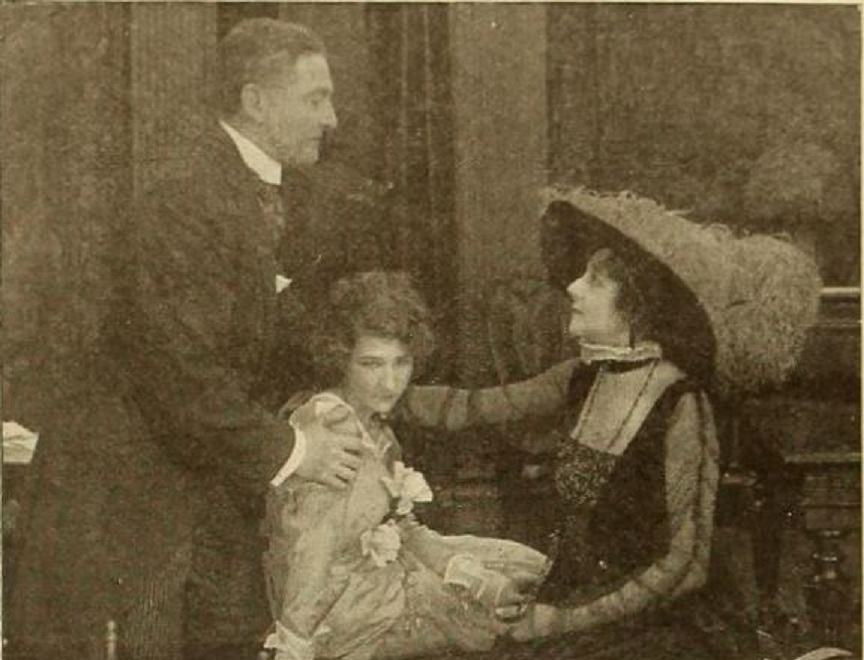
The moment Julia spots Bender, her mother, and a young woman she instantly recognizes as her daughter, Cora, is charged with an almost unbearable tension. The recognition, a silent epiphany, sets the stage for a series of clandestine meetings. Cora, impressed by the renowned Julia Marina, readily accepts her invitation, drawn by an inexplicable connection. These visits to Julia's dressing room become increasingly frequent, building towards the inevitable confrontation. The discovery of Julia's card in Cora's room by Bender acts as the final catalyst, driving him to the theater, where the truth, long suppressed, finally erupts.
In a moment of raw, unrestrained emotion, Julia reveals her true identity to Cora. The scene of their embrace, a long-overdue reunion of mother and daughter, is interrupted by Bender's furious entrance. His initial wrath, a potent cocktail of betrayal and disbelief, eventually yields to Cora's impassioned pleas. This pivotal reconciliation, while fragile, offers a glimmer of hope, suggesting that even the deepest wounds can begin to heal. Anne Leonard's portrayal of Julia in these climactic scenes would have been crucial, conveying a spectrum of emotions from desperation to maternal love without the aid of spoken dialogue. One might compare the dramatic weight of such a familial reunion to the emotional intensity found in a film like The Wolf, where family ties and hidden identities drive much of the narrative tension.
The narrative then hurtles towards its climactic resolution, centering on the egregious entanglement with the Duc de Lac. Julia discovers that the 'rich American girl' her philandering lover spoke of is, in fact, her own daughter. This unbearable irony forces Julia's hand. She confronts the Duc, demanding he break off the engagement, threatening to expose their illicit affair to prevent the marriage. The Duc, defiant and unrepentant, pushes Julia to make the ultimate sacrifice. In a staggering act of self-immolation, Julia reveals the truth of her past relationship with the Duc to Bender. His reaction is swift and brutal; consumed by rage and a renewed sense of betrayal, he takes Cora and returns to America, leaving Julia utterly bereft. This moment represents the nadir of Julia's journey, a complete and utter immolation of her personal happiness for the sake of her daughter's future. It’s a testament to the film’s willingness to explore the darker, more painful aspects of love and sacrifice.
In the aftermath, Julia seeks solace in her art, the one constant in her tumultuous life. Yet, even this sanctuary is denied to her. A final, bitter quarrel with the Duc de Lac, the architect of so much of her suffering, results in the devastating loss of her voice. This literal silencing is a powerful metaphor for the complete stripping away of her identity and purpose, a final, cruel punishment for her past choices. However, The Master Passion, in its true melodramatic spirit, offers a path to redemption. Months pass, and Bender, having had time to reflect on his hasty actions and perhaps softened by Cora's enduring love for her mother, repents. He returns to Europe, not to condemn, but to reclaim Julia, to take her back home. This final act of forgiveness, while perhaps appearing somewhat facile by modern standards, provides the emotional catharsis necessary for a narrative of such sweeping scope. It suggests that love, in its most enduring form, can transcend even the most profound betrayals and that true forgiveness is a journey, not a singular event.
The success of The Master Passion, like many silent films, hinged entirely on the expressive power of its cast. Anne Leonard, as Julia, carries the emotional weight of the narrative with remarkable grace and intensity. Her ability to convey ambition, joy, loneliness, despair, and ultimately, a profound sense of sacrifice, without uttering a single word, is a testament to her craft. Robert Conness, as Jack Carter, provides a poignant counterpoint to Julia's initial choices, representing the path not taken. Bigelow Cooper's George Bender evolves from an oblivious husband to a wrathful patriarch, and finally, to a repentant figure, a challenging arc to portray with subtlety in the silent medium. Richard Tucker's Duc de Lac is the quintessential cad, effectively embodying the external forces of temptation and ruin. The ensemble, including Grace Williams, Alpheus Lincoln, and William Wadsworth, contributes to the rich tapestry of supporting characters, each playing a vital role in Julia's complex journey.
Everett McNeil's writing is the bedrock upon which these performances are built. His narrative, while firmly rooted in the melodramatic conventions of the era, demonstrates a keen understanding of human psychology, particularly the conflicting desires that drive individuals. The film's pacing, the dramatic build-ups, and the impactful reversals are all products of a well-conceived script. While we can only infer the full visual splendor of the original production, the detailed plot suggests a rich visual language, likely employing symbolic sets, evocative lighting, and dynamic camera work to enhance the emotional impact. Films of this period, such as För sin kärleks skull, often excelled in using visual storytelling to convey intricate emotional landscapes, and The Master Passion undoubtedly belonged to this tradition.
The Master Passion remains a compelling artifact of early cinema, a powerful exploration of ambition's allure and its often-devastating cost. It delves into the complex interplay of personal desire, societal expectation, and the enduring power of familial bonds. While its narrative beats might seem familiar to contemporary audiences, the film's unflinching portrayal of Julia Long's tumultuous journey – from a woman driven by external validation to one who makes profound personal sacrifices for love – ensures its place as a significant work in the silent film canon. It's a reminder that the 'master passion' isn't always love, but can be fame, wealth, or even the desperate yearning for redemption, each demanding its own unique and often painful toll.
IMDb —
1929
Community
Log in to comment.