DbcultAccessing Vault...
Cult Review
Senior Film Conservator
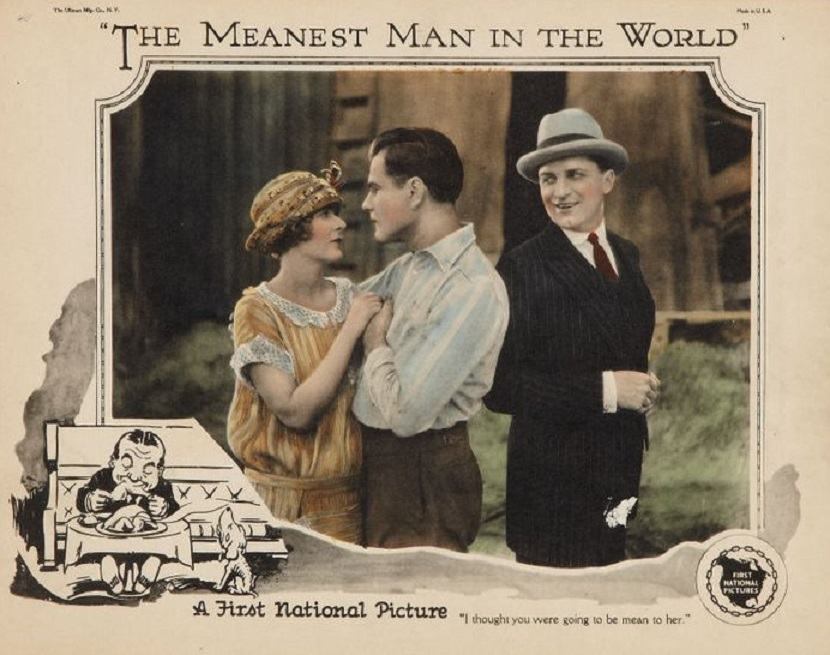
The story opens in a bustling urban courtroom where Bert Lytell, a lawyer celebrated for his genteel demeanor, faces an unprecedented crisis: his client list has evaporated. The film captures this downturn with a series of quick, silent vignettes—an empty office, a stack of unpaid bills, a forlorn client walking out of the courthouse. Lytell’s despair is palpable; his once‑steady hand trembles as he ponders his future.
Rather than accept defeat, Lytell resolves to reinvent himself. He adopts a new moniker, the “Meanest Man in the World,” and begins to practice law with a ferocity that borders on villainy. This transformation is portrayed through a montage of exaggerated gestures: clenched fists, steely eyes, and a signature scar on his cheek that he claims earned him respect. The film cleverly juxtaposes Lytell’s former warmth with his newfound severity, creating a visual dichotomy that keeps the audience engaged.
Central to the plot is Lytell’s conflict with the legal establishment, embodied by a rival attorney played by Carl Stockdale. The rival’s smug confidence serves as a foil to Lytell’s raw ambition. Their encounters are punctuated by witty intertitles that satirize courtroom theatrics and the absurdity of legal jargon. The rival’s attempts to undermine Lytell are met with increasingly ruthless tactics—spiteful evidence tampering, public smear campaigns, and even bribery attempts. Each confrontation escalates the stakes, pushing Lytell further into the abyss of moral compromise.
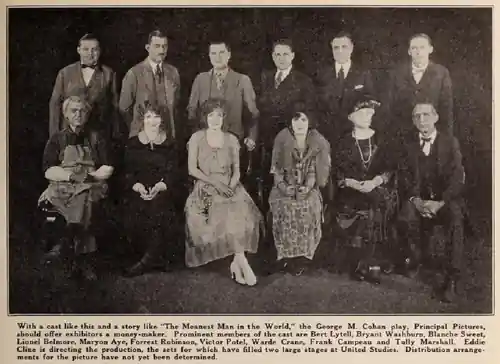
Intertwined with the courtroom drama is a romantic subplot featuring Marion Aye, a spirited stenographer who becomes Lytell’s confidante. Aye’s presence offers a counterpoint to Lytell’s harshness; her optimism and compassion gradually coax him back toward humanity. Their dynamic is rendered with subtle gestures—a lingering touch, a shared laugh—underscoring the film’s belief that empathy can survive even in the most cut‑throat environments.
The climax arrives when Lytell is called upon to defend a client accused of embezzlement. The stakes are personal: Lytell’s own reputation and his future hinge on the outcome. The courtroom scene is a masterclass in silent storytelling: a rapid succession of close‑ups, exaggerated expressions, and a crescendo of intertitles that culminate in Lytell’s revelation that the “mean” persona is a façade. He delivers a passionate plea for justice, not vengeance, and the jury is moved by his honesty. The film ends on a hopeful note, with Lytell returning to his original compassionate self, now tempered by the lessons learned from his brief descent into cruelty.
From a technical standpoint, The Meanest Man in the World showcases the strengths of silent-era filmmaking. The cinematographer employs chiaroscuro lighting to accentuate the moral ambiguity of Lytell’s journey. Dark shadows envelop his office, hinting at the darkness he is about to embrace, while bursts of bright light illuminate his courtroom victories, symbolizing triumph over adversity. The use of close‑up shots—particularly during pivotal moments—allows the audience to read the nuanced emotions of the actors without spoken dialogue.
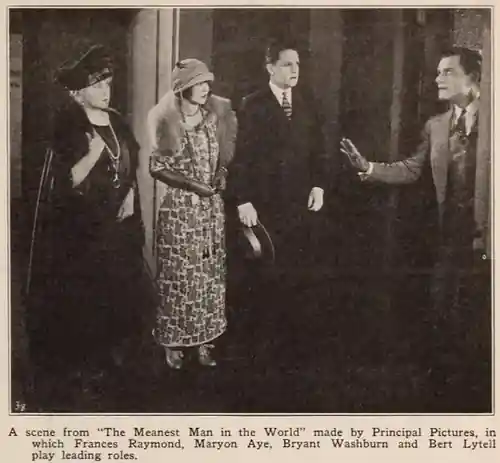
The film’s editing rhythm is another highlight. Scenes are stitched together with a brisk pace that mirrors the relentless pressure of the legal profession. However, the director never sacrifices clarity for speed; each transition is carefully framed to ensure the narrative remains coherent. This balance is reminiscent of the editing techniques seen in films such as The Silent Battle and El escándalo, where the visual storytelling compensates for the absence of sound.
The set design deserves special mention. The courtroom is rendered with meticulous detail—a towering judge’s bench, ornate wood paneling, and a backdrop of legal tomes that lend authenticity. In contrast, Lytell’s office is minimalistic, reflecting his humble beginnings. The stark contrast between these two environments visually reinforces the film’s central theme: the thin line between virtue and vice is often defined by environment and circumstance.
Bert Lytell’s portrayal of the titular character is a tour de force. He navigates the spectrum from affable lawyer to hardened adversary with an ease that feels both natural and intentional. His physicality—sharp gestures, deliberate pacing—conveys the internal conflict that would otherwise be lost in silent cinema. The actor’s ability to modulate his expressions—shifting from a soft smile to a hard stare—creates a believable arc that keeps the audience invested.
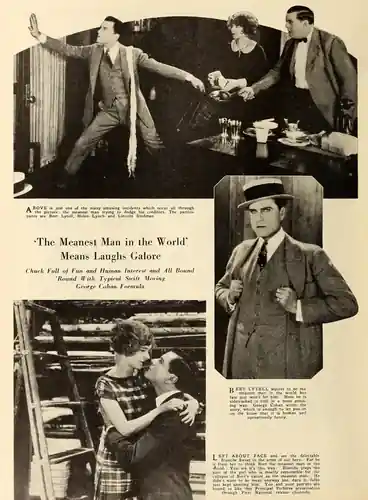
Marion Aye’s performance as the stenographer is equally compelling. She brings a vivacious energy that contrasts sharply with Lytell’s brooding intensity. Aye’s eyes sparkle with mischief, and her body language suggests a subtle defiance against the rigid structures of the legal world. Her interactions with Lytell are the emotional heart of the film, reminding viewers that compassion can thrive even in the most hostile environments.
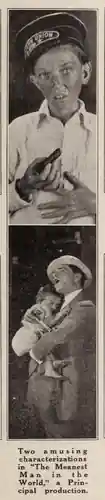
The supporting cast adds depth to the narrative. Victor Potel’s comic relief as a bumbling clerk offers a lighthearted counterbalance to the film’s darker moments. Carl Stockdale’s antagonistic presence is chilling; his cold, calculating demeanor forces Lytell to confront his own moral compass. William Conklin’s portrayal of a corrupt judge underscores the systemic issues within the judicial system, a theme that resonates with contemporary audiences.
At its core, The Meanest Man in the World is a meditation on power and integrity. The film questions whether the pursuit of success inevitably erodes one’s moral fiber. Lytell’s journey illustrates the seductive allure of ruthlessness: it promises quick victories but ultimately leads to isolation. By confronting his own hypocrisy, the protagonist learns that true authority stems from empathy, not intimidation.

The film also critiques the legal system’s susceptibility to corruption. Through the corrupt judge and the rival attorney’s bribery attempts, the narrative exposes how power can be abused when unchecked. This critique aligns with the broader social commentary present in other silent classics like The Cavell Case and Seeing America Thirst, which highlight systemic flaws and the necessity for reform.
The film’s humor is another layer that enhances its thematic depth. Satirical intertitles, exaggerated physical comedy, and witty dialogue (albeit silent) keep the narrative light while still delivering a potent message. The juxtaposition of Lytell’s mean façade with his underlying kindness provides a comedic yet poignant exploration of human nature.
When placed alongside other silent-era comedies such as Robinson Crusoe Ltd. and A Spy for a Day, The Meanest Man in the World distinguishes itself by weaving a more introspective narrative. While the former films prioritize slapstick humor and adventure, this film delves into the psychological ramifications of ambition. The comparison underscores the evolution of silent cinema from surface‑level comedy to nuanced storytelling.
The film’s pacing also aligns with that of Beyond the Trail, where tension builds gradually before culminating in a climactic resolution. However, The Meanest Man in the World’s resolution is more personal, focusing on the protagonist’s internal reconciliation rather than an external victory alone.
Despite being nearly a century old, the film’s themes remain strikingly relevant. In today’s fast‑paced legal environment, the temptation to compromise ethics for success is ever‑present. Lytell’s story serves as a cautionary tale, reminding contemporary audiences that integrity is a currency that cannot be bought with intimidation.
Moreover, the film’s stylistic choices—its use of lighting, editing, and performance—continue to influence modern filmmakers. Directors who craft character‑driven narratives with minimal dialogue can trace their lineage back to the techniques employed here. The film’s ability to convey complex emotions without words is a testament to the power of visual storytelling.
In conclusion, The Meanest Man in the World is a landmark in silent cinema that blends humor, social critique, and character development into a cohesive whole. Its enduring relevance, combined with its technical brilliance, cements its place among the great classics of early 20th‑century filmmaking. The film invites viewers to reflect on the true nature of power and the importance of staying true to oneself, even when the world urges otherwise.
IMDb —
1932
Community
Log in to comment.