DbcultAccessing Vault...
Cult Review
Senior Film Conservator
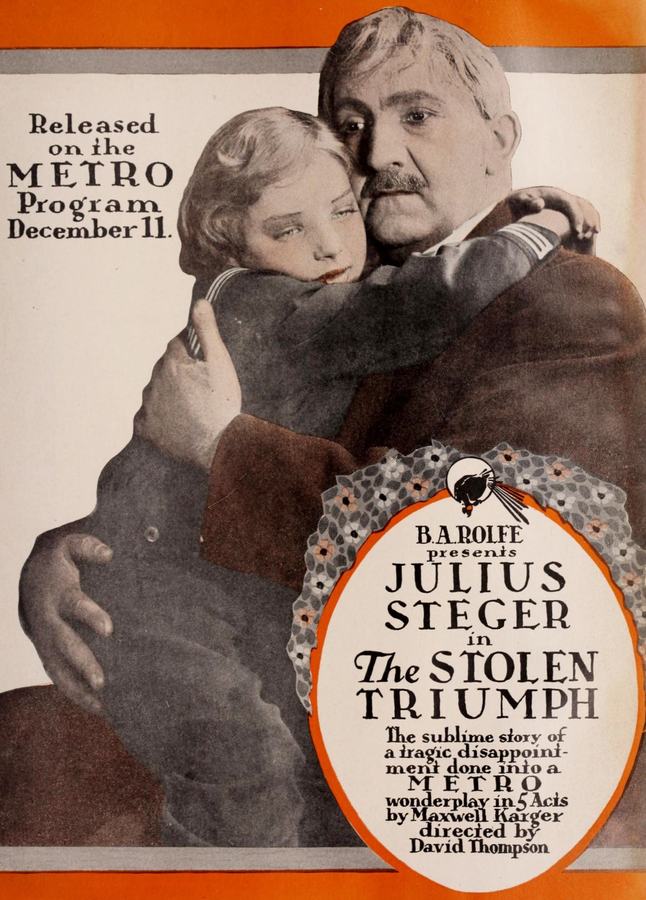
In the annals of early cinema, few narratives unfurl with the intricate moral tapestry and profound emotional resonance of The Stolen Triumph. This cinematic endeavor, a poignant melodrama from the pens of Maxwell Karger and Julius Steger, delves into the harrowing chasm between artistic brilliance and commercial exigency, charting a course through ambition, betrayal, and, ultimately, a hard-won redemption. It is a story that, despite its vintage, reverberates with timeless questions about integrity, the price of success, and the enduring power of creation.
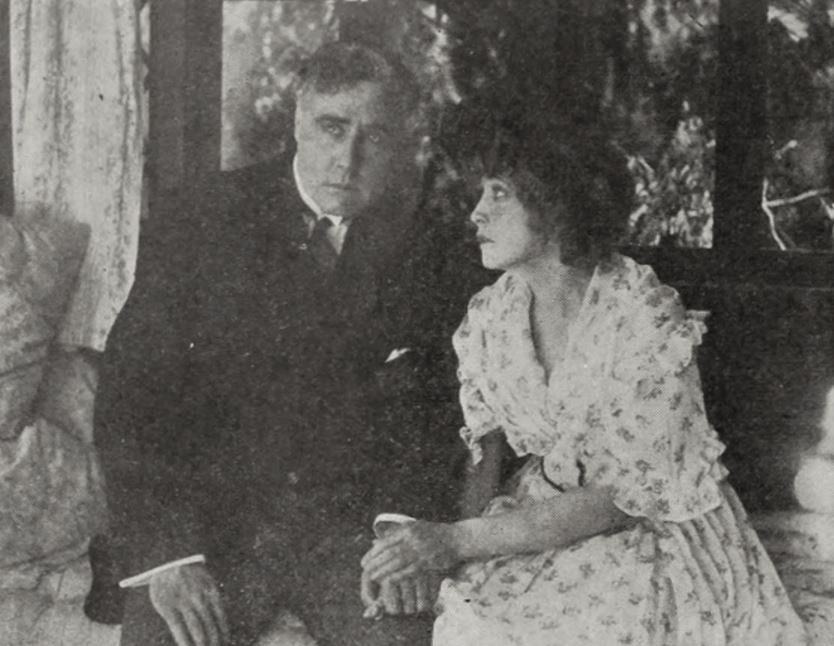
At its core, the film introduces us to Edwin Rowley (Julius Steger), a playwright of immense, almost ethereal talent, whose dramatic compositions possess an undeniable genius yet lack the pragmatic commercial appeal necessary for market penetration. He is a visionary, perhaps too pure for the cutthroat theatrical world. His antithesis, and tragically, his college associate, is Stephen Hunt (Edgar Kennedy), a prosperous theatrical manager whose acumen lies in the business rather than the art. Hunt's wife (Raye Dean), a woman of considerable ambition, yearns for her husband to transcend mere management and ascend to the revered status of a dramatist. Her persistent urgings plant a seed of desire in Hunt, leading him to promise an attempt at playwriting, a promise swiftly amplified by a zealous reporter who broadcasts Hunt's supposed literary pursuits to the public. This seemingly innocuous news item sets the stage for a calamitous confluence of fates, an unfortunate alignment that will irrevocably alter the lives of all involved.
Rowley, meanwhile, has completed what he believes to be his magnum opus, a play destined for greatness. Noticing the newspaper announcement regarding Hunt's foray into playwriting, his devoted wife (Clara Whipple) suggests he seek counsel from his old friend. In a moment of desperate optimism, Rowley approaches Hunt, recounting his arduous struggle for recognition and sustenance. Hunt, ever the pragmatist with a veneer of benevolence, offers to read the manuscript, even extending a loan to alleviate Rowley's immediate financial distress. This gesture, seemingly charitable, masks the nascent stirrings of a far darker impulse. The precious manuscript, the culmination of Rowley's soul-searing efforts, is left in Hunt's possession, a lamb led to slaughter, unknowingly.
The narrative takes a grim turn as Hunt peruses Rowley's play. He is not merely impressed; he is overwhelmed, gripped by its raw power and undeniable brilliance. The recognition of its genius ignites an insidious temptation within him. Safeguarded by the knowledge that Rowley, in his impecunious state, possesses no copy, Hunt yields to the irresistible urge to pilfer the work, to claim this profound creation as his own. The act of replication begins, a meticulous transcription that only deviates in the title, a superficial alteration to mask a profound theft. This pivotal moment, the moral failing of one man, irrevocably sets Rowley on a path of unfathomable suffering. One might draw parallels to the psychological torment explored in Prestuplenie i nakazanie, though here the torment is inflicted upon the innocent, rather than self-imposed.
Days bleed into weeks, marked by Rowley's anxious anticipation, a yearning for news from his former friend. When he finally returns to Hunt's office, the crushing blow arrives: Hunt dismisses the play as unsuitable, claiming to have mailed the manuscript back days prior. The pronouncement, a cold, calculated lie, accentuates Rowley's already profound sense of utter failure. This rejection, coupled with the apparent loss of his life's work, propels him into a desperate struggle for survival. He resorts to menial labor, addressing envelopes, a stark contrast to the intellectual heights he once scaled. His faithful wife, already weakened by chronic privation, succumbs to illness, a tragic casualty of starvation, her life extinguished by the very circumstances wrought by Hunt's perfidy.
The tragedy deepens on the opening night of Hunt's "new" play. Rowley, somehow managing to procure a ticket, attends the performance, only to witness the agonizing spectacle of his own creation paraded before an adoring public under another man's name. The recognition is instant, visceral, a searing confirmation of the theft. His cries of outrage are met with swift expulsion from the theater, his rightful protest dismissed as mere disturbance. Confronting Hunt afterward, his denunciations are met with threats of arrest, further cementing his powerlessness. Half-crazed with grief and injustice, he returns home to deliver the devastating news to his wife, a shock that proves fatal. The cumulative weight of his losses — his play, his reputation, his wife — shatters Rowley's mind. In a desperate act of utter despair, he plunges into the river, a symbolic and literal attempt to escape an unbearable reality. While rescued by a passing boat, his discarded hat and coat lead to the grim pronouncement of his drowning, a final, crushing blow to his earthly existence, or so it seems.
News of Rowley's presumed suicide reaches Hunt, sparking a profound crisis of conscience. The weight of his transgression, now amplified by the tragic consequences, becomes unbearable. He confesses his egregious act to his wife, revealing that the acclaimed "masterpiece" was not his own, but Rowley's. Her reaction is immediate and resolute: the wrong must be righted. This moral imperative sets the stage for Hunt's protracted journey toward atonement. In a profound gesture of reparation, they welcome Rowley's orphaned son, Edwin (Maurice Steuart, as a child), into their home, raising him alongside their own daughter, Alice (Helen Badgley, as a child). This act of adoption, while born of guilt, nonetheless provides Edwin with a life of privilege and opportunity that would have been unimaginable had his true father survived his despair.
Years unfurl, carrying with them the passage of time and the healing balm of new beginnings. Rowley, a wanderer with a mind rendered blank by trauma, drifts across the landscape, a spectral figure haunted by a past he cannot recall. Meanwhile, in the Hunt household, Edwin (now Maurice Steuart as a young man) flourishes under Hunt's penitent care, receiving every advantage imaginable. He and Alice (now Kathleen Townsend as a young woman) blossom into young adulthood, their childhood companionship deepening into a tender, undeniable love. Their betrothal becomes a symbol of hope, an innocent romance unknowingly entwined with a dark secret. Thematically, this echoes narratives of intertwined destinies and the enduring human spirit, much like the perseverance seen in Brother Officers where characters overcome significant personal trials.
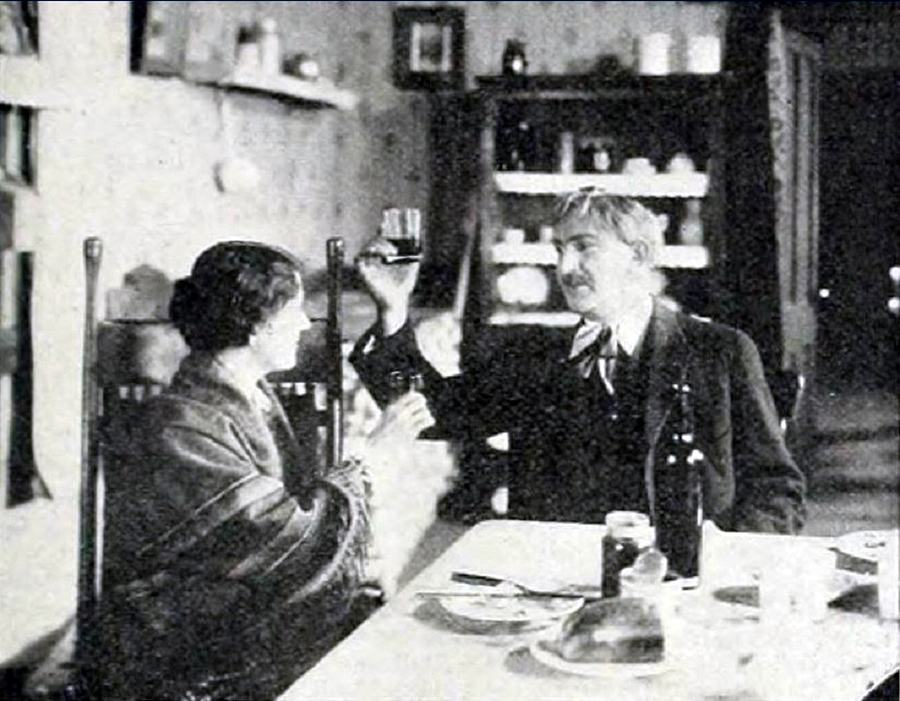
In a final, pivotal act of reparation, Hunt endeavors to make belated amends for his misdeed. He decides to produce an earlier play penned by the missing, presumed-dead Rowley. This announcement, a public acknowledgment of Rowley's forgotten genius, serves as a powerful catalyst. The sight of his name, attached to his creative endeavor, pierces the veil of Rowley's amnesia. Partially regaining his reason, he is drawn, as if by an invisible thread of fate, back to the very household where his triumph was stolen and his legacy nurtured. His arrival coincides with the joyous occasion of Edwin and Alice's engagement party, a scene of celebratory toasts and hopeful pronouncements.
As the guests raise their glasses, Edwin, unaware of the profound irony, begins to recite a poem, attributing it to his "gifted father." He falters, a momentary lapse in memory, but the familiar verses, echoing across the years, fully restore Rowley's shattered mind. The elder Rowley, his memory now entirely returned, steps forward to complete the poem, his voice a ghost from the past, now made flesh. This climactic moment, a dramatic denouement characteristic of the era's grand narratives, brings the truth to light, not through vengeful accusation but through the undeniable power of art itself. The past, with all its heartbreak and betrayal, is ultimately forgiven, and the playwright's reclining years are spent in the peace and happiness he so valiantly earned. This resolution, while perhaps overtly sentimental by modern standards, perfectly encapsulates the melodramatic sensibilities prevalent in films such as Fanchon, the Cricket or even the dramatic flourishes of Through Dante's Flames, where heightened emotion and moral clarity often guide the narrative to its conclusion.
The Stolen Triumph is more than a simple tale of theft; it is a profound meditation on several enduring themes. Firstly, it starkly contrasts artistic purity with commercial pragmatism. Rowley represents the uncompromised artist, whose genius is his sole reward until external forces intervene. Hunt, initially, embodies the more cynical side of the industry, where recognition and profit often overshadow genuine talent. This tension between art and commerce remains a perennial subject in film and literature, lending the film a timeless quality.
Secondly, the film explores the intricate dance between justice, retribution, and forgiveness. While Rowley suffers immensely, his eventual return and the subsequent reconciliation suggest a narrative arc that prioritizes healing over perpetual punishment. Hunt's decades-long effort to atone, guided by his morally steadfast wife, paints a picture of redemption earned through sustained effort and genuine remorse. His wife's role, in particular, is crucial; she acts as the moral compass, pushing him towards rectitude, a powerful feminine influence often seen in early cinema to steer male characters toward honor, much like the guiding figures in Behind the Scenes.
Moreover, the narrative subtly weaves in themes of fate and coincidence. The newspaper article, the chance encounter, the play's opening night, and Rowley's partial recovery triggered by the announcement of his own work – these elements suggest a grander design, an almost karmic balancing act. The poem, a fragment of Rowley's past self, becomes the key to unlocking his present, illustrating the enduring power of creation to transcend even the deepest psychological scars.
The performances, while adhering to the more exaggerated style often characteristic of silent cinema, effectively convey the heightened emotions demanded by the plot. Julius Steger's portrayal of Edwin Rowley is particularly compelling, navigating the character's journey from hopeful genius to despairing victim and finally to a man rediscovering his identity. His physical transformation, from an eager artist to a disoriented wanderer, would have been crucial in communicating his mental state without dialogue. Edgar Kennedy, as Stephen Hunt, manages to infuse his character with a complex blend of ambition, guilt, and eventual remorse, making his arc of atonement believable. Raye Dean, as Hunt's wife, provides the essential moral backbone, her character's unwavering commitment to justice serving as a vital counterpoint to her husband's initial transgression. The child actors, Helen Badgley and Maurice Steuart, transition smoothly into their adult counterparts, Kathleen Townsend and Maurice Steuart (again, indicating a growth in his character's age range), lending continuity to the decades-spanning narrative.
Directed by a collaboration that included Julius Steger himself, alongside Maxwell Karger as a writer, the film likely relied heavily on visual storytelling, symbolic gestures, and intertitles to convey its intricate plot. The pacing, typical of early melodramas, would have allowed for the slow burn of Rowley's suffering and Hunt's creeping guilt to fully register with the audience. The use of dramatic irony, particularly in the engagement scene, is a classic theatrical device expertly employed here to maximize emotional impact.
The Stolen Triumph stands as a testament to the narrative sophistication achievable in the silent era. It eschews simplistic morality, instead presenting a nuanced exploration of human frailty and the capacity for redemption. While it fits comfortably within the melodramatic conventions of its time, its core themes resonate far beyond. The struggle of the unrecognized artist, the corrupting influence of ambition, the devastating consequences of betrayal, and the ultimate triumph of truth and forgiveness are universal motifs that continue to captivate audiences across generations.
The film's exploration of artistic ownership and the moral responsibilities of those in positions of power remains remarkably relevant. It serves as a stark reminder that true success is not merely measured by accolades or financial gain, but by integrity and the lasting impact of one's creative spirit. In its weaving of personal tragedy with broader societal commentary, it joins a lineage of socially conscious narratives from the era, perhaps echoing the stark realities depicted in works like Peterburgskiye trushchobi or the moral quandaries presented in The Devil. Its enduring appeal lies not just in its dramatic twists, but in its unwavering belief in the eventual triumph of justice and the redemptive power of the human spirit, even after profound suffering. The final scene, with Rowley completing his son's recitation, is a powerful visual metaphor for the restoration of a stolen legacy, a poetic closure to a life once shattered. This film, therefore, is not merely a historical curiosity but a vivid, compelling drama that speaks to the timeless human condition.
IMDb —
1919
Community
Log in to comment.