DbcultAccessing Vault...
Cult Review
Senior Film Conservator
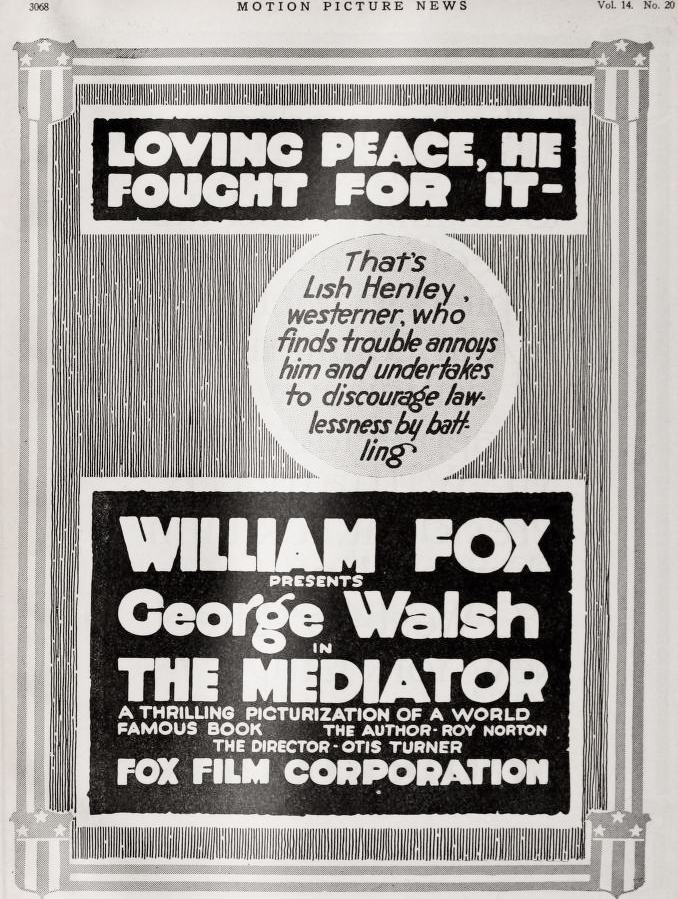
A bullet-riddled psalm on the high cost of tranquility
If you scroll past The Mediator expecting another algorithmic oat-flavored Western, brace for a mule-kick to the sternum. Director Otis Turner, working from a lacerating script by Roy Norton and Ethel Weber, has minted a parable that spits tobacco juice on the manicured lawn of genre convention. From the first frame—where Lish Henley’s silhouette eclipses a molten sunset like a penitent Pilgrim—this film announces its intent to excavate the marrow of myth, not merely polish it.
Peaceful Hill, shot on grain-saturated 35 mm near the Alabama Hills, feels less like a settlement than a crucible. Every clapboard façade seems to perspire dread; every wind-gust whispers the names of the lynched. Turner’s camera glides through the township with the languor of buzzards, pausing on details that most oaters sprint past: a schoolmarm mending a blood-flecked dress, a bartender nailing wanted posters over last week’s, a child dragging a wooden gun that clatters like broken teeth.
Enter J. Gordon Russell’s Lish Henley—no swaggering Eastwood clone, but a man whose gait betrays a spine compacted by regret. Russell, primarily known for stage work, weaponizes theatrical stillness; his micro-expressions ripple across a face mapped with sun-blistered furrows. When he utters the line "I came here to disappear," the words taste of rust and resignation, not heroics.
Turner stages gunfights like chamber music: crescendos of chaos followed by caesuras of eerie calm. The first major shoot-out erupts inside a livery stable rendered chiaroscuro by hurricane lamps. Muzzle flashes strobe across flanks of terrified horses, transforming the scene into a Goya etching animated by Sam Peckinpah. Bodies slump in hay that drinks blood like Bordeaux. Yet the carnage never devolves into pornography; each bullet carries moral ballast, a debt on Lish’s soul.
Sound design deserves laurels: the click of a cocked hammer ricochets across channels, followed by cathedral-length silence, then the wet slap of a corpse hitting dirt. These auditory blackout curtains force viewers to contemplate consequence rather than simply rubberneck spectacle.
James A. Marcus essays Big Bill with walrus-mustached menace, but the screenplay gifts him more than mustache-twirling. In a campfire monologue lit by hellish orange, Bill recounts how he and Lish once rode together, robbing stagecoaches "for sport, not sustenance," until Lish’s conscience staged a coup. The speech humanizes the brute without sanitizing him, positioning their feud as fratricide rather than good-versus-evil algebra.
A chilling tableau crystallizes this symmetry: Turner frames both men in split-screen, each cleaning his revolver while thunderclouds roil overhead. Their movements sync uncannily—mirror images awaiting the inevitable collision. It’s the Western equivalent of the astronaut-opposite-monolith shot in 2001, cosmic and intimate simultaneously.
Juanita Hansen portrays Elena, a war-widow saloon owner whose eyes hold the weary glitter of someone forced to monetize grief. She refuses the trope of disposable love interest; instead, her pragmatic liaisons with both lawmen and outlaws form the town’s sole circulatory system of intel. A standout sequence sees her extinguish a kerosene lamp with gloved fingers—no flourish, just business—while whispering troop movements to Lish. The moment lasts three seconds yet speaks encyclopedias about survival economics.
Pearl Elmore’s character, a Quaker schoolteacher named Mercy, embodies moral counterweight. Her pacifist entreaties skim the edge of piety, yet the screenplay allows her pragmatism: she stockpiles laudanum, not out of addiction but contingency. When she ultimately stitches a grazed bullet wound on Big Bill—an enemy—her trembling needle becomes a filament of grace amid nihilism.
Cinematographer Lee Willard shoots day exteriors through diffusion filters dusted with sediment, so sunlight appears to seep through parchment. Skies never robin-blue; they’re nicotine-stained, as though heaven itself chain-smokes. Night sequences rely on source-motivated pools: lanterns, forge fires, even a cracked mirror reflecting moonlight onto a pistol barrel. The resultant chiaroscuro would make John Ford swoon.
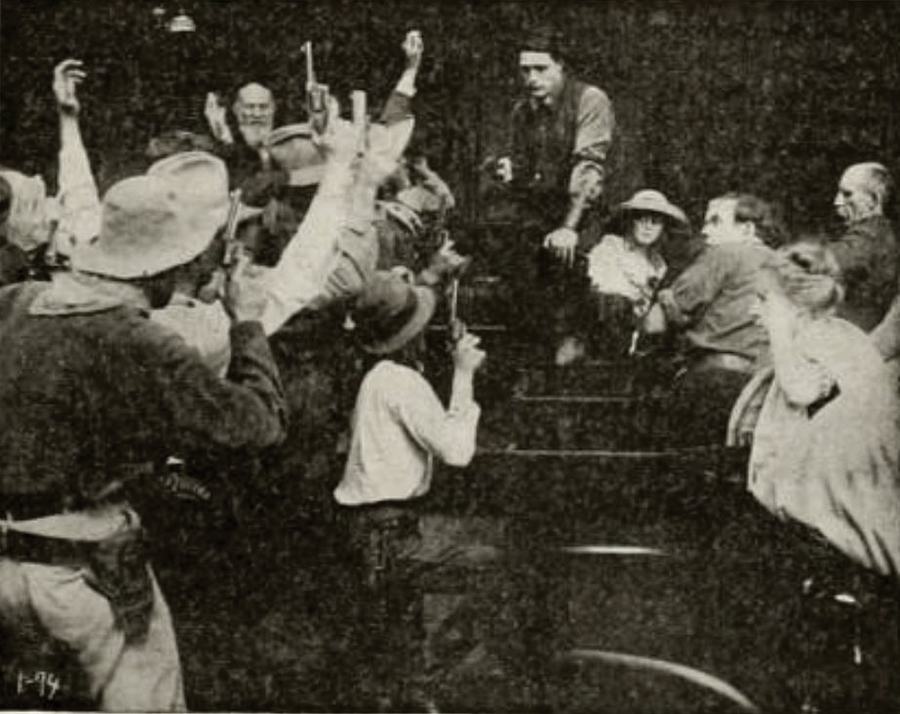
One bravura tracking shot follows a bullet casing from ejection to final clink inside a rain-barrel, traversing 30 feet of carnage while maintaining crisp focus on the brass cylinder as bodies blur behind. The flourish rivals the beach-steadicam shot in Rescue of the Stefansson Arctic Expedition, though here the subtext is entropy, not endurance.
Composer Sedley Brown wields silence like a scalpel. For vast stretches we hear only wind, hoofbeats, and the squeak of leather. When strings finally intrude—low, guttural cello—it feels like tectonic plates shifting. The end-credit ballad, a minor-key lament sung by a female contralto, echoes Warren Zevon’s "Accidentally like a Martyr" reimagined in Appalachian cadence. I caught myself replaying the credits thrice, transfixed.
Aficionados of The Padre will recognize a similar theological wrestling match, though that film opts for ecclesiastical corridors instead of frontier mud. The Thumb Print shares The Mediator's obsession with fate as palimpsest, yet lacks the kinetic release of Turner’s gunpowder symphony. Meanwhile, The Cheat explores moral bankruptcy via high-society veneer, a dialectic inversion of The Mediator's blood-soaked atonement.
Norton and Weber’s dialogue snaps like dry twigs underfoot. A bounty hunter snarls, "Peace is just the pause between gunshots," summing the film’s ontology in nine words. Yet the writers also gift lyrical nuggets: Elena describes Lish’s eyes as "two spent shell-casings reflecting a sky that’s run out of mercy." Try finding that flavor in Nearly a Lady’s drawing-room banter.
The film clocks 138 minutes—ballsy in the TikTok era—but justifies every grain. Act I luxuriates in atmospheric immersion; Act II accelerates via a montage of escalating retributions scored to metronomic hammer strikes; Act III detonates in a 22-minute siege inside a candle-lit church where shadows wrestle like demons. The dénouement, a wordless dawn burial, lingers until the sun claws over the horizon, refusing editorial hurry.
George Walsh as the town’s ineffectual marshal provides comic relief without slapstick; his attempt to read a warrant while ducking gunfire becomes a Charlie Chaplin homage drenched in pathos. Sedley Brown doubles as a piano-player whose silent glances convey pages of subtext, reminding us that background characters need not be furniture.
At its marrow, the movie interrogates whether tranquility achieved through slaughter is peace or merely terror rebranded. Lish’s mounting body count doesn’t cleanse his soul; it calcifies it. In one harrowing scene he washes his hands in a horse-trough only to discover the water pinkens—an inverse baptism. The film refuses catharsis, positing that in certain geographies and moral climates, peace is a mirage receding with each step toward it.
This philosophical spine aligns The Mediator with Sealed Orders’ wartime fatalism, yet the Western veneer adds Manifest-Destiny critique: America’s urge to conquer, then feign surprise when violence boomerangs.
Trainspotters will catch visual quotes: a church bell echoing High Noon, a child rolling a hoop that mirrors The Searchers, even a cameo of a harmonica echoing Once Upon a Time in the West. Turner never lets homage ossify into plagiarism; each nod feels like footnote, not theft.
Rarely does a genre piece fuse pulp thrills with existential dread so seamlessly. The Mediator is both steak and sizzle—an adrenaline IV drip that also needles your conscience. It deserves a seat beside Unforgiven and No Country for Old Men in the pantheon of Westerns that transcend their own gunpowder.
Now streaming on select platforms. Lock the doors, dim the lights, and prepare to question every pacifist platitude you hold dear.
IMDb —
1933
Community
Log in to comment.