DbcultAccessing Vault...
6.7/10
Senior Film Conservator
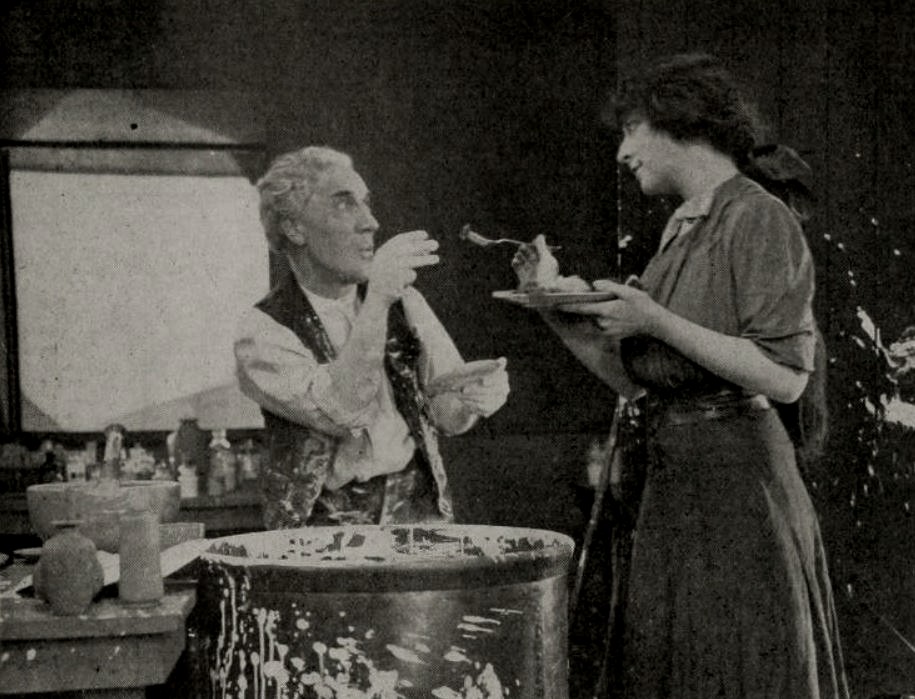
A definitive 6.7/10 rating for a film that redefined the boundaries of cult cinema. The Middleman remains a cornerstone of transgressive art.
A glaze so sheer it could make a coal-scuttle pass for Venetian crystal—that is the MacGuffin that ignites The Middleman, a 1915 one-reel furnace of resentment shot through with the metallic tang of capitalist cruelty.
Joseph Chandler, part feudal squire and part panic-stricken middle-manager, rules Tatlow Potteries like a cathedral of dirt. His frock-coat flaps against bottle-shaped kilns; his voice, inter-titled in florid serif, pleads with grey-suited creditors whose fountain pens are already thirsty for foreclosure. Enter Cyrus Blenkarn—stooped, spectral, eyes reflecting the cobalt shimmer of experimental slip. He alone suspects that alumina and flint, when tickled by a whisper of borax and bone ash, will birth a transparency that drinks light rather than refracting it. The metaphor is almost obscene: a labourer’s toil rendered invisible so that the bourgeois table may gleam.
The transaction is filmed in chiaroscuro so sharp it could etch pottery itself: Chandler’s manicured hand slaps down a crisp fifty-pound note; Blenkarn’s grime-blackened fingers accept the bribe while his pupils dilate not with gratitude but with calcified rage. A dissolve transports us to a shareholders’ banquet where the same Chandler, now apotheosised as town saviour, lifts a goblet coated in the stolen glaze. The camera lingers on the vessel’s rim as if it were a communion chalice, then tilts down to the workers’ gallery where children smeared with kiln soot watch their future glitter in another man’s hand.
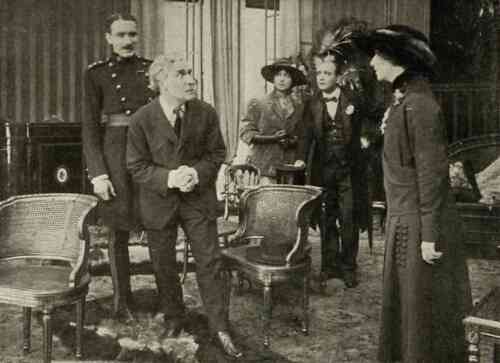
Cut to South Africa—an intertitle blooms across the screen in scarlet: “The diamond is a tear the earth weeps for the sun.” Blenkarn, reinvented in pith helmet and khaki, kneels in Kimberley’s open wound, sieving gems that out-sparkle any ceramic gloss. The narrative ellipse is brutal: colonial plunder funds personal vendetta. When he reappears in Staffordshire he is no longer the slighted artisan but a monied nemesis whose cufflinks are rough diamonds, whose smile is a legal document. With silent-era expediency he buys the local bank, calls in Tatlow’s overdraft, and watches Chandler’s empire crumble like over-fired earthenware.
Minna Grey, as Chandler’s daughter Elaine, supplies the film’s moral ventricle. Her moonlit stroll across the factory yard—veiled in a lace shawl that echoes the glaze’s fragility—becomes a visual refrain: each footstep threatens to shatter not only the shards underfoot but the social contract itself. Gerald Ames plays the young chemist who loves her and who, in a subplot trimmed by the censor’s shears, attempts to recreate Blenkarn’s formula to save the town. Their tentative courtship—conducted amid stacks of unglazed bisque—offers the sole shimmer of warmth in a film otherwise refrigerated by revenge.
George Bellamy’s Chandler ages a decade in every reel: shoulders hunch, side-whiskers grey, the swaggering patriarch reduced to bargaining with the very workforce he once patronised. The final tableau is a masterclass of silent pathos: furnaces cold, chimneys unburdened of smoke, Chandler wanders among the drying sheds while workers file past carrying their last wages in clay-splattered envelopes. A gust of wind lifts a shard of the famous glaze, sending it skittering like an accusation across the cobbles. Freeze-frame on Chandler’s face—half-lit, half-shadowed—contorted not in sorrow but in the dawning recognition that history will remember the glaze, never the glazer.
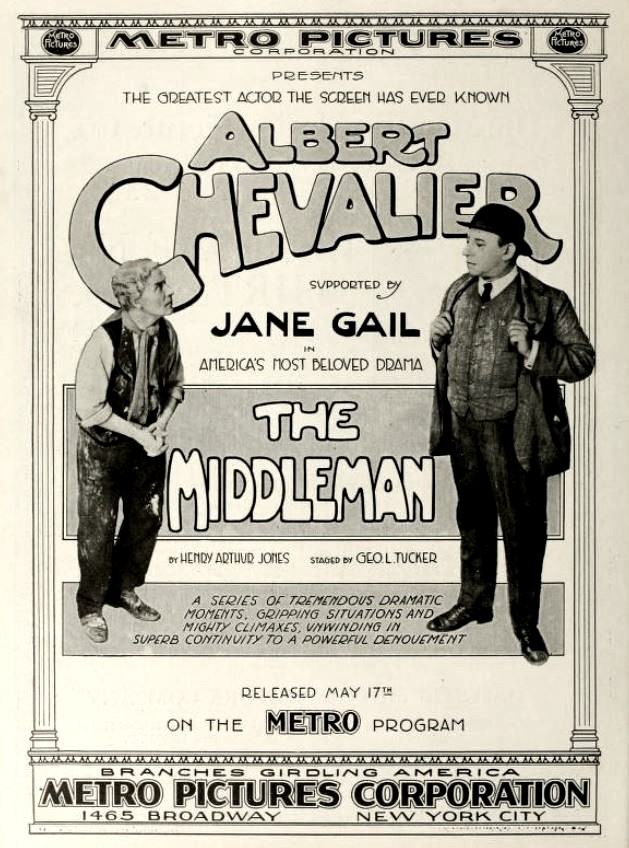
Direction by Bannister Merwin is economical to the point of austerity: no superfluous iris, no melodramatic over-cranking. Instead, he trusts spatial irony—placing the opulent dining hall and the kiln yard in the same wide frame, separated only by a brick arch that feels as porous as conscience. The camera’s stationary observations anticipate later British realist impulses; you could splice segments into a Ken Loach montage without jarring contrast.
Cinematographer (uncredited, as was custom) exploits orthochromatic stock’s sensitivity to blue: the glaze gleams with supernatural pallor while human skin retreats into walnut murk. The result is a world where objects outshine their makers, a visual manifesto of commodity fetishism avant la lettre. Meanwhile, the tinting—amber for interiors, viridian for exteriors, rose for Elaine’s romantic interludes—survives in several archival prints and heightens the film’s emotional synaesthesia.
Intertitles, penned by Henry Arthur Jones from his own stage play, favour epigrammatic stingers: “Debt is a kiln that fires men into monuments or shards.” The language is Shakespearean by way of the potter’s wheel—rich, compact, and surprisingly erudite for a one-reel release designed to fill a variety bill.
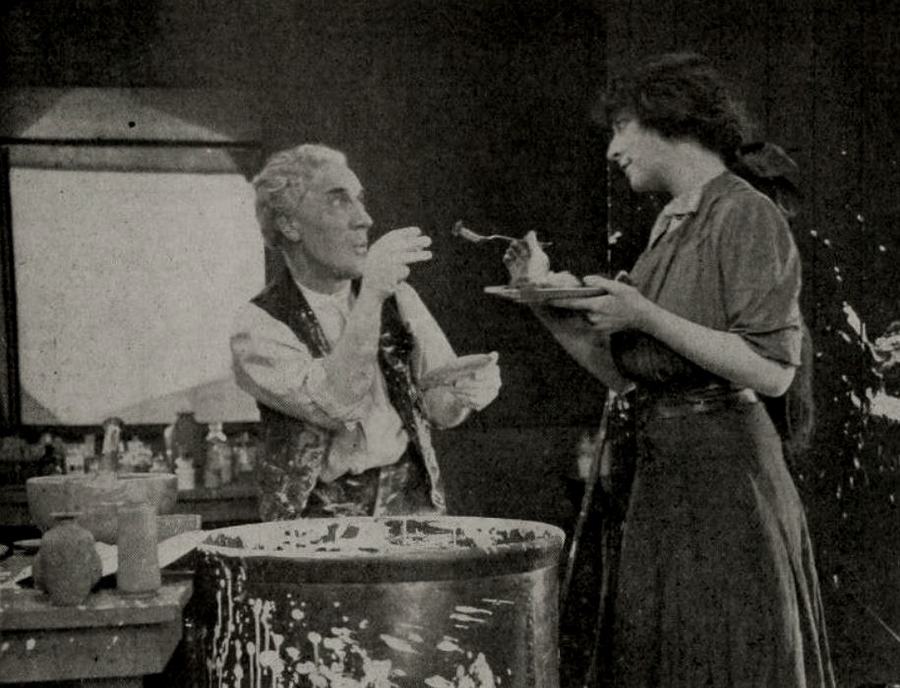
Performances oscillate between declamatory stage hangovers and moments of cinematic intimacy. Grey communicates panic with the flutter of a gloved hand against her skirt; Ames sketches youthful idealism through the way he balances a test tube as though it were a fragile dream. Yet it is the semi-comic supporting cadre—Albert Chevalier as a gin-tippling foreman, Hubert Willis as a creditor whose mutton-chops quiver at insolvency—that inject levity, preventing the parable from calcifying into pure pamphlet.
Comparable only in temper, not in craft, to contemporaries like 'Tween Heaven and Earth with its spiritual schisms, or Brewster's Millions with its lighter treatment of fortune’s caprice, The Middleman stands apart for its industrial specificity. Where Shadows of the Moulin Rouge luxuriates in bohemian decadence, this film wallows in soot, clay, and the acrid perfume of ambition.
Modern viewers may flinch at the colonial interlude—Blenkarn’s African sojourn is staged with zero Black presence, the land rendered as blank canvas for white vengeance—but the elision itself indicts the era’s extractive mindset. The film refuses to romanticise empire; it simply monetises it, much like its protagonist. In that sense The Middleman is startlingly honest: it admits that restitution, even when morally justified, is bankrolled by someone else’s despair.
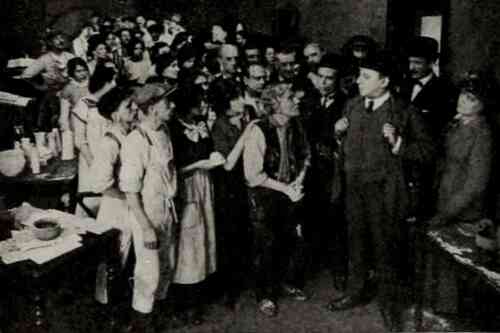
Score reconstruction on the BFI’s 2017 restoration pairs muted brass with ceramic percussion—xylophones, clay drums, glass harmonica—so that every crescendo feels like pots cracking in a too-hot kiln. The effect is hypnotic; you half-expect the theatre to smell of scorched flint. Viewed today, the film’s brevity (a lean 34 minutes) feels less a limitation than a punch: swift, concentrated, leaving a hairline fracture in your certainty about who deserves to inherit the earth.
Interpretive richness abounds. Read the glaze as intellectual property, and the fable prefigures Silicon Valley shark tanks; read it as art, and you witness patronage’s primal sin. Feminist critics can unearth Elaine’s marginalised genius—she sketches kiln profiles in her diary that anticipate modern tunnel ovens—while Marxist scholars will savour the spectacle of capital swallowing its own maker. The film is a palimpsest: each era finds its own fingerprints pressed into the clay.
Flaws? The Kimberley montage relies on a single, static long shot that borders on lantern-slide tourism; the romance subplot resolves with a haste that feels contractually obligated. Yet these are quibbles against the film’s broader achievement: distilling an epoch’s class anxieties into a parable you can hold in your palm—translucent, glittering, and sharp enough to draw blood.
So, a century on, why should you seek out this brittle gem? Because every age incubates new Chandlers—venture capitalists, tech bros, cultural appropriators—who purchase brilliance for pocket change. Because Blenkarns still dig diamonds, literal or cryptographic, to bankroll reckonings. And because cinema, at its inception, already understood what we keep forgetting: the most delicate gloss often conceals the crudest crack. Watch The Middleman; then, next time you lift a porcelain cup, wonder whose hands fashioned its shine, and whether they ever tasted fortune from its rim.
IMDb —
1917
Community
Log in to comment.