DbcultAccessing Vault...
Cult Review
Senior Film Conservator
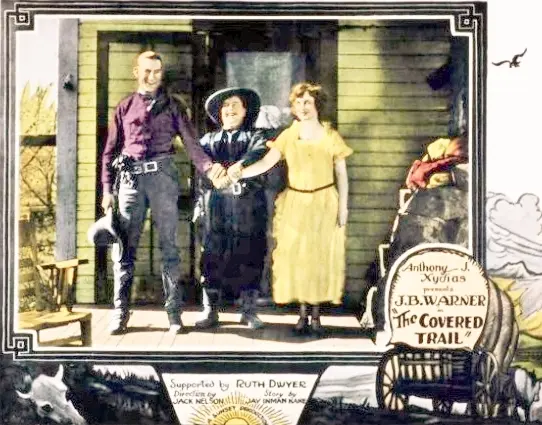
The silent Western, often dismissed by modern audiences as a primitive precursor to the technicolor epics of Ford or Peckinpah, frequently harbors a psychological complexity that belies its age. The Covered Trail (1923) is a quintessential exemplar of this hidden depth. It is a film that operates on two distinct levels: as a thrilling, dust-kicking horse opera and as a Shakespearean tragedy concerning the bonds of blood and the fickleness of public perception. At its heart lies the figure of Keats, played by the tragically short-lived J.B. Warner, whose performance anchors the film’s moral gravity. Unlike the flamboyant heroes of contemporary serials, Warner’s Keats is a man of silences and shadows, a precursor to the brooding anti-heroes that would later define the genre.
The central conflict of the film is not the external threat of the rustlers, but the internal struggle of Keats trying to preserve the innocence of his brother. This 'weakling brother' trope was a staple of the era, seen in varying degrees in films like The Honor of His House, where the preservation of family dignity outweighs personal safety. In 'The Covered Trail,' this dynamic is pushed to its absolute limit. The brother is not merely a victim of circumstance but a catalyst for Keats’ descent into social pariahdom. The film masterfully explores the frustration of trying to save someone who is actively participating in their own destruction, a theme that resonates far beyond the 1920s.
The rustler gang serves as a dark mirror to the community's supposed civility. While the vigilantes and the townspeople are quick to judge Keats based on his associations, the outlaws represent a different kind of entrapment. The cinematography captures this beautifully, often framing Keats in tight, claustrophobic spaces when he is with the gang, contrasting with the wide, albeit unforgiving, vistas of the trail when he is alone or with the Sheriff. This visual language speaks to the character’s internal confinement—he is a prisoner of his own loyalty.
Robert McKenzie’s portrayal of the Sheriff introduces a fascinating layer of moral ambiguity to the proceedings. In many silent Westerns, the law is represented as a monolithic force of righteousness. Here, however, the Sheriff must engage in a 'ruse' to save Keats from a lynch mob. This suggests a world where the formal legal system is insufficient to handle the volatile passions of a frontier community. The Sheriff recognizes Keats’ inherent goodness, but he cannot simply declare him innocent; he must play a dangerous game of deception to ensure that justice—rather than vengeance—is served.
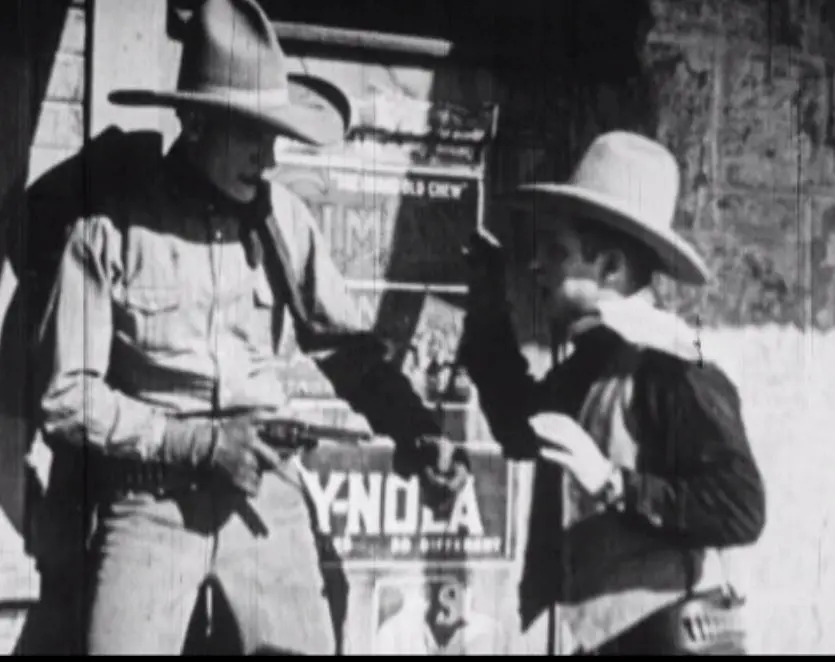
This subversion of justice is a recurring motif in silent cinema of the period. One might find thematic echoes in The White Masks, where identity and morality are obscured by the roles characters are forced to play. In 'The Covered Trail,' Keats’ identity is constantly being rewritten by those around him: he is a rustler to the vigilantes, a traitor to the gang, and a savior to the Sheriff. The fluidity of his reputation highlights the precarious nature of existence in a land where a man is only as good as the last person who saw him.
Technically, the film excels in its pacing, particularly during the third act. The attempted robbery of the Wells Fargo office is a masterclass in silent film editing. The cross-cutting between Keats’ escape and the gang’s preparations creates a palpable sense of urgency. Unlike the more experimental European cinema of the time, such as Der Mann ohne Namen - 1. Der Millionendieb, which focused on stylistic flourish, 'The Covered Trail' utilizes its camera to maximize the visceral impact of the action. The horses are not just props; they are instruments of momentum, their hooves churning the earth into a visual representation of the chaos unfolding.
The Wells Fargo office itself serves as a symbol of encroaching civilization and the order that Keats is fighting to protect, even as that same civilization seeks to hang him. The irony is sharp: the man the community wants to execute is the only one standing between them and financial ruin. This irony is a common thread in films like The Torch Bearer, where the protagonist’s true worth is only revealed through a crucible of fire and conflict.
The film’s resolution is where it truly transcends its genre trappings. The deathbed confession of the brother is a moment of profound pathos. In the absence of sound, the emotional weight is carried entirely by the actors’ expressions and the intertitles. The brother’s realization of the magnitude of Keats’ sacrifice brings a sense of closure that is both satisfying and deeply depressing. Keats is cleared of wrongdoing, but the cost is the life of the very person he spent the entire film trying to save. It is a pyrrhic victory that leaves the viewer questioning the utility of such devotion.
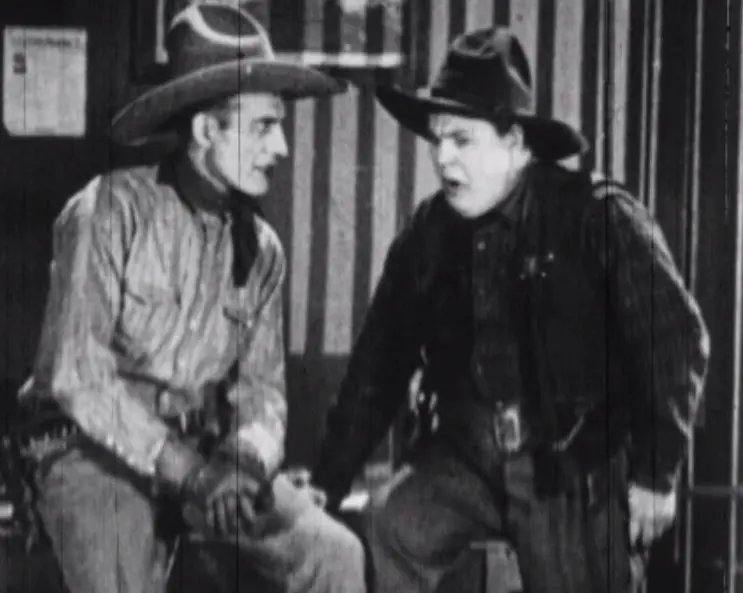
This ending avoids the easy, sun-dappled conclusions of many contemporary Westerns. It shares a certain grim realism with During the Plague, where the resolution of the plot does not necessarily mean the healing of the characters' traumas. Keats is left a Deputy, a man of the law, but he is also a man who has lost his family and his innocence. The final shots of the film linger on the landscape, suggesting that while the individual actors in this drama may pass away or be transformed, the trail remains—covered in the dust of their struggles.
J.B. Warner’s performance is a revelation. There is a stillness to him that is often missing from silent film acting, which frequently leaned toward the theatrical or the pantomimic. His chemistry with Ruth Dwyer provides a much-needed emotional anchor, though the romance is secondary to the fraternal bond. Robert McKenzie, as the Sheriff, provides a sturdy, reliable presence that balances Warner’s more internal performance. Together, they represent the two sides of the Western hero: the one who acts within the system and the one who must operate outside of it to save it.
The direction (though sometimes attributed to various hands in the silent era's collaborative studio system) shows a sophisticated understanding of spatial relationships. The way the characters move through the environment—whether it's the cramped confines of a jail cell or the sprawling expanse of the hills—tells us as much about their state of mind as the dialogue. This is a film that rewards close viewing, as small gestures and background details often hint at the larger forces at play. It stands in stark contrast to more lighthearted fare like Be a Little Sport or the social comedies like The City of Masks.
Released in 1923, 'The Covered Trail' arrived at a time when the Western was beginning to mature. The influence of films like La luz, tríptico de la vida moderna was pushing filmmakers toward more nuanced portrayals of contemporary life, and the Western had to adapt to remain relevant. By injecting a heavy dose of psychological realism and familial tragedy into the standard rustler plot, 'The Covered Trail' ensured its place as a significant, if sometimes overlooked, entry in the silent canon.
In conclusion, The Covered Trail is far more than a relic of a bygone era. It is a visceral, emotionally resonant exploration of the lengths a man will go to for love and the tragic consequences of misplaced loyalty. Through its stellar performances, particularly that of J.B. Warner, and its sophisticated visual storytelling, it remains a powerful testament to the enduring power of the Western myth. Whether compared to the social intrigue of Queens Are Trumps or the mystery of Alias Mary Brown, this film carves out its own unique space in the annals of cinema—a space defined by the dust of the trail and the blood of the heart.
A haunting reminder that the most dangerous trails are the ones we cover for those we love.
IMDb —
1928
Community
Log in to comment.