DbcultAccessing Vault...
Cult Review
Senior Film Conservator
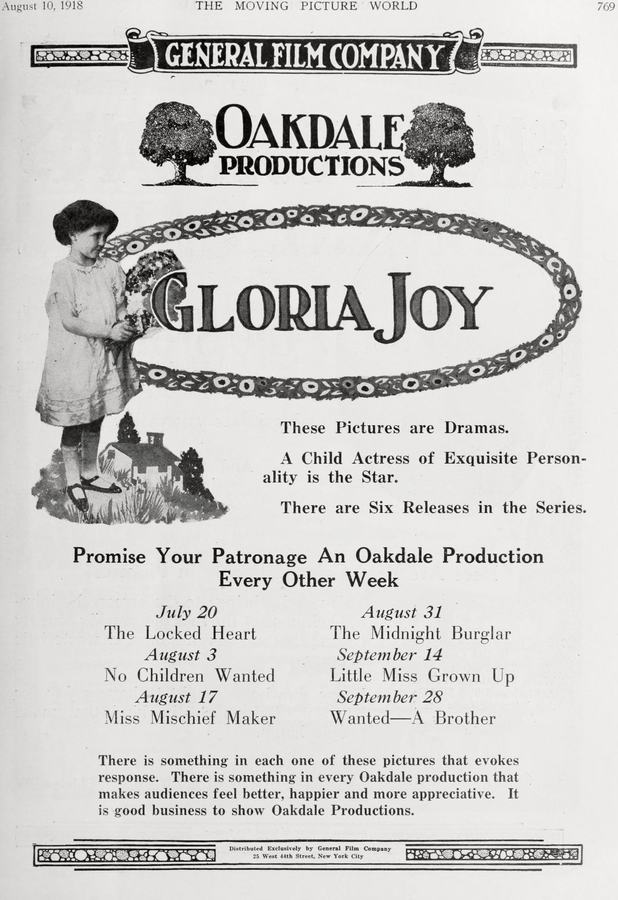
Stepping back into the nascent days of cinema, when flickering images and orchestral scores wove narratives without uttered dialogue, we encounter 'The Midnight Burglar' (1917), a film that, despite its age, still pulsates with a surprisingly robust social conscience. This isn't merely a historical artifact; it's a poignant mirror reflecting the stark class disparities that defined, and continue to define, society. The film courageously tackles themes of wealth, poverty, responsibility, and the transformative power of a child's unblemished perspective, all wrapped in the dramatic flourishes characteristic of its era. It asks us to consider the often-unseen suffering that exists just beyond the periphery of privileged lives, a question as relevant today as it was over a century ago.
At the heart of this narrative lies the Depue family, a microcosm of societal extremes. John Cromwell Depue, portrayed with a compelling blend of arrogance and eventual vulnerability by Neil Hardin, is the quintessential capitalist of his time – a man whose prosperity is built, quite literally, upon the backs of the less fortunate. His tenements are not just properties; they are breeding grounds for illness and despair, a stark physical manifestation of his moral neglect. Hardin’s performance, relying heavily on exaggerated gestures and facial expressions typical of silent film acting, effectively conveys the character’s initial obduracy and the subtle cracks that begin to form in his resolve. His refusal to ameliorate the unsanitary living conditions, even as sickness ravages his tenants, paints a chilling portrait of avarice unchecked by empathy. This uncompromising depiction of a landlord's indifference sets a powerful, if uncomfortable, stage for the moral drama that unfolds.
Then there is Emily Depue, John's wife, brought to life by Ethel Ritchie. Emily is the embodiment of superficial philanthropy, her charitable endeavors driven more by social standing and fashionable trends than by any genuine concern for the downtrodden. Ritchie captures this delicate balance of outward grace and inward emptiness with nuanced skill, particularly in scenes where she navigates her social circles. Her involvement in charity work is a performative act, a societal expectation rather than a heartfelt calling. Yet, it is through her, perhaps unwittingly, that the film’s moral compass begins to recalibrate. Her decision to take young Marylee on an excursion through the very tenements her husband owns is a catalyst, a moment of accidental enlightenment that shatters the protective bubble around their daughter.
The true heart of 'The Midnight Burglar' beats within Marylee Depue, a role exquisitely portrayed by Gloria Joy. Marylee’s journey from sheltered innocence to profound, active empathy is the narrative's central arc. Her initial exposure to the tenements is a visceral shock, a stark contrast to the opulent world she inhabits. It's a moment of pure, unadulterated suffering that she witnesses firsthand – the gaunt faces, the squalid surroundings, the palpable despair. This experience is a crucible, forging within her a sense of responsibility far beyond her years. Gloria Joy, with the raw, untutored emotional honesty often found in child actors of the silent era, makes Marylee's transformation utterly believable. Her wide-eyed wonder gives way to a solemn determination, a silent scream against the injustice she perceives.
Marylee’s subsequent actions are nothing short of revolutionary for her character. At a ball, a symbol of her mother's superficial world, she dresses as a 'slum child,' a potent visual metaphor for her internal shift. This act of self-disguise is not merely a playful costume; it's a deliberate blurring of class lines, a performative plea for the very people her family exploits. The money she collects, however meager, is imbued with a genuine spirit of giving that transcends the hollow gestures of her mother’s social circle. It's a moment of quiet rebellion, a child's answer to adult apathy.
The film truly earns its evocative title in Marylee's audacious nocturnal escapade. Driven by an urgent desire to alleviate the suffering of Jones's wife, who has contracted typhoid, Marylee embarks on a clandestine mission. The scene where she 'steals' a large basket of food from her own lavish home is fraught with tension and symbolic weight. It’s not a theft born of malice, but of desperate compassion – a moral burglary that transcends conventional notions of right and wrong. The food, a symbol of her family's excess, becomes a lifeline for those starved of basic necessities. This act highlights the film's core message: that sometimes, true justice requires a disruption of the established order, even if that disruption comes from the most unexpected source.
The encounter with Jones, whose desperation is subtly conveyed by Charles Dudley, is brief but impactful. Dudley's performance, though constrained by the era's acting conventions, communicates the crushing weight of poverty and illness. Other supporting cast members, like Nell Holman, Daniel Gilfether, Ruth Lackaye, Ethel Pepperell, and Frank Erlanger, contribute to the tapestry of the tenement world and the affluent society, often through brief but memorable appearances that underscore the film’s thematic contrasts. Their collective presence helps to flesh out the two distinct worlds Marylee navigates, amplifying the gravity of her choices.
Marylee's altruistic mission is cut short when she herself falls ill, prompting Jones to return her home. The climax of the film hinges on this moment of parental terror. John and Emily, confronted with the potential loss of their child, experience a profound, albeit somewhat dramatically convenient, shift in perspective. Their relief upon learning that Marylee's illness is merely a result of overindulgence in jam cakes, rather than a contagion contracted from the tenements, triggers a sudden moral awakening. This 'aha!' moment leads them to vow to lower rents and clean up their properties. While this resolution feels a tad simplistic, even saccharine, it serves its purpose within the narrative framework of early cinema, aiming for a clear moral victory.
The abruptness of this conversion might strike modern viewers as a narrative shortcut. However, within the context of 1917, such clear-cut moral lessons were often a staple of cinematic storytelling. The film posits that sometimes, personal tragedy or the fear of it, can be a more powerful catalyst for social change than abstract notions of justice. It’s a testament to the idea that self-interest, when threatened, can sometimes align with altruism. This kind of dramatic resolution can be seen in other films of the era that grappled with social issues, perhaps offering a more palatable conclusion for audiences who preferred hopeful endings.
Beyond its plot, 'The Midnight Burglar' is a rich tapestry of themes. It’s a compelling critique of social hypocrisy, particularly through the character of Emily. It explores the profound impact of environmental conditions on human health and dignity, a topic that resonated deeply in an era grappling with rapid urbanization and public health crises. Most importantly, it champions the power of individual empathy, particularly that of a child, to disrupt entrenched systems of injustice. The film's reliance on visual storytelling, characteristic of the silent era, means that every gesture, every set design, every intertitle must convey meaning with heightened clarity. The stark contrast between the opulent Depue mansion and the squalid tenements is a visual shorthand for the film's central conflict, effectively communicating the chasm between the two worlds.
The performances, as mentioned, are emblematic of silent film acting – often grander, more physically expressive than what we're accustomed to today. Neil Hardin's transformation from stern patriarch to penitent father is conveyed through a visible softening of his posture and a shift in his gaze. Ethel Ritchie's initial aloofness gradually gives way to genuine concern. And Gloria Joy's expressive face is a canvas for Marylee's emotional journey, from wide-eyed curiosity to determined compassion and finally, childish vulnerability. These actors, through their mastery of non-verbal communication, ensure that the emotional beats of the story land with impact, even without spoken dialogue.
In the broader landscape of early cinema, 'The Midnight Burglar' stands as an interesting example of social realism intertwined with melodrama. It's not as overtly political as some later films, nor as abstract as certain avant-garde experiments, but it directly confronts a pressing social issue of its time. When considering other films of this period, one might draw parallels to the moral explorations found in a film like The Scarlet Letter, which also delves into societal judgment and individual conscience, albeit through a different lens. Or perhaps, in its depiction of economic disparity and its consequences, it echoes the concerns present in The Dollar and the Law, which often explored the legal and ethical ramifications of wealth and power. The innocence and agency of a child protagonist, a recurring motif in cinema, might also remind viewers of films like Das Eskimobaby, where a young character drives much of the narrative's emotional core, or The Gilded Youth, which similarly scrutinizes the lives of the privileged young, albeit with different thematic conclusions. However, 'The Midnight Burglar' distinguishes itself by placing the child not just as an observer, but as the primary agent of moral transformation.
What makes 'The Midnight Burglar' still resonate? It's the timeless struggle between conscience and greed, the awakening of empathy, and the idea that even the smallest acts of kindness can ripple outwards. The film's ultimate message is one of hope – that change is possible, even for the most entrenched and self-serving individuals. However, it also leaves a subtle, lingering question: is such a convenient, fear-driven conversion truly sustainable? Or is it a momentary reprieve, a cinematic palliative for deep-seated systemic issues?
While the film's resolution may feel overly optimistic by today's standards, it encapsulates a certain idealism prevalent in early narrative cinema – the belief that moral rectitude, once recognized, will inevitably triumph. It's a powerful reminder of cinema's ability to not just entertain, but to provoke thought, challenge societal norms, and advocate for compassion. For those interested in the evolution of social commentary in film, or simply a compelling story of a child's moral courage, 'The Midnight Burglar' offers a surprisingly rich and thought-provoking experience, a testament to the enduring power of silent storytelling.
The absence of credited writers in the provided information is a common characteristic of early film production, where often the director or a collective studio effort shaped the narrative without individual screenwriting attribution. This only adds to the mystique of how such a pointed social commentary managed to emerge from the collaborative efforts of the time, proving that powerful narratives transcend individual authorship and can capture the zeitgeist through collective creative force.
IMDb 7.1
1934
Community
Log in to comment.