DbcultAccessing Vault...
5.1/10
Senior Film Conservator
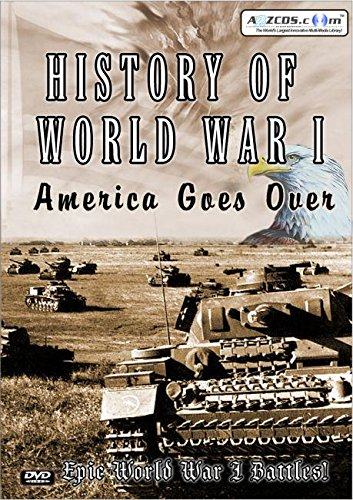
A definitive 5.1/10 rating for a film that redefined the boundaries of cult cinema. America Goes Over remains a cornerstone of transgressive art.
In the annals of early cinema, few works bear the weight of historical imperative quite like 'America Goes Over.' This isn't merely a film; it is a meticulously engineered artifact of its time, a strategic communication tool forged in the tumultuous crucible of World War I. Produced and disseminated by the nascent, yet remarkably effective, US Army Signal Corps, its primary objective transcended mere entertainment or factual reporting. Instead, it aimed to meticulously sculpt public perception, to 'educate' and inform a nation grappling with the profound implications of its entry into a global conflict that had, until then, felt distant and abstract. To view 'America Goes Over' today is to peer through a singular lens into the propaganda machinery of the early 20th century, a testament to the nascent understanding of moving images as a powerful force for national cohesion and strategic influence.
The US Army Signal Corps, traditionally tasked with communications, found itself at the forefront of a revolutionary new medium during World War I: film. Recognizing the profound potential of motion pictures to shape public opinion, they embarked on an ambitious project to document, curate, and disseminate images from the European front. 'America Goes Over' is a prime example of this pioneering effort. It wasn't a documentary in the modern sense, striving for objective truth, but rather a carefully constructed narrative designed to elicit specific emotional and intellectual responses. The film served as a crucial bridge, connecting the home front with the distant battlefields, translating the abstract concept of war into tangible, if carefully managed, visual experiences. The logistical challenges alone of capturing, developing, and distributing film reels across continents during wartime were immense, underscoring the strategic importance the military placed on this endeavor. The Signal Corps understood that public support was as vital to victory as munitions and manpower, and film was their most compelling weapon in the battle for hearts and minds.
One of the film's most significant features is the inclusion of General John J. Pershing, the stoic and resolute commander of the American Expeditionary Forces in Europe. His appearances are not mere cameos; they are calculated insertions of authority and gravitas, designed to imbue the entire enterprise with a sense of unwavering leadership. Pershing, often captured in moments of quiet command or surveying the vastness of the American effort, becomes a living symbol of national resolve. His presence reassures a populace that their sons and brothers are under competent, decisive leadership. The camera often frames him in a way that emphasizes his stature and strategic thinking, whether he is reviewing troops, conferring with aides, or observing the logistical marvels of the American build-up. These scenes served a dual purpose: to humanize the distant commander while simultaneously elevating him to an almost mythic status, a figurehead of American strength and purpose. The very act of seeing him, in motion, on screen, would have been a powerful experience for audiences accustomed to static photographs or written reports, making the war feel more immediate and tangible, yet still under control.
The heart of 'America Goes Over' lies in its portrayal of the American soldier, the 'doughboy,' navigating the unprecedented horrors and occasional lulls of the Western Front. The film masterfully, though selectively, captures the dichotomy of their existence. Scenes of combat are presented with a stark immediacy, showcasing the organized chaos of trench warfare, the relentless advance, and the sheer scale of modern conflict. While the most gruesome realities are undoubtedly omitted or sanitized, the viewer is still confronted with the visual impact of war: explosions, troops moving under fire, and the grim determination etched on the faces of young men. These sequences are designed to evoke a sense of urgency and the necessity of the American presence. Yet, 'America Goes Over' also dedicates significant screen time to the soldiers' moments of respite. We see them resting, eating, engaging in camaraderie, and performing the mundane tasks that punctuated the relentless tension of battle. These scenes are crucial for humanizing the soldiers, making them relatable to the audiences back home. They serve to remind viewers that these are not faceless warriors, but individuals, capable of humor, exhaustion, and resilience. This balance between the grim reality of conflict and the indomitable spirit of the troops was a deliberate rhetorical strategy, fostering both a sense of patriotic duty and profound empathy.
The visual rhetoric employed in 'America Goes Over' is fascinating, particularly when considered within the context of early filmmaking. With limited technology and nascent cinematic language, the filmmakers relied heavily on framing, composition, and the sheer power of authentic footage. There’s a distinct absence of the complex narrative structures or character development that were becoming increasingly prevalent in contemporary fictional features. Unlike the intricate dramatic arcs of a film like The Law of Compensation, or the emotionally charged personal journeys depicted in The Mortal Sin, 'America Goes Over' prioritizes collective experience and national purpose. Its 'narrative' is one of progression, of the American war effort steadily gaining momentum and making a decisive impact. The editing, while perhaps rudimentary by today's standards, serves to build a sense of scale and efficiency. Shots of vast troop movements, supply lines, and artillery barrages are intercut with close-ups of determined faces, creating a mosaic of national endeavor. The film implicitly argues for the necessity and righteousness of the war, not through explicit dialogue (which would have been difficult to synchronize at the time), but through the carefully selected and presented imagery itself. It leveraged the novelty of moving pictures to create an unparalleled sense of presence and immediacy, making the distant war feel undeniably real and urgent to the American public.
'America Goes Over' is a cornerstone in the history of both documentary filmmaking and state-sponsored propaganda. It demonstrates an early, yet sophisticated, understanding of how mass media could be harnessed to shape public opinion on a national scale. In an era before widespread radio or television, cinema offered an unprecedented opportunity to reach diverse audiences across the country. The film sought to counter isolationist sentiments, justify the immense human and financial costs of the war, and foster a unified national identity around the war effort. Its impact can be understood as a precursor to the powerful informational campaigns seen in later conflicts, solidifying the role of visual media as an indispensable tool for governments. It stands in stark contrast to pure entertainment features of the period, such as the fantastical adventures of Ali Baba and the Forty Thieves, or the more lighthearted fare like Giving Becky a Chance, which aimed to transport audiences away from reality. 'America Goes Over' dragged them into it, albeit a curated version. This film, therefore, offers invaluable insights into the social and political climate of the United States during WWI, revealing the government's acute awareness of public sentiment and its proactive efforts to manage it.
The legacy of 'America Goes Over' extends far beyond its initial wartime utility. It serves today as an invaluable primary source for historians, offering authentic, if framed, glimpses into the American experience of World War I. For film scholars, it provides a fascinating case study in the evolution of non-fiction cinema and the strategic deployment of visual media. Its techniques, though rudimentary, laid groundwork for future newsreels, documentaries, and even modern political advertising. The film reminds us of the enduring power of images to shape narratives, influence perceptions, and mobilize populations. It compels us to consider the ethical dimensions of media production, particularly when commissioned by state actors during times of crisis. While it lacks the intricate character studies or complex plot twists that might define a narrative feature like The Serpent or the suspenseful intrigue of The Vanderhoff Affair, its power lies precisely in its direct, unvarnished (within its own parameters) presentation of a historical moment. It is a raw, compelling piece of history, allowing us to not only witness the past but also to understand how that past was presented to its own contemporary audience.
Revisiting 'America Goes Over' in the 21st century offers a unique opportunity to reflect on the relationship between media, government, and the populace, a dynamic that remains profoundly relevant today. It's a stark reminder that even in its infancy, cinema was understood not just as an art form, but as a formidable instrument of national will and collective identity. It’s a film that demands to be seen, not just for its historical footage, but for what it reveals about the very nature of persuasion through visual storytelling during one of humanity's most cataclysmic conflicts.
— A profound look into the genesis of cinematic influence —
IMDb 6.4
1917
Community
Log in to comment.