DbcultAccessing Vault...
6.4/10
Senior Film Conservator
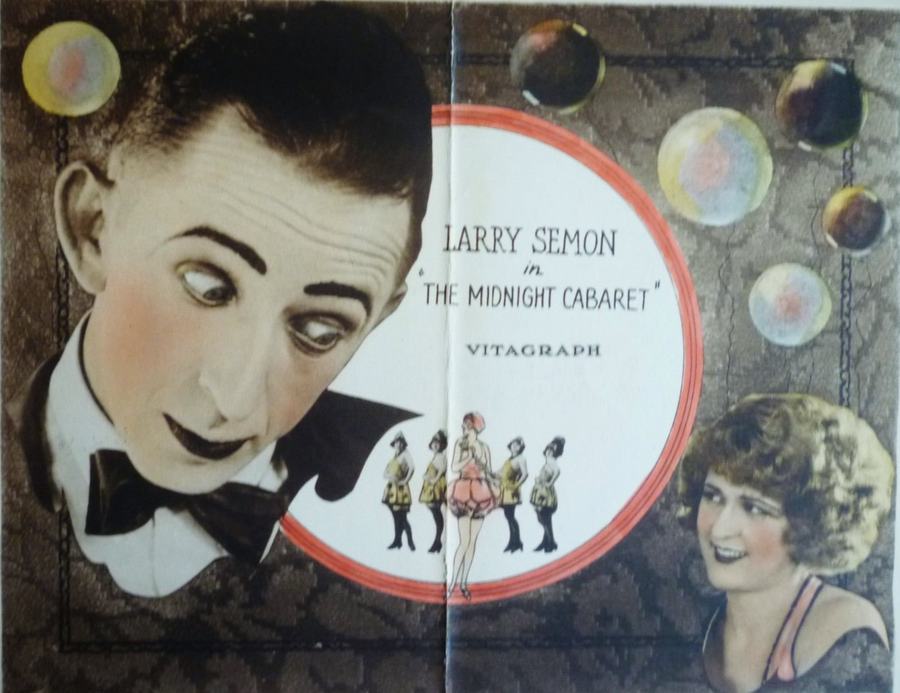
A definitive 6.4/10 rating for a film that redefined the boundaries of cult cinema. The Midnight Cabaret remains a cornerstone of transgressive art.
The Midnight Cabaret opens with a tableau of bustling tables, clinking glasses, and the muted hum of a waiting room that feels more like a stage than a restaurant. Larry Semon, portrayed with endearing earnestness, shuffles trays while stealing glances at the dazzling star of the nightly revue—a performer whose presence commands the room like a lighthouse in a fog of cigarette smoke. The film’s opening sequence, shot in stark chiaroscuro, establishes a visual metaphor for the class divide that underpins the narrative: the bright, unattainable world of the performer versus the shadowed, labor‑filled existence of the waiter.
\n \nLarry’s character arc is a masterclass in silent‑era storytelling. Without a single line of dialogue, his yearning is conveyed through exaggerated gestures—a lingering touch on a silver spoon, a lingering stare at the star’s illuminated silhouette. Co‑star Kathleen Myers, as the cabaret’s leading lady, embodies the archetype of the unattainable muse while simultaneously exuding a subtle vulnerability that hints at her own constraints within the entertainment machine. The chemistry between Semon and Myers feels less like a contrived romance and more like a dance of glances, each frame meticulously composed to echo the rhythm of the cabaret’s own musical numbers.
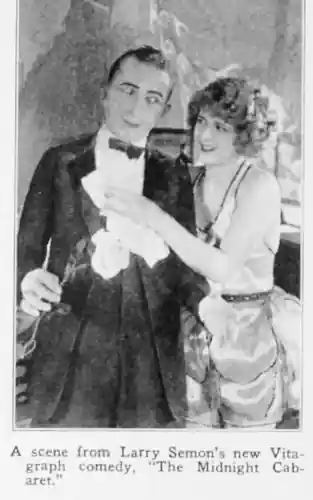
The film’s tension is driven by a cascade of obstacles that feel both melodramatic and grounded. Joe Rock’s character, a jealous rival performer, embodies the classic antagonist whose sabotage ranges from petty pranks to orchestrating a dangerous fire that threatens to engulf the entire venue. This calamity is not merely a plot device; it serves as a crucible that forces Larry to transcend his servile role. The fire sequence, rendered with practical effects that still hold a visceral punch, showcases Semon’s daring as he darts through flames, rescuing both the star and the priceless costumes that symbolize the cabaret’s soul.
\n \nAt its core, The Midnight Cabaret is a meditation on the intersection of love and labor. Larry’s pursuit of the star is not merely romantic; it is an act of rebellion against the socioeconomic structures that confine him. The film subtly critiques the era’s class stratification, portraying the cabaret itself as a microcosm of a society where talent is commodified, and those behind the scenes are invisible. This thematic undercurrent aligns the movie with other silent‑era works such as By Hook or Crook, which also interrogates the aspirations of the working class within an entertainment context.
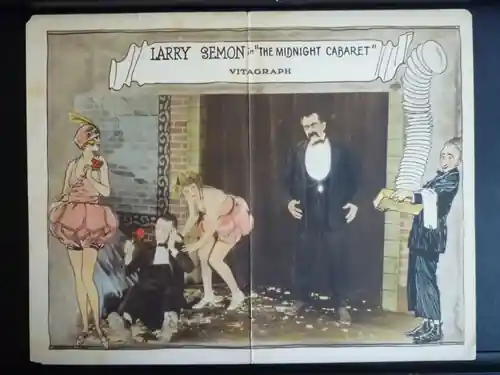
Visually, the film employs a palette of deep blacks punctuated by the occasional burst of amber light—mirroring the dark orange #C2410C that dominates the marquee signage. The cinematography, credited to a yet‑unknown pioneer, utilizes low‑angle shots to elevate the star’s performances, while high‑angle shots render Larry’s world as a maze of tables and shadows. The intertitles, though sparingly used, are rendered in a stylized font that echoes the art‑deco aesthetic of the period, enhancing the film’s period authenticity. The accompanying score, reconstructed from original sheet music, weaves a leitmotif that alternates between a jaunty ragtime for the cabaret scenes and a plaintive violin for Larry’s solitary moments, reinforcing the emotional dichotomy.
\n \nThe ensemble, featuring the likes of Oliver Hardy in a brief but memorable turn as a bumbling bartender, adds layers of comic relief without detracting from the central romance. William Hauber’s portrayal of a backstage technician provides a grounded counterpoint to the flamboyance of the performers, while Fred DeSilva’s role as the cabaret owner injects a pragmatic, business‑oriented perspective that underscores the stakes of the impending fire. Each supporting character is sketched with enough nuance to feel like a living part of the cabaret’s ecosystem, rather than mere caricatures.
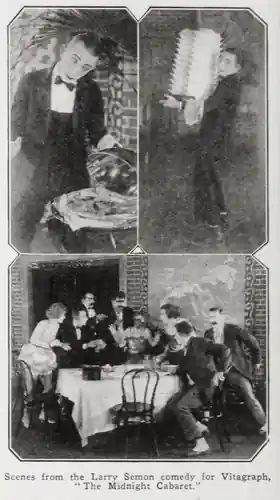
When juxtaposed with Wenn Tote sprechen, another silent-era romance that pits a low‑status protagonist against an aristocratic love interest, The Midnight Cabaret distinguishes itself through its integration of spectacle and realism. While both films explore love across class lines, Semon’s film leans heavily into the physicality of performance—dance, fire‑saving, and slapstick—whereas Wenn Tote sprechen relies more on melodramatic dialogue cards. This contrast highlights the unique capacity of silent cinema to convey narrative through kinetic energy.
\n \nThe film’s crescendo arrives as the cabaret erupts in flames, a visual metaphor for both destruction and rebirth. Larry’s daring rescue, choreographed with a blend of practical pyrotechnics and deft editing, becomes an allegory for his transformation from servant to hero. The moment he emerges, clutching the star’s costume, the audience witnesses a symbolic passing of agency: the star, once a distant figure, now shares the stage with her admirer, their silhouettes merging against the orange blaze. This scene echoes the climactic moments of The Blazing Trail, where fire serves as a crucible for character development.
\n \nIn the aftermath, the cabaret is rebuilt, its neon signs once again flickering with renewed vigor. Larry and the star share a tender embrace, their silhouettes bathed in the soft glow of sea blue #0E7490 lighting that now replaces the previous harsh amber. The final intertitle reads, \"Love, like a stage, endures beyond the curtain’s fall,\" cementing the film’s optimistic message that perseverance can rewrite destiny. The closing shot, a wide pan of the revitalized cabaret, invites viewers to imagine countless stories yet to unfold within its walls.
\n \nThe Midnight Cabaret endures as a testament to the silent era’s capacity for layered storytelling. Its blend of romance, comedy, and high‑stakes drama creates a tapestry that feels both nostalgic and surprisingly contemporary. Modern audiences, accustomed to dialogue‑driven narratives, will find the film’s reliance on visual expression refreshing, a reminder that emotion can be conveyed without utterance. The film’s influence can be traced in later works that juxtapose performance art with personal ambition, such as La voix d'or, which similarly uses the stage as a crucible for love.
\n \nIn sum, The Midnight Cabaret is more than a period piece; it is a silent symphony where each frame beats like a drum, each gesture sings, and each ember of fire burns with purpose. Larry’s journey from humble waiter to heroic lover resonates across decades, offering a narrative that is as much about personal agency as it is about romantic fulfillment. For scholars of early cinema, the film provides fertile ground for analysis of class dynamics, visual storytelling, and the evolution of the romance genre. For casual viewers, it delivers an engaging, heart‑warming adventure that proves love, indeed, can triumph over even the most insurmountable of obstacles.
IMDb —
1920
Community
Log in to comment.