DbcultAccessing Vault...
Cult Review
Senior Film Conservator
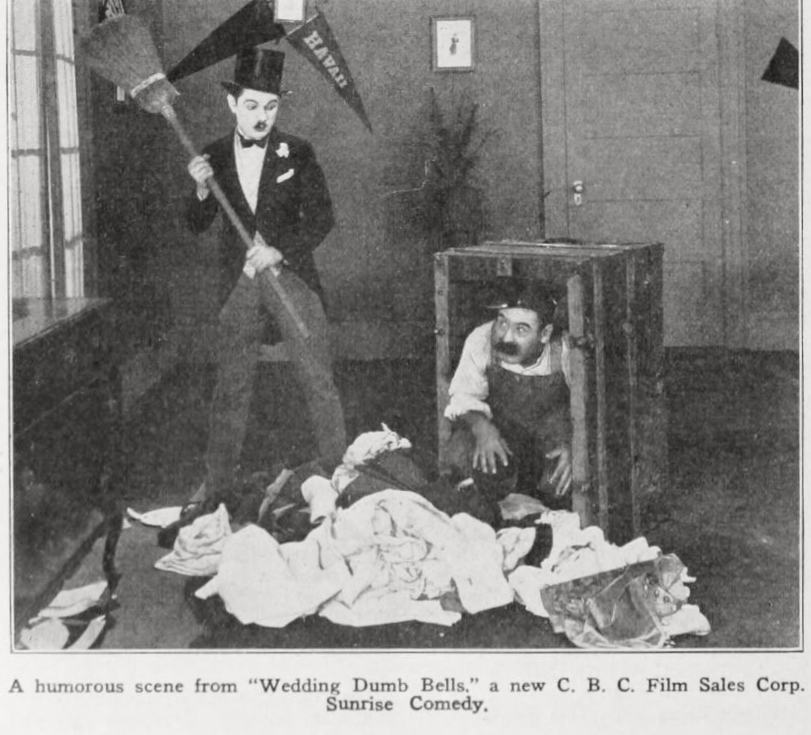
To gaze upon the 1921 celluloid artifact Wedding Dumb Bells is to witness a specific, ephemeral moment in the evolution of American humor. During an era when the cinematic landscape was still finding its rhythmic footing, Billy West emerged as a mercurial figure, often dismissed as a mere Chaplin mimic, yet possessing a technical precision that deserves a more nuanced autopsy. This film, a frantic exploration of domestic anxiety and physical failure, operates with a velocity that modern comedies rarely dare to replicate.
The structural integrity of Wedding Dumb Bells relies heavily on the concept of escalation. Unlike the more contemplative or melodramatic offerings of the time, such as Diane of Star Hollow, West’s work here is purely transactional. The protagonist offers a gesture of romance, and the universe responds with a blunt-force trauma. The "dumb bells" of the title serve as a dual metaphor—referencing both the literal exercise weights that catalyze the third-act chaos and the cast of characters who seem perpetually baffled by the basic laws of physics.
West’s performance is a marvel of kinetic energy. While some might argue that his style lacks the pathos of Chaplin or the stoic geometry of Keaton, there is a raw, unbridled desperation in his movements that feels remarkably contemporary. He captures the frantic pulse of the early 20th century, a time when the world was moving faster than its inhabitants could manage. In many ways, the film mirrors the social upheaval found in The Business of Life, though it swaps existential dread for the immediate threat of a heavy weight falling on one's cranium.
Visually, the film adheres to the flat, theatrical staging common to the period, yet there are flashes of experimental framing that suggest a burgeoning understanding of the camera's power. When compared to the aquatic visual explorations of Wonders of the Sea, Wedding Dumb Bells might seem grounded, but its use of deep space within the wedding hall allows for multiple layers of comedic action to occur simultaneously. It is a dense visual text, requiring the viewer to scan the frame for the next impending disaster.
The lighting is harsh, typical of the orthochromatic film stock of the day, which emphasizes the exaggerated makeup and the sweat-beaded brows of the performers. This creates a sense of visceral reality that contrasts sharply with the more stylized, almost ethereal quality of The Golden Rosary. Here, the world is tactile, dirty, and dangerous. Every surface looks like it could cause a bruise, and every prop feels heavy—a necessary component for the slapstick to resonate with the audience.
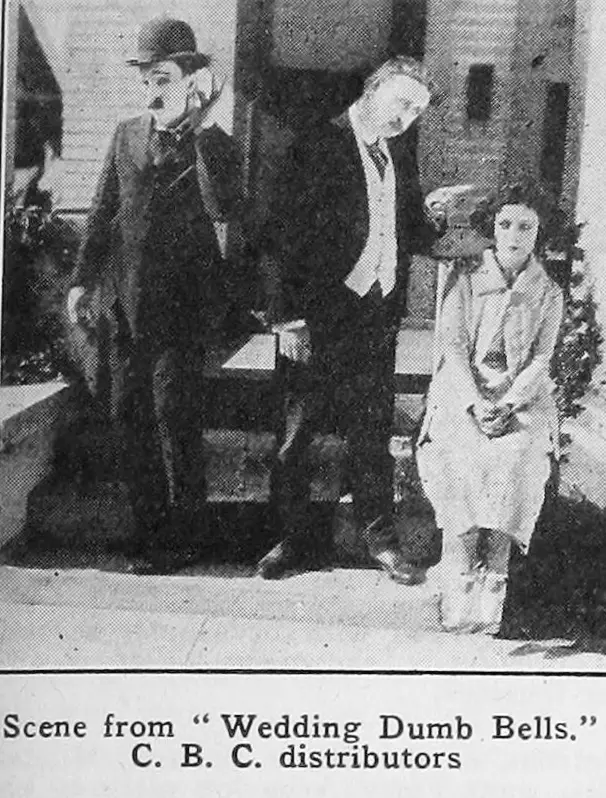
At its core, Wedding Dumb Bells is a scathing, albeit hilarious, critique of the wedding industry long before it was an industry. The formality of the event is the very thing that makes the comedy work. The stiffer the collar, the more satisfying it is to see it wilt. This theme of social posturing and its inevitable collapse is a recurring motif in silent cinema, often explored with more gravitas in films like An Honorable Cad. However, West chooses to dismantle the institution through pure entropy.
The supporting cast, while often relegated to the background, provides the necessary friction. They represent the "Small Town Stuff" (to borrow a title from Small Town Stuff) that keeps the protagonist grounded—literally and figuratively. Their reactions—ranging from indignant shock to oblivious participation—create a tapestry of human folly that elevates the film from a mere series of stunts to a coherent piece of social commentary.
It is impossible to discuss this film without addressing the elephant in the screening room: the Chaplin comparison. While West certainly utilized the same mustache, cane, and waddle, his timing was distinct. There is a franticness in Wedding Dumb Bells that Chaplin had largely abandoned by 1921 in favor of more sentimental narratives like The Kid. West remained a purist of the primitive gag. His work here shares a spiritual DNA with the rough-and-tumble energy of The Good for Nothing.
In Wedding Dumb Bells, we see West leaning into the "dumb" aspect of his persona with a lack of vanity that is refreshing. He is willing to be the butt of the joke, the victim of the dumbbell, and the architect of his own demise. This self-effacing quality is what makes the character sympathetic despite his destructive nature. It’s a delicate balance that many of his contemporaries, such as those in The Chauffeur, often struggled to maintain.
The editing in Wedding Dumb Bells is surprisingly sophisticated. The rhythmic cutting between West’s increasingly desperate face and the inanimate objects that threaten him creates a sense of mounting dread that is essential for the payoff. This precision in timing is what separates a great comedy from a mediocre one. It’s the same attention to detail one might find in the atmospheric tension of The Velvet Hand, though applied to a vastly different genre.
Furthermore, the film’s use of physical space—the way characters enter and exit the frame—suggests a mastery of the "wrong door" trope, much like the thematic core of Through the Wrong Door. In the world of Billy West, every door is the wrong door, and every choice leads to a spectacular, if painful, conclusion. This relentless commitment to the bit is what gives the film its enduring charm.
While Wedding Dumb Bells is a quintessentially American product, its slapstick language is universal. This was an era where cinema was truly a global tongue. One can see echoes of this physical comedy even in disparate international works like the Indian mythological Narasinha Avtar or the European sensibilities of Mouchy. The human body in distress is a comedic constant, transcending borders and cultural barriers.
The film also serves as a bridge between the early short-form comedies and the feature-length spectacles that would soon dominate the industry. It possesses a density of ideas that could have easily been expanded into a longer narrative, yet it benefits from its brevity. Like a well-placed spark in A Bit of Kindling, it ignites, burns brightly, and exits before the audience can catch their breath.
To dismiss Wedding Dumb Bells as a relic of a bygone era would be a mistake. It is a vital piece of the comedic puzzle, a testament to the power of physical performance and the enduring appeal of the underdog. Billy West may have stood in Chaplin’s shadow, but in this film, he finds his own light—even if that light is occasionally obscured by a falling anvil or a collapsing wedding cake. It captures the same spirit of chaotic romance found in A Crooked Romance, but with a more aggressive, unpolished edge.
In the final analysis, the film is a celebration of failure. It suggests that while we may strive for the perfection of a wedding day or the dignity of a well-lived life, we are ultimately at the mercy of our own clumsiness and the indifferent physics of the world around us. It is a message that resonates as much today as it did in 1921, perhaps even more so in our own era of curated perfection. Sometimes, the most honest thing we can do is drop the dumbbell and laugh at the wreckage.
Whether you are a scholar of the silent era or a casual fan of vintage mayhem, Wedding Dumb Bells offers a masterclass in the art of the fall. It is a raucous, unapologetic, and brilliantly executed slice of history that reminds us why we fell in love with the moving image in the first place. In a world of digital perfection, there is something deeply soul-stirring about the grainy, high-stakes comedy of Billy West.
IMDb —
1926
Community
Log in to comment.