DbcultAccessing Vault...
Cult Review
Senior Film Conservator
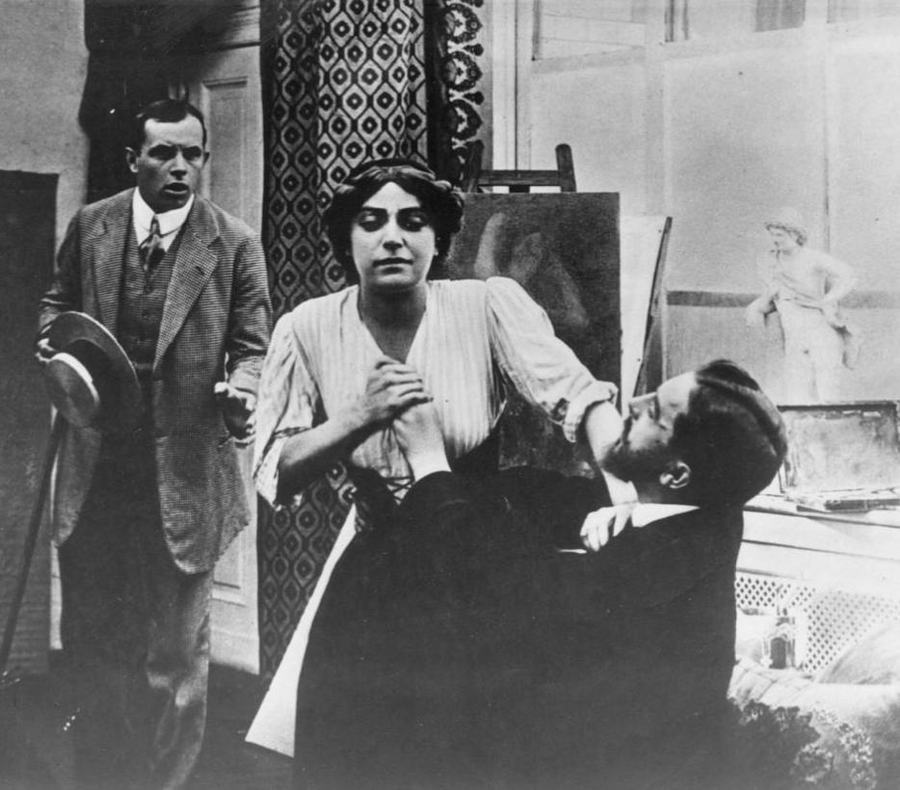
In the nascent epoch of cinema, when the flickering images on screen held audiences spellbound with their silent narratives and grand gestures, certain films emerged as incandescent beacons, shaping the very language of the medium. Urban Gad's 1912 drama, 'The Might of Gold' (Die Macht des Goldes), stands as one such pivotal work, a testament to the era's artistic ambitions and the profound expressive power of its leading star. This cinematic endeavor, a poignant exploration of innocence corrupted and the relentless pull of societal forces, offers far more than a simple plot; it presents a richly textured tapestry of human vulnerability and resilience, all rendered with the delicate precision characteristic of early European filmmaking.
Central to the enduring allure of 'The Might of Gold' is the magnetic presence of Asta Nielsen, an actress whose revolutionary performance style irrevocably altered the landscape of silent cinema. Nielsen, often hailed as the first international film star, brought to her roles an astonishing psychological depth, a nuanced expressiveness that transcended the limitations of pantomime. In an era where many performers still relied on theatrical overstatement, Nielsen's subtle facial expressions and restrained body language communicated volumes, drawing audiences into the inner turmoil of her characters. Her portrayal of the country girl in 'The Might of Gold' is a masterclass in this understated power. She embodies the character's initial naiveté with a delicate grace, her eyes reflecting an unspoiled wonder at the world. As her journey takes a darker turn, we witness a gradual, heart-wrenching transformation, conveyed not through dramatic histrionics, but through a deepening sadness in her gaze, a subtle slump in her shoulders, and a quiet resignation that speaks louder than any shouted dialogue. This capacity for internalizing emotion and projecting it outwards with such authentic intensity was Nielsen's signature and a defining characteristic that set her apart from her contemporaries.
Her work here echoes the profound emotional resonance found in her other collaborations with Urban Gad, such as Vampyrdanserinden (The Vampire Dancer) or Den sorte drøm (The Black Dream). In these films, Nielsen consistently played women pushed to the brink by societal pressures or personal tragedy, navigating complex moral landscapes with a palpable sense of vulnerability and defiance. What distinguishes her performance in 'The Might of Gold' is the particular arc of disillusionment, the way she subtly illustrates the erosion of spirit when confronted with the cold, calculating nature of the art world. It’s a performance that resonates with a timeless truth about the objectification of individuals in pursuit of artistic or material gain. Her character's transformation from an innocent muse to a weary soul, twice scarred by the harsh realities of life, is rendered with such conviction that it remains impactful even a century later. This is the true might of Nielsen's artistry – her ability to imbue silent images with a thunderous emotional roar.
Urban Gad, the visionary director and frequent collaborator with Asta Nielsen, orchestrates 'The Might of Gold' with a keen eye for dramatic tension and psychological nuance. Gad's directorial style, while rooted in the theatrical conventions of his time, consistently pushed the boundaries of visual storytelling, favoring close-ups and carefully composed tableaux to convey character and mood. Here, he masterfully contrasts the idyllic simplicity of the countryside with the opulent yet morally bankrupt urban environment. The initial scenes of the country girl's life are bathed in a gentle, almost pastoral light, symbolizing her untainted nature. This stands in stark opposition to the artist's studio, a space often depicted with dramatic chiaroscuro, highlighting the shadows that lurk beneath the surface of artistic pursuit. Gad understands that the true drama lies not in explosive action, but in the slow, insidious corrosion of a pure spirit.
The director's choice to focus on the psychological journey rather than overt melodrama is particularly striking for the period. While many films of the era, such as The Fatal Wedding or The Midnight Wedding, leaned heavily into sensational plots and broad strokes, Gad's approach is more introspective. He uses the camera not just to record events, but to explore the internal states of his characters. The artist, though a secondary figure, is subtly painted as a detached, almost predatory force, his lack of morals evident in his cold, calculating demeanor, brilliantly brought to life by Hermann Litt. Gad's direction ensures that the audience feels the protagonist's growing unease, her dawning realization of the artist's true nature, not through explicit dialogue cards, but through the visual language of her interactions and the oppressive atmosphere of her new surroundings. This sophisticated approach to character development and thematic exploration firmly establishes Gad as a pioneering figure in early European cinema, adept at crafting narratives that resonated on a deeper, more emotional level.
'The Might of Gold' delves into a constellation of potent themes that remain remarkably relevant. At its core is the theme of innocence lost, a narrative thread often woven into the fabric of early cinema, but here explored with a particular poignancy. The protagonist's journey from a sheltered rural existence to the morally ambiguous world of the city serves as a powerful allegory for the corrupting influence of ambition and the pursuit of external validation. The 'gold' in the title can be interpreted not merely as wealth, but as the allure of superficial glamour, the seductive promise of a life beyond the mundane, which ultimately proves to be a gilded cage. The film critiques the exploitative nature of certain artistic endeavors, where individuals become mere tools or objects for another's creative output, their humanity often overlooked or disregarded. The artist's lack of morals is a central plank of the plot, creating a palpable sense of unease and foreshadowing the protagonist's inevitable disenchantment. This theme of artistic exploitation, where the muse is consumed by the creator, finds echoes in later cinematic works, highlighting the film's early engagement with complex ethical questions.
The narrative then pivots, introducing a new layer of tragedy upon the protagonist's return home. The accidental killing committed by her old friend Christoph (played by Hans Burk) plunges her back into a moral quagmire, forcing her to confront the arbitrary cruelties of fate. This second act of the film shifts the focus from external exploitation to internal conflict and the complex loyalties of friendship. The protagonist is caught between the temptation to escape her circumstances once more – to flee the rural life that has now been tainted by violence – and her unwavering bond with Christoph. Her waiting for his dismissal, a judicial outcome that will determine both their futures, is fraught with a quiet, desperate tension. This waiting becomes a metaphor for her own suspended animation, her life on hold, burdened by the consequences of another's actions. The film thus explores not only the corruption of innocence but also the endurance of human connection in the face of adversity, and the difficult choices individuals must make when confronted with profound moral dilemmas. It’s a narrative that, despite its silent presentation, speaks volumes about the human condition.
While Asta Nielsen undeniably commands the screen, the supporting cast contributes significantly to the film's emotional landscape. Hans Burk as Christoph brings a grounded, earnest presence, embodying the simple, good-hearted friend whose life is tragically derailed. His portrayal provides a stark contrast to the sophisticated but soulless artist, offering a different kind of masculine presence in the protagonist's life. Paula Helmert and Hermann Litt, though their roles are less expansive, effectively populate this world, lending credibility to the environments, whether rural or urban. The interplay between these characters, though unspoken, is clear, contributing to the film's rich emotional fabric.
Visually, 'The Might of Gold' is a testament to the evolving artistry of early cinematography. The film utilizes a combination of long shots to establish setting and mood, and more intimate medium shots and close-ups to emphasize emotional states, particularly for Nielsen's character. The use of natural light in the countryside scenes evokes a sense of purity and openness, while the often more controlled, artificial lighting in the artist's studio creates a sense of confinement and artificiality. The careful framing of shots, the deliberate staging of actors within the frame, and the effective use of depth of field all demonstrate a sophisticated understanding of visual storytelling that was still in its infancy. These aesthetic choices coalesce to create a compelling visual narrative that complements the psychological drama, making the film a significant piece of cinematic history.
'The Might of Gold', like many of Urban Gad's and Asta Nielsen's collaborations, occupies a crucial space in the history of silent film. It showcases a period when cinema was rapidly developing its unique narrative grammar, moving beyond mere spectacle to explore complex human emotions and societal critiques. Films like Oliver Twist or Les misérables, while also dealing with social hardship, often relied on literary adaptations. 'The Might of Gold', however, feels distinctly cinematic in its conception, using visual means to convey its profound message. It's a drama that transcends its historical context, speaking to universal themes of vulnerability, moral choices, and the enduring human spirit.
The film's exploration of the objectification of women, the corrupting influence of materialism, and the arbitrary nature of justice were progressive for its time, challenging audiences to look beyond the surface. It’s a testament to the power of early cinema that these intricate ideas could be communicated so effectively without spoken dialogue. The legacy of 'The Might of Gold' lies not only in its artistic merits but also in its contribution to establishing the psychological drama as a viable and potent genre within the burgeoning film industry. It stands as a powerful reminder of the foundational artistry that paved the way for the cinematic masterpieces that would follow, a glimmering piece of the past that continues to resonate with contemporary audiences.
In conclusion, 'The Might of Gold' is far more than a historical curiosity; it is a compelling work of art that deserves renewed appreciation. Through Asta Nielsen's unparalleled performance and Urban Gad's insightful direction, the film offers a profound meditation on the human condition, an enduring narrative that captures the delicate balance between hope and despair, innocence and experience, and the inexorable forces that shape our destinies. It is a silent film that speaks volumes, a true gem from the dawn of cinema.
IMDb —
1922
Community
Log in to comment.