DbcultAccessing Vault...
5.1/10
Senior Film Conservator
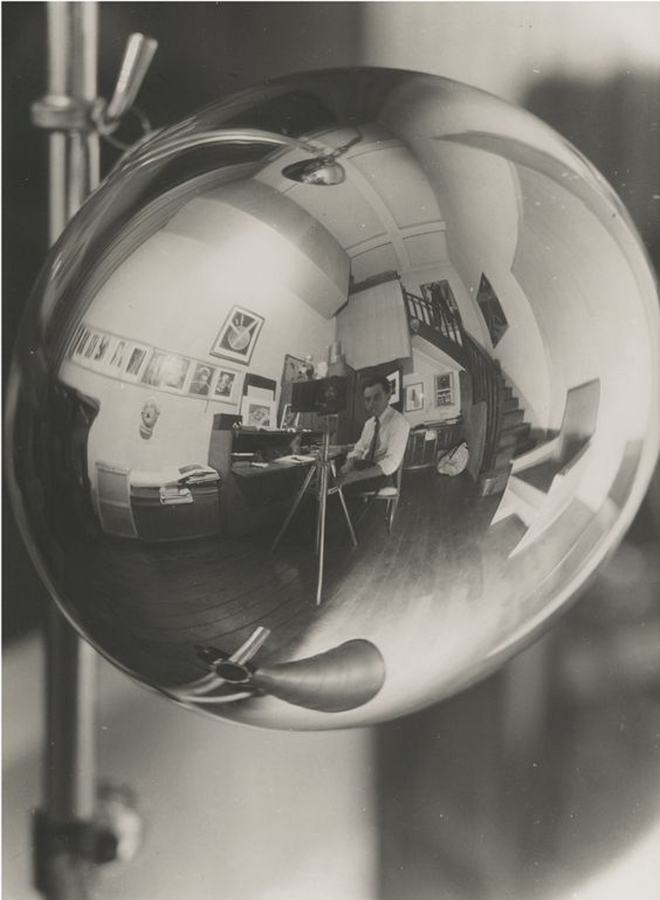
A definitive 5.1/10 rating for a film that redefined the boundaries of cult cinema. Rue Campagne-Première remains a cornerstone of transgressive art.
Rue Campagne-Première is not a film to be watched but a hallucination to be lived. Man Ray, the maverick who straddled the boundaries of Dada, Surrealism, and experimental photography, transplants his visual rebellion into celluloid, creating a work that is as disorienting as it is transcendent. Released in the early 1920s, this 28-minute marvel defies the conventions of its era, trading structured plots for a series of fever-dream sequences that feel both alien and achingly familiar. The film’s title, a Parisian street, is more than a setting—it’s a metaphor for the labyrinthine nature of modern existence, where every corner conceals a paradox.
From its opening shots of a woman trudging through a rain-slicked boulevard, the film establishes a tone of existential weariness. Her face, lit in a chiaroscuro that feels borrowed from Caravaggio, is a mask of detachment, as if she is both participant and observer in her own odyssey. The camera lingers on details: a cracked façade, a flickering streetlamp, a man in a top hat striding as if to nowhere. These images are not random—they are the building blocks of a narrative that exists beyond the literal. The city is a character in its own right, a sentient force that swallows the protagonists whole.
Man Ray’s script, a mosaic of non-sequiturs, thrives on juxtaposition. A woman’s reflection ripples like liquid mercury; a clock ticks backwards while a child’s toy collapses under its own weight. The film’s lack of dialogue is not a limitation but a strength. Without words to anchor meaning, the viewer is left adrift, forced to navigate the film’s ocean of symbols. The result is a hypnotic experience that feels both alien and intimate, as though the film is mirroring the viewer’s subconscious rather than telling a story.
Technically, Rue Campagne-Première is a tour de force of early film experimentation. Ray employs double exposures, jump cuts, and slow-motion sequences with a precision that feels ahead of his time. The use of shadows is particularly striking—figures emerge from darkness like phantoms, their silhouettes distorting into abstract shapes. One sequence, in which a man’s face is reflected in a spoon while he stares into a mirror, is a masterclass in visual irony. It’s a moment that transcends the film’s runtime, lingering like a scar on the viewer’s mind.
Comparisons to other avant-garde works of the era are inevitable. Like The Lion’s Claws, which also grapples with urban anxiety, or Wild Women, with its emphasis on female agency, Rue Campagne-Première occupies a unique space. While The Curse of Iku leans into folklore and mysticism, Ray’s film is rooted in the dissection of modernity. It’s a work that feels more in line with Marcel Duchamp’s readymades than the classical Hollywood films of the time, a fact that must have rattled even the most progressive of 1920s audiences.
The film’s structure is less a narrative arc than a spiral, drawing the viewer deeper into its enigmatic logic. A woman’s journey through the city becomes a metaphor for the human condition—searching, but never arriving. This mirrors the themes in Passing Night, though Ray’s approach is far more dissonant. His camera captures moments that feel like they’ve been plucked from a dream journal: a man walking on his hands, a train that appears to be moving in reverse, a child’s laugh that echoes through an empty square. These images are not meant to be explained; they are invitations to surrender to the film’s logic.
The performances, though minimal, are haunting in their restraint. The actors—likely friends of Ray’s from the Dadaist circles—move with a robotic precision that amplifies the film’s uncanny atmosphere. Their faces are masks, their gestures deliberate, as if they are puppets in a world where the strings have been cut. This is most evident in a sequence where a woman repeatedly steps onto and off a train platform, her expression never changing. It’s a moment that could be read as a meditation on futility, a critique of capitalist cycles, or simply a beautiful, empty gesture.
Ray’s use of sound is equally revolutionary, though the film’s original soundtrack is lost to time. The surviving print, accompanied by a modern score, leans into a minimalist approach—soft piano notes, the distant hum of a train, the occasional screech of metal. These sounds are not background; they are part of the film’s language. In one particularly jarring sequence, the abrupt cut to silence after a cacophony of city noise leaves the viewer in a vacuum of sound, a sensation that mirrors the film’s thematic dissonance.
Rue Campagne-Première is not without its contradictions. Its avant-garde ethos sometimes veers into self-indulgence, and the lack of emotional stakes might alienate viewers seeking traditional catharsis. Yet, this is precisely the film’s brilliance. It challenges the notion of what cinema can be, rejecting the need to please in favor of provoking. In an age where films were still finding their voice, Ray’s work was a radical declaration: that a film could be a poem, a provocation, or a question without needing to be an answer.
The film’s legacy is as elusive as its narrative. While it influenced later surrealist filmmakers like Luis Buñuel and Salvador Dalí, its true impact lies in its resistance to categorization. Unlike The Light That Failed, which leans into melodrama, or Homespun Folks, with its earnest regionalism, Rue Campagne-Première exists in a realm of pure abstraction. It is a film that demands to be experienced, not dissected, and yet its layers of meaning continue to unravel with each viewing.
For modern audiences accustomed to nonlinear storytelling, Rue Campagne-Première might feel less radical than it did in its time. Yet, its power endures in its ability to unsettle. The film’s final image—a woman walking into a tunnel, her silhouette dissolving into the dark—is a fitting coda. It is a reminder that some stories are not meant to be followed but felt, that the journey through the film’s labyrinth is more important than any destination. In an age obsessed with resolution, Ray’s work is a quiet rebellion: a testament to the beauty of ambiguity and the poetry of the unfinished.
IMDb 6.3
1931
Community
Log in to comment.