DbcultAccessing Vault...
Cult Review
Senior Film Conservator
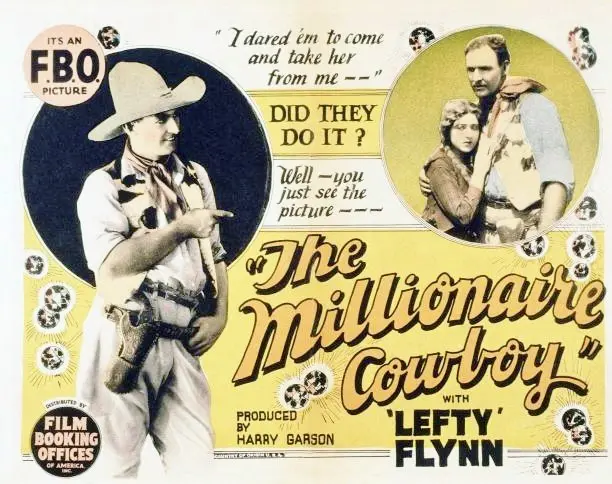
In the rarefied realm of silent cinema, The Millionaire Cowboy (1921) stands as a testament to the transformative power of redemption and love. This oft-overlooked gem, penned by Darryl F. Zanuck and Frank S. Beresford, weaves a complex narrative that defies straightforward categorization.
The film's protagonist, Gallop, played by Frederick Peters, is a young man with a penchant for revelry. His life takes a drastic turn when his father, Charles Meredyth, resolves to cure him of his convivial habits. In a shocking display of paternal manipulation, Meredyth fabricates a heinous crime, claiming that Gallop has killed a taxi driver, and offers to help him escape.
Gallop's ensuing journey leads him to a small, isolated southwestern town, whose sole inhabitants are the enigmatic entrepreneur Granville Truce, his daughter Pauline, and a gang of ruthless Mexican bandits. Truce, a self-made man with a penchant for innovation, has developed a revolutionary rust remover derived from cactus oil. His product, though effective, has yet to gain widespread recognition.
The arrival of Gallop and the bandits sets in motion a chain of events that will forever alter the town's trajectory. As Gallop valiantly assists Truce in vanquishing the bandits, he not only revitalizes the town but also forges an indelible bond with Pauline, played by Gloria Grey. Their romance blossoms against the backdrop of Gallop's redemption, as he seeks to atone for his past transgressions and prove himself worthy of Truce's trust and Pauline's affection.
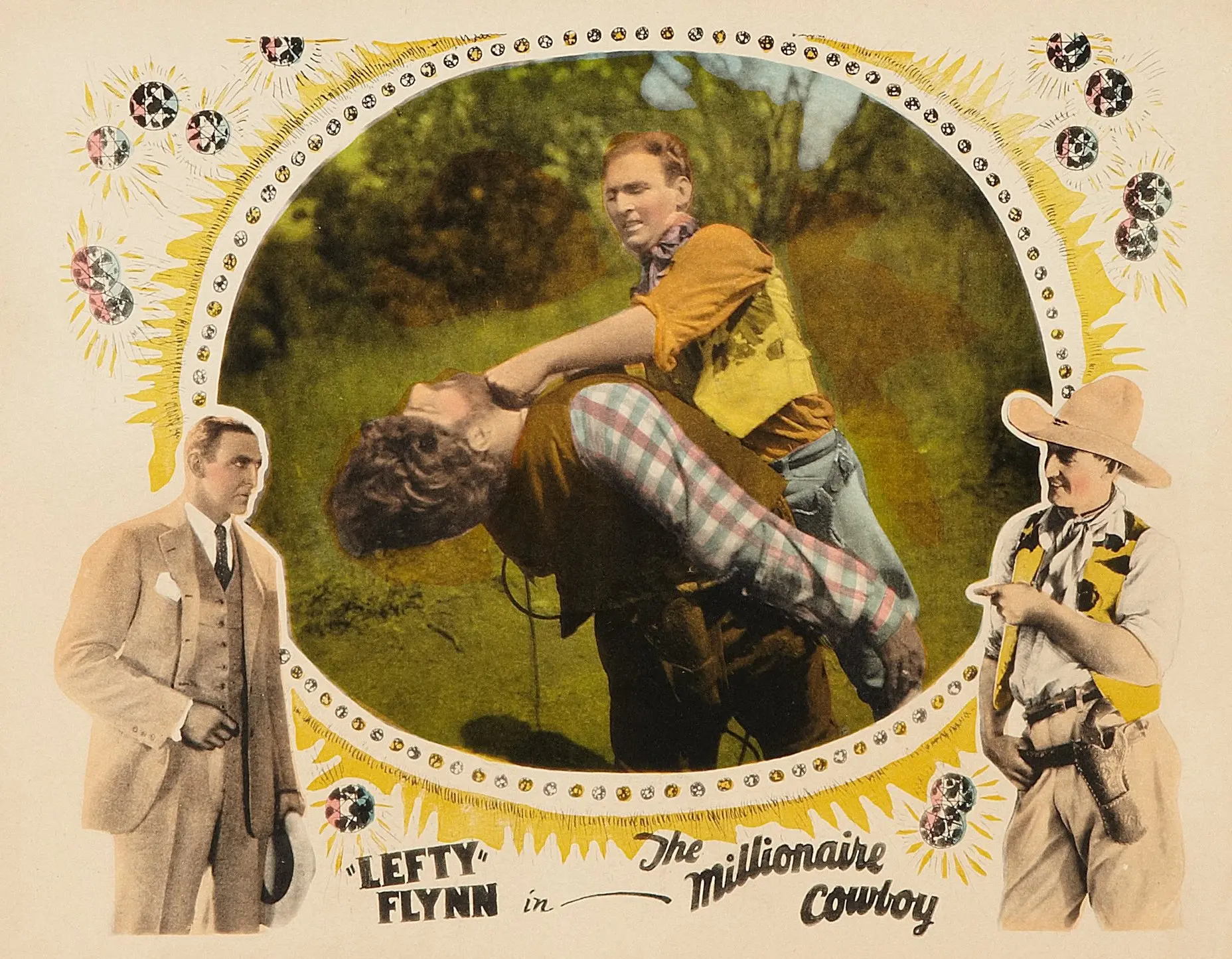
A closer examination of the film's themes reveals a nuanced exploration of morality, love, and redemption. Gallop's character arc, in particular, serves as a powerful metaphor for the human capacity for growth and transformation. His journey from a life of dissipation to one of purpose and responsibility is both captivating and thought-provoking.
In terms of cinematography, The Millionaire Cowboy boasts a visually stunning portrayal of the American Southwest. The film's use of location shooting and clever editing creates a sense of realism, drawing the viewer into the world of the story. The performances, too, are noteworthy, with Peters and Grey delivering standout turns as the star-crossed lovers.
When compared to other films of the era, The Millionaire Cowboy shares some similarities with Without Evidence (1925) in its exploration of themes such as redemption and personal growth. Similarly, the film's use of location shooting and emphasis on character development evoke Ludzie bez jutra (1921) and Die toten Augen (1927).
However, The Millionaire Cowboy distinguishes itself through its unique blend of action, romance, and drama. The film's pacing, though deliberate, never feels plodding, as the narrative unfolds with a sense of purpose and direction. The score, though silent, is equally effective in conveying the emotional tone of each scene.
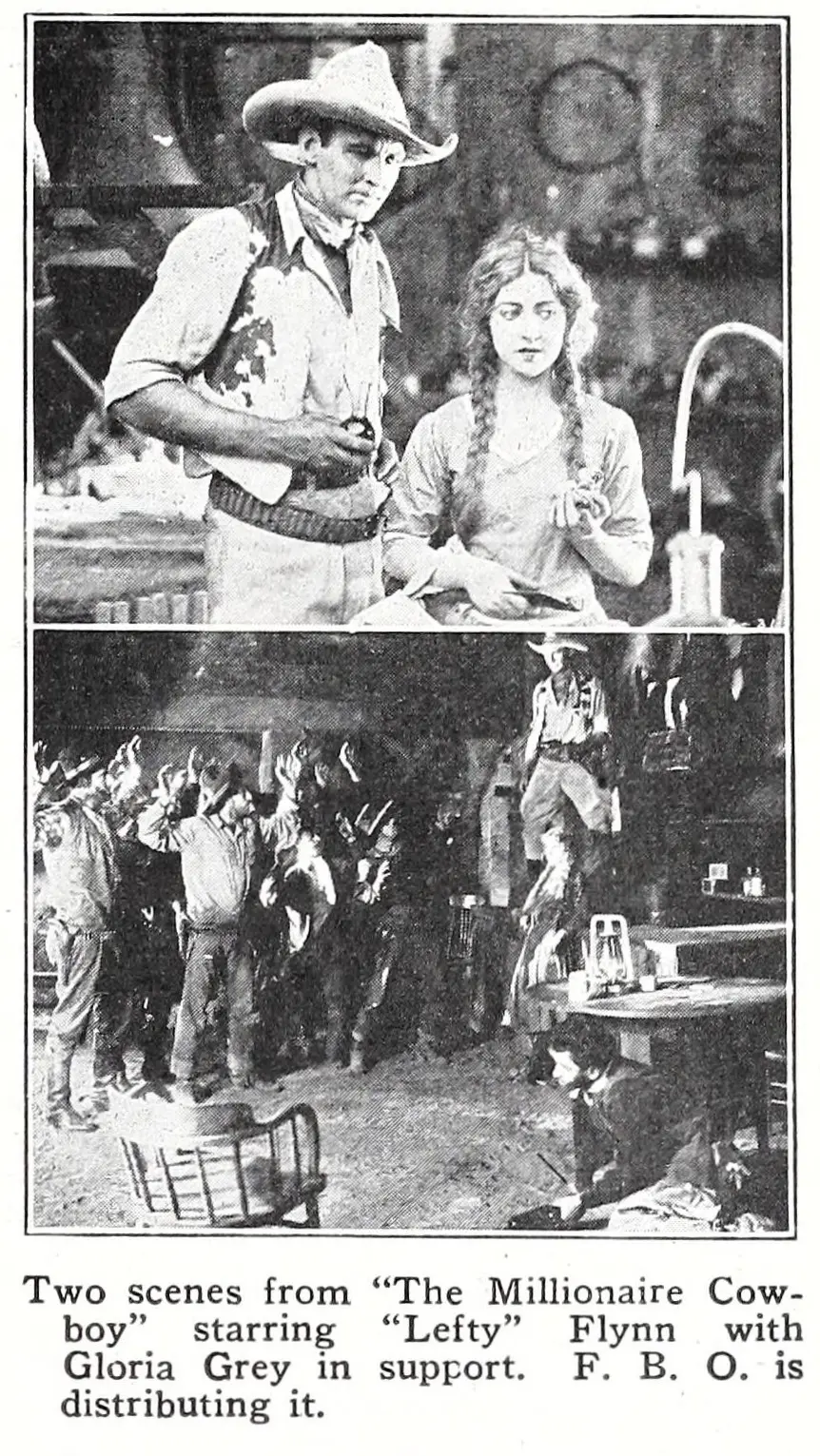
In conclusion, The Millionaire Cowboy is a hidden gem of the silent era, offering a captivating tale of love, redemption, and personal growth. With its strong performances, stunning cinematography, and nuanced exploration of themes, this 1921 classic is sure to delight audiences and scholars alike.
Ultimately, The Millionaire Cowboy serves as a powerful reminder of the enduring power of cinema to captivate, inspire, and educate. As a work of art, it continues to resonate with audiences today, offering a glimpse into a bygone era and a testament to the timeless themes that continue to shape our understanding of the human experience.
For those interested in exploring the film's historical context, The Shoes That Danced (1924) and The Eternal Sin (1922) offer valuable insights into the social and cultural trends of the 1920s. Meanwhile, Her Own People (1926) and A Quiet Street (1922) provide a fascinating glimpse into the lives of women during this period.
The Millionaire Cowboy (1921) - A timeless classic, rediscovered.

IMDb —
1913
Community
Log in to comment.