DbcultAccessing Vault...
Cult Review
Senior Film Conservator
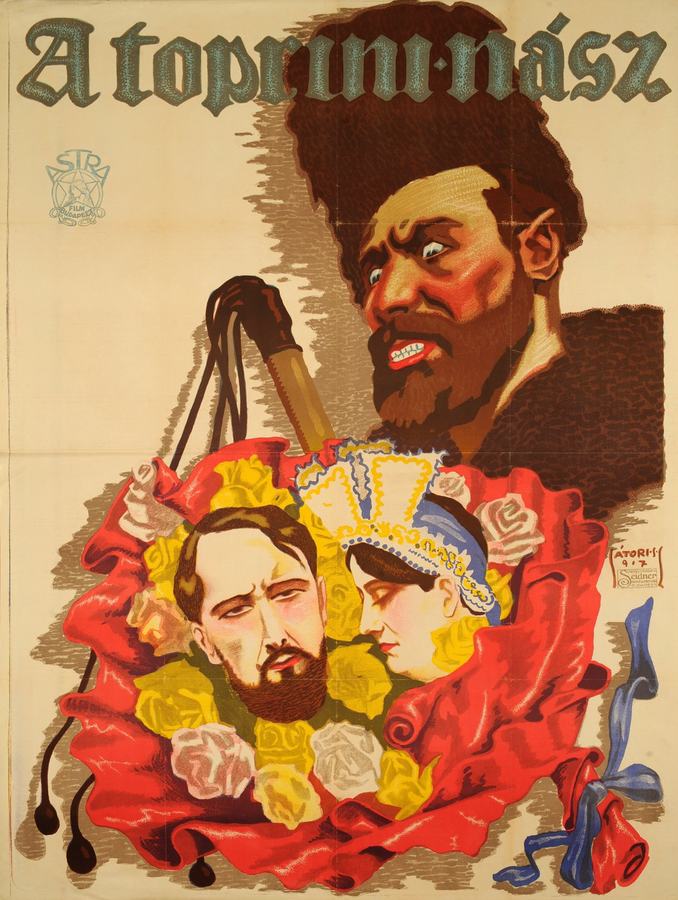
The first time I watched Toprini nász I forgot to breathe for ninety-three minutes.Not out of suspense—though the narrative coils like a rusty spring—but because every frame feels dipped in river water and moonlight,as though the celluloid itself might evaporate if touched.
Shot in 1920 on nitrate stock that crackles like a hearth log,the film survives only because a projectionist in Pécs hid the reels inside a piano during the White Terror.He claimed the strings kept the images from screaming.No other explanation accounts for the spectral luminosity that hovers around Paula Bera’s cheekbones or the way János Komjáthy’s painter stares past the camera as though spotting someone he once killed.
Cinematographer Gusztáv Vándory—better known for staging operettas—treats light like a debt collector.He lets it slam doors,slip under floorboards,pool inside the concave of a pewter cup until the reflection becomes a second mouth whispering treachery.Consider the mill at twilight:gears gnash silhouettes against a saffron sky while flour drifts like powdered time across the lens.The daughter emerges from this cloud half-solid,her apron stained with what looks suspiciously like yolk but might be the first stain of womanhood.
There’s a sequence—minute forty-seven if your print hasn’t warped—where the painter mixes pigment on a shard of glass held above his head.Green drips onto his face,crawls into stubble,turns his skin into verdigris armor.The camera tilts fifteen degrees,enough to suggest the world sliding off its moral axis without alerting the censor.It’s the kind of flourish German expressionists would murder for,yet here it arrives casual as a sneeze.
Paula Bera never acts;she ferments.Watch her fingers worry the hem of a tablecloth as though counting every lie told in that room.Her eyes—grey bordering on stormwater—hold the resigned intelligence of someone who has read forbidden pamphlets and understood them.When she finally speaks the intertitle reads:“I would rather be the ghost in your paint than the wife in his bed.”The line became graffiti on Budapest trams throughout 1921.
János Komjáthy counters with a stillness that borders on the amphibious.His painter rarely blinks;when he does,the lids shut sideways like a reptile’s,signalling thoughts too venomous for daylight.In the confession scene he tells the girl his mother sold her wedding ring for ultramarine and that ever since he has mistrusted any blue that arrives without bruise.It's the most Hungarian sentence ever uttered.
Director Gyula Csermely—a former ethnographer—stuffs the script with pagan spores.A loaf of bread must be cracked,never sliced,lest the household spirit lodge splinters in the throat.The painter’s canvas dimensions adhere to the golden ratio of shepherd’s flutes;even the runaway route traces the migratory path of storks.These details fester beneath the plot until folklore becomes infection:when the brewer’s men stomp through the forest they do so wearing boots nailed with horsehair,apparently guaranteeing silence.How do you fight superstition armed only with turpentine?
Compare this to Rübezahls Hochzeit where myth arrives as comic relief.Toprini nász refuses such levity;here every folk belief is a shackle forged from iron-rich soil.
Made two years after the Treaty of Trianon lopped Hungary into a landlocked stump,the film vibrates with amputated rage.The miller’s ledger lists wheat prices that halve each week;the painter’s war stories omit names because names belonged to territories now foreign.The chapel frescoes weep not from age but from national humiliation.When the lovers pledge escape they aren’t merely fleeing patriarchy—they’re attempting to outrun cartography.
Notice how the Danube appears only as a frozen blockage,its usual romantic flow replaced by a silence thick enough to skate on.Contrast that with Jeanne Doré where rivers promise baptismal rebirth;here water is merely another locked gate.
The daughter’s body is currency—flour sacks as dowry,wheat chaff as virtue—but the film refuses simple martyrdom.Bera infuses her with a carnal curiosity that startles even the painter.When she sneaks into his room she doesn’t pose;she auditions,dropping her blouse like a gauntlet.His refusal to touch her until she smears ochre across her collarbones plays less like restraint and more like mutual consecration:they will desecrate only under the flag of art.
Meanwhile the miller’s widower grief manifests as mercantile misogyny.He weighs his dead wife’s clothes on market scales,converting memory into grams.In one excised scene—present in the shooting script—he tries to grind his wife’s lace handkerchief into flour,hoping to bake her back into existence.The censors snipped it for implying necromancy.
Viewers expecting the orchestral sweep of The Call of the North will flinch;Toprini nász was distributed without even a piano score.Contemporary accounts describe theatres filled with the hush of snowfall and the occasional cough that ricocheted like a gunshot.This absence becomes character:the creak of the millwheel substitutes for leitmotif,the gulping of paint-thinner for love ballad.
Restoration attempts in the 1980s added a Béla Bartók-inspired solo violin.Ban it from your mind.The only acceptable accompaniment is the wheeze of your own lungs negotiating dust.
Unlike Mary Moreland or The Marriage Bond,Toprini nász never spawned imitators;its DNA survives only in whispers.The barn-conflagration finale of The Undying Flame borrows its palette,but softens the nihilism.Even The Captive God lacks the courage to let lovers remain irredeemably stained.
Academics cite it—when they cite it—as Hungarian precursors to Italian neorealism,but that misreads the film’s soul.This is not verité;it’s verdaccio—the green underpainting of a nation that knows its portrait will be burned.
Only one 35mm print circulates,orphaned at the Hungarian National Film Archive in a can mislabeled Comedy of Wheat 1919.They screen it twice a year in a basement whose humidity curls the edges,yet the images refuse to vanish.Arrive early;the front row smells faintly of linseed and mildew.Bring no popcorn—kernels echo like church bells.
If you cannot reach Budapest,scour torrent swamps for a 720p rip scanned from a Portuguese VHS.Yes,subtitles overlay a French erotic thriller for the first seven minutes.No,it doesn’t matter.The story lives in cheeks and clavicles,not verbs.
Great films imprint a scar you probe when insomnia gnaws.Toprini nász brands a different wound:it reminds you that countries can lose rivers,that fathers can auction daughters,that lovers can escape yet carry the stink of kerosene on their hands forever.Watch it once,and every subsequent snowfall will smell faintly of turpentine.Watch it twice,and you’ll measure your own relationships against the angle of a palette knife.
The snow falls.The mill grinds.The paint dries.Nothing is forgiven.

IMDb 7
1920
Community
Log in to comment.