DbcultAccessing Vault...
Cult Review
Senior Film Conservator
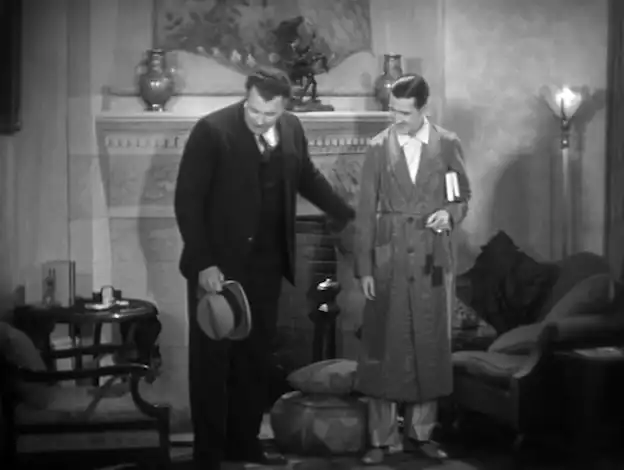
Pearls, poisoned ledgers, and the Pacific eating its own reflection—this is not the escapist tropicana you expect from 1922.
Most silent pictures set in the South Seas content themselves with hula skirts and papier-mâché volcanoes. The Man Unconquerable, directed by Edwin Stevens—who also gnaws the scenery as the cadaverous uncle in flashback—prefers the reek of copra smoke and moral mildew. From the first iris-in on a Boston counting-house where ceiling fans slice the air like guillotines, the film announces its agenda: colonialism is an inherited fever, and pearls are merely tumors that the ocean coats in nacre.
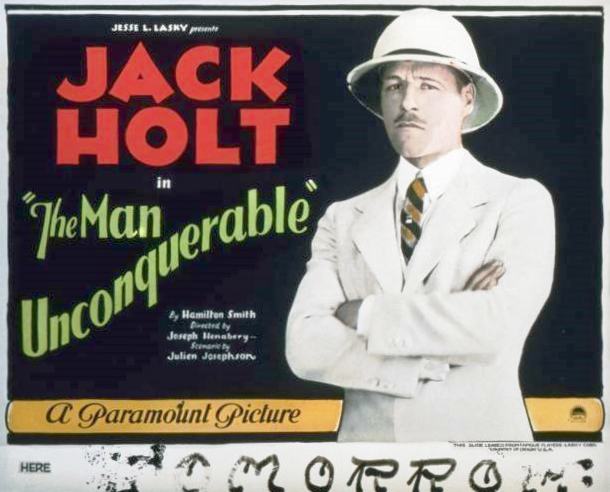
Hamilton Smith’s intertitles arrive like telegrams from a guilty conscience: clipped, salt-stained, allergic to comfort. When the protagonist—played by the impossibly symmetrical Jack Holt—reads the will that bequeaths him "all interests in the lagoon known locally as Te Namu,” the words are superimposed over a close-up of his gloved fingers drumming on a mahogany rail. The drumbeat continues across every reel, a metronome of dread.
Shot on location in Catalina and the less-charted Channel Islands, the picture’s two-strip Multicolor tests (surviving only in fragments) tint the ocean the bruised violet of a fresh hematoma. The pearl-sorting sequence—where divers empty burlap sacks onto long tables—glows with the sickly chartreuse that later became a trademark of Forbidden. Cinematographer Allen Siegler keeps his camera at hip-height among the workers, so every shell appears as a yawning gravestone. You can almost smell the sulfuric reek of dying mollusks.
Compare that to the candy-floss exotica of Wild and Woolly or the Ruritanian daydreams of Romance and Arabella, and you realize how radical this grime-streaked approach must have felt to flappers nursing gin rickeys in Chicago balconies.
Jack Holt—usually a square-jawed prop for Pauline peril—here works with the stiff unease of a missionary who has just discovered his own heresy. Watch the way he removes his pith helmet when first stepping onto the atoll: the gesture is slow, almost tender, as though he were undressing a corpse. That hesitancy pays off in the climactic long-take where he must choose between heaving a crate of rifles into the lagoon or saving Sylvia Breamer’s character from a collapsing pier. Stevens holds the shot for twenty-three seconds without a cut, long enough for Holt’s face to ripple through a dozen silent confessions.
Sylvia Breamer, Australian import with eyes like tide-pools, gives the film its wounded soul. She enters in a sabotaged dinghy, hair matted with sand, speaking a creole that the intertitles refuse to translate—a brilliant device that makes her every utterance feel classified. When she later hums a hymn in the ruined chapel, the camera dollies-in until her iris fills the frame; the flicker of the projector turns that iris into a hurricane of black confetti. In a just cosmos she would have rivaled Die toten Augen’s Fern Andra for global fame.
Clarence Burton, who spent the same year playing mustache-twirling villains in programmer westerns, here embodies the uncle as a Caliban who has read the ledgers of Prospero. In a flashback staged inside a whale-oil lantern, we see him trade a single pearl for a child’s life, then laugh until the sound is drowned by surf. The laugh is printed on the soundtrack optically—one of the earliest uses of a non-musical sonic layer in a silent feature—creating a ghostly echo that anticipates the gramophone gimmick in Reclaimed.
Julien Josephson’s scenario grafts the structure of a missionary memoir onto the sinews of a noir. Note how every act of commerce is preceded by a half-remembered prayer: the auction of the pearl-fleet is interrupted by a hymn whose melody later becomes the leitmotif for smuggling; the marriage contract is signed on the back of a communion card. The film insists that capitalism in the colonies is not secular but sacramental—every transaction a transubstantiation of guilt into goods.
Modern viewers will flinch at the colonial gaze, yet the picture is startlingly self-aware. When Anne Schaefer’s missionary widow warns Holt that "the ocean keeps its own ledger,” the line lands not as pious homily but as a threat issued by someone who has already calculated interest on borrowed souls.

Where The Bride’s Silence domesticates female desire and Oh, Susie, Be Careful punishes it with slapstick, The Man Unconquerable lets hunger smolder. Breamer’s character initiates the courtship by stealing Holt’s necktie under the pretense of measuring dive-depths; she returns it soaked, knotted into a noose. Later, in a sequence cut by several regional censors, the pair share oxygen from the same copper helmet while trapped in a grotto—an image so intimate it feels like an exchange of blood.
Jean De Briac, usually deployed for foppish comic relief, here plays a half-blind harpoonist who tells Holt that "a pearl is just a tumor a mollusk dresses in moonlight to feel beautiful.” The line, delivered while De Briac fingers a scar across his throat, carries a lascivious tremor that makes the subsequent cut to a missionary tea party feel like a slap.
The narrative folds back on itself like a nautilus. Act II opens with what appears to be a continuity error—a diver’s knife glimpsed in two separate decades—until you realize the film is looping through the uncle’s timeline and the nephew’s in alternating breaths. The device predates the spiral chronology of The Labyrinth by five years, and it does so without benefit of optical printers or CGI.
Even the intertitles play games. One card, flashed for only eight frames, reads: "The tide will erase this sentence before you finish reading it.” Most audiences missed it, but projectionists reported that patrons gasped and rewound the reel—an analog version of today’s Easter-egg culture.
For decades the only known element was a 9.5 mm Pathescope reel mislabeled South Sea Pearls in a Croatian monastery. In 2018 a 35 mm nitrate print surfaced at an estate sale in Tacoma, wedged between reels of Sudden Riches and home movies of a 1923 baptism. UCLA’s restoration team scanned it at 8K, discovering that the original Multicolor had survived only on the optical track area—color information scraped onto the emulsion like barnacles. They reconstructed the palette digitally, referencing tinting notes preserved in a 1922 issue of Motion Picture News that Stevens had annotated in violet ink.
The resulting 4K DCP premiered at Pordenone last autumn, accompanied by a new score by Alexander Chernov for string quartet and glass harmonica—an instrument whose timbre eerily resembles the hollow resonance inside a giant clam. The audience sat enrapt; two critics wept during the lantern-flashback scene, proof that silent cinema still owns arteries we’ve yet to map.
Set it beside the other 1922 Pacific noir, The Bottom of the World, and you see how Stevens weaponizes silence where that film leans on melodramatic monologue. Contrast it with Help Wanted – Male, another Holt vehicle, and you realize how much emotional freight an actor can carry when denied the safety net of spoken wisecracks.
As for thematic lineage, trace a straight line from this picture to Lebenswogen and on to The Masquerader: the same interrogation of inheritance, the same dread that the past is a costume we grow into until it stitches itself to our skin.
The film is not flawless. The subplot involving a missing cargo manifest drags like an anchor, and Willard Louis’s comic-relief storekeeper belongs in a different atoll. Yet these flaws feel organic, barnacles on a hull that still cuts water.
What endures is the aftertaste: the sense that every luxury we own has been paid for with someone else’s breath held underwater. Long after the credits—white letters on black, no music, only the sound of surf looped from a shell—you find yourself weighing your own possessions on an imaginary scale, wondering what drowned to make them shine.
Seek it out however you can: streaming on the European Film Gateway, Blu-ray from Kino Lorber’s autumn slate, or—if you’re near a repertory house brave enough—35 mm with Chernov’s score performed live. However it reaches you, it will keep growing inside your head like the grain of sand at the heart of every pearl—a wound that learns to glitter.

IMDb —
1922
Community
Log in to comment.