DbcultAccessing Vault...
6.4/10
Senior Film Conservator
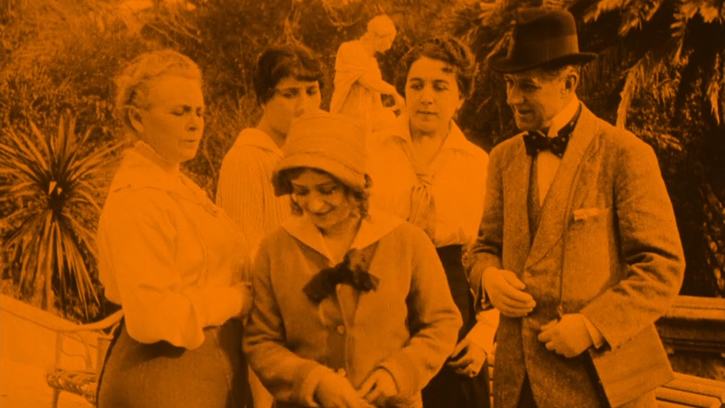
A definitive 6.4/10 rating for a film that redefined the boundaries of cult cinema. Le crépuscule du coeur remains a cornerstone of transgressive art.
Stepping back into the cinematic past, one encounters works that, despite their age, resonate with an astonishing contemporary relevance. 'Le crépuscule du coeur' is precisely such a film, a silent-era masterpiece that, even without spoken dialogue, articulates the complex tapestry of human emotion with a clarity and depth many modern productions struggle to achieve. This French melodrama, a poignant exploration of love, class, and the crushing weight of societal expectations, unfolds with a grace and intensity that leaves an indelible mark upon the viewer's soul. It's a film that demands engagement, not just passive observation, inviting us to peer into the hearts of its characters as they navigate a world both beautiful and brutal.
The narrative, a meticulously crafted web of romantic entanglement and familial intrigue, centers on Annette, brought to life with breathtaking sensitivity by Yvonne Mario. Mario's performance is a masterclass in silent acting; her expressive eyes and delicate gestures convey volumes, painting a portrait of a young woman whose inner strength belies her humble station. We witness her initial innocent joy, her burgeoning love for Henri, and then the crushing despair as fate, manipulated by the cruel hand of circumstance and ambition, threatens to tear her world apart. Her portrayal is so authentic, so raw, that one cannot help but feel every pang of her sorrow, every flicker of her hope. Her Annette is not merely a character; she is an embodiment of resilience, a quiet storm against the societal tempest. This kind of nuanced emotional delivery, without the aid of spoken words, is what truly elevates silent cinema to an art form, and Mario stands among its finest practitioners.
Maurice Mariaud, as the conflicted artist Henri, delivers a performance brimming with internal struggle. He is not a villain, but a man caught in an impossible bind, torn between the dictates of his heart and the crushing demands of his family's honor and financial solvency. Mariaud masterfully conveys Henri's anguish, his vacillation, and ultimately, his desperate capitulation to forces he perceives as insurmountable. His scenes with Yvonne Mario possess a palpable chemistry, making their tragic separation all the more heart-wrenching. The film brilliantly uses their interactions to underscore the devastating impact of external pressures on personal happiness. One can almost feel the invisible chains binding Henri, a stark contrast to the freedom his artistic soul craves. His journey mirrors that of many protagonists in early cinema, striving for self-determination against a rigid social structure, much like the struggles seen in The Closed Road, where personal desires clash with inescapable destinies.
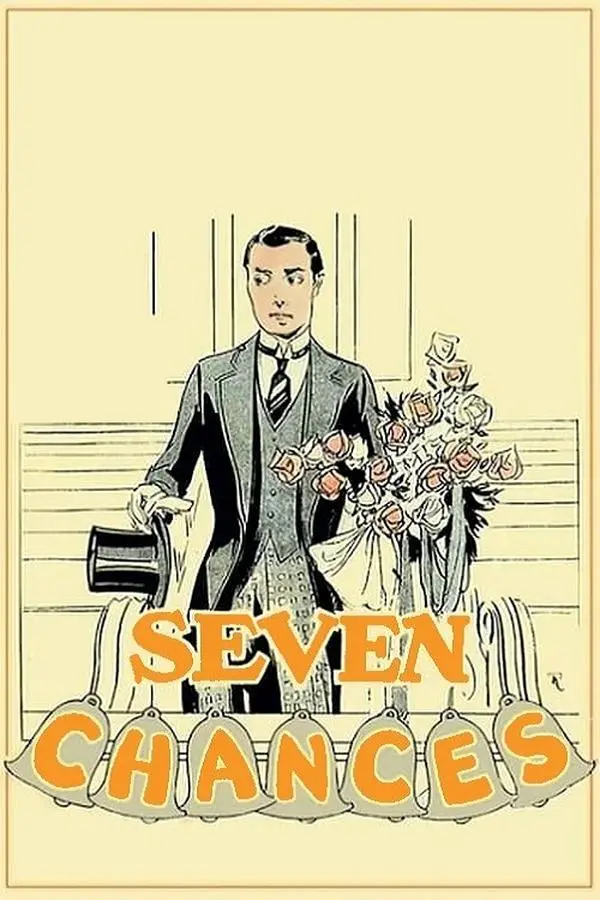
The true antagonist, if one can label her so, is Berthe Jalabert's Madame Dubois. Jalabert imbues her character with an almost terrifying elegance, a woman whose composure is as unyielding as her ambition. Her cold, calculated machinations drive much of the plot's conflict, and her presence on screen is formidable. Every glance, every subtle shift in her posture, speaks of a woman who views human relationships through the lens of transaction and power. She is the embodiment of the rigid class system, a force of nature that seeks to control and dictate destinies for the sake of reputation and wealth. Her performance provides a necessary gravitas, a stark counterpoint to the youthful passion of Annette and Henri. The subtle villainy she portrays is far more insidious than overt malice, making her character a truly memorable one in the annals of silent film antagonists. Her portrayal recalls the formidable matriarchs and social manipulators found in films like The Boss, where power dynamics within families dictate the course of lives.
Madeleine Ramey, as Annette's ailing mother, provides the emotional anchor for Annette's struggles. Her quiet suffering and unwavering love for her daughter amplify the stakes, making Annette's sacrifices all the more profound. Ramey's subtle acting conveys the burden of illness and the quiet dignity of a woman facing adversity. Her presence adds a layer of pathos, reminding us that Annette's plight is not merely romantic, but existential, tied to the very survival of her family. This element of familial duty and sacrifice is a common, yet always impactful, theme in early cinema, often driving the heroine's choices, much like in Her Atonement.
The character of Monsieur Dubois, played by Jacques Volnys, is a stroke of narrative genius. His initial portrayal as a benevolent, almost ethereal, presence gradually gives way to his true identity as Henri's estranged father. Volnys exudes a quiet wisdom and a deep sense of moral rectitude, serving as the film's moral compass. His eventual intervention is not merely a plot device, but a powerful commentary on the possibility of redemption and the triumph of genuine affection over superficiality. His character provides the much-needed ray of hope in what could otherwise be an overwhelmingly tragic tale, embodying the potential for societal conventions to be challenged by deeply held personal values. His role as a hidden hand guiding events echoes the thematic undercurrents of films like My Lady Incog., where concealed identities and motivations ultimately shape outcomes.
Marthe Vinot's Genevieve, the wealthy heiress destined for Henri, is not a one-dimensional rival. Vinot portrays her with a nuanced coldness that eventually thaws into a surprising nobility. Her character's arc, from a symbol of societal expectation to an agent of moral clarity, is subtly rendered, demonstrating that even those seemingly entrenched in the upper echelons can possess a conscience. Her decision to break off the engagement, witnessing Henri's true feelings for Annette and disgusted by the deceit, is a pivotal moment, showcasing her own integrity and refusal to be a pawn in a loveless arrangement. This unexpected turn highlights the film's sophisticated understanding of human complexity, eschewing simple good-versus-evil dichotomies.
Ferruccio Biancini's contribution, though perhaps less central, is nonetheless vital. As a conflicted confidante or a minor antagonist, depending on the specific narrative thread, Biancini adds another layer to the intricate web of relationships. His presence, even in fleeting moments, helps to flesh out the world of the film, providing reactions and motivations that underscore the central drama. Whether he plays a loyal friend to Henri, wrestling with the moral implications of Henri's choices, or a minor figure whose actions inadvertently push the plot forward, Biancini's performance contributes to the overall texture and realism of the Parisian milieu.
The visual storytelling in 'Le crépuscule du coeur' is exemplary. The cinematography captures the grandeur of Parisian society alongside the intimate struggles of its characters. Directors of this era were masters of visual narrative, using light and shadow, composition, and movement to convey emotion and advance the plot. The film likely employs dramatic close-ups to emphasize the actors' nuanced expressions, particularly those of Yvonne Mario, allowing the audience to truly connect with their inner turmoil. The use of elaborate sets and costumes would have transported audiences to the Belle Époque, immersing them in the world of the story. The stark contrast between the opulent, often suffocating, interiors of the aristocratic world and the more modest, yet emotionally rich, settings of Annette's life is visually striking and thematically resonant. This visual dichotomy reinforces the central conflict of class and values, a hallmark of many silent dramas, including Nearly a Lady and its exploration of social facades.
The pacing of the film is deliberate, allowing emotional beats to fully land before moving to the next dramatic development. This measured rhythm is characteristic of silent melodramas, building suspense and empathy through a careful unfolding of events. Intertitles, used judiciously, provide essential dialogue and exposition without interrupting the flow of visual storytelling. They are not merely captions but integral parts of the narrative, often crafted with poetic language that enhances the film's artistic aspirations. The film’s narrative structure, though perhaps appearing conventional by today’s standards, was revolutionary in its time, demonstrating a sophisticated understanding of dramatic arc and character development.
Thematically, 'Le crépuscule du coeur' delves into the enduring power of love in the face of adversity, the corrupting influence of wealth and social standing, and the importance of integrity. It's a timeless tale that explores the universal human experience of choice and consequence. The film suggests that true happiness cannot be bought or forced, but must be earned through authenticity and courage. It champions the idea that genuine affection, however humble its origins, ultimately holds more value than the most glittering of societal accolades. This message, while perhaps idealistic, resonates deeply, offering a glimmer of hope in a world often dictated by cynical pragmatism. The film's exploration of moral choices and their profound impact on individuals echoes the ethical dilemmas at the core of The Man Who Came Back, where characters are forced to confront their past and future with equal weight.
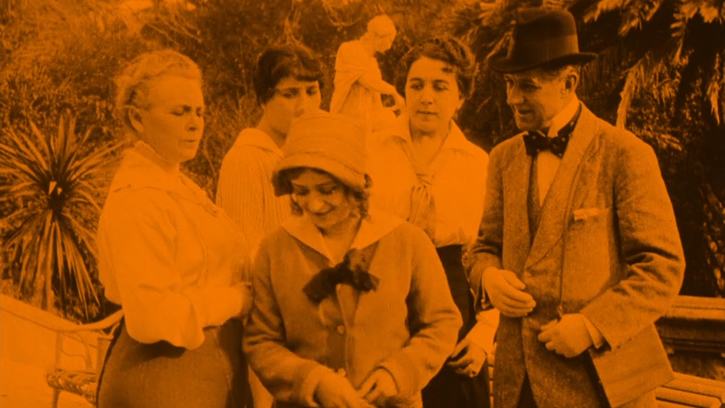
The direction of 'Le crépuscule du coeur' masterfully orchestrates the various performances and narrative threads into a cohesive and emotionally compelling whole. The director understands the nuances of silent film acting, allowing the camera to linger on faces, capturing the subtlest shifts in emotion. The use of tableau shots, a common technique in early cinema, is employed to stunning effect, freezing moments of high drama to allow the audience to absorb the emotional weight of a scene. The staging of the climactic engagement party, for instance, would have been a triumph of cinematic tension, with the opulent setting providing a stark contrast to the raw emotional honesty erupting within it. Such dramatic staging and emotional intensity can be seen in other powerful silent films like Honor Thy Name, where family loyalty and personal conviction collide.
The film's title itself, 'Le crépuscule du coeur' (The Twilight of the Heart), is profoundly evocative. It speaks to the idea that love, even when triumphant, is often scarred by the trials it endures. It’s not an ending bathed in the bright light of dawn, but rather a mellow, reflective twilight, acknowledging the pain and sacrifice that forged the bond. This nuanced perspective elevates the film beyond a simple romantic melodrama, imbuing it with a philosophical depth that encourages contemplation long after the final frame. The film's ability to portray a love that is both victorious and melancholic is a testament to its artistic ambition and success.
In an era dominated by rapid technological advancements in cinema, 'Le crépuscule du coeur' stands as a powerful reminder of the enduring artistry of silent film. It demonstrates that storytelling, at its core, transcends sound and color, relying instead on the universal language of human emotion. The performances, the visual poetry, and the timeless themes combine to create a cinematic experience that is both historically significant and emotionally resonant. For aficionados of early cinema, or anyone seeking a deeply moving narrative, this film offers a rich and rewarding journey into the heart's enduring twilight. Its intricate character dynamics and societal commentary also draw parallels with German silent films like Marionetten or even Der Millionenonkel, which also explored the complexities of human nature and social standing through a distinctly European lens.
The film's impact lies not just in its narrative, but in its ability to transport the viewer to a bygone era while simultaneously exploring themes that remain acutely relevant. The struggle between personal desire and societal obligation, the corrosive nature of unbridled ambition, and the redemptive power of truth are all handled with a deft touch that avoids didacticism. Instead, the film presents these conflicts through the lived experiences of its characters, inviting the audience to draw their own conclusions and feel their own empathy. The enduring legacy of 'Le crépuscule du coeur' is its capacity to speak across generations, proving that a truly great story, told with sincerity and artistry, never truly fades into the past.
Ultimately, 'Le crépuscule du coeur' is more than just a historical curiosity; it is a vibrant, beating heart of a film that continues to pulse with life. Its exploration of love's trials and triumphs, set against the opulent yet restrictive backdrop of early 20th-century Parisian society, offers a profound and moving experience. The performances, particularly Yvonne Mario's captivating turn, remain etched in the memory, a testament to the power of silent acting to convey the most complex human emotions. It’s a film that reminds us of the profound beauty and enduring resonance of early cinematic art, a true jewel in the crown of French silent cinema.
The interplay of light and shadow, characteristic of the era, is employed not just for aesthetic appeal but as a symbolic representation of the characters' internal states. Shadows deepen around moments of despair or deception, while shafts of light pierce through, often accompanying revelations or moments of hope. This visual language, so intrinsic to silent film, is executed with precision, adding layers of meaning that enhance the narrative without requiring a single spoken word. The use of dramatic lighting to heighten emotional impact is a technique that can be observed in various forms across early cinematic history, from the German Expressionist films to American melodramas like The Destroying Angel, demonstrating a universal understanding of visual rhetoric.
The film's ability to craft such a rich tapestry of emotion and consequence, relying solely on visual cues and the power of performance, is a remarkable feat. It underscores the artistry and ingenuity of filmmakers during this period, who had to invent and refine cinematic language as they went along. 'Le crépuscule du coeur' stands as a shining example of this pioneering spirit, a film that is both a product of its time and a timeless work of art. The meticulous attention to detail in set design, costume, and even the smallest gesture by an actor, all contribute to an immersive experience that transcends the limitations of its format.
The societal commentary embedded within the narrative is also noteworthy. The film subtly critiques the rigid class structures and the pervasive influence of wealth in determining personal fates. It highlights the hypocrisy of a society that values appearances and financial gain over genuine affection and moral integrity. This critique is delivered not through heavy-handed exposition, but through the lived experiences of Annette and Henri, whose love is constantly battling against the invisible, yet formidable, barriers of social standing. This critical look at societal norms is a recurring motif in cinema, appearing in various forms from the dramatic confrontations in May Blossom to the more subtle class distinctions explored in The Galloper.
The ending, as suggested by the title, is not one of unbridled joy, but rather a profound understanding of love forged in suffering. It is a 'twilight' not of complete darkness, but of reflective light, acknowledging the scars that remain. This sophisticated approach to resolution, avoiding a saccharine 'happily ever after,' lends the film a greater sense of realism and emotional maturity. It suggests that even the most triumphant love stories carry the weight of their journey, making the ultimate connection between Annette and Henri all the more meaningful and resonant. The enduring emotional impact of such a conclusion ensures that 'Le crépuscule du coeur' remains a compelling watch, inviting contemplation on the true cost and reward of love.
For those who appreciate the profound storytelling capabilities of silent cinema, 'Le crépuscule du coeur' is an essential viewing. It's a film that uses every tool at its disposal – from the subtle nuances of performance to the grand sweep of its visual narrative – to craft a story that is both deeply personal and universally resonant. The performances of Yvonne Mario and Maurice Mariaud, supported by a stellar ensemble, elevate the material, making their characters' struggles and triumphs feel intensely real. It is a testament to the power of cinema to convey complex human experiences, even without the aid of sound, and a poignant reminder of the enduring beauty of early French filmmaking. This cinematic jewel is a powerful exemplar of its genre, standing alongside other European classics such as Mit Herz und Hand fürs Vaterland in its ability to capture the spirit and dilemmas of its age.
The emotional arc of the film is meticulously constructed, taking the audience on a journey from innocent romance to devastating heartbreak, and finally, to a hard-won, yet deeply felt, reconciliation. This journey is punctuated by moments of intense drama and quiet introspection, each contributing to the film’s overall impact. The director’s ability to maintain this emotional equilibrium, balancing moments of despair with glimmers of hope, is a hallmark of truly masterful storytelling. The narrative never feels rushed or contrived; rather, it unfolds with an organic naturalness that draws the viewer ever deeper into its world. The emotional complexity and character depth rival many contemporary dramas, proving that the silent era was anything but simplistic. Such a profound exploration of the human psyche is often found in films that challenge viewers to look beyond the surface, akin to the introspective journeys in The Man Inside or The Bugle Call, where characters confront their inner demons and external pressures with equal intensity.
The film's enduring appeal lies in its exploration of themes that transcend time and culture: the quest for true love, the battle against social injustice, and the triumph of the human spirit. These universal elements, combined with the exquisite artistry of its execution, ensure that 'Le crépuscule du coeur' remains a powerful and relevant cinematic experience. It is a film that speaks to the heart, reminding us of the fragility and resilience of human connection, and the enduring power of hope in the face of despair. Its place in the pantheon of silent film classics is well-deserved, a luminous example of storytelling at its most pure and poignant.
IMDb —
1926
Community
Log in to comment.