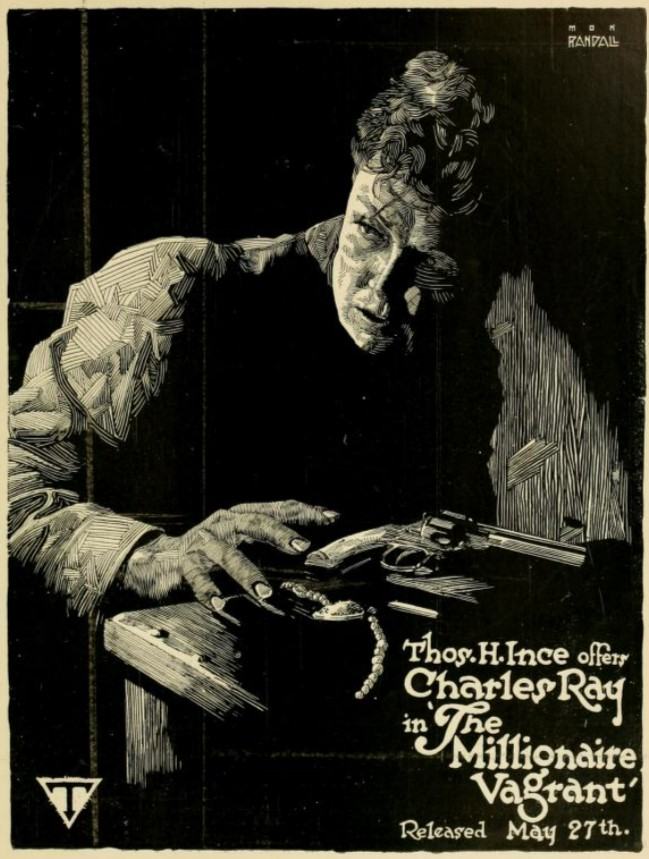
There is a moment—wordless, razor-thin—when Steven du Peyster peels the price tag from a secondhand coat and discovers it costs exactly six cents more than the sum total of his worldly coin. The camera, hungry, lingers on the trembling tag; the celluloid seems to inhale, exhale, bruise. In that sliver of silver nitrate suspense, The Millionaire Vagrant vaults from flapper-era trifle to pocket-sized epic of American inequality, a film that anticipates Capra’s populism by half a decade yet retains the sting of a muckraker’s pen.
The Alchemy of Absence: How Silence Screams Class
Director J.G. Hawks, a name now relegated to footnote fetishists, understood that silent cinema’s greatest weapon is omission. Dialogue—those intertitle stutters—functions like a scalpel: every syllable cuts. When Steven confesses “I have dined on tomorrow’s hope,” the card burns white-hot against black leader, a haiku of hunger. Hawks weaponizes negative space: tenement hallways yawn like caverns; a pawnshop window swallows Steven’s reflection whole. Compare this to Topiel, where Polish expressionists smother the frame with clutter; Hawks opts for brutal vacuum, an aesthetic of eviction.
Elvira Weil: Street Oracle in a Newsboy Cap
Elvira Weil’s Sadie O’Grady pirouettes into the narrative astride a pushcart, her eyes twin trolley sparks. She embodies the film’s centrifugal conscience: she pickpockets the rich, then slips dimes into blind buskers’ tin cups. Watch her in the soup-kitchen line—she ladles water into the broth to stretch it, a micro-rebellion against scarcity. Weil’s performance is all angled elbows and sideways glances; she weaponizes charm like a switchblade. It’s a travesty that her career flatlined with the coming of sound; she had the brittle swagger of a Lombard prototype.
Charles Ray: From All-American Boy to Human Palimpsest
Once the embodiment of rural virtue in The Soul of a Child, Charles Ray here deconstructs his own mythos. Note the scene where Steven attempts to pawn his Phi Beta Kappa key: Ray’s fingers tremble like tuning forks, his face a battlefield of mortification. The actor’s reed-slender physique, once a symbol of pastoral vigor, now underscores urban fragility. Ray’s eyes—pale, almost aqueous—mirror the metropolis’s neon cruelty. It’s a performance of subtraction: he peels away layers of entitlement until only sinew and shame remain.
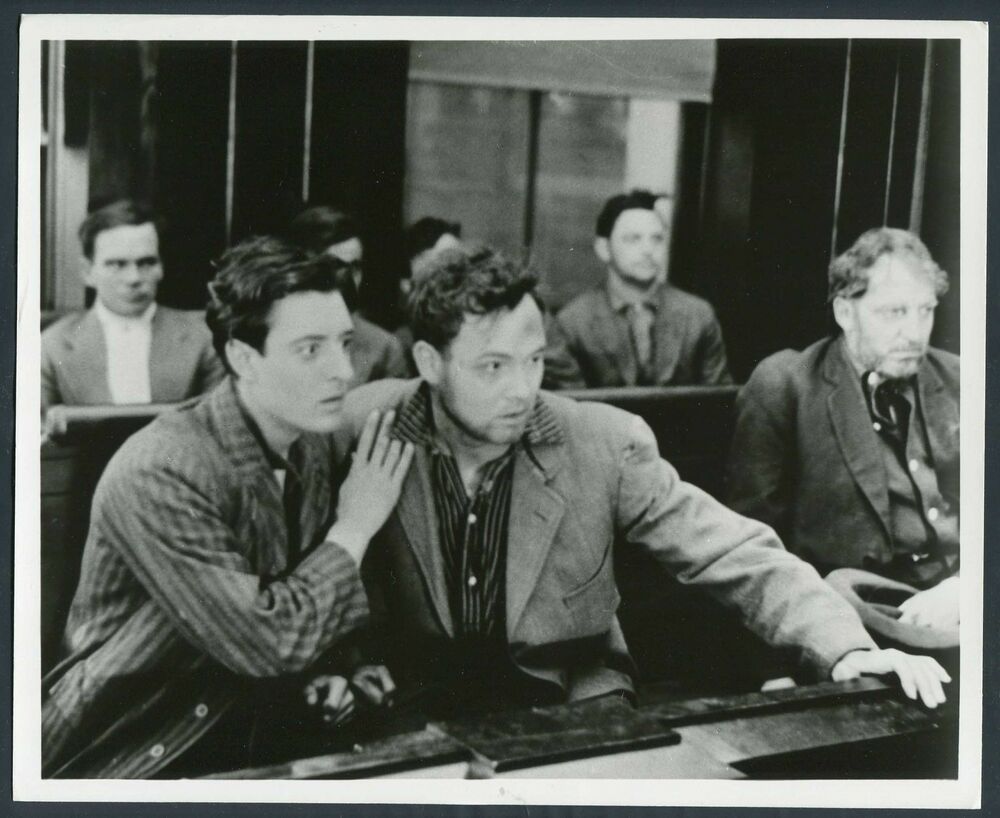
Scene from The Millionaire Vagrant
Cinematic perspective: Exploring the visual vocabulary of The Millionaire Vagrant (1917) through its definitive frames.
Bowery Baroque: Production Design as Social X-Ray
Art director Robert Haas eschews back-lot fakery, shooting instead on location along South Street’s rotting piers. Rusted anchor chains become necklaces of industrial decline; fish-market ice glints like scattered diamonds. One set piece—a flophouse interior—features bunks stacked to the ceiling, a vertiginous grid of human storage. Shadows fall in tessellated patterns, evoking a prison etched onto celluloid. Compare this oppressive verticality to the claustrophobic bourgeois parlors of Bristede Strenge; Hawks inverts the hierarchy—here, poverty towers, wealth recedes.
Intertitles as Guerrilla Poetry
J.G. Hawks, who moonlighted as a magazine versifier, injects his intertitles with modernist snap. A sampling:
“Six dollars: a week’s ransom for a prince in exile.”
“Hunger is a silent violin—only the gut hears the note.”
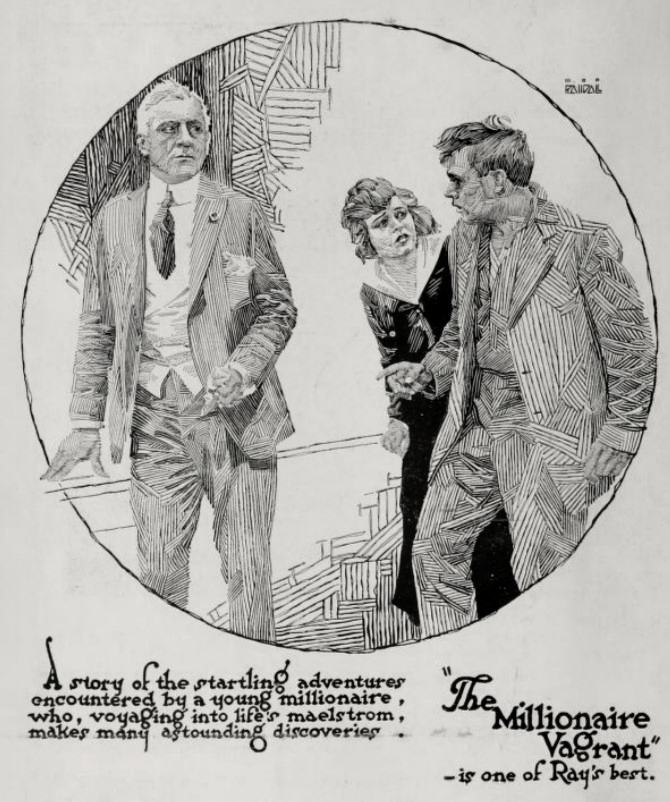
Scene from The Millionaire Vagrant
Cinematic perspective: Exploring the visual vocabulary of The Millionaire Vagrant (1917) through its definitive frames.
Each card arrives with the brisk jab of a leftist pamphlet, yet never topples into agitprop. The prose is lean, imagistic—think Tzara meets Tin Pan Alley.
The Gendered Economics of Rescue
While Steven’s arc charts the humbling of capital, the women around him perform emotional labor that the film half-acknowledges. Sylvia Breamer’s bohemian painter, Lola Vance, offers Steven shelter in exchange for modeling sessions; her gaze commodifies his body just as surely as the factory owners commodify labor. Yet the script never grants her the narrative closure of autonomy—she exits mid-reel, canvas unfinished. Conversely, Carolyn Wagner’s society heiress—Steven’s fiancée—embodies wealth as absentee landlord of the heart. Her sole scene, a telephone conversation shot in claustrophobic medium close-up, reveals pearls clenched between teeth: anxiety as jewelry.
Comparative Canon: Where Does Millionaire Vagrant Reside?
Set it beside Artie, the Millionaire Kid and you see two opposing mythologies: Artie’s wealth is a fairy-tale wand, Steven’s a ball-and-chain. Match it against The Grasp of Greed and note how both films weaponize montage to indict capital, yet Hawks tempers melodrama with flapper-era insouciance. Finally, juxtapose with A Million a Minute—that carnival of ticker-tape surrealism—and you realize Hawks prefers asphalt over abstraction, hunger over hokum.
Soundless Symphony: The Score That Wasn’t
Archival records indicate that the original premiere featured a live trio performing a pastiche of Irving Berlin and Yiddish theater motifs. Today, most prints circulate with a cobbled-together score of royalty-free parlor tunes, a sonic insult to the film’s class fury. Seek instead the 2019 restoration screened at MoMA, where a new quartet interpolated klezmer clarinet with prepared piano—an aural analogue to the city’s fractured rhythms.
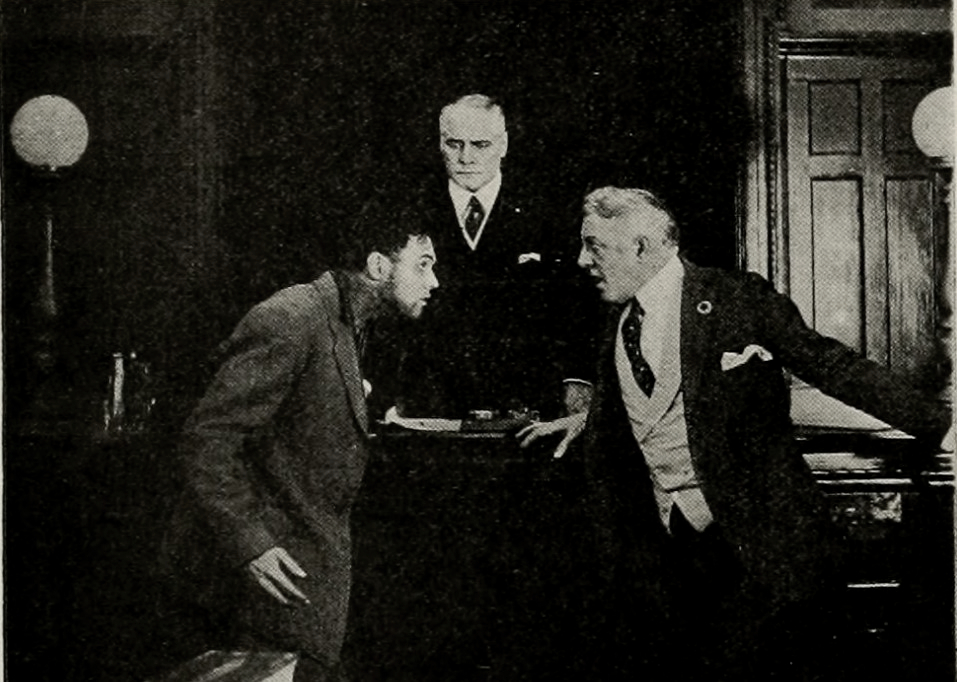
Scene from The Millionaire Vagrant
Cinematic perspective: Exploring the visual vocabulary of The Millionaire Vagrant (1917) through its definitive frames.
Cinematic Legacy: A Phantom That Haunts Capra
Watch It Happened One Night after viewing Millionaire Vagrant and the lineal DNA glares back: the heiress divested of jewels, the newspaperman tutored in hunger, the roadside campfire as confessional. Yet where Capra tilts toward reconciliation, Hawks leaves us in limbo. Steven’s return to Park Avenue is filmed in low-angle shots that make mansion columns loom like tombstones; the final intertitle reads: “To know the price of bread is to fear the cost of cake.” No marriage, no merger, only a lingering unease that wealth is a currency of moral amnesia.
Viewing Strategy: How to Wrestle a 35mm Ghost
The film survives in two incomplete prints—one at the Library of Congress, another in a private Dutch collection. Both lack reel four, a loss that critics have dubbed “the lacuna of lentils,” referencing the missing soup-kitchen climax. Cinephiles patch the gap with production stills and a surviving continuity script, creating a viewing experience half-cinema, half-archaeological dig. Embrace the fragmentation; the gaps become negative space where modern anxieties seep in.
Final Appraisal: A Time-Capsule Grenade
Is The Millionaire Vagrant a masterpiece? Not quite. Its third-act tonal swerve into slapstick—Steven disguised as a one-man band to evade process servers—shatters the vérité spell. Yet its bruised lyricism, its willingness to indict the very audience that funded its production, renders it a prophetic relic. In an age when tech bros cosplay poverty at $200-a-night faux-slum hotels, Hawks’s century-old wager feels chillingly contemporary. The film’s final shot—Steven’s silk top hat drifting down the East River like a coffin for vanished privilege—lingers like a question mark scrawled on water.
Verdict: 8.5 / 10 — Essential viewing for anyone who believes money is a language without synonyms.