DbcultAccessing Vault...
Cult Review
Senior Film Conservator
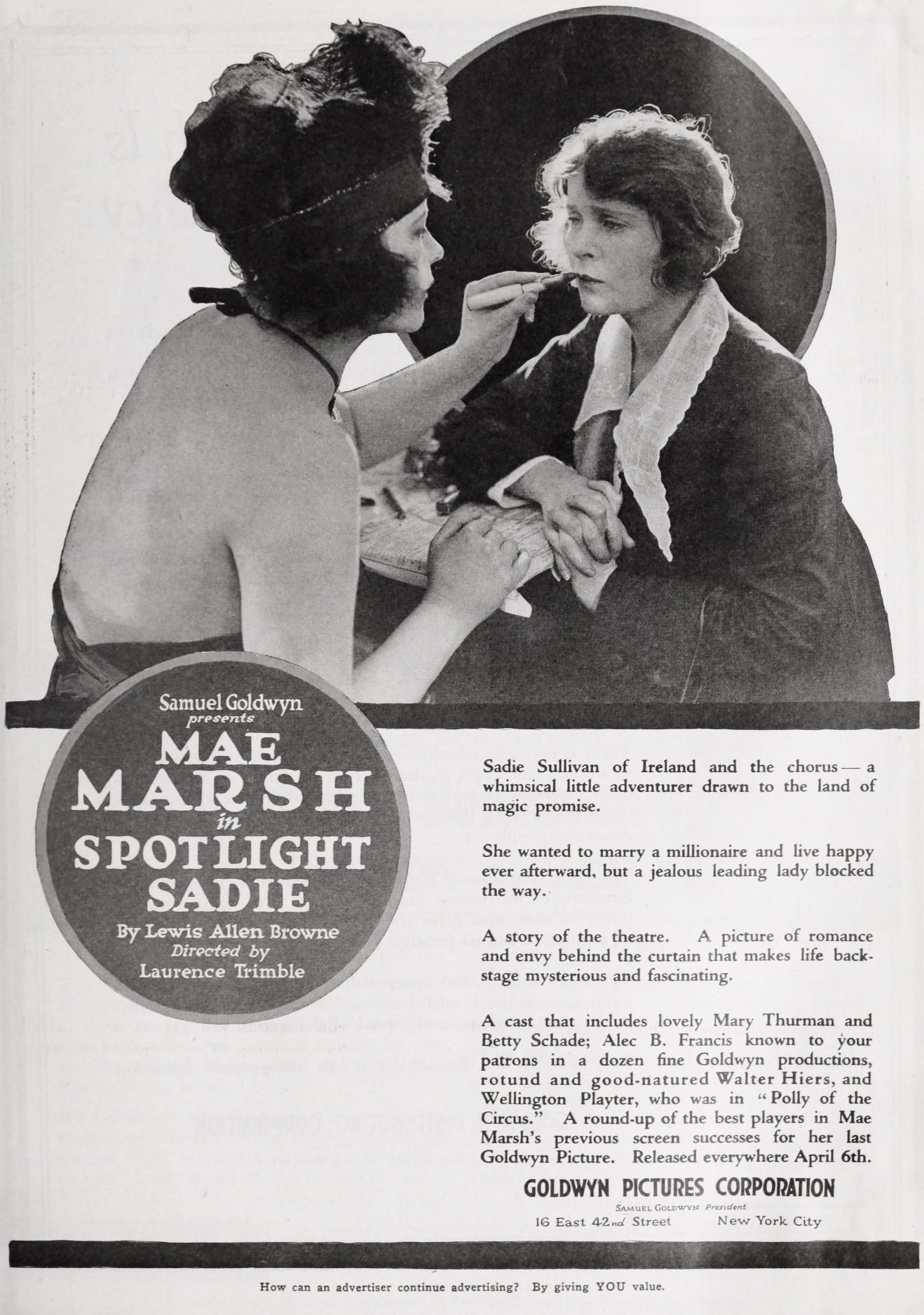
In the annals of early American cinema, where flickering shadows told tales of grand aspirations and moral quandaries, Spotlight Sadie emerges as a fascinating artifact, a silent film that, despite its relatively modest scale, offers a surprisingly rich tapestry of themes. Released into a world grappling with modernity, burgeoning urban centers, and shifting social mores, this picture, with its seemingly straightforward narrative, provides a compelling lens through which to examine the era's fascination with purity, perception, and the elusive pursuit of the American Dream. It's a testament to the enduring power of storytelling that even without spoken dialogue, the film manages to convey the nuanced struggles of its protagonist, Sadie Sullivan, an Irish immigrant navigating the treacherous yet alluring currents of New York society.
Sadie's journey begins not with a flourish, but with the quiet desperation of an immigrant seeking a better life. Leaving behind the familiar landscapes of Ireland, she arrives in the bustling metropolis of New York, a city that promised opportunities but often delivered hardship. Her initial lodgings with her married sister quickly sour, tainted by the presence of a 'worthless' brother-in-law whose idleness casts a pall over the household. Her own employment, a tedious and low-paying stint at a five-and-dime store, offers little in the way of fulfillment or upward mobility. This opening act masterfully establishes Sadie's predicament: a young woman of inherent decency and aspiration, trapped in circumstances that threaten to stifle her spirit. It’s a familiar narrative trope of the era, echoing similar struggles seen in films like Sins of the Parents, where characters often find themselves battling against societal pressures and familial shortcomings to forge their own path.
The catalyst for Sadie's transformation is a seemingly innocuous magazine article—a Cinderella story of a chorus girl who marries a millionaire. This narrative, a potent cocktail of glamour and social ascent, ignites a spark within Sadie, a vision of a life beyond the drudgery of her current existence. It speaks to the pervasive cultural narratives of the time, where popular media often painted idealized pictures of success, particularly for women, through marriage or a foray into the entertainment world. For Sadie, the stage represents not merely a career, but a potential escape hatch, a gateway to a world where her innate virtues might finally be recognized and rewarded.
Sadie's entry into the musical-comedy company immediately sets up a fascinating dichotomy. On one hand, there's the vibrant, often risqué world of the showgirls, a realm of perceived 'loose morals' and worldly experience. On the other, there's Sadie, quietly reading her Bible backstage, a testament to her unshakeable faith and moral compass. This stark contrast is not merely played for comedic effect, but serves as a central thematic pillar of the film. It highlights the tension between outward appearances and inner conviction, a theme explored in various forms across silent cinema, from the social commentary of The Outcast to the more nuanced character studies of the era.
Her friendship with Reverend John Page further solidifies her 'saintly' image. The Reverend represents a moral anchor in a world that often seems adrift, providing Sadie with spiritual guidance and, as events will prove, a crucial ally. This alliance between the sacred and the secular, the church and the stage, is a bold narrative choice, challenging conventional notions of piety and suggesting that virtue can indeed thrive in unexpected places. Betty Schade's portrayal of Sadie is particularly effective here, conveying an earnestness and quiet strength that makes her character’s steadfastness believable amidst the temptations and superficiality of her new environment.
The film truly hits its stride with the introduction of press agent Jack Mills. Mills, a shrewd operator with an eye for novelty, recognizes the unique appeal of Sadie's innocence. In an era where sensationalism and carefully crafted public images were becoming increasingly important, Mills's decision to market Sadie as 'The Saintly Show Girl' is a stroke of genius. It's a brilliant commentary on the nascent power of media and public relations, demonstrating how a persona can be constructed and capitalized upon, regardless of the individual's true nature—though in Sadie's case, the persona aligns perfectly with her character. This narrative arc subtly critiques the superficiality of fame while simultaneously celebrating the genuine article.
This manufactured image transforms Sadie from a mere chorus girl into a phenomenon. Her 'saintly' reputation becomes her unique selling point, setting her apart from the myriad other performers vying for attention. It's a clever inversion of expectations: instead of conforming to the expected 'loose morals' of a showgirl, Sadie’s purity becomes her greatest asset. This dynamic is reminiscent of other films that explore the tension between public perception and private reality, such as The Mysterious Mr. Tiller, albeit with a more lighthearted approach to the deceptive aspects of identity.
No silent film romance would be complete without a love triangle, and Spotlight Sadie delivers with panache. Millionaire Dick Carrington, initially captivated by the leading lady Dollie Delmar, soon finds himself drawn to Sadie's fresh charm and distinctive aura. His shift in affections is a blow to Dollie's ego and a threat to her social standing, fueling a bitter jealousy that drives the film's climactic conflict. Dollie, brilliantly played by Mary Thurman, embodies the archetype of the jaded, manipulative rival, a character often seen in narratives where innocence clashes with experience.
The subsequent engagement between Dick and Sadie is the final straw for Dollie. Her desperation culminates in a nefarious plot to tarnish Sadie's carefully cultivated image. She devises a scheme to lure Sadie to a notorious roadhouse, an establishment Dollie knows is slated for a police raid. This act of calculated sabotage is a classic narrative device, designed to test the protagonist's virtue and provide a dramatic turning point. It highlights the cutthroat nature of ambition and rivalry, particularly in environments where social status and romantic attachment are intertwined.
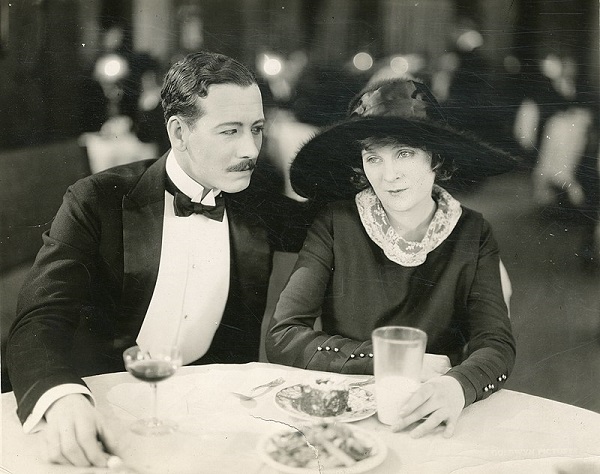
Just as Sadie seems poised on the brink of scandal and ruin, Reverend John Page reappears, a deus ex machina in clerical garb. His timely arrival at the raided roadhouse, and his ability to satisfactorily explain Sadie's innocent presence to both the police and a bewildered Dick, is the film's ultimate resolution. The Reverend's intervention is not merely convenient; it reinforces the film's underlying message about the triumph of true character and the importance of having genuine allies. It's a classic cinematic moment where virtue is rewarded, and villainy is thwarted, albeit without the dramatic comeuppance often reserved for such antagonists in other films like The Face in the Moonlight.
With her name cleared and her integrity reaffirmed, Sadie is free to marry Dick Carrington, fulfilling the very dream that initially drew her to the stage. The ending is undeniably conventional, a satisfying conclusion to a story that champions moral fortitude and the power of love. It reaffirms the era's romantic ideals, where genuine goodness ultimately prevails over superficiality and malice. The marriage signifies not just personal happiness for Sadie, but also her successful assimilation into a higher social stratum, a testament to the aspirational narratives prevalent in early 20th-century American culture.
Spotlight Sadie, through its engaging plot and well-defined characters, explores several themes that remain pertinent even today. The pursuit of the American Dream, the challenges faced by immigrants, the tension between traditional morality and modern urban life, and the construction of public image are all woven into its fabric. Sadie’s journey from anonymity to celebrity, and her struggle to maintain her integrity amidst the temptations of the stage, offers a timeless narrative about personal values in the face of external pressures. This theme of navigating societal expectations while preserving one's core identity resonates with films such as M'Liss, which also portrays a pure-hearted protagonist in challenging circumstances.
The film also subtly critiques the superficiality of fame and the fickle nature of public opinion. Jack Mills's ability to create a sensation out of Sadie's 'saintliness' underscores how easily perceptions can be manipulated. Yet, it also suggests that genuine virtue, when present, can shine through, even in the most cynical of environments. The performances, particularly Betty Schade as the titular Sadie, are commendable, conveying emotion and character depth without the aid of dialogue. The supporting cast, including Wellington A. Playter as Dick Carrington and Mary Thurman as the conniving Dollie Delmar, contribute significantly to the film's overall charm and dramatic tension.
While not a sprawling epic like Tsar Nikolay II, or a stark drama akin to The Green Swamp, Spotlight Sadie excels in its specific niche: a heartwarming, morally upright romantic comedy-drama of the silent era. It's a reminder of a time when cinema was still finding its voice, using visual storytelling to explore universal human experiences. The film's enduring appeal lies in its optimistic outlook and its belief in the ultimate triumph of good character. It captures a slice of early 20th-century Americana, reflecting the hopes, anxieties, and moral compass of a society undergoing rapid transformation.
For modern viewers, Spotlight Sadie offers more than just a historical curiosity; it's an accessible entry point into the unique artistry of silent film. The expressive acting, often exaggerated by today's standards, was the common language of the screen, conveying emotions and intentions through gesture, facial expressions, and body language. The pacing, though sometimes deliberate, allows for moments of quiet contemplation and visual storytelling that can be deeply rewarding. The intertitles, far from being mere text, served as crucial narrative devices, often delivering poignant dialogue or explanatory exposition, much like the narrative voice in a novel.
The film's technical aspects, while perhaps not groundbreaking for its time, are competently executed. The cinematography effectively captures the contrasting worlds of Sadie's humble beginnings and the dazzling theatrical stage. The direction by Lewis Allen Browne and Charles J. Wilson ensures a clear narrative progression, keeping the audience engaged in Sadie's plight and eventual triumph. While it might not share the epic scope or gritty realism of some contemporaries, its strength lies in its focused character study and its charming portrayal of a young woman's journey.
In an era when films like Britain's Bulwarks, No. 1: Women Munitioneers of England showcased the changing roles of women in society through documentary, Spotlight Sadie explores similar shifts through the lens of fiction, illustrating how women were beginning to seek independence and carve out new identities in the urban landscape. Sadie's ambition, though tied to traditional romantic outcomes, represents a nascent form of female agency, a desire to transcend her circumstances through her own efforts and innate character.
Ultimately, Spotlight Sadie is more than just a historical curiosity; it's a delightful and insightful piece of silent cinema that deserves renewed attention. Its exploration of themes like ambition, morality, and public perception remains relevant, offering a glimpse into the social fabric of its time while delivering a universally appealing story of triumph over adversity. For those seeking to delve deeper into the silent era, or simply enjoy a charming narrative with a strong moral core, this film is a wonderful discovery. It reminds us that sometimes, the brightest spotlights are reserved not for the loudest voices, but for the quietest virtues.
The film, with its blend of melodrama and moralistic undertones, serves as a quintessential example of early Hollywood's ability to craft narratives that both entertain and subtly educate. It is a testament to the enduring power of a simple story, well told, that can resonate across generations. So, dim the lights, perhaps put on some period-appropriate music, and let Spotlight Sadie transport you back to an era where innocence could still conquer all, even in the glittering, sometimes treacherous, world of the stage.
IMDb 6.8
1915
Community
Log in to comment.