DbcultAccessing Vault...
Cult Review
Senior Film Conservator
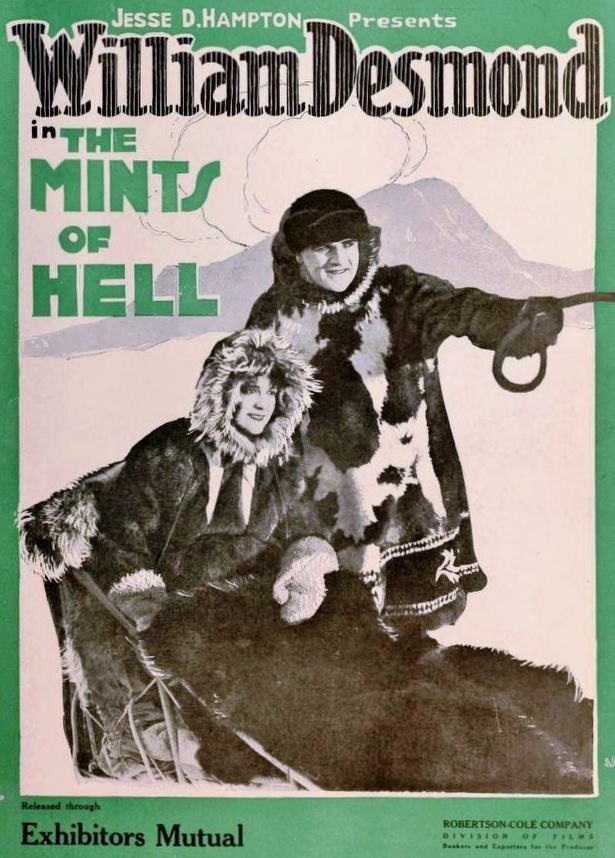
In the pantheon of early twentieth-century survivalist cinema, few artifacts shimmer with quite the same eerie, soot-stained luster as The Mints of Hell. This is not merely a tale of the Klondike; it is a psychological descent into the avarice that liquefies human morality in the face of absolute isolation. Directed with a keen eye for the oppressive vastness of the North, the film transcends the typical 'Northern' genre tropes by introducing a MacGuffin so peculiar it borders on the surreal: gold that is soft, black, and shaped like coins from a demonic treasury.
The cinematography captures the Yukon not as a land of opportunity, but as a monochromatic judge. Unlike the more romanticized vistas found in Northern Lights, the environment here feels actively hostile. The blizzard sequences are not mere plot devices; they are atmospheric drownings. When William Desmond’s Dan Burke is submerged in the white silence, the film achieves a tactile sense of dread. The camera lingers on the frost-bitten exhaustion of the dog teams, elevating the animals to silent witnesses of human folly.
The visual contrast between the blinding white of the tundra and the 'black gold' of the title creates a striking chiaroscuro effect. This black gold serves as a potent metaphor for the corruption inherent in the rush for wealth. It is 'soft,' suggesting a malleability of character, and 'flat,' stripped of the three-dimensional glory of traditional nuggets. It is wealth rendered as charcoal, a literalization of the 'mints of hell' that consume the souls of those who seek them.
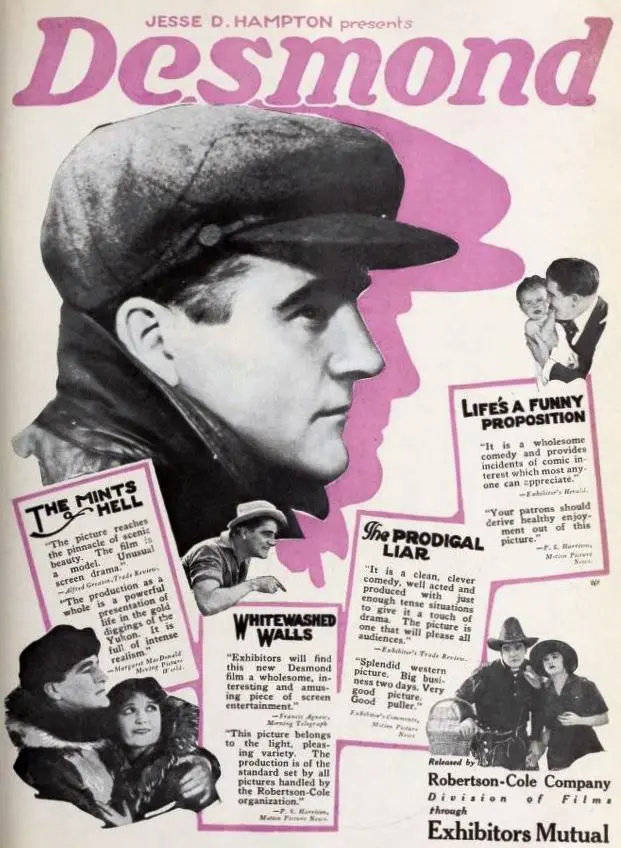
William Desmond delivers a performance of remarkable physical nuance. Initially, his Dan Burke is the quintessential 'tenderfoot'—a term of derision that the film deconstructs with surgical precision. Burke’s evolution from a ridiculed outsider to a hardened survivalist is paced with a deliberate, grinding momentum. Unlike the swashbuckling bravado seen in The Mutiny of the Bounty, Desmond’s heroism is reactive and exhausted. He is a man being hammered into shape by the anvil of the Arctic.
His chemistry with Vivian Rich, who portrays Aline, is the emotional anchor of the film. Rich avoids the 'damsel in distress' pitfalls that plagued many contemporary productions, such as At Bay. Instead, she is a creature of the wilderness, her nursing of Burke being an act of both mercy and territorial dominance. Their romance is forged in the crucible of a cabin fever that feels both intimate and claustrophobic.
One cannot discuss The Mints of Hell without addressing its preoccupation with lineage and the 'half-breed' trope, a recurring obsession in silent-era dramas like The Halfbreed. Burke’s internal conflict—his love for Aline warring with his prejudices regarding her supposed indigenous heritage—serves as a window into the colonial anxieties of 1919. The resolution, where Aline is revealed to be 'purely' white, is a standard, if disappointing, narrative escape hatch of the era, designed to satisfy the segregationist sensibilities of the time while allowing for a 'happy' ending.
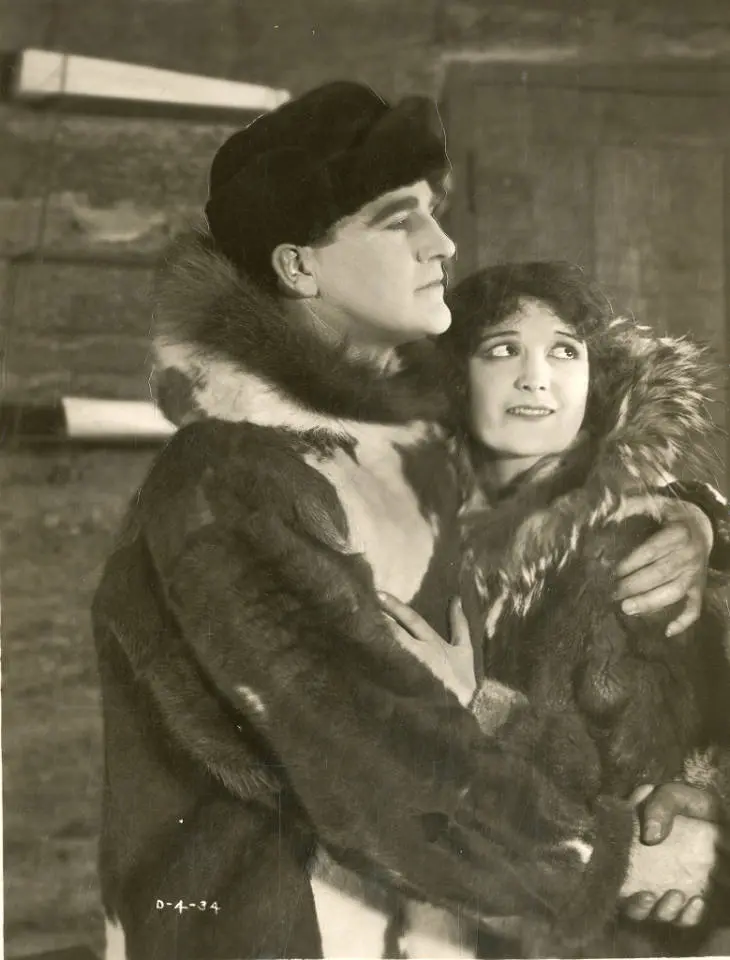
However, the film’s handling of this tension is more complex than its contemporaries. The 'stain' of the mine and the 'stain' of the perceived heritage are intertwined. Burke’s willingness to love her despite his misconceptions suggests a burgeoning, albeit flawed, humanism that sets the film apart from the more rigid moralizing of The Scales of Justice. It explores the idea that in the wilderness, the social hierarchies of the 'civilized' world are as fragile as ice over a deep river.
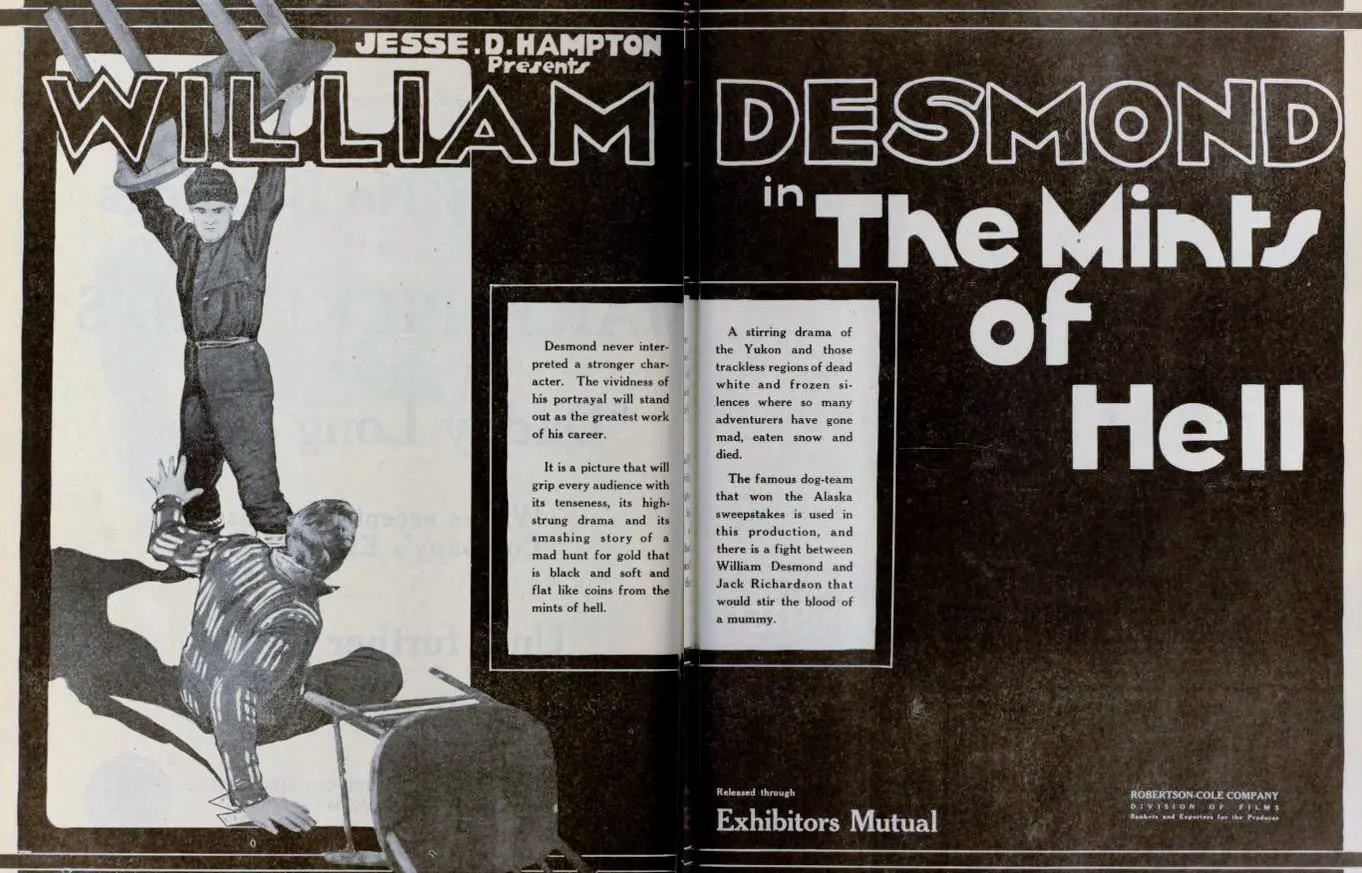
Clay Hibbing, played with a snarling, predatory intensity by Jack Richardson, represents the antithesis of Burke’s burgeoning integrity. Hibbing is the personification of the frontier’s lawlessness. His pursuit of the mine is not for sustenance or legacy, but for a nihilistic accumulation of power. The scene where he attacks Aline is filmed with a jarring, kinetic energy that predates the more polished action sequences of Broadway Jones.
The murder of Reirdon and the subsequent framing of Burke introduces a 'whodunit' element that adds a layer of noir-ish dread to the snowy landscape. This intersection of the detective genre and the Western survivalist film creates a hybrid vigor. The race to claim the mine becomes a race for legal and moral exoneration. The final image of Hibbing freezing to death—a statue of greed preserved in the ice—is a haunting piece of poetic justice that resonates far more than the courtroom dramas of Het proces Begeer.
The direction by Joseph Franz (though some records attribute different roles to the crew) demonstrates a sophisticated understanding of spatial relationships. In the vastness of the Yukon, the placement of characters in the frame signifies their vulnerability. When Burke and his dogs are caught in the storm, the wide shots emphasize their insignificance against the horizon, a technique also utilized effectively in A Lass of the Lumberlands.
The editing during the final race against Hibbing is particularly noteworthy. The cross-cutting between the two men, each battling their own physical limitations and the unforgiving terrain, builds a rhythmic tension that is almost percussive. This isn't the melodrama of Sweet Alyssum; this is a visceral, high-stakes kineticism. The use of natural lighting (or the convincing simulation thereof in the interiors) gives the film a grit that many of its peers, like the more stage-bound The Girl from Rector's, lack.
What lingers long after the credits roll is the concept of the 'Mints of Hell.' In many ways, the film functions as a critique of the industrial age’s hunger for resources. By making the gold black and soft, the filmmakers suggest that the earth’s riches are not inherently beautiful; they are raw, primal, and potentially 'hellish' when removed from their natural context. This thematic depth elevates the movie above standard adventure fare like The Man Who Would Not Die.
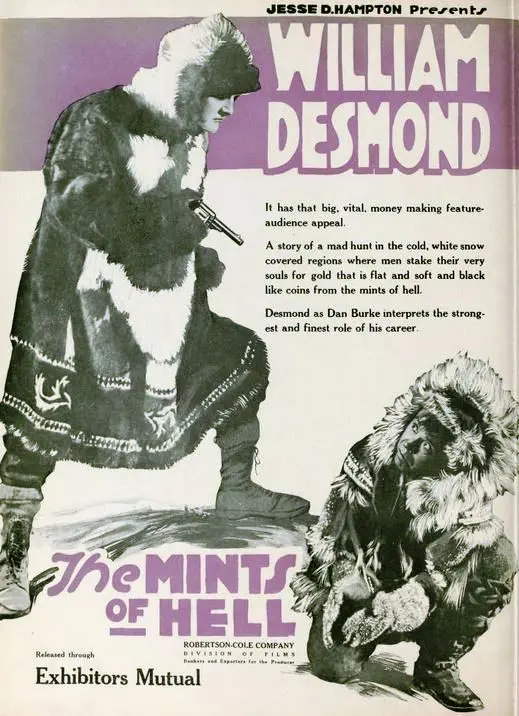
The film posits that the only true wealth is the human connection forged in the face of annihilation. Burke’s partnership with Chaudiare and his marriage to Aline are the 'true' gold, contrasted against the cold, dead coins of the mine. It is a sentiment echoed in Hidden Fires, yet here it is rendered with a frost-bitten sincerity that feels earned through blood and shivering limbs.
While The Mints of Hell may not occupy the same cultural footprint as Chaplin’s *The Gold Rush*, its influence on the survivalist subgenre is undeniable. It captures a specific moment in cinematic history where the rugged individualism of the frontier was beginning to be questioned by a more cynical, post-war sensibility. The film is a bridge between the Victorian morality of Her Country First and the burgeoning psychological realism of the 1920s.
For the modern viewer, it remains a fascinating study in atmosphere and archetypal struggle. The 'Mints of Hell' are still out there, buried under layers of historical neglect, waiting for a new generation of cinemaphiles to rediscover their dark, malleable beauty. It is a film that demands to be seen not just as a relic, but as a living, breathing piece of art that understands the shivering heart of the human condition.
"In the silence of the Yukon, the only thing louder than the wind is the sound of a heart breaking—or a man's soul hardening into the very gold he seeks."
IMDb —
1919
Community
Log in to comment.