DbcultAccessing Vault...
4.7/10
Senior Film Conservator
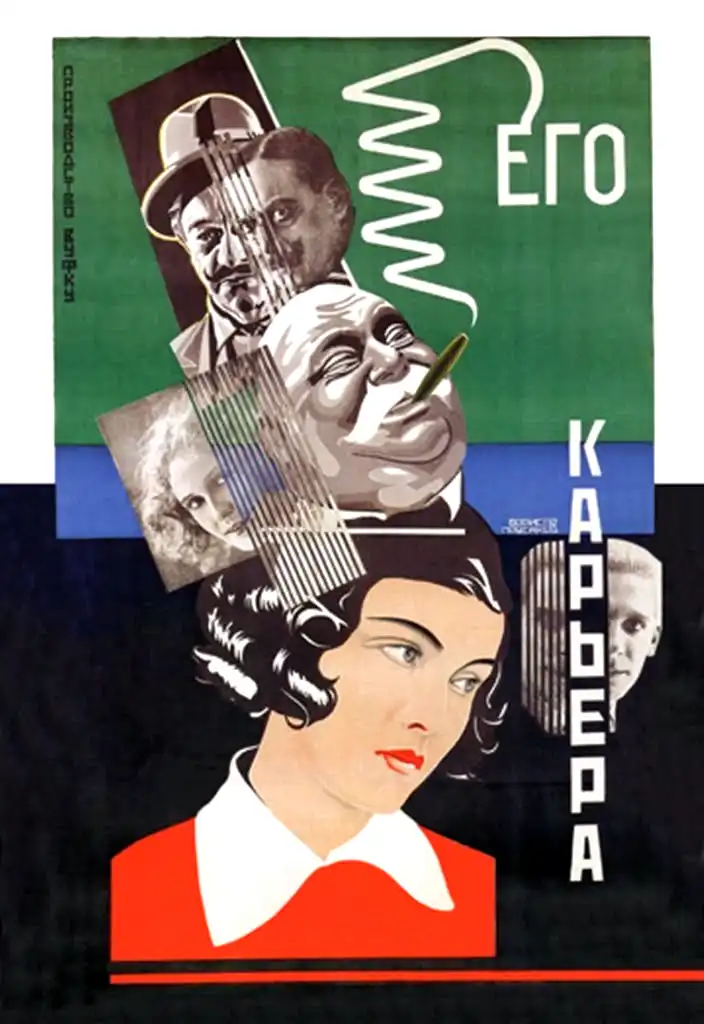
A definitive 4.7/10 rating for a film that redefined the boundaries of cult cinema. Yego kar'yera remains a cornerstone of transgressive art.
If you're someone who loves digging into film history, especially the silent era, then Yego kar'yera might be a fascinating watch today. For everyone else, maybe grab a cup of tea, because this 1928 Soviet film moves at its own, often deliberate, pace. Folks really into early Soviet filmmaking or expressive acting will probably find something to chew on here. But if you need snappy dialogue or quick cuts, you’ll likely be checking your watch. 🕰️
The film itself, about a man chasing… well, something bigger than himself, feels like a window into how stories were told without words. You get a lot of big gestures. I mean, really big gestures. L. Konstantinovsky, as our main guy, practically emotes with his whole body, even his eyebrows get a workout.
There's this moment early on, I think, where he's looking out a window. It's supposed to be contemplative, I guess, but it goes on for what feels like an eternity. You see the light shift on his face, then shift again. It's almost hypnotic, but then your mind just wanders off. 🤔
The intertitles, you know, those text cards? Some of them are just beautiful, almost poetic. Others feel like they're stating the obvious, like "He felt sad." Yeah, we got that from the tear rolling down his cheek for the last thirty seconds.
One thing that really stuck with me was the way they used shadows. Not like fancy noir shadows, but more like practical, stark contrasts. When a character is feeling down, they're often literally half-hidden in gloom. It's simple, but it works, giving the scene a heavy feeling.
Anna Sten has a small role, but she brings this energy to the screen that's quite different from some of the other actors. Her eyes, even in black and white, just sparkle with a kind of defiance. You wish she had more screentime.
There’s this odd little sequence where our hero is walking through a market. The extras feel less like a bustling crowd and more like people told to walk back and forth. It creates this slightly artificial vibe, like a stage play sometimes. 🎭
The music, if you're watching a version with a modern score, can really change how you feel about it. I caught one with a very sparse, almost minimalist piano score, and it made those long gazes feel even longer. Another version, with a more dramatic orchestral backing, completely changed the mood. It's a reminder of how much silent films depend on that accompanying soundtrack.
The story itself, without giving too much away, cycles through ambition and disappointment. You see our protagonist make choices that seem good at the time, only to lead him down a path that... well, you can guess. There’s a certain inevitability to it all.
I kept thinking about how much filmmaking has changed, but also how some things just don't. The desire to tell a human story, to show a person striving. That's still there. The way they did it, with all the dramatic facial expressions and arm-waving, is definitely from another time. But the feeling behind it, that's universal.
There’s a scene where a character opens a letter, and the way they slowly unfold it, deliberately, like every fold holds immense weight. It's such a small detail, but it speaks to the pace and the gravity they wanted to convey. You don't see that kind of drawn-out action much anymore.
It’s not a film that will change your life, probably. But it's a good one to put on if you want to understand where cinema came from. To see how much emotion they could wring out of a simple close-up or a well-placed shadow. It's a little rough around the edges, sure, but it has its moments.
One of the other actors, Nikolai Panov, has this gruff charm. He plays someone who seems to always be at odds with our main character, and their silent disagreements are actually pretty compelling. No words needed, just looks.
The ending… it’s what you might expect for a film of this era dealing with ambition. It closes things out rather neatly, maybe too neatly for some tastes. But you can't deny the commitment to the emotional beats. Even if they're shouted across a canyon with a megaphone.
IMDb —
1921
Community
Log in to comment.