DbcultAccessing Vault...
5.4/10
Senior Film Conservator
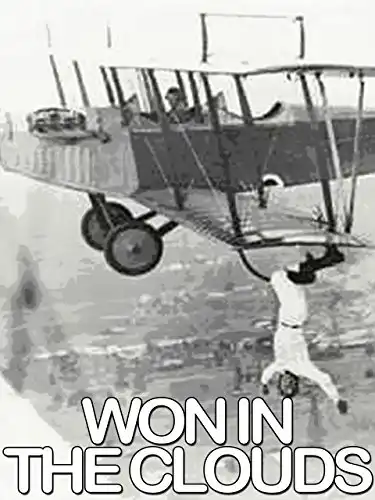
A definitive 5.4/10 rating for a film that redefined the boundaries of cult cinema. Won in the Clouds remains a cornerstone of transgressive art.
Okay, so Won in the Clouds from 1928. This one's a tough sell for most people today, honestly. If you're into early aviation films, or just really curious about what was passing for action-adventure almost a century ago, then maybe, maybe give it a look. But if you're expecting anything like modern pacing or even coherent storytelling, you're going to be bored out of your mind. It's strictly for silent film completists or those with a very specific niche interest in biplanes and early cinema curiosities. Everyone else, probably skip it.
The premise is simple enough: diamond mine, South Africa, bad guys trying to steal it, good guys trying to protect it, and a whole lot of biplanes. Myrtis Crinley plays the plucky heroine, and she does her best with what she's given, which isn't much. Her character mostly exists to be captured or to look worried. George B. French, as the lead pilot, has this perpetually earnest expression that starts to feel a little vacant after a while.
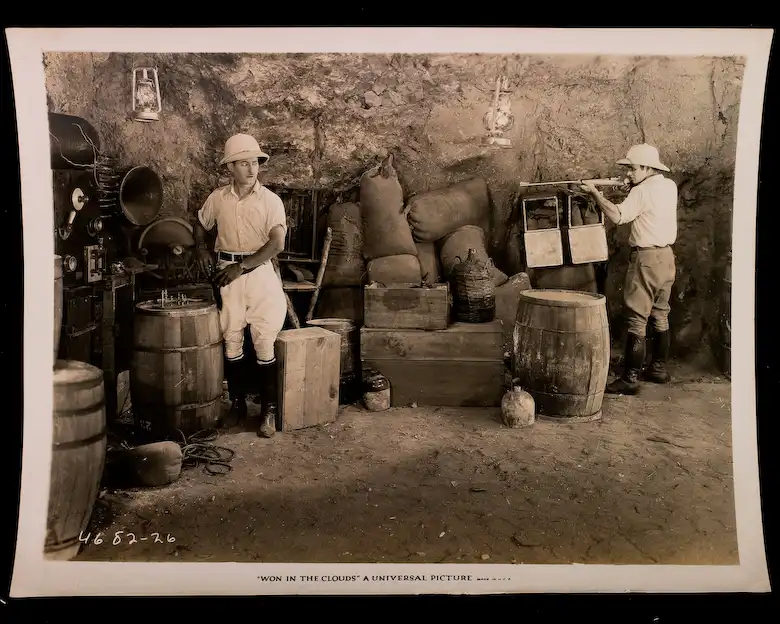
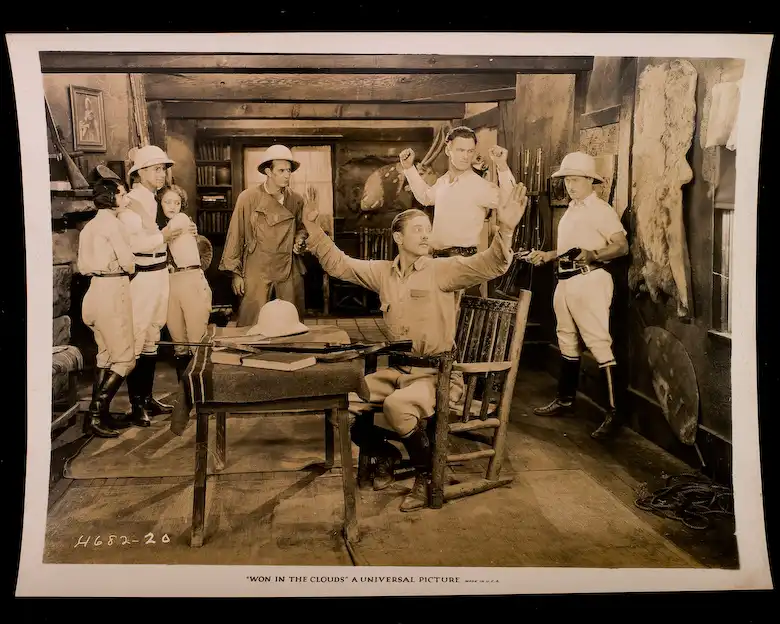
There's a scene early on where the bad guys are trying to intimidate the family, and the acting is just so broad. It’s not even "silent film broad" in a charming way; it's more like everyone forgot what emotion they were supposed to be portraying and just settled for "general menace." One of the villains, Albert Prisco, has this mustache he keeps twirling, and it feels less like a character choice and more like he just didn't know what to do with his hands.
The pacing is a real killer here. We get these long, drawn-out establishing shots of the South African landscape, which are pretty enough for the time, but they go on forever. You keep waiting for something to happen, and then it just... doesn't. Or it does, but it's another intertitle explaining something that could have been shown in two seconds.
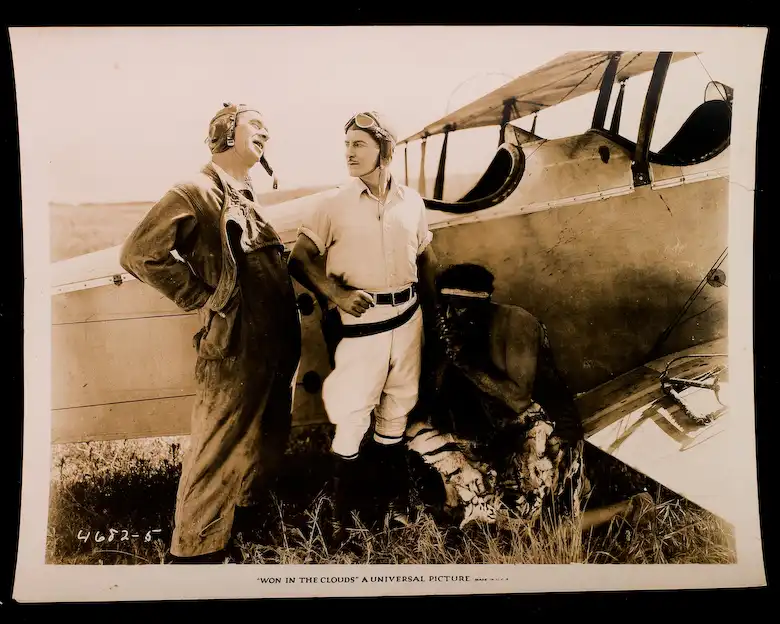
And the biplane sequences? They're the whole point, right? They're okay. For 1928, seeing real planes doing stunts is impressive, no doubt. But the way they're edited, it's often hard to tell who's chasing whom, or even what the objective is. There's a particular shot where a plane flies really close to the ground, and it's genuinely thrilling for a moment, then it cuts to a shot of someone looking vaguely concerned in a cockpit, and the energy just drains away.
The costumes are a mixed bag. Everyone's wearing these very proper safari outfits, even when they're supposedly deep in the wilderness or scrambling around a mine. Crinley's riding habit looks pristine no matter what danger she's just escaped. It pulls you out of it a bit.
There's a moment when the hero and heroine are trying to escape, and they're running through what looks like a very manicured garden, not a wild South African landscape. It's a small detail, but it just highlights how much the film struggles with its own setting.
The dialogue, conveyed through intertitles, is mostly functional. "They must not get the diamonds!" "We shall pursue them!" Nothing wrong with that, but it rarely adds any depth. Sometimes, a particularly clunky line will pop up, and you can almost hear the writers, Gardner Bradford and Otis Turner, just trying to get the plot point across.
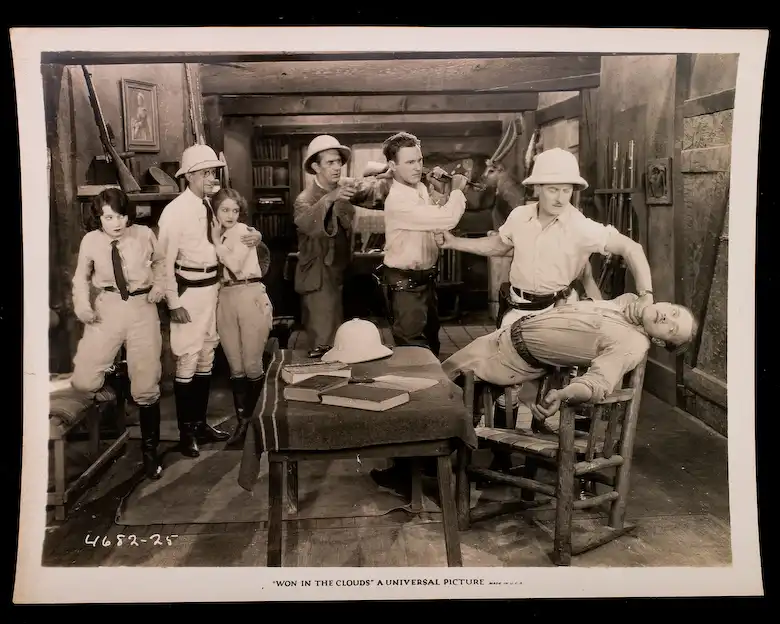
What does work, occasionally, is the sheer novelty of it. These planes, flown by people like Art Goebel, were state-of-the-art spectacle back then. You can see the ambition, even if the execution often feels clunky. There's a sequence where one of the planes lands precariously, and you can feel the genuine risk involved in filming something like that. That's where the movie briefly finds its footing.
But then it goes back to more scenes of people standing around, or another chase that feels oddly static despite the movement. The villains, especially Frank Tomick and Roy Wilson, are interchangeable. They just stand there, looking menacing, then get foiled. There's no real sense of threat or personality.
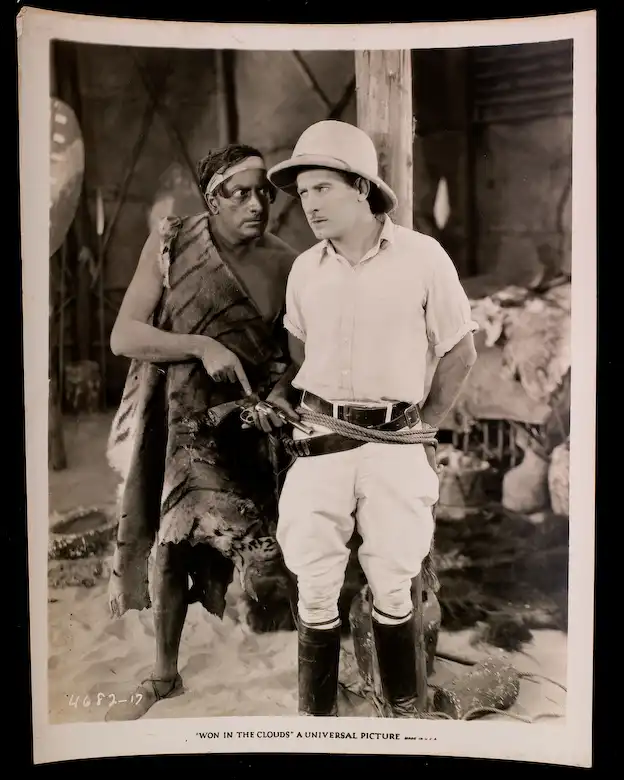
The final confrontation over the mine is supposed to be the big climax, and it involves a lot of back-and-forth flying and some very obviously miniature explosions. It’s hard to get invested. The stakes feel low because the characters are so thinly drawn. You almost want to root for the biplanes themselves more than the people in them.
Honestly, the film feels like it's trying to stretch a short idea into feature length. There are just so many moments that drag, where a reaction shot lingers too long or a scene repeats itself thematically. It’s not terrible, just... a lot of filler around a few cool aerial shots. It makes The Great Gamble feel like a tightly-wound thriller by comparison.
IMDb —
1922
Community
Log in to comment.