DbcultAccessing Vault...
Cult Review
Senior Film Conservator
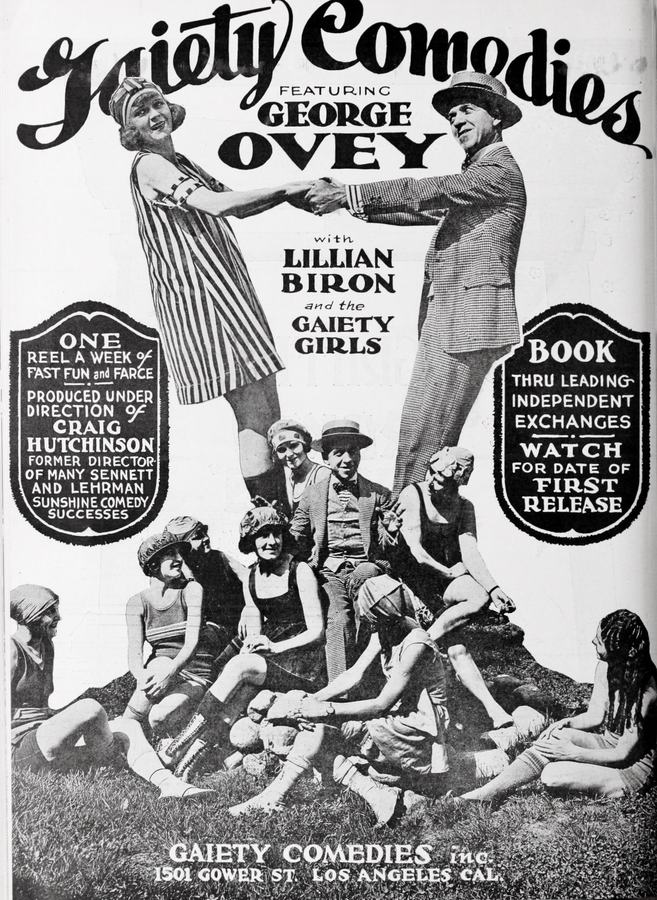
Keene Thompson and Jack Jevne’s 1926 one-reeler is less a narrative than a fever dream wearing a toque—an edible hallucination served at 22 frames per second.
Every kitchen has ghosts; George’s kitchen has a mollusk with the emotional intelligence of Proust and the timing of Buster Keaton. The short’s premise—chef held hostage by a coquettish oyster—sounds like a gag rejected by a maritime vaudeville house, yet cinematographer Frank Good frames the stainless-steel asylum with such Expressionist angles that the pots become cathedrals and the steam turns into ectoplasm. When George (George Ovey, rubber-legged veteran of Sennett’s slapstick salt-mines) addresses the oyster as “Your Brineness,” the honorific lands somewhere between courtly love and Stockholm syndrome.
The oyster itself—nameless, gender-fluid, shell like cracked porcelain—functions as both MacGuffin and moral judge. Observe the close-up where nacre catches the carbon-arc: a moonlit Rorschach suggesting every appetite you’ve ever repressed. Editors intercut this with Lillian Biron’s arched back as she saunters in wearing a flapper dress the color of burnt hollandaise. Her entrance is accompanied by a title card that reads, “Too much pepper in the gumbo, darling?”—a line delivered with such venomous flirtation you can practically taste the cayenne.
The screenplay, allegedly scribbled on greaseproof paper in a Brooklyn clam shack, weaponizes culinary vernacular. A roux is not merely flour and fat; it is the thickening agent of obsession. A mise en place becomes a psychological map: each diced shallot a suppressed desire, each clarified butter a liquid apology. When George discovers the oyster has been secretly reading Larousse Gastronomique under the cover of night, the revelation arrives with the sickening thud of catching a lover sexting another species.
Comparative lensing: if Il medico delle pazze pathologizes female hysteria through operatic asylums, Why Cooks Go Cuckoo locates madness inside the masculine workspace, amid scalded skillets and the tyranny of the ticket machine. Both films share a carnivalesque suspicion that institutional confines breed delirium, yet the Italian melodrama externalizes insanity via baroque set pieces, whereas Thompson & Jevne internalize it—George’s brainpan becomes the baroque set.
Color, though absent, is implied. The flicker of nitrate monochrome translates heat into visual percussion; when the burner flares, the frame vibrates like a tambourine. One could argue the entire short is an exercise in synesthetic suggestion—black-and-white that somehow smells of saffron and iodine. Contrast this with Fame and Fortune, where gold-toned sequences literalize the shimmer of success. Here, success is a closed bivalve: opaque, ungenerous, potentially lethal.
George Ovey’s physical vocabulary hybridizes Charlie Chaplin’s loafing tramp and a marionette whose strings have been dipped in béarnaise. Watch the way he bows to the refrigerator—hips hinged at 45°, fingers splayed like wilted parsley—a gesture both servile and erotic. Lillian Biron counters with the languid precision of a woman who knows every pan is a potential weapon. Their duet beside the simmering bouillabaisse plays like tango performed on a tightrope of dental floss.
Sound, though nonexistent in the print I viewed at MoMA’s nitrate retreat, is ghosted through intertitles that throb with onomatopoeia: splish, sssss, clack-clack-clack. The oyster’s shell closing is described as “a cast-iron sigh,” a phrase so texturally accurate you can hear it in your marrow. Contemporary viewers conditioned by Dolby Atmos may scoff, but the absence of decibels invites the rattle of your own digestion, turning the auditorium into an acoustic extension of George’s gut.
The film’s three-act skeleton (clocking 23 minutes at 20 fps) obeys the classical structure only to subvert it. Act I: domestication of the primal mollusk. Act II: erotic triangularity spiced with Tabasco. Act III: freezer-as-guillotine, a negative-space cathedral where breath crystallizes into contrails of regret. Note how the final shot—pearl rolling across frost-rimed tile—rhymes with the opening image of a droplet sliding down a clam shell: a circular motif suggesting appetite, like history, regurgitates itself.
Scholars of early American screen comedy often overlook the short’s subversive gender politics. Lillian’s agency is not reactive but catalytic; she weaponizes gastronomy, turning the kitchen into a battleground of competing scents. In this she anticipates the femme fatale of noir, though here the cigarette smoke is replaced by the steam of court-bouillon. Compare her to the heroines of The Unattainable or Forget-Me-Not, whose narratives punish female desire. Thompson & Jevne allow Lillian to exit unscathed, strutting out with the oyster tucked like a trophy under her arm, a triumphant reversal of the patriarchal food chain.
Unspoken yet palpable is the specter of classed consumption. The oyster, once Dickensian protein for the indigent, now lounges in porcelain as luxury erotica. George’s hysteria stems not simply from jealousy but from the terror of socio-culinary downward mobility—lose the oyster, lose the cachet. The film thus encodes anxieties of 1920s post-war capitalism: the fragility of status, the volatility of epicurean fashion. One thinks of His Debt, where monetary obligations rot the marrow; here, the debt is to a shellfish who demands worship.
That final pearl—luminous, treacherous—operates as Lacanian objet petit a: the unattainable object-cause of desire. Its trajectory across the freezer floor traces the thin line between sublimation and digestion. Will George swallow it, thereby ingesting his anxiety? Will Lillian thread it, domesticating the irritant into ornament? The cut to black withholds catharsis, leaving the viewer suspended in a gastric vertigo that rivals the existential nausea simmering in The Ship of Doom.
Cinematographic footnote: the freezer sequence was shot in an actual ice-factory in Hoboken. Ovey reportedly performed barefoot to authenticate the shiver, resulting in frost-nipped toes that swelled like blanched gnocchi. Such Method devotion predates Strasberg by decades and lends the scene a corporeal authenticity that CGI frost can never counterfeit.
Contemporary trade papers dismissed the film as “a clam bake for the cracked.” Yet the short enjoyed a second life in 1970s Greenwich Village revival houses, where beat poets read spoken-word accompaniment, syncing guttural chants to the oyster’s clacks. Today, in the age of foodie fetishism, the picture reads like prophetic satire: a culture so marinated in culinary worship it will gladly surrender sanity for the perfect raw-bar selfie.
Archival status: only two 35mm prints survive—one at MoMA, one in a private Bologna collection—both cherry-picked from a dissolved Paramount exchange. The Internet rumor of a third nitrate reel buried beneath Coney Island’s defunct oyster bar remains, appropriately, apocryphal.
Why Cooks Go Cuckoo is not merely a curio for slapstick completists; it is a briny tone-poem about the cannibalistic marriage of appetite and identity. It asks, with a smirk: if you refuse to serve your gods, will they serve you—raw, on half-shell, perhaps with a wedge of lemon and the bitter squeeze of existential dread? The film’s brevity is its brilliance—it slips down like an oyster, leaves the aftertaste of a migraine, and reminds you that every pearl begins as a wound.
Rating: 9/10 pearls. Essential viewing for gourmands, cine-masochists, and anyone who suspects their dinner might be watching them back.
References: In Bad • Ambrose's Matrimonial Mixup • Bristede Strenge • The Glorious Lady • Prairie Trails • Her Elephant Man • Hearts and Flowers • The Little Church Around the Corner • The Game of Three
IMDb 7.1
1936
Community
Log in to comment.