DbcultAccessing Vault...
Cult Review
Senior Film Conservator
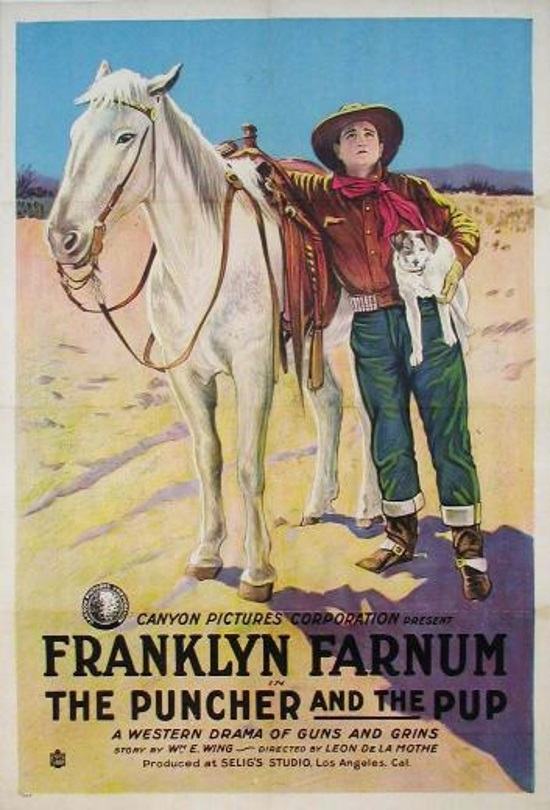
In the annals of early cinema, particularly within the nascent, yet burgeoning, Western genre, certain films emerge not merely as historical artifacts but as vibrant testaments to storytelling ingenuity. "The Puncher and the Pup" stands as one such luminous example, a cinematic vignette that deftly weaves together elements of spirited comedy, steadfast loyalty, and an archetypal clash of cultures against the sweeping backdrop of the American West. It’s a film that, despite its silent era origins, speaks volumes through its nuanced performances, evocative staging, and a narrative rhythm that pulses with an undeniable charm. To merely categorize it as a 'cowboy film' would be to overlook the sophisticated undercurrents that animate its seemingly straightforward premise.
The narrative commences with an almost idyllic portrayal of the Circle Dot Ranch, a sanctuary of rugged masculinity and untamed spirit, where the cowboys, a veritable brotherhood bound by shared labor and an unwritten code of honor, operate with a jovial camaraderie. Their days, though arduous, are punctuated by a lightheartedness that speaks to a profound contentment with their lives on the range. This equilibrium, however, is destined for a delightful disruption with the much-anticipated return of Mabel, the rancher's daughter, portrayed with captivating grace by Edith Storey. Storey's portrayal imbues Mabel with a delicate balance of urban refinement and an innate connection to her frontier roots, making her a figure of both admiration and protective affection for the ranch hands. Her presence instantly injects a new dynamic into the all-male dominion, transforming the ranch from a mere workplace into a home imbued with familial warmth and a touch of feminine allure.
Yet, Mabel's homecoming is not an isolated event. Like an unwelcome shadow, she is trailed by an ostentatious suitor, a man whose urban affectations and supercilious demeanor immediately mark him as an outsider. This character, a thinly veiled caricature of metropolitan arrogance, represents everything the frontier cowboys are not: entitled, presumptuous, and utterly devoid of the genuine grit and humility that defines their existence. His unwanted attentions towards Mabel serve as the primary catalyst for the film's unfolding drama, setting the stage for a classic confrontation between two disparate worlds. This narrative device, while seemingly simple, allows the film to explore deeper themes of cultural clash, the inherent chivalry of the Western hero, and the collective defense of communal values against external imposition. It's a trope that resonates even today, echoing the timeless struggle between authenticity and pretense.
The strength of "The Puncher and the Pup" lies not just in its engaging plot but in the vibrant performances of its ensemble cast. Francis Ford, a towering figure of early cinema, not only directs but also delivers a performance that anchors the film with a robust authenticity. His presence, whether as the titular 'Puncher' (a role often embodying the quintessential strong, silent type) or a key figure among the ranch hands, conveys a gravitas mixed with a surprising lightness of touch, crucial for the film's comedic leanings. He understands the nuances of the Western archetype, playing it with a subtle wit that elevates the character beyond mere caricature.
Edith Storey, as Mabel, is luminous. Her ability to convey emotion through gesture and expression, a hallmark of silent film acting, is particularly noteworthy. She isn't just a damsel in distress; she is an intelligent, spirited young woman whose discomfort with the snobby suitor is palpable, yet she maintains a quiet dignity. Her interactions with the cowboys, particularly the 'Puncher,' hint at a deeper understanding and appreciation for their way of life, contrasting sharply with the superficiality of her unwelcome admirer.
The supporting cast, featuring stalwarts like Bud Osborne, William Clifford, Franklyn Farnum, Buck Jones, and Vester Pegg, are instrumental in establishing the film's authentic frontier atmosphere. Each actor, even in brief appearances, contributes to the overall tapestry of the Circle Dot Ranch, portraying distinct personalities that collectively form the heart of the community. Buck Jones, in particular, even in his earlier roles, often brought a compelling screen presence that would later define his career as a Western star. Their collective portrayal of the 'happy-go-lucky cowboys' is never simplistic; rather, it's a nuanced depiction of men who, despite their rough exteriors, possess a strong moral compass and a deep-seated loyalty to one another and to those they care for. This ensemble work is crucial, as it builds the credible foundation upon which the film's comedic resolution is built.
The 'Pup' in the title, often a literal canine companion in early Westerns, here serves as both a charming narrative device and a symbol of the untamed, yet loyal, spirit of the West. If a literal dog, its antics provide moments of genuine levity and often play a pivotal role in the unfolding 'plan.' If interpreted metaphorically as a younger, less experienced cowboy, it speaks to the mentorship and communal spirit prevalent on the ranch. Either way, the 'Pup' embodies an innocence and an uncorrupted nature that contrasts sharply with the snobby visitor's calculating demeanor. The film's brilliance truly shines in the execution of the cowboys' 'plan' for this unwelcome guest.
Instead of resorting to overt violence, a common, albeit often justified, trope in the genre, the cowboys devise a scheme rooted in frontier ingenuity and a healthy dose of practical humor. This isn't the grim, high-stakes gambling of "The Gamblers" nor the stark terror of a film like "Friday the 13th" (though anachronistic for comparison, it highlights the tonal difference). Rather, it's a more subtle, yet equally effective, form of frontier justice, tailored to the specific sensibilities of their environment. The plan likely involves some form of 'tenderfoot' initiation, exposing the suitor's lack of practical skills and courage in the face of genuine Western challenges. This comedic comeuppance serves not just as entertainment but as a powerful reaffirmation of the values held dear by the ranch community: resourcefulness, humility, and an earned respect for the land and its demands. It's a delightful subversion of the typical Western showdown, opting for wit over weaponry.
Francis Ford's directorial hand in "The Puncher and the Pup" is remarkably assured for the era. He demonstrates a keen understanding of comedic timing, utilizing both physical gags and character-driven humor to great effect. The pacing of the film, a critical element in silent cinema, is expertly managed, allowing moments of quiet character development to breathe alongside the more boisterous comedic sequences. Ford's use of the expansive Western landscape is also commendable; while perhaps not as dramatically sweeping as later, more technically advanced Westerns, he effectively conveys the sense of isolation and self-reliance inherent to the frontier experience. The ranch itself becomes a character, a bastion of traditional values resisting the encroachment of urban pretension.
Thematic exploration in the film goes beyond simple good-versus-evil. It delves into the dynamics of community and the unspoken rules that govern social interaction in a specific cultural context. The cowboys' actions, while playful, are ultimately a defense of their way of life and a protective gesture towards Mabel. This contrasts with films that might explore more rigid societal hierarchies, like "Madame la Presidente" or "Sixty Years a Queen", where social standing is paramount. Here, it is character and conduct that truly matter. The film implicitly argues that true worth is found not in one's tailored suits or urban affectations, but in one's honesty, courage, and ability to contribute meaningfully to a community. This message, delivered with a light touch, makes the film resonate beyond its immediate comedic impact.
For a film of its vintage, the cinematography of "The Puncher and the Pup" is remarkably effective. While the elaborate tracking shots and intricate camera movements of later eras were yet to be fully developed, the film utilizes its static shots and carefully composed frames to convey a wealth of information. The wide shots of the ranch and the surrounding landscape establish a sense of place, while medium shots and occasional close-ups allow the audience to connect with the characters' emotions and reactions. The visual gags are often enhanced by precise framing, ensuring that the audience grasps the comedic intent without the need for dialogue. This mastery of visual storytelling is a testament to the skills of early filmmakers who had to convey complex narratives purely through images and intertitles.
The editing, too, plays a crucial role in shaping the film's rhythm and comedic timing. Cuts are often used to punctuate jokes, highlight reactions, or accelerate the pace during moments of action or suspense. The transitions between scenes are generally smooth, guiding the viewer through the narrative with clarity. Compared to the often raw and experimental editing of even earlier films, "The Puncher and the Pup" demonstrates a growing sophistication in cinematic language. It's a far cry from the abstract narratives of films like "V ognyakh shantazha", instead embracing a clear, accessible storytelling style that was crucial for popularizing the Western genre.
"The Puncher and the Pup" might not possess the dramatic gravitas of a "The Crimson Dove" or the intricate emotional tapestry of "Eve's Daughter", but its significance lies in its contribution to the burgeoning Western genre and its delightful blend of humor and heart. It's a film that, even a century later, retains a certain freshness, a testament to the timeless appeal of its narrative and the universal themes it explores. It offers a fascinating glimpse into the early days of Hollywood, showcasing how filmmakers like Francis Ford were already experimenting with genre conventions, character development, and comedic timing.
For enthusiasts of silent cinema and Westerns alike, this film is more than just an archival curiosity. It’s a vibrant piece of cinematic history that illustrates the foundational elements that would define the genre for decades to come. The performances by Edith Storey and Francis Ford, in particular, are compelling, demonstrating the power of nuanced acting even without spoken dialogue. It's a reminder that truly effective storytelling transcends technological limitations, relying instead on compelling characters, engaging plots, and a clear vision. Much like the simple, yet profound, endurance shown in "The Marathon", the film's narrative endures through its intrinsic charm and well-crafted execution.
Ultimately, "The Puncher and the Pup" is a delightful journey back to a simpler, yet profoundly engaging, era of filmmaking. It’s a testament to the enduring appeal of the Western mythos, infused with a refreshing comedic sensibility that makes it a joy to behold. It reminds us that even in the absence of sound and color, the power of human expression, coupled with a well-told story, can create a cinematic experience that resonates deeply and leaves a lasting impression. This film, with its unassuming title, delivers a punch of wit and a wag of charm that firmly establishes its place as a minor, yet memorable, gem in the vast landscape of early American cinema.
IMDb 6.5
1935
Community
Log in to comment.