DbcultAccessing Vault...
Cult Review
Senior Film Conservator
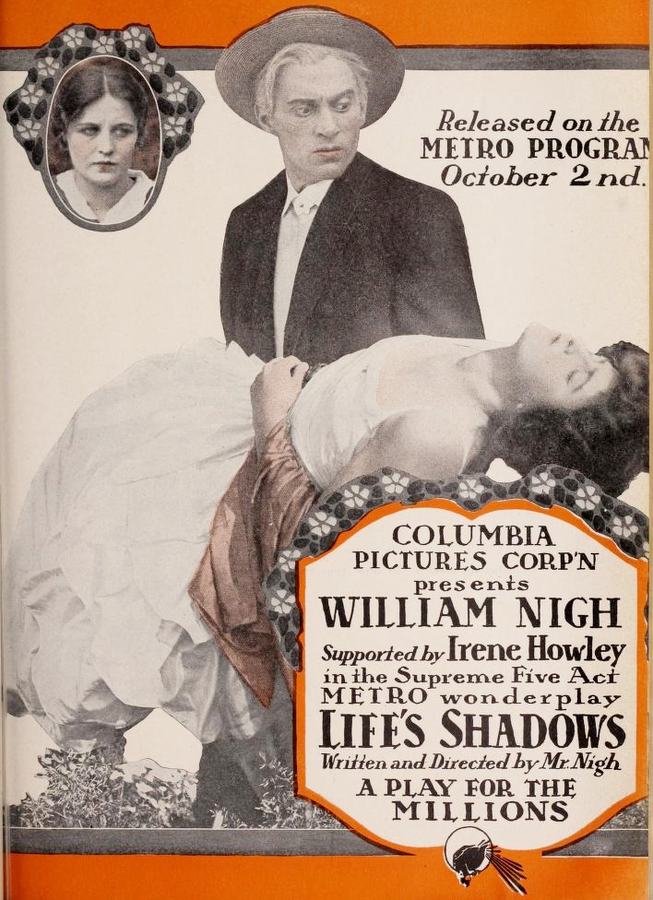
In the nascent years of the cinematic medium, few films dared to peel back the veneer of small-town American exceptionalism with the surgical precision found in Life's Shadows (1916). Directed and written by the prolific William Nigh, this silent-era relic is far more than a moralistic fable; it is a sophisticated exploration of the cognitive dissonance inherent in organized society. The town of Purity, the film’s setting, serves as a microcosm for a burgeoning nation struggling to reconcile its puritanical roots with the encroaching complexities of the modern world. Unlike the grand spectacles of later eras, such as the visual maximalism of Avatar, Nigh’s work relies on the intimate, often claustrophobic interplay of character and environment.
The protagonist, Martin Bradley, played with a haunting vulnerability by William Yearance, is a figure of profound contradiction. He is the town drunk, a man whose very existence is an affront to the sober sensibilities of Purity’s elite. Yet, Bradley possesses a clarity of vision that his detractors lack. While the townspeople are preoccupied with the performance of virtue, Bradley is engaged in the practice of it. His support of two ostracized women—social pariahs whose crimes are never fully articulated but whose exclusion is absolute—mirrors the thematic concerns of gender and forgiveness found in Should a Wife Forgive?. However, where other films might offer a sentimental reconciliation, Life's Shadows remains steadfast in its cynicism regarding the mob’s capacity for growth.
Nigh’s direction utilizes the limited technology of 1916 to create a visual landscape defined by shadow and light—a literal manifestation of the film's title. The cinematography, though primitive by contemporary standards, achieves a level of psychological depth that rivals the expressionistic tendencies of The Avenging Conscience: or 'Thou Shalt Not Kill'. The framing of Bradley often places him in the lower third of the screen or obscured by foreground elements, emphasizing his status as an interloper in his own home. In contrast, the town’s leaders are captured in high-angle shots, projecting an authority that the narrative slowly reveals to be hollow.
This visual dichotomy is particularly effective during the political sequences. The mayoral race between James Durkel and Chester Thorndyke is not merely a subplot; it is the catalyst for the film’s moral climax. James Durkel represents the shadow—the corruption that hides behind a polished exterior. His dirty tricks and manipulation of the electorate are reminiscent of the gritty power struggles in The Spoilers. Bradley’s role as the whistleblower is a subversion of the "drunkard" trope; he is the only one sober enough to recognize the rot at the heart of the democratic process.
The treatment of the two women in the film provides a searing critique of the era’s gender politics. In 1916, social standing for women was a fragile glass structure, easily shattered by the slightest whisper of impropriety. We see echoes of this fragility in The Country Mouse and The Spendthrift, but Life's Shadows removes the comedic or melodramatic cushions. These women are not rescued by a dashing hero; they are sustained by a man who is himself a victim of the same judgmental machinery. This alliance of the discarded creates a poignant subculture within Purity, a hidden world of empathy that stands in stark contrast to the cold, public square.
The performance by Irene Howley and Grace Stevens deserves mention. In an era where acting often veered into the hyperbolic, their restrained portrayals of quiet desperation add a layer of realism that grounds the film's more theatrical elements. They represent the "shadows" of the title—lives lived in the margins, ignored by the history books but essential to the emotional core of the human experience.
The election of Chester Thorndyke is the film’s most bitter victory. Thorndyke, while ostensibly a man of better character than Durkel, is ultimately a creature of the system. The voters’ insistence that he disavow Bradley is a masterful stroke of writing by Nigh. It highlights the transactional nature of public morality. The people of Purity want the benefits of Bradley’s truth, but they refuse to pay the social cost of acknowledging the messenger. They want a clean house, but they despise the janitor who swept it.
This theme of the unappreciated savior is a recurring motif in early cinema, often explored with more mystical overtones in films like Enhver or A Modern Mephisto. In Life's Shadows, however, the conflict is grounded in the mundane reality of municipal politics. There are no supernatural forces at play, only the crushing weight of peer pressure and the preservation of status. The film suggests that the greatest threat to a community is not the drunkard in the gutter, but the "respectable" citizen who will sacrifice an innocent man to maintain their social standing.
William Nigh’s dual role as writer and director allows for a cohesive vision that is rare for the period. The pacing is deliberate, allowing the atmosphere of Purity to settle over the audience like a heavy fog. While some contemporary viewers might find the tempo slower than the action-packed sequences of The Sky Hunters or the rugged intensity of The Primal Lure, the slow burn is essential to the film’s impact. It forces the viewer to sit with the discomfort of the town’s hypocrisy, to feel the isolation that Bradley feels.
The use of intertitles in Life's Shadows is also noteworthy. Rather than merely advancing the plot, the text often provides a philosophical commentary on the action, echoing the moral weight found in Danish silents like Dødsklokken or the social critiques of Den kulørte slavehandler. Nigh understands that in a silent film, the words on the screen must carry the weight of the unspoken, and he uses them to sharpen the film’s satirical edge.
As we look back at Life's Shadows from a century’s distance, its relevance has not diminished. The mechanisms of cancel culture and social shaming that dominate contemporary discourse are merely modern iterations of the dynamics present in Purity. The film serves as a mirror, reflecting the perennial human desire to find someone to look down upon so that we might feel taller. It challenges the viewer to identify with Bradley, the outcast, rather than the "pure" citizens who ultimately control the narrative.
In comparison to other films of its time, such as the whimsical Feathertop or the more traditional heroics of The Lifeguardsman, Life's Shadows stands out for its refusal to provide a comfortable resolution. There is no triumphant parade for Bradley. There is no public apology. The film ends on a note of somber reality: the truth has been told, the right man is in office, but the hero remains in the shadows. It is a sophisticated, deeply humanistic work that deserves its place in the pantheon of early American cinema.
The ensemble cast, including Harry Linson and Roy Clair, provides a solid foundation for Yearance’s central performance. Each character, no matter how small their screen time, contributes to the sense of a living, breathing, and ultimately flawed community. Even the minor roles, such as those played by David Thompson or Harry Blakemore, are imbued with a sense of history and place. This is not a film of caricatures, but of people—frightened, prideful, and occasionally capable of greatness.
Ultimately, Life's Shadows is a testament to the power of cinema to act as a social conscience. It does not shy away from the ugliness of human nature, but it also finds beauty in the most unlikely places—in a bottle of cheap whiskey shared between outcasts, in the courage to speak truth to power, and in the quiet dignity of a man who knows his worth even when the world refuses to see it. It is a haunting, essential viewing experience that reminds us that the brightest lights always cast the deepest shadows.
For those interested in the evolution of the social drama, comparing this film to The Sundowner offers a fascinating look at how early filmmakers tackled the theme of the wandering soul in search of redemption.
IMDb 6
1920
Community
Log in to comment.