DbcultAccessing Vault...
5.5/10
Senior Film Conservator
A definitive 5.5/10 rating for a film that redefined the boundaries of cult cinema. The Missing Link remains a cornerstone of transgressive art.
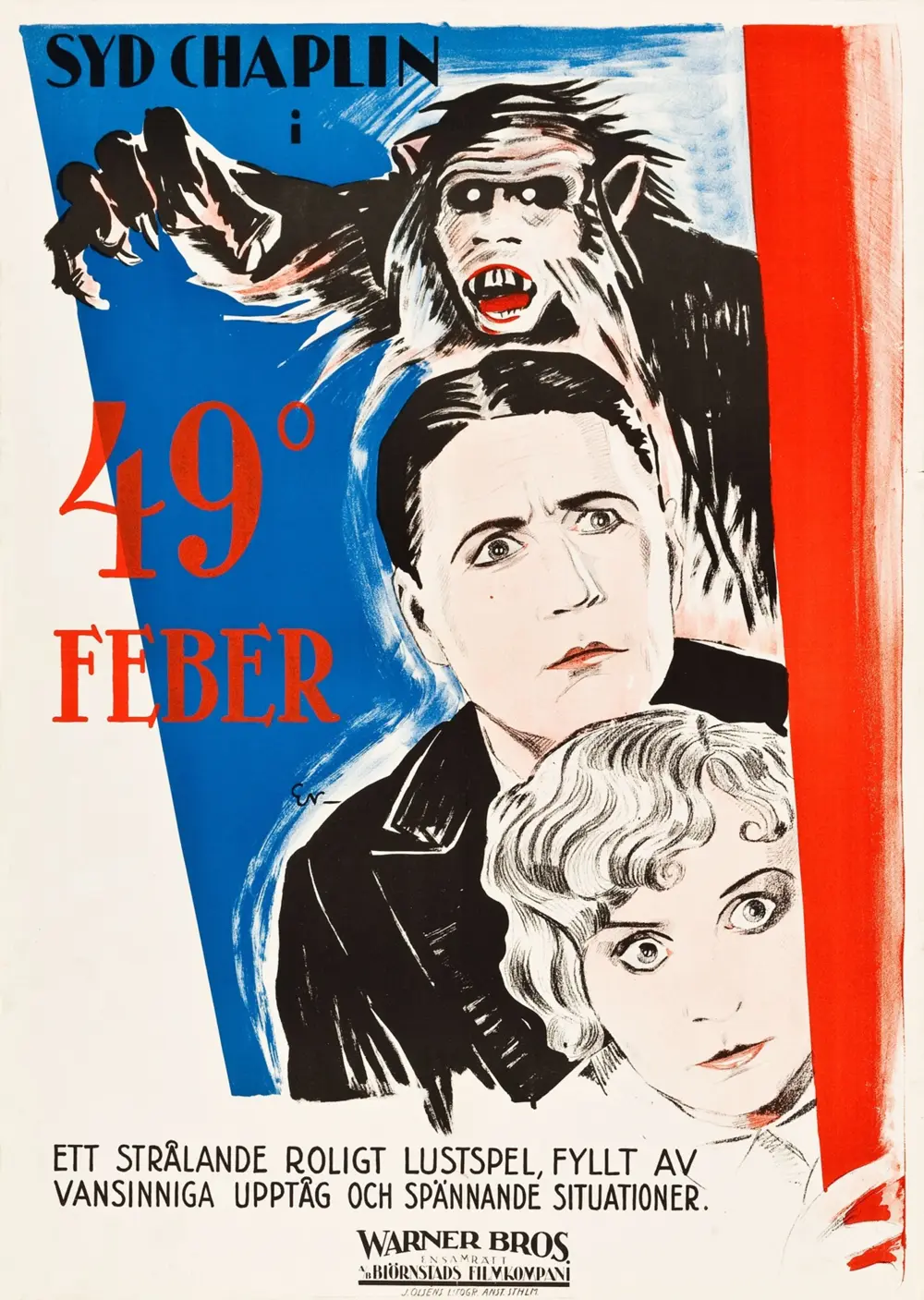
Is Syd Chaplin's 1927 silent comedy, The Missing Link, a cinematic treasure worth unearthing in the modern age? Short answer: yes, but with significant caveats that demand a particular kind of viewer. This film is a fascinating relic for silent film aficionados, comedy historians, and anyone curious about the comedic stylings of Charlie Chaplin’s lesser-known, yet equally talented, elder brother. It is decidedly NOT for those seeking a fast-paced, tightly plotted narrative or a politically correct portrayal of exotic locales and creatures.
It functions more as a historical curiosity, a snapshot of early Hollywood’s adventurous spirit and its nascent comedic formulas. While its humor can feel dated, and its narrative occasionally meanders, there’s an undeniable charm in Syd Chaplin’s physical comedy and the sheer audacity of its premise. It works. But it’s flawed.
Let's cut directly to the chase. For a film nearly a century old, the question of its contemporary relevance is paramount.
This film works because of Syd Chaplin’s undeniable screen presence and his commitment to physical comedy, even when the gags themselves are simplistic. His discomfort with animals, central to the plot, is genuinely conveyed through exaggerated facial expressions and frantic movements, often eliciting a chuckle despite the passage of time. The sheer ambition of filming with real animals in 1927 also lends it a raw, unpolished energy that modern CGI-laden productions often lack.
This film fails because its pacing is inconsistent, and its narrative structure feels more like a series of loosely connected vignettes than a cohesive story arc. The humor, while occasionally effective, relies heavily on slapstick and repetitive gags involving animals, which can grow tiresome. Furthermore, the portrayal of the 'missing link' concept and the 'native' characters, while typical for its era, is undeniably problematic and cringe-inducing by today's standards, making it a difficult watch for some.
You should watch it if you are a devoted fan of silent cinema, a student of early comedic forms, or someone with a deep interest in the Chaplin family's legacy beyond Charlie. It offers a unique window into the production challenges and popular entertainment of the late 1920s. However, if you are looking for a universally enjoyable, timeless comedy, you might find yourself more frustrated than entertained.
At its heart, The Missing Link is a fish-out-of-water story, a classic comedic setup that still resonates today. Arthur Wells, played by Syd Chaplin, is introduced as an impoverished poet, a man of refined sensibilities and delicate constitution. His aversion to animals, both domesticated and wild, is established early and often, becoming the wellspring of most of the film's comedic scenarios.
The plot, thin as it is, hinges on Wells's desperate attempt to secure a fortune by impersonating a renowned big-game hunter. His mission: to journey into the heart of the jungle and bring back proof of the 'missing link.' This premise, while ludicrous, taps into a particular cultural fascination of the era—the ongoing debates and public imagination surrounding evolution and unexplored territories.
Syd Chaplin, while often overshadowed by his younger brother, demonstrates a distinct comedic style. He is less graceful than Charlie, more overtly clumsy, and his expressions are broader, almost vaudevillian. In one memorable sequence, Wells attempts to appear brave while a small monkey mischievously tugs at his hat, his face contorting in a mixture of terror and forced composure. This scene perfectly encapsulates his character’s internal conflict and Chaplin’s ability to convey it without dialogue.
However, his performance, while earnest, sometimes struggles against the film's episodic nature. There are moments where the energy dips, and Chaplin seems to be waiting for the next gag to propel him forward, rather than driving the narrative through his character's journey. This is a common pitfall of silent comedies that prioritize individual gags over character development.
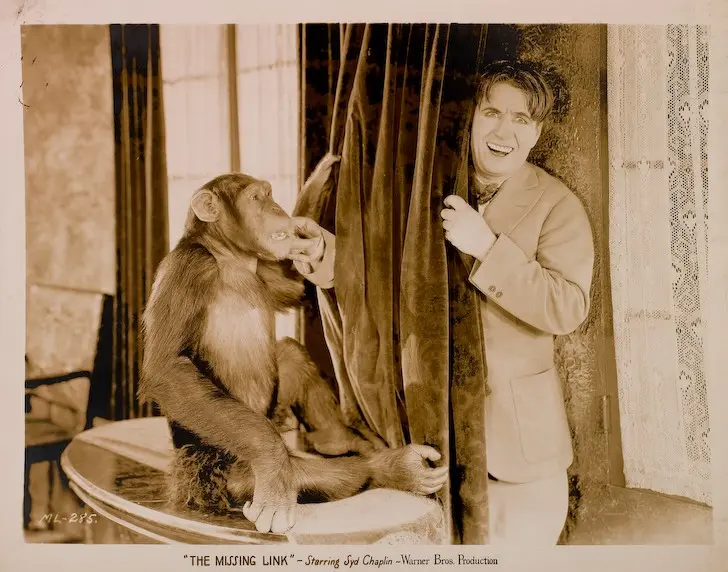
Directed by Charles Reisner and written by Reisner and a young Darryl F. Zanuck, The Missing Link showcases a certain level of ambition for its time. The decision to film on location, or at least with extensive use of real animals and elaborate sets designed to mimic jungle environments, is commendable. The film doesn't shy away from close-ups of various creatures, from chimpanzees to lions, which must have been a logistical nightmare for the production crew.
Cinematically, the film adheres to the conventions of late silent cinema. The camera work is functional, primarily focusing on capturing the action and the comedians' movements. There are few flourishes or innovative shots that elevate it beyond standard fare. Establishing shots of the 'jungle' are often grand, attempting to convey scale, but the studio-bound nature of many scenes is evident, breaking the illusion of a truly wild expedition.
One particular scene involving a lion escaping its cage in what appears to be a domestic setting stands out. The frantic chaos, the quick cuts between the terrified characters, and the genuine menace of the animal create a palpable tension that momentarily transcends the film's comedic aspirations. It's a testament to the raw power of animal performers, though one can't help but wonder about the safety protocols of the era.
The film's most striking aspect is arguably its willingness to engage with real animals, a choice that simultaneously elevates its realism in certain moments and exposes its comedic limitations in others. This daring approach is both its greatest strength and its most significant liability.
The pacing of The Missing Link is uneven. The initial setup of Arthur Wells's predicament and his reluctant transformation into a hunter is handled with a decent tempo. However, once the 'expedition' begins, the film often settles into a rhythm of one animal-related mishap after another. While some of these gags land—such as Wells's desperate attempts to avoid Akka the Chimp, who proves to be a surprisingly engaging animal actor—others feel protracted and predictable.
The tone is overtly farcical, leaning heavily into slapstick and physical comedy. There's little subtlety here, which is not inherently a flaw for a silent comedy, but it does mean that modern audiences might find the humor broad to the point of exhaustion. The film never attempts to imbue its protagonist with any real depth beyond his animal phobia, making his journey less emotionally resonant and more a vehicle for gags.
A significant challenge for contemporary viewers lies in the dated nature of the humor and certain cultural representations. The concept of the 'missing link' itself, as presented, feels like a relic of pseudo-scientific sensationalism. More troublingly, the portrayal of indigenous people, even if brief and stereotypical, reflects unfortunate colonial attitudes prevalent at the time. This is not to condemn the film outright but to acknowledge that its historical context is inseparable from its viewing experience today. For a more nuanced and enduring silent comedy dealing with societal issues, one might look to films like J'accuse!, though their tones are vastly different.
Absolutely, but with specific expectations. It’s a valuable piece for understanding the landscape of 1920s cinema, particularly the comedic efforts outside of Charlie Chaplin’s immediate orbit. Syd Chaplin’s performance, while not consistently brilliant, offers enough moments of genuine comedic flair to justify a viewing for those interested in film history.
However, if your primary goal is pure entertainment without historical context, you might find it a challenging watch. Its humor has not aged universally well, and its narrative can drag. Think of it less as a timeless classic and more as a significant artifact.
The Missing Link is a curious beast, much like its titular subject. It's a film that demands patience and a particular appreciation for the historical context of silent cinema. Syd Chaplin delivers a committed performance, showcasing a comedic talent that deserved more widespread recognition, even if the material doesn't always serve him perfectly. The ambition of its production, particularly the integration of live animals, is genuinely impressive for its time, offering glimpses of early filmmaking ingenuity.
However, its uneven pacing, reliance on repetitive gags, and problematic cultural elements prevent it from being a universally recommendable classic. It’s a fascinating watch for those who enjoy digging into the lesser-known corners of cinematic history, a solid B-side to the more famous A-sides of the silent era. It’s a testament to the fact that even films that don't quite hit the mark can still offer valuable lessons and moments of unexpected delight. Just don't expect a seamless, laugh-a-minute experience; approach it as an archaeological expedition into film's past, and you might just find some treasure.

IMDb —
1926
Community
Log in to comment.