DbcultAccessing Vault...
Cult Review
Senior Film Conservator
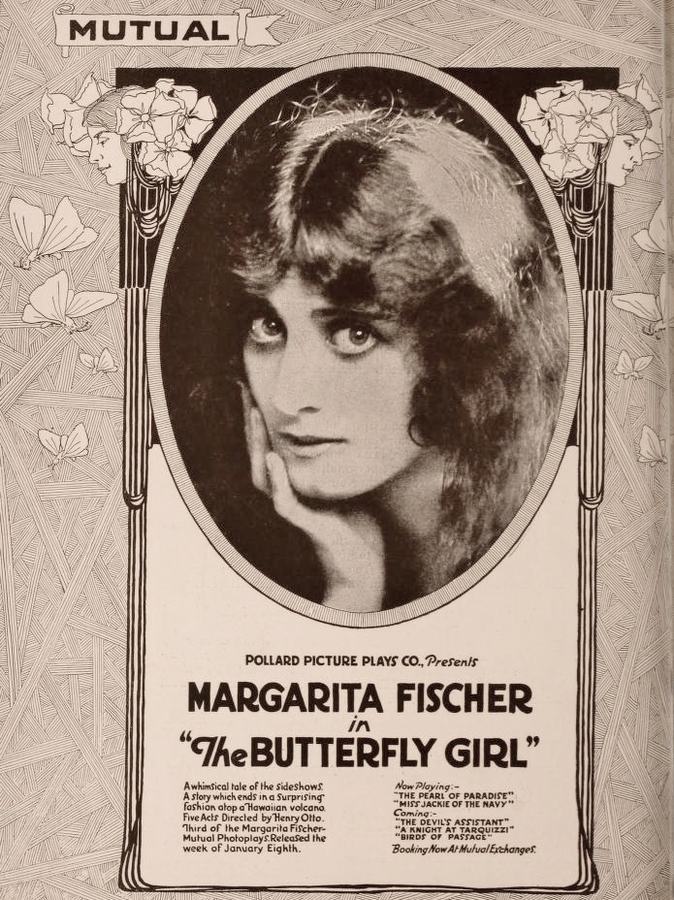
Silent cinema, often dismissed by casual observers as a quaint precursor to modern film, frequently plumbed the depths of human emotion and societal injustice with a starkness that can still resonate profoundly today. Among the myriad forgotten treasures of that era, The Butterfly Girl, released in 1917, emerges as a particularly poignant example, a narrative steeped in the exploitation of innocence and the resilience of the human spirit. This film, starring the luminous Margarita Fischer, transports us to a world where spectacle and cruelty intertwine, set against the vibrant, yet ultimately indifferent, backdrop of the Panama-Pacific International Exposition. It’s a narrative that, despite its century-old vintage, speaks to timeless concerns about vulnerability, the corrupting influence of greed, and the power of performance to both conceal and reveal profound truths.
The premise, deceptively simple, unfurls into a complex examination of familial abuse and the objectification of a child. Our story begins with a tragedy: the untimely death of a mother, leaving two young sisters adrift in a world suddenly devoid of their primary anchor. This initial loss immediately establishes a tone of vulnerability that permeates the entire film. The girls are subsequently entrusted to the care of their aunt and uncle, a decision that quickly proves catastrophic. These supposed guardians, far from offering solace or protection, embody a chilling blend of avarice and callousness. Their intentions are laid bare almost immediately; the children are not welcomed into a loving home, but rather absorbed into a cynical enterprise. This stark contrast between expectation and reality sets the stage for the film's central conflict, highlighting the precarious position of children in a society where their welfare could easily be subsumed by adult self-interest.
The aunt and uncle are not just neglectful; they are actively malevolent, viewing their nieces not as family, but as commodities to be leveraged for financial gain. Their business, a theatrical act at the grand Panama Exposition, provides the perfect, albeit sinister, stage for their exploitation. The elder sister, whose name, regrettably, is often lost to the sands of time in synopsis, becomes the focal point of their scheme. She is transformed, quite literally, into the titular 'human butterfly.' This transformation is not one of fantasy or enchantment, but of forced labor and dehumanization. Dressed in elaborate, winged costumes, she is compelled to perform, to embody a creature of delicate beauty, while her inner world is undoubtedly one of profound distress and entrapment. The irony is palpable: a symbol of freedom and ephemeral grace is reduced to a spectacle of involuntary servitude. This central image is powerful, encapsulating the film's thematic core in a single, striking visual.
At the heart of this poignant drama is Margarita Fischer, whose performance as the tormented protagonist is nothing short of captivating. Fischer, a prominent star of the silent era, possessed a unique ability to convey a vast spectrum of emotion through subtle gestures, expressive eyes, and nuanced body language. In The Butterfly Girl, her portrayal transcends mere acting; it becomes an embodiment of silent suffering and burgeoning defiance. She navigates the character's journey from a grieving orphan to a public spectacle with a delicate balance of fragility and an underlying strength that hints at eventual liberation. Her silent pleas, her desperate glances, and the forced smiles she adopts for her audience speak volumes, perhaps more eloquently than any spoken dialogue could. Fischer’s performance anchors the film, making the character’s plight deeply felt and her eventual triumph, however it manifests, all the more earned. The supporting cast, including J. Gordon Russell as the nefarious uncle and Della Pringle as the equally cruel aunt, effectively create the oppressive atmosphere from which Fischer's character must escape. John Steppling, Jack Mower, and Marie Kiernan round out the ensemble, each contributing to the tapestry of characters that populate this vivid, if often grim, world. The uncredited nature of the film's writers, a common practice in early cinema, underscores the collaborative and often improvisational nature of storytelling during this period, where the vision of the director and the magnetism of the star often shaped the narrative as much as any script.
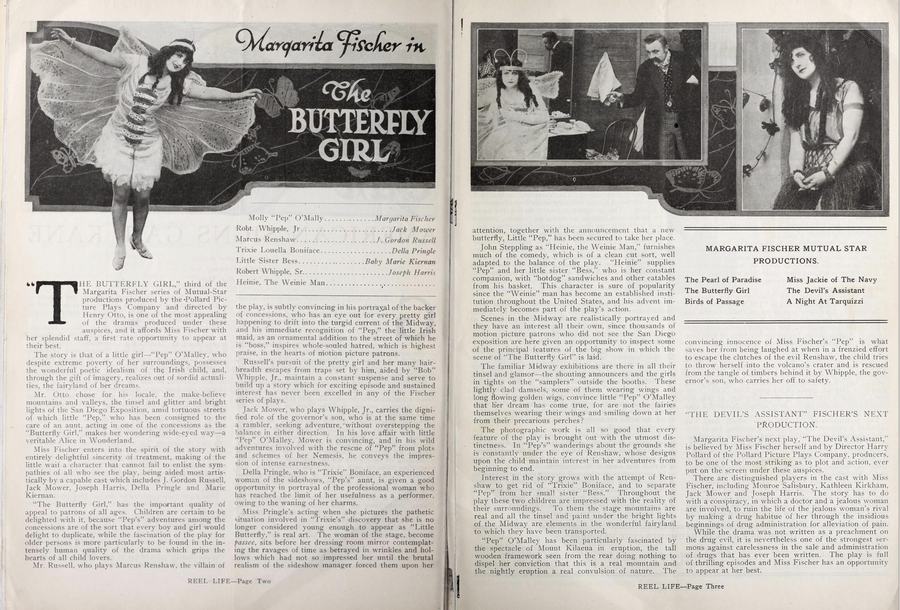
The choice of the Panama-Pacific International Exposition as the setting is a stroke of narrative genius. World's Fairs of this period were grand showcases of human achievement, technological marvels, and cultural exchange, bustling with crowds seeking wonder and entertainment. Yet, beneath this veneer of progress and excitement, The Butterfly Girl exposes a darker undercurrent: the potential for exploitation within the very mechanisms designed for public amusement. The exposition, with its dazzling lights and exotic attractions, becomes a gilded cage for our young protagonist. The contrast between the festive atmosphere enjoyed by the fairgoers and the hidden misery of the 'human butterfly' amplifies the film's critique of societal blindness to suffering, especially when it is packaged as entertainment. The vibrant crowds, oblivious to the true nature of the performance, become unwitting accomplices in the children's exploitation. This setting allows the film to explore themes of illusion versus reality, and the often-facile acceptance of spectacle without questioning its human cost.
The visual storytelling of silent films often relied heavily on elaborate sets and costumes, and one can imagine the 'human butterfly' costume to be both beautiful and restrictive, a physical manifestation of the protagonist's emotional state. The cinematography, though limited by the technology of the time, would have focused on close-ups of Fischer's face to capture her emotional turmoil, juxtaposed with wider shots of the bustling exposition to emphasize her isolation amidst the throng. The director's challenge was to communicate the narrative's tension and pathos without spoken words, relying on intertitles, character expressions, and symbolic imagery. The film likely employed dramatic lighting to highlight moments of despair and hope, creating a visual language that was both immediate and profound. The pacing would have been crucial, building suspense around the children's plight and the eventual, hoped-for intervention or escape.
Beyond the immediate drama of the plot, The Butterfly Girl functions as a potent social critique. It shines a spotlight on the vulnerability of orphans and the horrifying ease with which those in positions of trust can betray their sacred duty. The film implicitly questions the societal structures that allow such exploitation to occur, particularly under the guise of familial care. It also delves into the complex nature of resilience. Despite the immense suffering and dehumanization she endures, the protagonist's spirit is never entirely broken. Her journey is one of endurance, and the narrative, typical of many melodramas of the era, likely builds towards a moment of salvation or escape, allowing the audience to witness her eventual assertion of self against overwhelming odds. This arc of suffering and eventual triumph would have been particularly resonant with audiences of the time, who often sought moral clarity and emotional catharsis in their cinematic experiences.
Comparing The Butterfly Girl to other films of its period reveals common thematic threads. For instance, the plight of a young girl navigating a harsh world without parental protection echoes in films like The Small Town Girl, which often depicted women facing societal pressures and moral dilemmas. The theme of exploitation, particularly of individuals used for public spectacle or gain, can be seen in various forms across early cinema, though perhaps rarely with such a direct, literal representation as the 'human butterfly.' The idea of forced performance and hidden identity also finds parallels in narratives where characters are compelled to live double lives or assume false personas, much like the deceptive appearances in The Pretenders, albeit with different stakes. The film's examination of familial cruelty, while perhaps less overtly Gothic than something like Barnaby Rudge, still taps into universal fears about betrayal from within one's own kin. These comparisons highlight how The Butterfly Girl, while unique in its central conceit, participates in a broader cinematic conversation about social justice, morality, and the human condition during a transformative period in film history.
In its totality, The Butterfly Girl stands as a compelling artifact of silent cinema, offering both a gripping narrative and a window into the social anxieties of its time. It is a testament to the power of visual storytelling and the enduring talent of performers like Margarita Fischer, who could evoke profound empathy without uttering a single word. The film's legacy lies not just in its dramatic plot, but in its ability to provoke thought about the ethical boundaries of entertainment and the unwavering spirit of those who endure unimaginable hardship. It serves as a stark reminder that even amidst the dazzling lights and grand spectacles of a world fair, shadows of human cruelty can persist, and that true beauty often lies not in outward display, but in the quiet strength of a soul striving for freedom. For those interested in the rich tapestry of early film, this picture offers a powerful, albeit often heartbreaking, journey into a bygone era, demonstrating that some stories, like the flight of a butterfly, are both delicate and enduring.
IMDb —
1920
Community
Log in to comment.